



Linguistic and Professional Rationales for Setting CEFR C1–C2 Language Proficiency Requirements for Certified Translators, Translation Certification Providers, and Certified Interpreters in Thailand
30 December 2025, Bangkok — This article aims to explain and analyze the linguistic, professional, and human-rights-based rationales for requiring practitioners in the fields of translation and interpreting who hold certified status to demonstrate a minimum language proficiency at the C1 level under the Common European Framework of Reference for Languages (CEFR), while establishing C2 as the standard level for full and unconditional registration. The article also discusses a conditional registration mechanism for practitioners with extensive professional experience who have not yet reached the C2 level, and compares this framework with the broader context of translators and interpreters in Thailand, most of whom are not subject to systematic language proficiency assessment. In addition, the article proposes policy recommendations and key considerations for users of translation and interpreting services in legal cases and legally consequential transactions.
Translation and Interpreting in High-Stakes Contexts
Translation and interpreting in legal, medical, and administrative contexts are not merely acts of linguistic transfer. Rather, they are processes directly linked to individual rights, freedoms, and the legitimacy of decision-making by both public and private institutions. Linguistic errors in such contexts may lead to irreversible harm, including the loss of procedural rights, contractual misinterpretation, or violations of fundamental human rights. Consequently, many countries and international professional bodies impose stringent language proficiency standards on practitioners who operate under certified status.
The Meaning of “Certified Work” and the Burden of Responsibility
The terms certified translator and certified interpreter do not refer to individuals who have merely completed short-term training or accumulated general work experience. Instead, they denote professionals who present themselves to the state, the courts, or the public as producing work that is sufficiently reliable to be used as evidence or as a formal component of legally binding decision-making processes. Certified work, therefore, carries a substantially higher level of responsibility than general communicative tasks, both ethically and in terms of legal risk.
C1 as the Minimum Threshold for Certified Practice
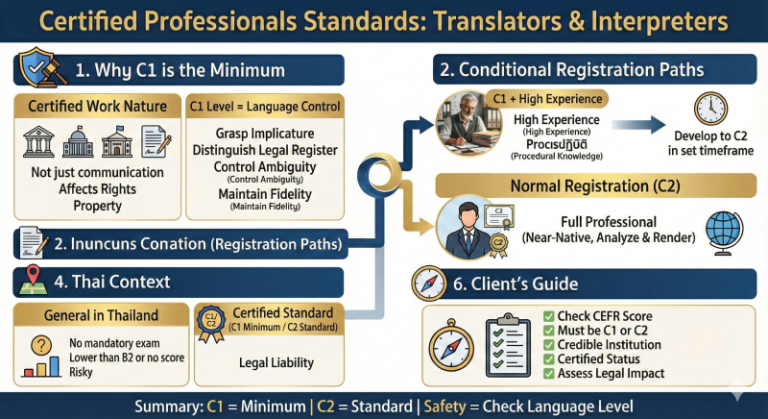
Under the CEFR, the C1 level reflects the ability to comprehend structurally complex texts, recognize implicit meanings, and use language flexibly and precisely in professional contexts (Council of Europe, 2020). These competencies constitute the minimum threshold for handling legal and administrative texts, which are often characterized by specialized terminology, extended syntactic structures, and intentional ambiguity. Practitioners whose proficiency is limited to B2 or below, while potentially fluent in everyday communication, generally lack sufficient control over language to certify translations or interpretations with legal consequences.
C2 as the Standard Level for Full Registration
The C2 level represents near-native command of language, enabling practitioners to manage non-formulaic texts, analyze and render abstract content, and consistently preserve both the form and tone of the source text (North, 2014). Establishing C2 as the standard level for full registration is therefore not an excessive requirement, but rather an affirmation that fully accredited professionals must be capable of operating competently in all high-risk contexts without compromising accuracy or integrity.
Conditional Registration: Reconciling Standards with Professional Reality
Allowing conditional registration for practitioners who demonstrate C1-level proficiency but possess extensive, verifiable professional experience—such as operating a translation business, working within translation agencies, or consistently translating official documents—reflects an effort to reconcile theoretical standards with labor market realities. This approach does not dilute quality standards; instead, it acknowledges procedural knowledge while imposing a clear obligation to advance toward C2 proficiency within an appropriate timeframe.
The Context of General Translators and Interpreters in Thailand
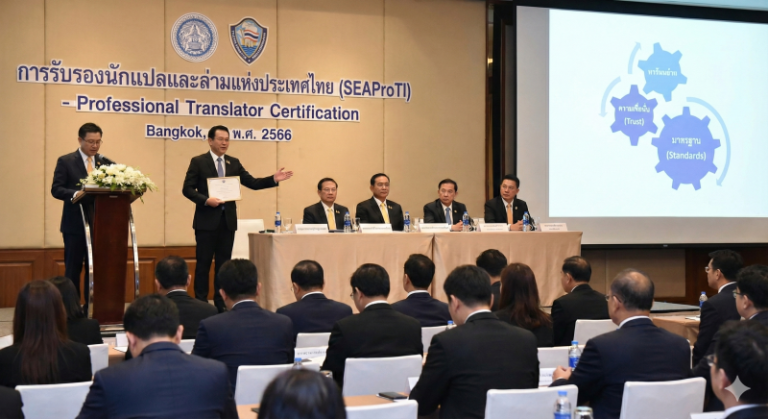
In Thailand, the Southeast Asian Association of Professional Translators and Interpreters (SEAProTI) is the only institution that implements a professional licensing system and enforces CEFR-based standards at both national and international levels. Historically, Thailand has not maintained a national licensing system for translators and interpreters. As a result, many practitioners lack formal language proficiency certification or operate below the B2 level, particularly those registered with government agencies for case-specific administrative purposes. Such registration serves bureaucratic convenience rather than professional certification and should not be interpreted as a guarantee of quality in high-risk translation and interpreting contexts.
Recommendations for Service Users
Users of translation and interpreting services, especially in court proceedings, contractual matters, and other legally consequential contexts, should consider language proficiency as a critical factor in their decision-making. Price, claimed experience, or registration status alone are insufficient indicators of quality. Verified CEFR results at the C1 or C2 level from reputable institutions significantly reduce risk and enhance confidence in the accuracy and legitimacy of the associated processes.
Conclusion
Establishing C1 as the minimum and C2 as the standard proficiency level for certified translators, translation certification providers, and certified interpreters is grounded in academic principles and human rights considerations, not professional exclusion. Conditional registration reflects institutional flexibility, while the broader absence of systematic language assessment in Thailand remains a structural issue that requires heightened awareness and informed judgment on the part of service users.
References
- Council of Europe. (2020). Common European Framework of Reference for Languages: Learning, teaching, assessment – Companion volume. Strasbourg: Council of Europe Publishing.
- North, B. (2014). The CEFR in practice. Cambridge: Cambridge University Press.
- Pöchhacker, F. (2016). Introducing interpreting studies (2nd ed.). London: Routledge.
- Hale, S. (2007). Community interpreting. London: Palgrave Macmillan.
About Certified Translators, Translation Certifiers, and Certified Interpreters of SEAProTI
The Southeast Asian Association of Professional Translators and Interpreters (SEAProTI) has formally announced the qualifications and requirements for registration of Certified Translators, Translation Certification Providers, and Certified Interpreters in Sections 9 and 10 of the Royal Gazette, published by the Secretariat of the Cabinet, Office of the Prime Minister of Thailand, on 25 July 2024 (Vol. 141, Part 66 Ng, p. 100). Certified Translators, Translation Certification Providers, and Certified Interpreters
The Council of State has proposed the enactment of a Royal Decree, granting registered translators and recognised translation certifiers from professional associations or accredited language institutions the authority to provide legally valid translation certification (Letter to SEAProTI dated April 28, 2025)
SEAProTI is the first professional association in Thailand and Southeast Asia to implement a comprehensive certification system for translators, certifiers, and interpreters.
Head Office: Baan Ratchakru Building, No. 33, Room 402, Soi Phahonyothin 5, Phahonyothin Road, Phaya Thai District, Bangkok 10400, Thailand
Email: hello@seaproti.com | Tel.: (+66) 2-114-3128 (Office hours: Mon–Fri, 09:00–17:00)
เหตุผลเชิงภาษาศาสตร์และเชิงวิชาชีพในการกำหนดระดับภาษา C1–C2 สำหรับนักแปลรับรอง ผู้รับรองการแปล และล่ามรับรองในประเทศไทย
30 ธันวาคม 2568, กรุงเทพมหานคร – บทความนี้มีวัตถุประสงค์เพื่ออธิบายและวิเคราะห์เหตุผลเชิงภาษาศาสตร์ เชิงวิชาชีพ และเชิงสิทธิมนุษยชน ในการกำหนดให้ผู้ประกอบวิชาชีพด้านการแปลและการล่ามที่มีสถานะ “รับรอง” (certified) ต้องมีระดับความสามารถทางภาษาอย่างน้อยในระดับ C1 ตามกรอบอ้างอิงความสามารถทางภาษาของยุโรป (Common European Framework of Reference for Languages: CEFR) และกำหนดระดับ C2 เป็นมาตรฐานปกติของการขึ้นทะเบียนอย่างสมบูรณ์ บทความยังอภิปรายระบบการอนุโลมให้ขึ้นทะเบียนแบบมีเงื่อนไขสำหรับผู้มีประสบการณ์วิชาชีพยาวนานแต่ยังไม่ถึงระดับ C2 ตลอดจนเปรียบเทียบกับบริบทของนักแปลและล่ามทั่วไปในประเทศไทยซึ่งส่วนใหญ่ไม่มีการวัดระดับภาษาอย่างเป็นระบบ บทความเสนอข้อแนะนำเชิงนโยบายและข้อควรพิจารณาสำหรับผู้ใช้บริการแปลและล่ามในคดีและธุรกรรมที่มีผลทางกฎหมาย
การแปลและการล่ามในบริบททางกฎหมาย การแพทย์ และการปกครอง มิใช่เพียงการถ่ายทอดความหมายเชิงภาษา หากแต่เป็นกระบวนการที่เกี่ยวข้องโดยตรงกับสิทธิ เสรีภาพ และความชอบธรรมของกระบวนการตัดสินใจของรัฐและเอกชน ความผิดพลาดทางภาษาในบริบทดังกล่าวอาจนำไปสู่ผลเสียหายที่ไม่อาจเยียวยาได้ เช่น การเสียสิทธิในกระบวนการยุติธรรม การตีความสัญญาผิดพลาด หรือการละเมิดสิทธิมนุษยชนขั้นพื้นฐาน ด้วยเหตุนี้ หลายประเทศและองค์กรวิชาชีพสากลจึงกำหนดมาตรฐานด้านความสามารถทางภาษาอย่างเข้มงวดสำหรับผู้ที่ใช้สถานะ “รับรอง” (certified) ในการปฏิบัติงาน
ความหมายของ “งานรับรอง” และภาระความรับผิด
คำว่า “นักแปลรับรอง” หรือ “ล่ามรับรอง” มิได้หมายถึงผู้ที่ผ่านการอบรมระยะสั้นหรือมีประสบการณ์ทำงานทั่วไป หากแต่หมายถึงผู้ที่แสดงตนต่อรัฐ ศาล หรือสาธารณะว่า งานของตนมีความน่าเชื่อถือในระดับที่สามารถนำไปใช้เป็นหลักฐานหรือเป็นองค์ประกอบของกระบวนการตัดสินใจที่มีผลผูกพันทางกฎหมายได้ ภาระความรับผิดของงานรับรองจึงสูงกว่างานสื่อสารทั่วไปอย่างมีนัยสำคัญ ทั้งในเชิงจริยธรรมและในเชิงความเสี่ยงทางกฎหมาย
ระดับ C1 ในฐานะ “ขั้นต่ำ” ของงานรับรอง
ตามกรอบ CEFR ระดับ C1 สะท้อนถึงความสามารถในการเข้าใจข้อความที่มีโครงสร้างซับซ้อน การรับรู้ความหมายโดยนัย (implicit meaning) และการใช้ภาษาอย่างยืดหยุ่นและแม่นยำในบริบททางวิชาชีพ (Council of Europe, 2020) ความสามารถดังกล่าวเป็นเงื่อนไขขั้นต่ำสำหรับการจัดการกับข้อความทางกฎหมายและราชการ ซึ่งมักประกอบด้วยถ้อยคำเฉพาะ (terminology) โครงสร้างประโยคยาว และความคลุมเครือเชิงเจตนา (intentional ambiguity) ผู้ที่มีระดับภาษาเพียง B2 หรือต่ำกว่า แม้อาจสื่อสารได้คล่องในชีวิตประจำวัน แต่ยังไม่สามารถควบคุมภาษาได้อย่างเพียงพอสำหรับการรับรองเอกสารหรือคำแปลที่มีผลผูกพันทางกฎหมาย
C2 ในฐานะมาตรฐานปกติของการขึ้นทะเบียน
ระดับ C2 แสดงถึงความสามารถในการใช้ภาษาอย่างใกล้เคียงเจ้าของภาษา สามารถรับมือกับข้อความที่ไม่เป็นสูตรสำเร็จ วิเคราะห์และถ่ายทอดเนื้อหาเชิงนามธรรม และรักษาความเที่ยงตรงของรูปแบบและน้ำเสียงของต้นฉบับได้อย่างสม่ำเสมอ (North, 2014) การกำหนด C2 เป็นมาตรฐานปกติของการขึ้นทะเบียนจึงมิใช่การตั้งเกณฑ์ที่เกินจริง หากแต่เป็นการยืนยันว่า ผู้ที่มีสถานะวิชาชีพอย่างสมบูรณ์สามารถปฏิบัติงานในทุกบริบทที่มีความเสี่ยงสูงได้อย่างเหมาะสม
การขึ้นทะเบียนแบบมีเงื่อนไข: การประสานมาตรฐานกับความเป็นจริง
การอนุโลมให้ผู้ที่มีระดับภาษา C1 แต่มีประสบการณ์วิชาชีพยาวนานและสามารถแสดงหลักฐานการทำงานจริง เช่น การเปิดร้านแปล การทำงานในเอเจนซี่ หรือการแปลเอกสารราชการต่อเนื่อง ขึ้นทะเบียนแบบมีเงื่อนไข เป็นแนวทางที่สะท้อนการประสานระหว่างมาตรฐานเชิงทฤษฎีกับความเป็นจริงของตลาดแรงงาน แนวทางนี้มิใช่การลดคุณภาพ หากแต่เป็นการยอมรับความรู้เชิงปฏิบัติ (procedural knowledge) ควบคู่กับข้อกำหนดให้พัฒนาความสามารถทางภาษาไปสู่ระดับ C2 ภายในระยะเวลาที่เหมาะสม
บริบทของนักแปลและล่ามทั่วไปในประเทศไทย
ในประเทศไทย สมาคมวิชาชีพนักแปลและล่ามแห่งเอเชียตะวันออกเฉียงใต้ (SEAProTI) เป็นสถาบันเดียวที่มีระบบการออกใบอนุญาตวิชาชีพ (licensing) หรือการบังคับใช้มาตรฐาน CEFR ในระดับชาติและระดับสากล และในอดีตที่ผ่านมา ประเทศไทยไม่เคยมีระบบการออกใบอนุญาตวิชาชีพ (licensing) นักแปลและล่ามจำนวนมากจึงไม่มีผลสอบวัดระดับภาษา หรือมีระดับต่ำกว่า B2 โดยเฉพาะผู้ที่ขึ้นทะเบียนกับหน่วยงานรัฐเพื่อใช้งานเฉพาะกรณี การขึ้นทะเบียนลักษณะดังกล่าวมีวัตถุประสงค์เพื่อการจัดการเชิงธุรการ มิใช่การรับรองความสามารถทางวิชาชีพ และไม่ควรถูกนำไปตีความว่าเป็นหลักประกันด้านคุณภาพของงานแปลและการล่ามในบริบทที่มีความเสี่ยงสูง
ข้อเสนอแนะสำหรับผู้ใช้บริการ
ผู้ใช้บริการแปลและล่าม โดยเฉพาะในกรณีที่เกี่ยวข้องกับศาล สัญญา หรือสิทธิทางกฎหมาย ควรตรวจสอบระดับความสามารถทางภาษาของผู้ให้บริการเป็นองค์ประกอบหนึ่งในการตัดสินใจ ไม่ควรพิจารณาจากราคา ประสบการณ์ที่อ้าง หรือสถานะการขึ้นทะเบียนเพียงอย่างเดียว การมีผลสอบ CEFR ระดับ C1 หรือ C2 จากสถาบันที่เชื่อถือได้ ช่วยลดความเสี่ยงและเพิ่มความมั่นใจในความถูกต้องและความชอบธรรมของกระบวนการที่เกี่ยวข้อง
สรุป
การกำหนดระดับภาษา C1 เป็นขั้นต่ำและ C2 เป็นมาตรฐานปกติสำหรับนักแปลรับรอง ผู้รับรองการแปล และล่ามรับรอง เป็นการยึดหลักวิชาการและหลักสิทธิมนุษยชน มิใช่การกีดกันผู้ประกอบอาชีพ การอนุโลมให้ขึ้นทะเบียนแบบมีเงื่อนไขสะท้อนความยืดหยุ่นเชิงสถาบัน ขณะที่การขาดการวัดระดับภาษาในระบบทั่วไปของไทยยังคงเป็นประเด็นเชิงโครงสร้างที่ผู้ใช้บริการต้องตระหนักและใช้วิจารณญาณอย่างรอบคอบ
- Council of Europe. (2020). Common European Framework of Reference for Languages: Learning, teaching, assessment – Companion volume. Strasbourg: Council of Europe Publishing.
- North, B. (2014). The CEFR in practice. Cambridge: Cambridge University Press.
- Pöchhacker, F. (2016). Introducing interpreting studies (2nd ed.). London: Routledge.
- Hale, S. (2007). Community interpreting. London: Palgrave Macmillan.
สมาคมวิชาชีพนักแปลและล่ามแห่งเอเชียตะวันออกเฉียงใต้ (SEAProTI) ได้ประกาศหลักเกณฑ์และคุณสมบัติผู้ที่ขึ้นทะเบียนเป็น “นักแปลรับรอง (Certified Translators) และผู้รับรองการแปล (Translation Certification Providers) และล่ามรับรอง (Certified Interpreters)” ของสมาคม หมวดที่ 9 และหมวดที่ 10 ในราชกิจจานุเบกษา ของสำนักเลขาธิการคณะรัฐมนตรี ในสำนักนายกรัฐมนตรี แห่งราชอาณาจักรไทย ลงวันที่ 25 ก.ค. 2567 เล่มที่ 141 ตอนที่ 66 ง หน้า 100 อ่านฉบับเต็มได้ที่: นักแปลรับรอง ผู้รับรองการแปล และล่ามรับรอง
สำนักคณะกรรมการกฤษฎีกา เสนอให้ตราเป็นพระราชกฤษฎีกา โดยกำหนดให้นักแปลที่ขึ้นทะเบียน รวมถึงผู้รับรองการแปลจากสมาคมวิชาชีพหรือสถาบันสอนภาษาที่มีการอบรมและขึ้นทะเบียน สามารถรับรองคำแปลได้ (จดหมายถึงสมาคม SEAProTI ลงวันที่ 28 เม.ย. 2568)
สมาคมวิชาชีพนักแปลและล่ามแห่งเอเชียตะวันออกเฉียงใต้ เป็นสมาคมวิชาชีพแห่งแรกและแห่งเดียวในประเทศไทยและภูมิภาคเอเชียตะวันออกเฉียงใต้ที่มีระบบรับรองนักแปลรับรอง ผู้รับรองการแปล และล่ามรับรอง
สำนักงานใหญ่: อาคารบ้านราชครู เลขที่ 33 ห้อง 402 ซอยพหลโยธิน 5 ถนนพหลโยธิน แขวงพญาไท เขตพญาไท กรุงเทพมหานคร 10400 ประเทศไทย
อีเมล: hello@seaproti.com โทรศัพท์: (+66) 2-114-3128 (เวลาทำการ: วันจันทร์–วันศุกร์ เวลา 09.00–17.00 น.