



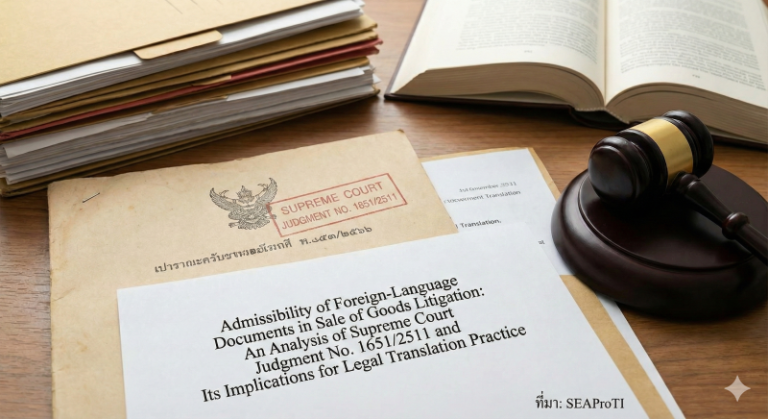
Admissibility of Foreign-Language Documents in Sale of Goods Litigation:
An Analysis of Supreme Court Judgment No. 1651/2511 and Its Implications for Legal Translation Practice
15 February 2026, Bangkok – This article analyzes the reasoning of the Thai Supreme Court in Judgment No. 1651/2511, which concerned a dispute over the sale and installation of swimming pool equipment. The decision is particularly significant regarding the admissibility of documents drafted in a foreign language without a complete Thai translation. The Court held that such documents may still be admitted as evidence if they contain Thai-language text sufficient to convey the essential substance of the legal relationship. This article explains the legal framework under Section 46 of the Civil Procedure Code and discusses the procedural implications and professional consequences for legal translators.
1. Introduction
Documentary evidence, including purchase orders, invoices, and technical specifications, often originates in a foreign language during civil litigation involving commercial transactions. A key procedural question arises: must such documents be fully translated into Thai to be admissible as evidence?
Supreme Court Judgment No. 1651/2511 provides an important answer to this question and remains instructive for both litigants and legal translation professionals.
2. Facts of the Swimming Pool Equipment Sale Case
In this case, the plaintiff alleged that the defendant had ordered swimming pool equipment worth 30,698 baht, with an additional installation fee of 2,750 baht. The defendant had partially paid but allegedly still owed 8,448 baht.
The plaintiff provided documentary evidence with the complaint to show that the sale took place. These documents were drafted in a foreign language and were not fully translated into Thai. The defendant objected, arguing that the documents were inadmissible because they lacked a complete Thai translation.
The Supreme Court held that although the documents were primarily in a foreign language, they contained certain Thai-language text sufficient to establish that a sale of swimming pool equipment had taken place. Therefore, the documents could be admitted as evidence.
3. Interpretation of Section 46 of the Civil Procedure Code
Section 46 of the Thai Civil Procedure Code says that if one side uses a document written in a foreign language, the court can order a Thai translation to be made. The provision reflects the court’s discretionary authority rather than establishing an absolute requirement that all foreign-language documents must be fully translated in every case.
The Court’s reasoning in this case demonstrates that admissibility depends on whether the document enables the court to understand the essential substance of the legal relationship. If the document includes Thai-language text identifying key elements—such as the nature of the goods, the parties, and the purchase price—the court may consider that sufficient for evidentiary purposes.
However, if a document contains no Thai text at all and the court cannot independently ascertain its meaning, the legal outcome may differ, as the change would affect both judicial comprehension and procedural fairness between the parties.
In the swimming pool equipment dispute, the foreign-language document served to establish three essential elements:
- The existence of a contract of sale
- The type of goods (swimming pool equipment)
- The agreed purchase price
The Court reasoned that although technical details of the equipment were not fully translated, the fundamental facts of the transaction were discernible from the Thai-language portions of the document. This approach reflects the principle of “substance over form.” The Court prioritized substantive justice and factual clarity over strict formalism regarding complete translation.
5. Implications for Legal Translation Practice
Although the Court admitted the partially translated document, this does not imply that partial translation constitutes the best professional practice. Legal translators should carefully consider the following:
5.1 Completeness and Neutrality
Selective translation may create the appearance of strategic omission, potentially favoring one party. Such practice risks undermining neutrality, transparency, and professional integrity.
5.2 Risks of Interpretation
In commercial disputes, untranslated technical specifications may later affect determinations concerning product quality, defects, or liability. An incomplete translation may therefore carry significant legal consequences.
5.3 Contemporary Judicial Practice
While this judgment allows admissibility in limited circumstances, modern Thai courts increasingly require complete Thai translations to ensure clarity and prevent procedural disputes. The minimum threshold for admissibility should not be equated with the optimal standard of professional responsibility.
6. Conclusion
Supreme Court Judgment No. 1651/2511 states that documents in a foreign language can be accepted even if they don’t have a full Thai translation, as long as the Thai parts clearly explain the main points of the legal relationship. In the context of the dispute over the sale of swimming pool equipment, the court emphasized a substantive understanding of the transaction over formal completeness.
Nevertheless, from a professional standpoint, legal translators should not rely on this minimum evidentiary threshold. Complete, accurate, and transparent translation remains essential to safeguarding procedural fairness and minimizing litigation risk in bilingual legal documentation.
References
- Civil Procedure Code of Thailand.
- Supreme Court Judgment No. 1651/2511.
- Coulthard, M., Johnson, A., & Wright, D. (2017). An introduction to forensic linguistics: Language in evidence (2nd ed.). Routledge.
- Gibbons, J. (2003). Forensic linguistics: An introduction to language in the justice system. Blackwell Publishing.
The Southeast Asian Association of Professional Translators and Interpreters (SEAProTI) has officially shared the qualifications and requirements for becoming Certified Translators, Translation Certification Providers, and Certified Interpreters in Sections 9 and 10 of the Royal Gazette, which was published by the Prime Minister’s Office in Thailand on July 25, 2024. Certified Translators, Translation Certification Providers, and Certified Interpreters
The Council of State has proposed the enactment of a Royal Decree, granting registered translators and recognised translation certifiers from professional associations or accredited language institutions the authority to provide legally valid translation certification (Letter to SEAProTI dated April 28, 2025)
SEAProTI is the first professional association in Thailand and Southeast Asia to implement a comprehensive certification system for translators, certifiers, and interpreters.
Head Office: Baan Ratchakru Building, No. 33, Room 402, Soi Phahonyothin 5, Phahonyothin Road, Phaya Thai District, Bangkok 10400, Thailand
Email: hello@seaproti.com | Tel.: (+66) 2-114-3128 (Office hours: Mon–Fri, 09:00–17:00)
การรับฟังเอกสารภาษาต่างประเทศในคดีซื้อขาย: วิเคราะห์คำพิพากษาศาลฎีกาที่ 1651/2511 และนัยต่อวิชาชีพนักแปลกฎหมาย
15 กุมภาพันธ์ 2569, กรุงเทพมหานคร – บทความนี้วิเคราะห์แนววินิจฉัยของศาลฎีกาในคำพิพากษาศาลฎีกาที่ 1651/2511 ซึ่งเกี่ยวข้องกับข้อพิพาทซื้อขายอุปกรณ์สระว่ายน้ำ โดยเฉพาะประเด็นการรับฟังเอกสารที่เป็นภาษาต่างประเทศและไม่มีคำแปลภาษาไทยครบถ้วน ศาลวินิจฉัยว่าสามารถรับฟังได้ หากมีข้อความภาษาไทยที่เข้าใจสาระสำคัญของนิติสัมพันธ์ บทความนี้มุ่งอธิบายหลักกฎหมายตามประมวลกฎหมายวิธีพิจารณาความแพ่ง มาตรา 46 พร้อมทั้งอภิปรายผลกระทบเชิงกระบวนวิธีและนัยสำคัญต่อมาตรฐานวิชาชีพนักแปลกฎหมาย
1. บทนำ
ในคดีแพ่งที่เกี่ยวข้องกับการซื้อขายสินค้าหรือธุรกรรมทางพาณิชย์ เอกสารประกอบการฟ้องคดีมักจัดทำขึ้นเป็นภาษาต่างประเทศ โดยเฉพาะใบสั่งซื้อ ใบกำกับสินค้า หรือเอกสารทางเทคนิค ปัญหาสำคัญคือ เอกสารดังกล่าวจำต้องมีคำแปลภาษาไทยครบถ้วนหรือไม่จึงจะรับฟังได้เป็นพยานหลักฐาน
คำพิพากษาศาลฎีกาที่ 1651/2511 เป็นแนวคำวินิจฉัยที่ให้คำตอบอย่างมีนัยสำคัญต่อคำถามนี้
2. ข้อเท็จจริงในคดีซื้อขายอุปกรณ์สระว่ายน้ำ
ในคดีดังกล่าว โจทก์ฟ้องว่าจำเลยสั่งซื้ออุปกรณ์สระว่ายน้ำจากโจทก์เป็นเงิน 30,698 บาท และมีค่าติดตั้งเพิ่มเติม 2,750 บาท จำเลยชำระเงินบางส่วนแล้ว แต่ยังค้างชำระ 8,448 บาท
เพื่อพิสูจน์การซื้อขาย โจทก์ได้ยื่นเอกสารแนบท้ายฟ้อง ซึ่งเป็นเอกสารภาษาต่างประเทศ อย่างไรก็ดี เอกสารดังกล่าวมิได้มีคำแปลภาษาไทยครบถ้วน จำเลยจึงโต้แย้งว่าไม่อาจรับฟังเอกสารนั้นได้
ศาลฎีกาวินิจฉัยว่า แม้เอกสารจะเป็นภาษาต่างประเทศและไม่มีคำแปลครบถ้วน แต่ในเอกสารมีข้อความภาษาไทยบางส่วนที่สามารถเข้าใจได้ว่าเป็นการซื้อขายอุปกรณ์สระว่ายน้ำ จึงสามารถรับฟังเอกสารดังกล่าวเป็นพยานหลักฐานได้
3. การตีความมาตรา 46 แห่งประมวลกฎหมายวิธีพิจารณาความแพ่ง
มาตรา 46 แห่ง ป.วิ.พ. บัญญัติว่า เมื่อมีการอ้างอิงเอกสารที่ทำขึ้นเป็นภาษาต่างประเทศ ศาลอาจสั่งให้จัดทำคำแปลเป็นภาษาไทยได้ บทบัญญัตินี้สะท้อนว่า การจัดทำคำแปลมิใช่เงื่อนไขบังคับเด็ดขาดในทุกกรณี หากแต่เป็นเรื่องดุลพินิจของศาล
แนววินิจฉัยในคดีนี้ชี้ให้เห็นว่า ศาลพิจารณาว่าเอกสารมี “สาระสำคัญ” เพียงพอให้เข้าใจความสัมพันธ์ทางกฎหมายหรือไม่ หากมีข้อความภาษาไทยที่อธิบายเนื้อหาหลัก เช่น ระบุประเภทสินค้า คู่สัญญา และมูลค่าการซื้อขาย ศาลอาจเห็นว่าเพียงพอต่อการรับฟัง
อย่างไรก็ตาม หากเอกสารไม่มีข้อความภาษาไทยเลย และศาลไม่สามารถเข้าใจเนื้อหาได้ด้วยตนเอง ผลทางกฎหมายย่อมอาจแตกต่างออกไป เพราะกระทบต่อหลักความเข้าใจร่วมและความเสมอภาคของคู่ความ
4. การวิเคราะห์เชิงกระบวนวิธีจากกรณีศึกษา
ในคดีซื้อขายนี้ เอกสารภาษาต่างประเทศทำหน้าที่พิสูจน์องค์ประกอบสำคัญ ได้แก่
- การมีอยู่ของสัญญาซื้อขาย
- ประเภทสินค้า (อุปกรณ์สระว่ายน้ำ)
- จำนวนเงินที่ตกลงกัน
ศาลเห็นว่า แม้รายละเอียดเชิงเทคนิคของอุปกรณ์จะยังไม่ได้แปลทั้งหมด แต่ข้อเท็จจริงหลักเกี่ยวกับการซื้อขายสามารถเข้าใจได้จากข้อความภาษาไทยที่ปรากฏในเอกสาร
แนวคิดนี้สะท้อนหลัก “สาระสำคัญเหนือรูปแบบ” (substance over form) กล่าวคือ ศาลมุ่งคุ้มครองความยุติธรรมเชิงเนื้อหา มากกว่าความเคร่งครัดทางพิธีการเกี่ยวกับการแปลครบทุกถ้อยคำ
5. นัยสำคัญต่อวิชาชีพนักแปลกฎหมาย
แม้ศาลจะรับฟังเอกสารดังกล่าวได้ แต่มิได้หมายความว่าการแปลบางส่วนเป็นแนวปฏิบัติที่เหมาะสมในเชิงวิชาชีพ นักแปลกฎหมายควรพิจารณาประเด็นต่อไปนี้
5.1 ความครบถ้วนและความเป็นกลาง
การแปลเพียงบางส่วนอาจเปิดช่องให้เกิดการเลือกสรรถ้อยคำเฉพาะส่วนที่เป็นประโยชน์ต่อฝ่ายหนึ่งฝ่ายใด ซึ่งอาจกระทบหลักความเป็นกลางและความโปร่งใสในกระบวนพิจารณา
5.2 ความเสี่ยงในการตีความ
ในคดีซื้อขาย หากรายละเอียดทางเทคนิคของอุปกรณ์ไม่ได้แปลครบถ้วน อาจมีผลต่อการวินิจฉัยเรื่องคุณภาพสินค้า ความชำรุดบกพร่อง หรือความรับผิดในภายหลัง
5.3 มาตรฐานร่วมสมัยของศาล
แม้แนวคำพิพากษานี้เปิดช่องให้รับฟังเอกสารที่แปลไม่ครบ แต่ในทางปฏิบัติ ศาลไทยในปัจจุบันมักกำหนดให้มีคำแปลภาษาไทยอย่างครบถ้วน เพื่อความชัดเจนและป้องกันข้อพิพาทในภายหลัง
ดังนั้น มาตรฐานขั้นต่ำแห่งการรับฟังของศาล ไม่ควรถูกตีความว่าเป็นมาตรฐานสูงสุดของวิชาชีพนักแปล
6. บทสรุป
คำพิพากษาศาลฎีกาที่ 1651/2511 วางหลักสำคัญว่า เอกสารภาษาต่างประเทศอาจรับฟังได้ แม้ไม่มีคำแปลครบถ้วน หากมีข้อความภาษาไทยที่เข้าใจสาระสำคัญของนิติสัมพันธ์ กรณีศึกษาในคดีซื้อขายอุปกรณ์สระว่ายน้ำแสดงให้เห็นว่าศาลให้ความสำคัญกับเนื้อหาหลักของการซื้อขายมากกว่ารูปแบบทางพิธีการ
อย่างไรก็ดี ในเชิงวิชาชีพนักแปลกฎหมาย การจัดทำคำแปลที่ครบถ้วน ถูกต้อง และโปร่งใส ยังคงเป็นกลไกสำคัญในการคุ้มครองความยุติธรรม และลดความเสี่ยงทางกระบวนวิธีในคดีที่เกี่ยวข้องกับเอกสารสองภาษา
- ประมวลกฎหมายวิธีพิจารณาความแพ่ง.
- คำพิพากษาศาลฎีกาที่ 1651/2511.
- Coulthard, M., Johnson, A., & Wright, D. (2017). An introduction to forensic linguistics: Language in evidence (2nd ed.). Routledge.
- Gibbons, J. (2003). Forensic linguistics: An introduction to language in the justice system. Blackwell Publishing.
สำนักคณะกรรมการกฤษฎีกาเสนอให้ตราเป็นพระราชกฤษฎีกา โดยกำหนดให้นักแปลที่ขึ้นทะเบียน รวมถึงผู้รับรองการแปลจากสมาคมวิชาชีพหรือสถาบันสอนภาษาที่มีการอบรมและขึ้นทะเบียน สามารถรับรองคำแปลได้ (จดหมายถึงสมาคม SEAProTI ลงวันที่ 28 เม.ย. 2568)
สมาคมวิชาชีพนักแปลและล่ามแห่งเอเชียตะวันออกเฉียงใต้เป็นสมาคมวิชาชีพแห่งแรกและแห่งเดียวในประเทศไทยและภูมิภาคเอเชียตะวันออกเฉียงใต้ที่มีระบบรับรองนักแปลรับรอง ผู้รับรองการแปล และล่ามรับรอง
สำนักงานใหญ่: อาคารบ้านราชครู เลขที่ 33 ห้อง 402 ซอยพหลโยธิน 5 ถนนพหลโยธิน แขวงพญาไท เขตพญาไท กรุงเทพมหานคร 10400 ประเทศไทย
อีเมล: hello@seaproti.com โทรศัพท์: (+66) 2-114-3128 (เวลาทำการ: วันจันทร์–วันศุกร์ เวลา 09.00–17.00 น.