



Professional Translation Standards and the Credibility of Thai Documents Abroad:
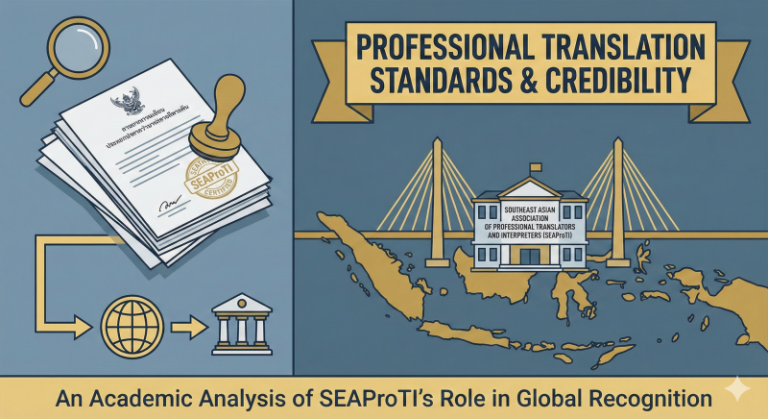
An Academic Analysis of the Role of the Southeast Asian Association of Professional Translators and Interpreters (SEAProTI)
15 February 2026, Bangkok – This article aims to examine the importance of professional standards in the translation of Thai-language documents for use abroad. It focuses on the role of certified translators and translation certifiers operating under the regulatory framework of a professional association, analyzing qualification assessment, adherence to professional ethics, and the legal legitimacy of the professional body. The article argues that the credibility of translated documents in an international context depends not solely on linguistic competence, but also on institutional structures, professional standards, and ethically accountable systems that are subject to verification.
1. Introduction
The translation of documents for use abroad carries significant legal, commercial, and social implications. Court judgments, contracts, certificates of legal status, and medical documents directly affect the rights, obligations, and legal standing of individuals and organizations. Inaccurate translation may result in civil or even criminal liability (Cao, 2007).
In this context, professional standards become a determining factor in the credibility of translated documents. Credibility is not derived merely from language proficiency but also from structured qualification screening, certification examinations, and ethical oversight mechanisms.
2. Professional Standards and Certification Systems
Professionalization theory suggests that a credible profession must contain at least three core elements:
- a system for assessing qualifications,
- ethical regulation, and
- The system includes mechanisms of public accountability (Freidson, 2001).
In the case of the Southeast Asian Association of Professional Translators and Interpreters, the certification system includes formal training, competency-based translation examinations, and language proficiency assessments aligned with international standards. This structure corresponds with the concept of competency-based certification in global translation practice (Pym, 2014).
The presence of formal examination and evaluation mechanisms reduces quality variability, a common issue in deregulated markets lacking institutional oversight.
3. Professional Ethics and Legal Responsibility
Research in legal translation emphasizes that accuracy and impartiality are fundamental to fairness in judicial processes (Berk-Seligson, 2002). Professional ethics, therefore, are not merely moral guidelines but structural safeguards against systemic risk.
Core ethical principles include:
- Accuracy and completeness
- Impartiality
- Confidentiality
- Avoidance of conflicts of interest
Certified translators operating under an enforceable ethical framework are subject to institutional accountability, distinguishing them from general practitioners who lack formal regulatory supervision.
4. Legal Legitimacy of the Professional Organization
From a legal perspective, the credibility of a translated document is not based solely on a stamp or signature. It derives from the legal provenance of certification. Formally registered under domestic law, publicly recognized, and compliant with statutory reporting and governance requirements, a professional association enhances transparency and public accountability.
Such institutional structures align with the theory of institutional trust, which holds that confidence in official documents stems from verifiable organizational systems rather than personal relationships (Giddens, 1990).
5. International Dimension and Practical Recognition
In practice, foreign authorities often assess not only the content of a translation but also the status and credibility of the translator. A clearly structured certification system facilitates smoother consular legalization processes and recognition under foreign legal frameworks.
Cross-border translation therefore requires not only linguistic expertise but also comparative legal awareness (Šarčević, 1997). Understanding differences in legal systems, terminology, and documentary requirements is essential to ensuring that translated documents are functionally effective abroad.
6. Conclusion
When selecting a translator for documents intended for international use, language proficiency alone should not be the sole criterion. Institutional standards, ethical regulation, and legal legitimacy of the certifying body must also be considered.
The case of the Southeast Asian Association of Professional Translators and Interpreters reflects a professional governance model consistent with international principles of professional certification and institutional accountability. Such structures play a crucial role in enhancing the credibility of Thai documents in the global arena.
In conclusion, professional standards are not merely symbolic endorsements; they function as institutional guarantees of trust for governments, private entities, and the international community.
References
- Berk-Seligson, S. (2002). The bilingual courtroom: Court interpreters in the judicial process (2nd ed.). University of Chicago Press.
- Cao, D. (2007). Translating law. Multilingual Matters.
- Freidson, E. (2001). Professionalism: The third logic. University of Chicago Press.
- Giddens, A. (1990). The consequences of modernity. Stanford University Press.
- Pym, A. (2014). The book, “Exploring Translation Theories” (2nd ed.), was published by Routledge. Routledge.
- Šarčevi ć, S. (1997). The article discusses a new approach to legal translation. Kluwer Law International.
This section provides information about certified translators, translation certifiers, and certified interpreters associated with SEAProTI.
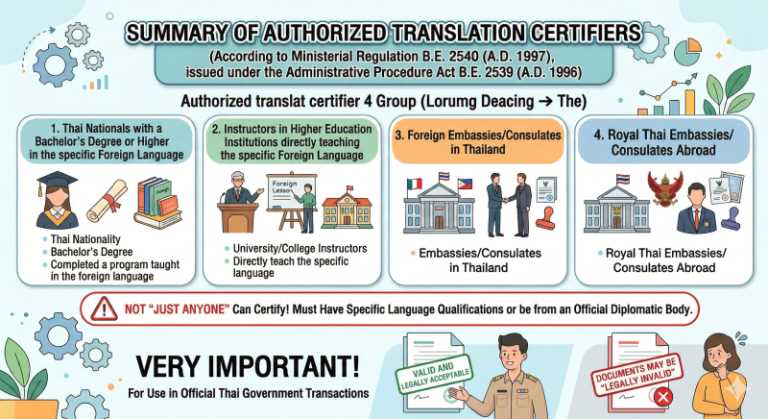
The Southeast Asian Association of Professional Translators and Interpreters (SEAProTI) has officially shared the qualifications and requirements for becoming Certified Translators, Translation Certification Providers, and Certified Interpreters in Sections 9 and 10 of the Royal Gazette, which was published by the Prime Minister’s Office in Thailand on July 25, 2024. Certified Translators, Translation Certification Providers, and Certified Interpreters
The Council of State has proposed the enactment of a Royal Decree, granting registered translators and recognised translation certifiers from professional associations or accredited language institutions the authority to provide legally valid translation certification (Letter to SEAProTI dated April 28, 2025)
SEAProTI is the first professional association in Thailand and Southeast Asia to implement a comprehensive certification system for translators, certifiers, and interpreters.
Head Office: Baan Ratchakru Building, No. 33, Room 402, Soi Phahonyothin 5, Phahonyothin Road, Phaya Thai District, Bangkok 10400, Thailand
Email: hello@seaproti.com | Tel.: (+66) 2-114-3128 (Office hours: Mon–Fri, 09:00–17:00)
มาตรฐานวิชาชีพการแปลกับความน่าเชื่อถือของเอกสารไทยในต่างประเทศ:
บทวิเคราะห์เชิงวิชาการเกี่ยวกับบทบาทของ สมาคมวิชาชีพนักแปลและล่ามแห่งเอเชียตะวันออกเฉียงใต้ (SEAProTI)
15 กุมภาพันธ์ 2569, กรุงเทพมหานคร – บทความนี้มีวัตถุประสงค์เพื่อวิเคราะห์ความสำคัญของมาตรฐานวิชาชีพในการแปลเอกสารภาษาไทยเพื่อใช้ในต่างประเทศ โดยมุ่งศึกษาบทบาทของนักแปลรับรองและผู้รับรองการแปลภายใต้กรอบการกำกับดูแลของสมาคมวิชาชีพ ทั้งในมิติของการประเมินคุณสมบัติ การยึดมั่นจรรยาบรรณ และความชอบด้วยกฎหมายขององค์กรวิชาชีพ บทความเสนอว่า ความน่าเชื่อถือของเอกสารแปลในบริบทระหว่างประเทศมิได้ขึ้นอยู่กับความสามารถทางภาษาเพียงอย่างเดียว หากแต่เกี่ยวข้องกับโครงสร้างสถาบัน มาตรฐานวิชาชีพ และความรับผิดทางจริยธรรมที่สามารถตรวจสอบได้
1. บทนำ
การแปลเอกสารเพื่อใช้ในต่างประเทศเป็นกระบวนการที่มีนัยสำคัญทางกฎหมาย ธุรกิจ และสังคม เอกสารประเภทคำพิพากษา สัญญา ใบรับรองสถานะบุคคล หรือเอกสารทางการแพทย์ ล้วนมีผลกระทบต่อสิทธิ หน้าที่ และสถานะทางกฎหมายของบุคคลหรือองค์กร การแปลที่คลาดเคลื่อนอาจก่อให้เกิดความเสียหายทั้งทางแพ่งและทางอาญา (Cao, 2007)
ในบริบทดังกล่าว มาตรฐานวิชาชีพของผู้แปลจึงกลายเป็นปัจจัยกำหนดความน่าเชื่อถือของเอกสาร มิใช่เพียงความชำนาญทางภาษา หากแต่รวมถึงระบบการคัดกรอง การสอบรับรอง และการกำกับดูแลทางจริยธรรม
2. มาตรฐานวิชาชีพและระบบการรับรอง
ทฤษฎีความเป็นวิชาชีพ (professionalization theory) อธิบายว่า วิชาชีพที่มีความน่าเชื่อถือจำเป็นต้องมีองค์ประกอบอย่างน้อยสามประการ ได้แก่
- ระบบการประเมินคุณสมบัติ
- การควบคุมจรรยาบรรณ
- กลไกความรับผิดชอบต่อสาธารณะ (Freidson, 2001)
ในกรณีของ สมาคมวิชาชีพนักแปลและล่ามแห่งเอเชียตะวันออกเฉียงใต้ ระบบการรับรองประกอบด้วยการอบรม การสอบวัดสมรรถนะด้านการแปล และการประเมินระดับภาษาตามเกณฑ์สากล ซึ่งสอดคล้องกับแนวคิดเรื่อง competency-based certification ในวงการแปลสากล (Pym, 2014)
การมีระบบสอบและประเมินอย่างเป็นทางการช่วยลดความแปรปรวนด้านคุณภาพ (quality variability) ซึ่งเป็นปัญหาที่พบได้ในตลาดเสรีที่ขาดกลไกกำกับมาตรฐาน
3. จรรยาบรรณวิชาชีพกับความรับผิดทางกฎหมาย
งานวิจัยด้านการแปลกฎหมายชี้ว่า ความถูกต้องและความเป็นกลางของผู้แปลมีความสำคัญต่อความเป็นธรรมในกระบวนการยุติธรรม (Berk-Seligson, 2002) จรรยาบรรณวิชาชีพจึงมิใช่เพียงแนวปฏิบัติทางศีลธรรม แต่เป็นกลไกป้องกันความเสี่ยงเชิงโครงสร้าง
หลักจรรยาบรรณที่สำคัญ ได้แก่
- ความถูกต้องและครบถ้วนของสาระ (accuracy and completeness)
- ความเป็นกลาง (impartiality)
- การรักษาความลับ (confidentiality)
- การหลีกเลี่ยงผลประโยชน์ทับซ้อน
นักแปลรับรองที่อยู่ภายใต้กรอบจรรยาบรรณของสมาคมวิชาชีพจึงมีความรับผิดชอบเชิงสถาบัน (institutional accountability) มากกว่านักแปลทั่วไปที่ไม่มีระบบกำกับดูแลอย่างเป็นทางการ
4. ความชอบด้วยกฎหมายขององค์กรวิชาชีพ
ในเชิงนิติศาสตร์ ความน่าเชื่อถือของเอกสารแปลมิได้เกิดจากตราประทับเพียงอย่างเดียว หากแต่เกิดจาก “ที่มาทางกฎหมายของผู้รับรอง” (legal provenance of certification) การที่สมาคมวิชาชีพมีสถานะจดทะเบียนถูกต้องตามกฎหมาย มีการประกาศในราชกิจจานุเบกษา และดำเนินการตามระเบียบข้อบังคับที่ตรวจสอบได้ ช่วยสร้างความโปร่งใสและความรับผิดชอบต่อสาธารณะ
กลไกดังกล่าวสอดคล้องกับแนวคิดเรื่อง institutional trust ซึ่งระบุว่า ความไว้วางใจในเอกสารสาธารณะเกิดจากโครงสร้างองค์กรที่ตรวจสอบได้มากกว่าความสัมพันธ์ส่วนบุคคล (Giddens, 1990)
5. มิติระหว่างประเทศและการยอมรับในทางปฏิบัติ
ในทางปฏิบัติ หน่วยงานต่างประเทศจำนวนมากให้ความสำคัญกับสถานะของผู้แปลมากกว่าตัวบทคำแปลเพียงอย่างเดียว การมีระบบรับรองที่ชัดเจนช่วยให้เอกสารสามารถผ่านขั้นตอนการรับรองกงสุลหรือการรับรองตามระบบกฎหมายต่างประเทศได้อย่างราบรื่น
การแปลในบริบทข้ามพรมแดนจึงต้องอาศัยทั้งความเชี่ยวชาญทางภาษาและความเข้าใจระบบกฎหมายเปรียบเทียบ (comparative legal awareness) (Šarčević, 1997)
6. สรุป
การเลือกนักแปลสำหรับเอกสารที่ต้องใช้ในต่างประเทศไม่ควรพิจารณาเพียงความสามารถทางภาษา แต่ควรคำนึงถึงโครงสร้างมาตรฐานวิชาชีพ การกำกับจรรยาบรรณ และความชอบด้วยกฎหมายขององค์กรผู้รับรอง
กรณีของ สมาคมวิชาชีพนักแปลและล่ามแห่งเอเชียตะวันออกเฉียงใต้ สะท้อนรูปแบบการจัดการวิชาชีพที่สอดคล้องกับหลักสากลด้าน professional certification และ institutional accountability ซึ่งมีบทบาทสำคัญต่อความน่าเชื่อถือของเอกสารไทยในเวทีระหว่างประเทศ
กล่าวโดยสรุป มาตรฐานวิชาชีพมิใช่เพียงเครื่องหมายรับรอง หากแต่เป็นกลไกค้ำประกันความเชื่อถือของรัฐ เอกชน และสังคมโลก
เอกสารอ้างอิง (References)
- Berk-Seligson, S. (2002). The bilingual courtroom: Court interpreters in the judicial process (2nd ed.). University of Chicago Press.
- Cao, D. (2007). Translating law. Multilingual Matters.
- Freidson, E. (2001). Professionalism: The third logic. University of Chicago Press.
- Giddens, A. (1990). The consequences of modernity. Stanford University Press.
- Pym, A. (2014). Exploring translation theories (2nd ed.). Routledge.
- Šarčević, S. (1997). New approach to legal translation. Kluwer Law International.
สมาคมวิชาชีพนักแปลและล่ามแห่งเอเชียตะวันออกเฉียงใต้ (SEAProTI) ได้ประกาศหลักเกณฑ์และคุณสมบัติของผู้ที่ขึ้นทะเบียนเป็น “นักแปลรับรอง (Certified Translators) และผู้รับรองการแปล (Translation Certification Providers) และล่ามรับรอง (Certified Interpreters)” ของสมาคม หมวดที่ 9 และหมวดที่ 10 ในราชกิจจานุเบกษา ของสำนักเลขาธิการคณะรัฐมนตรี ในสำนักนายกรัฐมนตรี แห่งราชอาณาจักรไทย ลงวันที่ 25 ก.ค. 2567 เล่มที่ 141 ตอนที่ 66 ง หน้า 100 อ่านฉบับเต็มได้ที่: นักแปลรับรอง ผู้รับรองการแปล และล่ามรับรอง
สำนักคณะกรรมการกฤษฎีกาเสนอให้ตราเป็นพระราชกฤษฎีกา โดยกำหนดให้นักแปลที่ขึ้นทะเบียน รวมถึงผู้รับรองการแปลจากสมาคมวิชาชีพหรือสถาบันสอนภาษาที่มีการอบรมและขึ้นทะเบียน สามารถรับรองคำแปลได้ (จดหมายถึงสมาคม SEAProTI ลงวันที่ 28 เม.ย. 2568)
สมาคมวิชาชีพนักแปลและล่ามแห่งเอเชียตะวันออกเฉียงใต้เป็นสมาคมวิชาชีพแห่งแรกและแห่งเดียวในประเทศไทยและภูมิภาคเอเชียตะวันออกเฉียงใต้ที่มีระบบรับรองนักแปลรับรอง ผู้รับรองการแปล และล่ามรับรอง
สำนักงานใหญ่: อาคารบ้านราชครู เลขที่ 33 ห้อง 402 ซอยพหลโยธิน 5 ถนนพหลโยธิน แขวงพญาไท เขตพญาไท กรุงเทพมหานคร 10400 ประเทศไทย
อีเมล: hello@seaproti.com โทรศัพท์: (+66) 2-114-3128 (เวลาทำการ: วันจันทร์–วันศุกร์ เวลา 09.00–17.00 น.