




Private-Sector Registration of Professional Translators and Interpreters: An Institutional Analysis of Prohibitions and Limitations Imposed by the Southeast Asian Association of Professional Translators and Interpreters
29 December 2025, Bangkok – This article aims to explain and analyze the registration framework for professional translators and interpreters implemented by the Southeast Asian Association of Professional Translators and Interpreters (SEAProTI), with particular emphasis on the prohibitions and limitations governing eligibility for registration. Specifically, it examines the policy of not accepting applicants who are already registered with, or affiliated to, government agencies or other certifying bodies that have not entered into a Memorandum of Understanding (MOU) with the Association. The article argues that such requirements do not constitute institutional exclusion but rather function as structural mechanisms designed to prevent conflicts of interest, safeguard professional standards, and respond to the expectations of international service users—characteristics inherent to private-sector professional associations operating in a globalized context.
Keywords: professional registration, translators and interpreters, private professional associations, conflict of interest, professional standards
Introduction
In cross-linguistic communication, translators and interpreters do not merely transmit words; they function as institutional mechanisms that directly affect rights, obligations, and the credibility of legal, medical, and commercial systems at the international level (Hale, 2014; Pöchhacker, 2016). Consequently, professional bodies responsible for registering and regulating translators and interpreters play a crucial role in shaping professional quality and ethical conduct.
As a private professional association, SEAProTI has adopted a registration framework that differs significantly from those of public-sector institutions. This framework includes certain prohibitions and limitations that may raise policy-related questions. This article seeks to provide a systematic institutional explanation for these regulatory choices.
SEAProTI as a Private Professional Association
SEAProTI is a private organization registered under the Civil and Commercial Code of Thailand. It does not receive funding derived from public taxation and operates under the principle of professional self-regulation, a concept widely recognized in international professional governance (Abbott, 1988).
The Association’s client base exhibits a distinctive structure: more than 95% of its service users are private-sector entities and overseas organizations, including multinational corporations, international law firms, and global event organizers. This structural characteristic necessitates that SEAProTI’s standards align primarily with the expectations of the global professional market rather than with the operational frameworks of domestic bureaucratic systems.
Registration Criteria and Limitations
A core condition for registration with SEAProTI is that applicants must not be listed as translators or interpreters registered with, or affiliated to, government agencies or other certifying bodies that are neither recognized by SEAProTI nor bound to it through an MOU. This requirement is grounded in institutional principles rather than in individualized assessments of professional competence.
Such limitations reflect the concept of the jurisdiction of professions, whereby professional organizations must clearly define their regulatory boundaries in order to preserve institutional autonomy and the credibility of internal standards (Abbott, 1988).
Structural Rationales for the Prohibitions
Prevention of Conflicts of Interest in Remuneration
SEAProTI is committed to continuously elevating professional remuneration in accordance with international standards. This objective may conflict with the fixed or rigid remuneration structures typically found in certain government agencies. Allowing individuals to hold overlapping registration statuses could generate conflicts of interest and undermine the Association’s regulatory authority.
Divergent Training Frameworks and Professional Scope
Unlike institutions that focus exclusively on a single domain—such as legal interpreting—SEAProTI encompasses multiple professional fields, including law, medicine, commerce, and international conferences. Each field entails distinct ethical requirements and specialized competencies (Pöchhacker, 2016). Consequently, training frameworks cannot be uniformly aligned with those of the public sector.
Differences in Professional Practice Contexts
Interpreting within government agencies is typically conducted under the authority of the state, whereas private-sector interpreting involves contractual liability, market-driven expectations, and compliance with international professional standards. These contextual differences necessitate distinct mechanisms for ethical regulation and quality assessment (Hale, 2014).
The Role of MOUs and Long-Term Institutional Development
SEAProTI does not categorically exclude cooperation with government agencies. However, cross-institutional registration is required to be founded upon clearly defined MOUs, developed through multiple levels of policy and operational dialogue to ensure alignment of regulatory standards.
At present, the existing legal and regulatory environment does not adequately support such agreements. Institutional development of this nature may require a timeframe of 10–20 years or longer, which is typical of structural reforms within specialized professions.
Conclusion
The prohibitions and limitations imposed by SEAProTI should not be construed as mechanisms of exclusion. Rather, they function as structural tools designed to protect professional standards, prevent conflicts of interest, and maintain the Association’s credibility within the international professional arena. Understanding these regulatory choices through an institutional lens is therefore essential to the sustainable development of the translation and interpreting profession in Thailand.
References
- Abbott, A. (1988). The system of professions: An essay on the division of expert labor. University of Chicago Press.
- Hale, S. B. (2014). The discourse of court interpreting (2nd ed.). John Benjamins.
- Pöchhacker, F. (2016). Introducing interpreting studies (2nd ed.). Routledge.
About Certified Translators, Translation Certifiers, and Certified Interpreters of SEAProTI
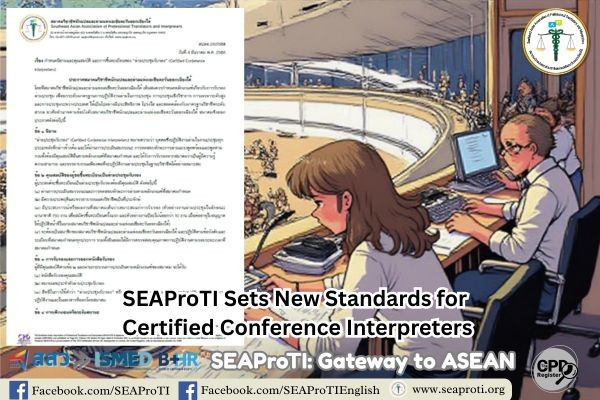
The Southeast Asian Association of Professional Translators and Interpreters (SEAProTI) has formally announced the qualifications and requirements for registration of Certified Translators, Translation Certification Providers, and Certified Interpreters in Sections 9 and 10 of the Royal Gazette, published by the Secretariat of the Cabinet, Office of the Prime Minister of Thailand, on 25 July 2024 (Vol. 141, Part 66 Ng, p. 100). Certified Translators, Translation Certification Providers, and Certified Interpreters
The Council of State has proposed the enactment of a Royal Decree, granting registered translators and recognised translation certifiers from professional associations or accredited language institutions the authority to provide legally valid translation certification (Letter to SEAProTI dated April 28, 2025)
SEAProTI is the first professional association in Thailand and Southeast Asia to implement a comprehensive certification system for translators, certifiers, and interpreters.
Head Office: Baan Ratchakru Building, No. 33, Room 402, Soi Phahonyothin 5, Phahonyothin Road, Phaya Thai District, Bangkok 10400, Thailand
Email: hello@seaproti.com | Tel.: (+66) 2-114-3128 (Office hours: Mon–Fri, 09:00–17:00)
แนวทางการขึ้นทะเบียนนักแปลและล่ามวิชาชีพของเอกชน:
การวิเคราะห์เชิงสถาบันว่าด้วยข้อห้ามและข้อจำกัดของ สมาคมวิชาชีพนักแปลและล่ามแห่งเอเชียตะวันออกเฉียงใต้
29 ธันวาคม 2568, กรุงเทพมหานคร – บทความนี้มีวัตถุประสงค์เพื่ออธิบายและวิเคราะห์แนวทางการรับขึ้นทะเบียนนักแปลและล่ามวิชาชีพของสมาคมวิชาชีพนักแปลและล่ามแห่งเอเชียตะวันออกเฉียงใต้ (SEAProTI) โดยมุ่งเน้นข้อห้ามและข้อจำกัดในการรับขึ้นทะเบียน โดยเฉพาะกรณีการไม่รับขึ้นทะเบียนบุคคลที่มีสถานะขึ้นทะเบียนหรือสังกัดหน่วยงานราชการหรือองค์กรรับรองอื่นที่ไม่ได้ทำบันทึกข้อตกลงความร่วมมือ (Memorandum of Understanding: MOU) กับสมาคม บทความนี้เสนอว่าข้อกำหนดดังกล่าวมิใช่การกีดกันเชิงสถาบัน หากแต่เป็นกลไกเชิงโครงสร้างเพื่อป้องกันผลประโยชน์ทับซ้อน รักษามาตรฐานวิชาชีพ และตอบสนองต่อความคาดหวังของผู้ใช้บริการในระดับสากล อันเป็นลักษณะเฉพาะขององค์กรวิชาชีพเอกชนในบริบทโลกาภิวัตน์
คำสำคัญ: การขึ้นทะเบียนวิชาชีพ, นักแปลและล่าม, องค์กรวิชาชีพเอกชน, ผลประโยชน์ทับซ้อน, มาตรฐานวิชาชีพ
ในกระบวนการสื่อสารข้ามภาษา นักแปลและล่ามมิได้ทำหน้าที่เพียงถ่ายทอดถ้อยคำ หากแต่มีบทบาทเป็นกลไกเชิงสถาบันที่ส่งผลต่อสิทธิ หน้าที่ และความน่าเชื่อถือของระบบกฎหมาย การแพทย์ และการค้าในระดับนานาชาติ (Hale, 2014; Pöchhacker, 2016) ด้วยเหตุนี้ องค์กรวิชาชีพที่ทำหน้าที่ขึ้นทะเบียนและกำกับมาตรฐานนักแปลและล่ามจึงมีบทบาทสำคัญในการกำหนดคุณภาพและจริยธรรมของวิชาชีพ
SEAProTI ในฐานะองค์กรวิชาชีพเอกชน ได้กำหนดแนวทางการขึ้นทะเบียนที่แตกต่างจากหน่วยงานภาครัฐ โดยมีข้อห้ามและข้อจำกัดบางประการที่อาจก่อให้เกิดข้อสงสัยในเชิงนโยบาย บทความนี้มุ่งอธิบายเหตุผลเชิงโครงสร้างของแนวทางดังกล่าวอย่างเป็นระบบ
สถานะของ SEAProTI ในฐานะองค์กรวิชาชีพเอกชน
SEAProTI เป็นองค์กรเอกชนที่จดทะเบียนตามประมวลกฎหมายแพ่งและพาณิชย์ มิได้ใช้งบประมาณจากภาษีของประชาชน และดำเนินงานภายใต้หลักการกำกับตนเองขององค์กรวิชาชีพ (professional self-regulation) ซึ่งเป็นแนวคิดที่ได้รับการยอมรับอย่างกว้างขวางในบริบทสากล (Abbott, 1988)
โครงสร้างผู้ใช้บริการของสมาคมมีลักษณะเฉพาะ กล่าวคือ กว่า 95% เป็นองค์กรเอกชนและหน่วยงานในต่างประเทศ เช่น บริษัทข้ามชาติ สำนักงานกฎหมายระหว่างประเทศ และผู้จัดงานระดับนานาชาติ ลักษณะดังกล่าวส่งผลให้มาตรฐานที่สมาคมกำหนดต้องสอดคล้องกับความคาดหวังของตลาดวิชาชีพโลก มากกว่ากรอบการปฏิบัติของระบบราชการภายในประเทศ
หลักเกณฑ์และข้อจำกัดในการรับขึ้นทะเบียน
หนึ่งในเงื่อนไขสำคัญของการขึ้นทะเบียนกับ SEAProTI คือ ผู้สมัครต้องไม่มีรายชื่อเป็นนักแปลหรือล่ามที่ขึ้นทะเบียนหรือสังกัดหน่วยงานราชการหรือองค์กรรับรองอื่นที่สมาคมมิได้ให้การรับรองหรือไม่ได้ทำ MOU ร่วมกัน ข้อกำหนดดังกล่าวตั้งอยู่บนหลักการเชิงสถาบัน ไม่ใช่การประเมินคุณค่าของบุคคลเป็นรายกรณี
การกำหนดข้อจำกัดเช่นนี้สะท้อนแนวคิดเรื่อง “ขอบเขตอำนาจวิชาชีพ” (jurisdiction of professions) ซึ่งองค์กรวิชาชีพจำเป็นต้องกำหนดให้ชัดเจนเพื่อรักษาความเป็นอิสระและความน่าเชื่อถือของมาตรฐานภายใน (Abbott, 1988)
เหตุผลเชิงโครงสร้างของข้อห้าม
การป้องกันผลประโยชน์ทับซ้อนด้านค่าตอบแทน
SEAProTI มีนโยบายยกระดับค่าตอบแทนนักแปลและล่ามให้สอดคล้องกับมาตรฐานสากล ซึ่งอาจขัดกับโครงสร้างค่าจ้างแบบตายตัวของบางหน่วยงานรัฐ การอนุญาตให้บุคคลมีสถานะขึ้นทะเบียนซ้อนกันอาจนำไปสู่ความขัดแย้งเชิงผลประโยชน์ (conflict of interest) และบ่อนทำลายอำนาจการกำกับของสมาคม
ความแตกต่างของแนวทางการอบรมและขอบเขตวิชาชีพ
ต่างจากหน่วยงานที่มุ่งเน้นการแปลหรือล่ามเฉพาะด้านใดด้านหนึ่ง SEAProTI ครอบคลุมหลายสาขาวิชาชีพ เช่น กฎหมาย การแพทย์ การค้า และการประชุมระดับนานาชาติ ซึ่งแต่ละสาขามีข้อกำหนดด้านจริยธรรมและทักษะเฉพาะ (Pöchhacker, 2016) การอบรมจึงไม่อาจใช้กรอบเดียวกันกับระบบราชการได้
ความแตกต่างของบริบทการปฏิบัติหน้าที่
งานล่ามในหน่วยงานราชการมักดำเนินการภายใต้กรอบอำนาจรัฐ ขณะที่งานในภาคเอกชนต้องเผชิญแรงกดดันด้านความรับผิดทางสัญญา ความคาดหวังของตลาด และมาตรฐานสากล ความแตกต่างนี้ทำให้การกำกับจรรยาบรรณและการประเมินคุณภาพจำเป็นต้องใช้เครื่องมือและแนวคิดที่ต่างกัน (Hale, 2014)
บทบาทของ MOU และการพัฒนาในระยะยาว
SEAProTI มิได้ปิดกั้นความร่วมมือกับหน่วยงานราชการ หากแต่กำหนดให้การรับขึ้นทะเบียนข้ามสถาบันต้องอยู่บนพื้นฐานของ MOU ที่ชัดเจน ซึ่งต้องผ่านการหารือเชิงนโยบายและเชิงปฏิบัติหลายระดับ เพื่อให้แนวทางการกำกับมาตรฐานเป็นไปในทิศทางเดียวกัน
อย่างไรก็ดี ในบริบทปัจจุบัน กรอบกฎหมายและระเบียบที่เกี่ยวข้องยังไม่เอื้อต่อการทำ MOU ดังกล่าว กระบวนการพัฒนาอาจต้องใช้ระยะเวลา 10–20 ปี หรือมากกว่านั้น ซึ่งเป็นลักษณะปกติของการเปลี่ยนแปลงเชิงสถาบันในวิชาชีพเฉพาะทาง
บทสรุป
ข้อห้ามและข้อจำกัดในการรับขึ้นทะเบียนของ SEAProTI มิใช่กลไกเชิงกีดกัน (exclusion) หากแต่เป็นเครื่องมือเชิงโครงสร้างเพื่อคุ้มครองมาตรฐานวิชาชีพ ป้องกันผลประโยชน์ทับซ้อน และรักษาความน่าเชื่อถือขององค์กรในเวทีสากล การทำความเข้าใจแนวทางดังกล่าวในเชิงสถาบันจึงมีความสำคัญต่อการพัฒนาวิชาชีพนักแปลและล่ามในประเทศไทยอย่างยั่งยืน
เอกสารอ้างอิง (References)
- Abbott, A. (1988). The system of professions: An essay on the division of expert labor. University of Chicago Press.
- Hale, S. B. (2014). The discourse of court interpreting (2nd ed.). John Benjamins.
- Pöchhacker, F. (2016). Introducing interpreting studies (2nd ed.). Routledge.
เกี่ยวกับนักแปลรับรอง ผู้รับรองการแปล และล่ามรับรองของสมาคมวิชาชีพนักแปลและล่ามแห่งเอเชียตะวันออกเฉียงใต้
สมาคมวิชาชีพนักแปลและล่ามแห่งเอเชียตะวันออกเฉียงใต้ (SEAProTI) ได้ประกาศหลักเกณฑ์และคุณสมบัติผู้ที่ขึ้นทะเบียนเป็น “นักแปลรับรอง (Certified Translators) และผู้รับรองการแปล (Translation Certification Providers) และล่ามรับรอง (Certified Interpreters)” ของสมาคม หมวดที่ 9 และหมวดที่ 10 ในราชกิจจานุเบกษา ของสำนักเลขาธิการคณะรัฐมนตรี ในสำนักนายกรัฐมนตรี แห่งราชอาณาจักรไทย ลงวันที่ 25 ก.ค. 2567 เล่มที่ 141 ตอนที่ 66 ง หน้า 100 อ่านฉบับเต็มได้ที่: นักแปลรับรอง ผู้รับรองการแปล และล่ามรับรอง
สำนักคณะกรรมการกฤษฎีกา เสนอให้ตราเป็นพระราชกฤษฎีกา โดยกำหนดให้นักแปลที่ขึ้นทะเบียน รวมถึงผู้รับรองการแปลจากสมาคมวิชาชีพหรือสถาบันสอนภาษาที่มีการอบรมและขึ้นทะเบียน สามารถรับรองคำแปลได้ (จดหมายถึงสมาคม SEAProTI ลงวันที่ 28 เม.ย. 2568)
สมาคมวิชาชีพนักแปลและล่ามแห่งเอเชียตะวันออกเฉียงใต้ เป็นสมาคมวิชาชีพแห่งแรกและแห่งเดียวในประเทศไทยและภูมิภาคเอเชียตะวันออกเฉียงใต้ที่มีระบบรับรองนักแปลรับรอง ผู้รับรองการแปล และล่ามรับรอง
สำนักงานใหญ่: อาคารบ้านราชครู เลขที่ 33 ห้อง 402 ซอยพหลโยธิน 5 ถนนพหลโยธิน แขวงพญาไท เขตพญาไท กรุงเทพมหานคร 10400 ประเทศไทย
อีเมล: hello@seaproti.com โทรศัพท์: (+66) 2-114-3128 (เวลาทำการ: วันจันทร์–วันศุกร์ เวลา 09.00–17.00 น.