


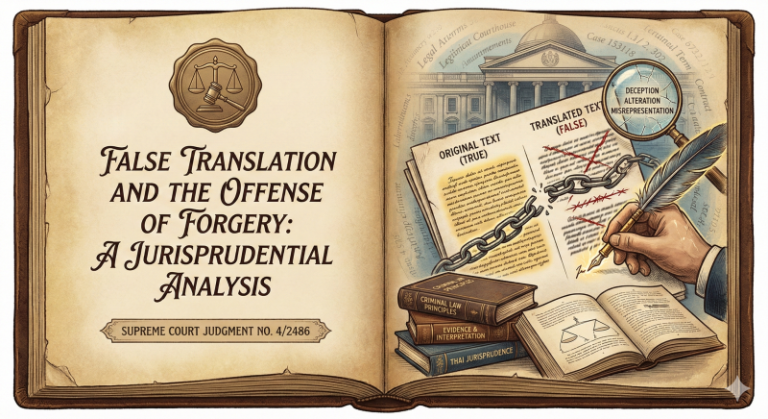
False Translation and the Offense of Forgery: A Jurisprudential Analysis of Supreme Court Judgment No. 4/2486
18 February 2026, Bangkok—This article examines the legal status of a “false translation” in relation to the criminal offense of forgery under Thai law, based on Supreme Court Judgment No. 4/2486 (1943). The court held that preparing a Thai translation containing false statements to accompany an English original does not constitute the offense of forgery. The central reasoning lies in the juridical nature of a translation as a “new document,” rather than an alteration or falsification of the original. However, a false translation may still give rise to other forms of criminal or civil liability, depending on the translator’s intent and the consequences of the act. This study highlights the doctrinal significance of strict statutory interpretation in criminal law and its implications for certified translators and multilingual legal documentation.
1. Introduction
In the Thai legal system, translated documents play a crucial role in cross-border transactions, judicial proceedings, and administrative processes. A recurring doctrinal question arises: if a translation contains false or distorted content, does such conduct amount to the criminal offense of forgery?
Supreme Court Judgment No. 4/2486 established the principle that preparing a Thai translation containing false statements to accompany an English original does not constitute forgery. This article analyzes the reasoning behind that ruling by examining the elements of forgery and the legal status of translations within criminal law theory.
2. Elements of the Offense of Forgery
Under the Thai Penal Code (1956), forgery generally requires:
- The making or alteration of a document;
- In a manner that renders it false; and
- With the intent to cause others to believe that it is genuine.
The offense is designed to protect the reliability and authenticity of documents as instruments of legal proof or evidence. If there is no alteration of the original document and no false attribution of authorship, the essential elements of forgery are not satisfied.
3. The Legal Status of a Translation
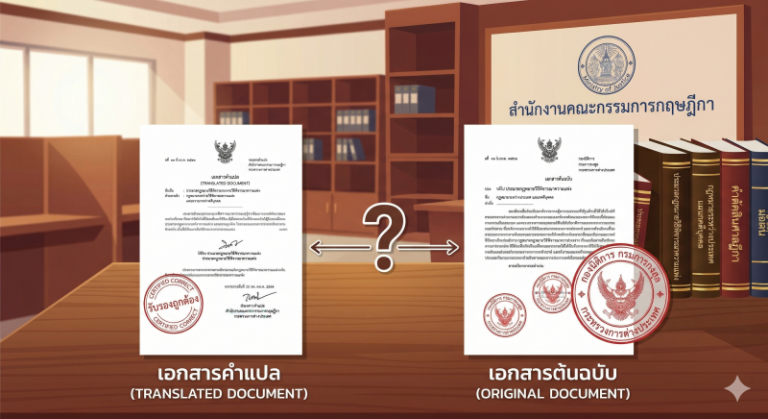
A translation is not the original document. Rather, it is a separate document created to convey the meaning of the original text in another language. Although it refers to and depends upon the original, it has an independent juridical existence.
Therefore, even if a translation inaccurately or deliberately misrepresents the original content, it does not alter or falsify the original document itself. The Supreme Court reasoned that since the original English document remained intact and unaltered, the act did not meet the statutory definition of forgery.
This reasoning is consistent with the principle of strict interpretation of criminal statutes, whereby criminal liability must be confined strictly to conduct that clearly satisfies the statutory elements (Saenguthai, 2019).
4. Potential Liability Arising from a False Translation
Although a false translation does not constitute forgery, it may give rise to other forms of liability, depending on intent (mens rea) and consequence. Possible offenses may include:
- Use of a false document;
- Making a false statement to a public official;
- Fraud, if the translation is used to deceive another person into suffering a loss;
- Civil liability in tort under Section 420 of the Civil and Commercial Code.
Thus, the legal analysis does not end with the rejection of forgery. The determining factors are the translator’s intent and the legal consequences resulting from the false content.
5. Implications for Certified Translators
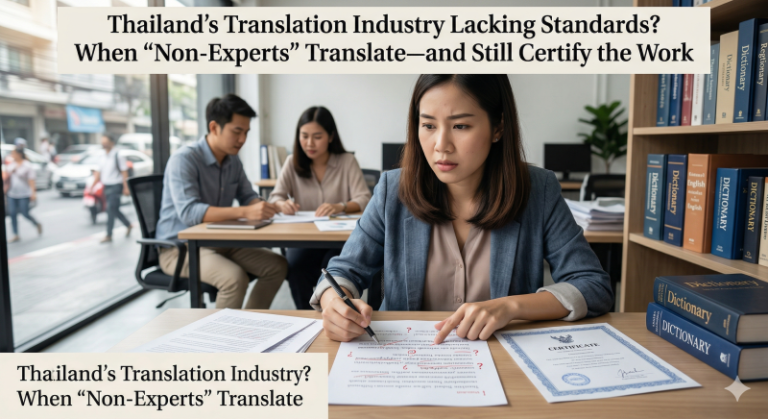
In contemporary practice, certified translations require the translator to formally attest that the translation is accurate and faithful to the original. Such certification creates direct professional and legal responsibility.
If a translator intentionally distorts material facts while certifying accuracy, the conduct may constitute other criminal offenses or, at minimum, civil liability and professional misconduct. Accordingly, even though a false translation is not automatically forgery, the duty of good faith and professional integrity remains fundamental.
6. Conclusion
Supreme Court Judgment No. 4/2486 establishes a significant doctrinal distinction: a false translation is not equivalent to forgery because it constitutes a separate document and does not alter the original. Nevertheless, such conduct may still attract criminal or civil liability depending on intent and resulting harm.
Understanding this distinction is essential both in criminal law theory and in practical legal translation, where multilingual documents often carry direct legal consequences. The boundary between linguistic error and legal wrongdoing lies not merely in textual inaccuracy, but in intention and legal effect.
References
- Civil and Commercial Code. (1925). Thailand.
- Penal Code. (1956). Thailand.
- Supreme Court of Thailand. (1943). Supreme Court Judgment No. 4/2486.
- Saenguthai, Y. (2019). Criminal Law: General Part. Bangkok: Thammasat University Press.
This section provides information about certified translators, translation certifiers, and certified interpreters associated with SEAProTI.
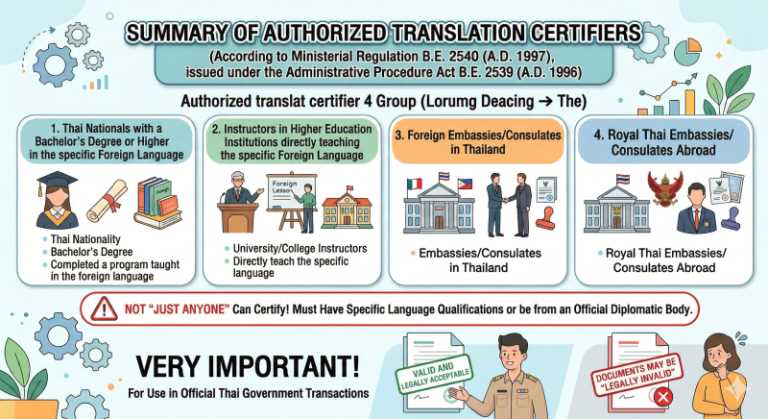
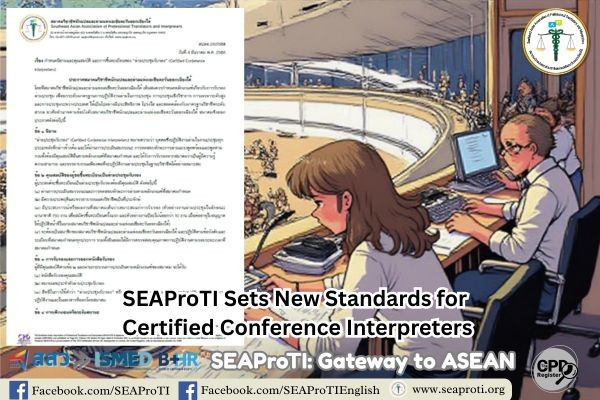
The Southeast Asian Association of Professional Translators and Interpreters (SEAProTI) has officially shared the qualifications and requirements for becoming Certified Translators, Translation Certification Providers, and Certified Interpreters in Sections 9 and 10 of the Royal Gazette, which was published by the Prime Minister’s Office in Thailand on July 25, 2024. Certified Translators, Translation Certification Providers, and Certified Interpreters
The Council of State has proposed the enactment of a Royal Decree, granting registered translators and recognised translation certifiers from professional associations or accredited language institutions the authority to provide legally valid translation certification (Letter to SEAProTI dated April 28, 2025)
SEAProTI is the first professional association in Thailand and Southeast Asia to implement a comprehensive certification system for translators, certifiers, and interpreters.
Head Office: Baan Ratchakru Building, No. 33, Room 402, Soi Phahonyothin 5, Phahonyothin Road, Phaya Thai District, Bangkok 10400, Thailand
Email: hello@seaproti.com | Tel.: (+66) 2-114-3128 (Office hours: Mon–Fri, 09:00–17:00)
คำแปลเท็จกับความผิดฐานปลอมหนังสือ: การวิเคราะห์เชิงนิติศาสตร์จากแนวคำพิพากษาศาลฎีกาที่ 4/2486
18 กุมภาพันธ์ 2569, กรุงเทพมหานคร – บทความนี้มุ่งวิเคราะห์ปัญหาข้อกฎหมายเกี่ยวกับสถานะของ “คำแปลที่มีข้อความอันเป็นเท็จ” ในความสัมพันธ์กับความผิดฐานปลอมหนังสือตามกฎหมายอาญาไทย โดยอาศัยแนวคำพิพากษาศาลฎีกาที่ 4/2486 เป็นฐานวิเคราะห์หลัก ศาลวินิจฉัยว่า การทำคำแปลภาษาไทยที่แสดงข้อความเท็จเพื่อประกอบต้นฉบับภาษาอังกฤษ ไม่เป็นความผิดฐานปลอมหนังสือ บทความเสนอว่า เหตุผลสำคัญอยู่ที่ลักษณะทางนิติกรรมของคำแปลซึ่งถือเป็น “เอกสารใหม่” มิใช่การแก้ไขหรือปลอมแปลงต้นฉบับ อย่างไรก็ดี การแปลอันเป็นเท็จอาจก่อให้เกิดความรับผิดฐานอื่น ทั้งทางอาญาและทางแพ่ง ขึ้นอยู่กับเจตนาและผลแห่งการกระทำ การศึกษานี้มีนัยสำคัญต่อมาตรฐานวิชาชีพนักแปลรับรองและการใช้เอกสารหลายภาษาในกระบวนการยุติธรรม
1. บทนำ
ในบริบทของระบบกฎหมายไทย เอกสารแปลมีบทบาทสำคัญในธุรกรรมข้ามภาษา การพิจารณาคดี และการติดต่อหน่วยงานรัฐ อย่างไรก็ตาม ปัญหาทางทฤษฎีที่เกิดขึ้นคือ หากคำแปลมีข้อความไม่ตรงกับต้นฉบับ หรือจงใจบิดเบือนสาระสำคัญ การกระทำนั้นจะเข้าข่าย “ปลอมหนังสือ” หรือไม่
แนวคำพิพากษาศาลฎีกาที่ 4/2486 ได้วางหลักว่า การทำคำแปลภาษาไทยที่มีข้อความเท็จเพื่อประกอบต้นฉบับภาษาอังกฤษ ไม่เป็นความผิดฐานปลอมหนังสือ หลักการดังกล่าวจึงควรได้รับการวิเคราะห์ในเชิงองค์ประกอบความผิดทางอาญา และในเชิงสถานะของคำแปลในระบบกฎหมาย
2. องค์ประกอบความผิดฐานปลอมหนังสือ
ความผิดฐานปลอมหนังสือในกฎหมายอาญาไทยมีแก่นสำคัญอยู่ที่ (1) การทำหรือแก้ไขเอกสาร (2) ให้ผิดไปจากความจริง และ (3) มีเจตนาให้ผู้อื่นหลงเชื่อว่าเป็นเอกสารแท้ (ประมวลกฎหมายอาญา, 2499)
การปลอมหนังสือจึงมุ่งคุ้มครอง “ความน่าเชื่อถือของเอกสาร” ในฐานะพยานหลักฐานหรือเครื่องแสดงสิทธิ หากไม่มีการแทรกแซงตัวต้นฉบับ หรือไม่มีการแอบอ้างแหล่งที่มา องค์ประกอบความผิดย่อมไม่ครบถ้วน
3. สถานะทางกฎหมายของคำแปล
คำแปลมิใช่ต้นฉบับ หากแต่เป็น “เอกสารใหม่” ที่จัดทำขึ้นเพื่อถ่ายทอดความหมายของเอกสารอีกฉบับหนึ่ง แม้เนื้อหาจะอ้างอิงถึงต้นฉบับ แต่ในเชิงนิติศาสตร์ คำแปลมีสถานะเป็นคนละเอกสาร
ดังนั้น การแปลข้อความให้ผิดไปจากต้นฉบับ มิได้เป็นการแก้ไขต้นฉบับโดยตรง และมิได้ทำให้ต้นฉบับสูญเสียความแท้จริง ศาลฎีกาจึงเห็นว่าไม่เข้าองค์ประกอบความผิดฐานปลอมหนังสือ
หลักคิดดังกล่าวสอดคล้องกับแนวทฤษฎีว่าด้วยการตีความองค์ประกอบความผิดทางอาญาอย่างเคร่งครัด (strict interpretation of criminal statutes) ซึ่งต้องตีความจำกัดเฉพาะกรณีที่เข้าองค์ประกอบโดยชัดแจ้ง (หยุด แสงอุทัย, 2562)
4. ความรับผิดที่อาจเกิดขึ้นจากคำแปลเท็จ
แม้ไม่เป็นปลอมหนังสือ แต่คำแปลที่มีข้อความอันเป็นเท็จอาจก่อให้เกิดความรับผิดในฐานะอื่น เช่น ความผิดฐานใช้เอกสารอันเป็นเท็จ ความผิดฐานแจ้งข้อความอันเป็นเท็จต่อเจ้าพนักงาน ความผิดฐานฉ้อโกง หากมีการหลอกลวงให้ผู้อื่นเสียทรัพย์ ความรับผิดทางแพ่งจากการกระทำละเมิด (ประมวลกฎหมายแพ่งและพาณิชย์, มาตรา 420)
ประเด็นสำคัญจึงอยู่ที่ “เจตนา” (mens rea) และ “ผลแห่งการกระทำ” มิใช่เพียงลักษณะของเอกสารเท่านั้น
5. นัยต่อมาตรฐานวิชาชีพนักแปลรับรอง
ในบริบทปัจจุบัน การแปลรับรอง (certified translation) กำหนดให้ผู้แปลลงนามรับรองความถูกต้องของคำแปล การรับรองดังกล่าวสร้างความรับผิดโดยตรงต่อผู้แปล หากมีการจงใจบิดเบือนสาระสำคัญ อาจเข้าข่ายความผิดฐานอื่น หรืออย่างน้อยย่อมก่อให้เกิดความรับผิดทางแพ่งและทางวิชาชีพ
ดังนั้น แม้คำแปลเท็จไม่เข้าองค์ประกอบปลอมหนังสือ แต่หลักความสุจริต (good faith) และความรับผิดชอบต่อสาธารณะยังคงเป็นหัวใจของวิชาชีพ
6. สรุป
แนวคำพิพากษาศาลฎีกาที่ 4/2486 วางหลักสำคัญว่า คำแปลเท็จไม่เท่ากับการปลอมหนังสือ เนื่องจากคำแปลมีสถานะเป็นเอกสารใหม่ มิใช่การแก้ไขหรือปลอมต้นฉบับ อย่างไรก็ตาม การกระทำดังกล่าวอาจก่อให้เกิดความผิดฐานอื่น ขึ้นอยู่กับเจตนาและผลทางกฎหมาย
การทำความเข้าใจเส้นแบ่งนี้มีความสำคัญทั้งในทางทฤษฎีกฎหมายอาญา และในทางปฏิบัติสำหรับผู้ประกอบวิชาชีพด้านการแปลและล่ามในบริบทของกระบวนการยุติธรรม
เอกสารอ้างอิง
- ประมวลกฎหมายอาญา. (2499). ราชกิจจานุเบกษา.
- ประมวลกฎหมายแพ่งและพาณิชย์. (2468). ราชกิจจานุเบกษา.
- ศาลฎีกา. (2486). คำพิพากษาศาลฎีกาที่ 4/2486.
- หยุด แสงอุทัย. (2562). กฎหมายอาญา ภาค 1. กรุงเทพมหานคร: สำนักพิมพ์มหาวิทยาลัยธรรมศาสตร์.
สำนักคณะกรรมการกฤษฎีกาเสนอให้ตราเป็นพระราชกฤษฎีกา โดยกำหนดให้นักแปลที่ขึ้นทะเบียน รวมถึงผู้รับรองการแปลจากสมาคมวิชาชีพหรือสถาบันสอนภาษาที่มีการอบรมและขึ้นทะเบียน สามารถรับรองคำแปลได้ (จดหมายถึงสมาคม SEAProTI ลงวันที่ 28 เม.ย. 2568)
สมาคมวิชาชีพนักแปลและล่ามแห่งเอเชียตะวันออกเฉียงใต้เป็นสมาคมวิชาชีพแห่งแรกและแห่งเดียวในประเทศไทยและภูมิภาคเอเชียตะวันออกเฉียงใต้ที่มีระบบรับรองนักแปลรับรอง ผู้รับรองการแปล และล่ามรับรอง
สำนักงานใหญ่: อาคารบ้านราชครู เลขที่ 33 ห้อง 402 ซอยพหลโยธิน 5 ถนนพหลโยธิน แขวงพญาไท เขตพญาไท กรุงเทพมหานคร 10400 ประเทศไทย
อีเมล: hello@seaproti.com โทรศัพท์: (+66) 2-114-3128 (เวลาทำการ: วันจันทร์–วันศุกร์ เวลา 09.00–17.00 น.