



Ego, Power, and Professional Standards: An Analysis of Coercive Behavior in the Interpreting Profession
17 February 2026, Bangkok—This article examines coercive uses of power within the interpreting profession, particularly in cases where practitioners with limited competence rely on symbolic status, seniority, or the role of “expert” to pressure others into accepting their abilities. The article argues that such phenomena should not be explained merely as matters of individual personality traits. Rather, they must be analyzed through the lenses of social psychology, identity theory, and organizational power structures. The analysis demonstrates that key contributing factors include the fragility of professional identity, the conflation of personal dignity with status, and the absence of systematic mechanisms for professional oversight and quality assurance.
The interpreting profession is grounded in fundamental principles of accuracy, neutrality, and accountability for the consequences of communication. Nevertheless, in certain contexts, practitioners with insufficient competence may resort to power-based mechanisms to shield themselves from scrutiny. Intimidation, undermining the credibility of colleagues, and invoking seniority to silence critique are not merely matters of professional etiquette; they raise ethical concerns and structural power issues that directly affect professional standards.
Understanding this phenomenon requires an analytical framework that connects ego, identity, and power within organizational settings.
Defensive Ego and Status-Based Aggression
Baumeister, Smart, and Boden (1996) argue that much aggression does not stem from low self-esteem but from “defensive high self-esteem,” a condition in which individuals maintain an inflated yet fragile self-image. When confronted with criticism, such individuals may respond with hostility or coercion in order to protect their threatened identity.
Within the interpreting profession, when individuals anchor their self-worth to an image of expertise or to the symbolic role of “teacher,” questioning the quality of their performance may be interpreted as an attack on personal dignity rather than as a legitimate professional evaluation. The exertion of power over others thus functions as a defensive mechanism to preserve identity.
Social Identity and the Protection of Status
Social Identity Theory, as developed by Tajfel and Turner (1979), explains that individuals derive self-esteem from their membership in social groups and professional roles. The identity of “expert” or “instructor” may become central to one’s self-concept and therefore must be defended. When that status is challenged, individuals may react by diminishing others or asserting hierarchical authority to maintain their relative position.
This phenomenon is not confined to any particular age group. Although such behavior may be observed among some senior practitioners or, conversely, among newer entrants who construct strong expert identities early in their careers, age-based generalizations lack empirical support. More significant factors include the stability of professional identity and whether organizational culture encourages or discourages critical evaluation and peer review.
Organizational Power Structures and the Use of Authority
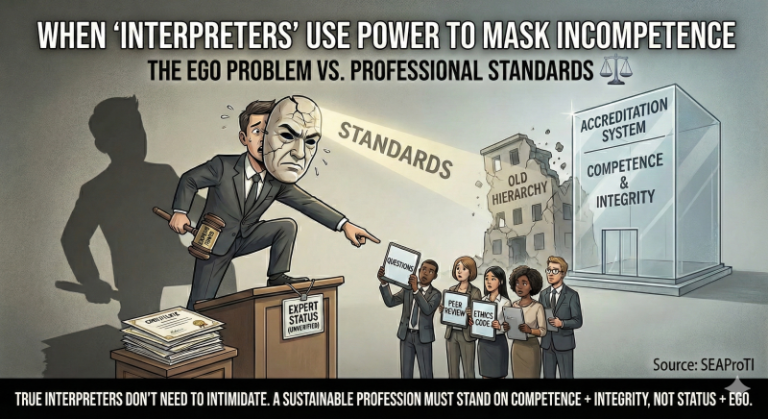
French and Raven (1959) identified multiple bases of social power, including legitimate power (derived from formal position), expert power (derived from perceived knowledge), and coercive power (derived from the ability to punish or intimidate). In contexts lacking accreditation systems or external evaluation, claims to expert power may go unchecked. Over time, such claims may evolve into coercive power when scrutiny emerges.
Einarsen, Hoel, Zapf, and Cooper (2011) demonstrate that workplace bullying often flourishes in environments characterized by limited transparency and weak complaint mechanisms. Hofstede (2001) further explains that in cultures with high power distance, questioning individuals in higher-status positions is socially discouraged. Under such conditions, coercive behavior can persist with minimal resistance.
Implications for Professional Standards and Systemic Risk
Interpreting is intrinsically linked to communication risk management. Pym (2012) argues that translator and interpreter ethics must be grounded in awareness of consequences and responsibility for potential errors. When practitioners block quality control mechanisms, risks increase for both organizations and service recipients.
Coercive behavior not only diminishes quality but also erodes a culture of learning. It discourages colleagues from offering corrective feedback and replaces competence-based standards with status-based hierarchies. In the long term, this dynamic threatens the credibility of the profession as a whole.
Conclusion
Coercive uses of power within the interpreting profession should be understood as structural issues involving ego, identity, and organizational authority rather than as isolated personality flaws. Addressing the problem requires the establishment of governance systems grounded in verifiable standards, the promotion of peer review cultures, and the clear separation of personal identity from performance evaluation.
A sustainable profession must rest on demonstrable competence and integrity—not on authority that goes unquestioned.
References
- Baumeister, R. F., Smart, L., & Boden, J. M. (1996). Relation of threatened egotism to violence and aggression: The dark side of high self-esteem. Psychological Review, 103(1), 5–33. https://doi.org/10.1037/0033-295X.103.1.5
- Einarsen, S., Hoel, H., Zapf, D., & Cooper, C. L. (2011). Bullying and harassment in the workplace: Developments in theory, research, and practice (2nd ed.). CRC Press.
- French, J. R. P., & Raven, B. (1959). The bases of social power. In D. Cartwright (Ed.), Studies in social power (pp. 150–167). University of Michigan Press.
- Hofstede, G. (2001). Culture’s consequences: Comparing values, behaviors, institutions and organizations across nations (2nd ed.). Sage.
- Pym, A. (2012). On translator ethics: Principles for mediation between cultures. John Benjamins.
- Tajfel, H., & Turner, J. C. (1979). An integrative theory of intergroup conflict. In W. G. Austin & S. Worchel (Eds.), The social psychology of intergroup relations (pp. 33–47). Brooks/Cole.
This section provides information about certified translators, translation certifiers, and certified interpreters associated with SEAProTI.
The Southeast Asian Association of Professional Translators and Interpreters (SEAProTI) has officially shared the qualifications and requirements for becoming Certified Translators, Translation Certification Providers, and Certified Interpreters in Sections 9 and 10 of the Royal Gazette, which was published by the Prime Minister’s Office in Thailand on July 25, 2024. Certified Translators, Translation Certification Providers, and Certified Interpreters
The Council of State has proposed the enactment of a Royal Decree, granting registered translators and recognised translation certifiers from professional associations or accredited language institutions the authority to provide legally valid translation certification (Letter to SEAProTI dated April 28, 2025)
SEAProTI is the first professional association in Thailand and Southeast Asia to implement a comprehensive certification system for translators, certifiers, and interpreters.
Head Office: Baan Ratchakru Building, No. 33, Room 402, Soi Phahonyothin 5, Phahonyothin Road, Phaya Thai District, Bangkok 10400, Thailand
Email: hello@seaproti.com | Tel.: (+66) 2-114-3128 (Office hours: Mon–Fri, 09:00–17:00)
อัตตา อำนาจ และมาตรฐานวิชาชีพ: การวิเคราะห์พฤติกรรมข่มขู่ในบริบทวิชาชีพล่าม
17 กุมภาพันธ์ 2569, กรุงเทพมหานคร – บทความนี้มุ่งวิเคราะห์พฤติกรรมการใช้อำนาจเชิงข่มขู่ในบริบทวิชาชีพล่าม โดยเฉพาะกรณีที่ผู้ปฏิบัติงานมีข้อจำกัดด้านทักษะ แต่ใช้สถานะเชิงสัญลักษณ์ ความอาวุโส หรือบทบาทความเป็น “ผู้รู้” เพื่อกดดันผู้อื่นให้ยอมรับความสามารถของตน บทความเสนอว่าปรากฏการณ์ดังกล่าวไม่ควรถูกอธิบายในเชิงลักษณะนิสัยส่วนบุคคลเพียงอย่างเดียว หากแต่ต้องวิเคราะห์ผ่านกรอบจิตวิทยาสังคม ทฤษฎีอัตลักษณ์ และโครงสร้างอำนาจในองค์กร ผลการวิเคราะห์ชี้ให้เห็นว่าปัจจัยสำคัญอยู่ที่ความเปราะบางของอัตลักษณ์วิชาชีพ การผูกศักดิ์ศรีตนเองกับสถานะ และการขาดกลไกกำกับดูแลมาตรฐานอย่างเป็นระบบ
วิชาชีพล่ามตั้งอยู่บนหลักการพื้นฐานด้านความแม่นยำ ความเป็นกลาง และความรับผิดชอบต่อผลกระทบของการสื่อสาร อย่างไรก็ตาม ในบางบริบทกลับพบพฤติกรรมที่ผู้ปฏิบัติงานซึ่งมีข้อจำกัดด้านทักษะเลือกใช้กลไกเชิงอำนาจเพื่อป้องกันการถูกตั้งคำถาม การข่มขู่ การลดทอนความน่าเชื่อถือของผู้อื่น หรือการใช้อาวุโสกดทับเสียงวิพากษ์ จึงมิใช่เพียงปัญหามารยาทวิชาชีพ หากแต่เป็นประเด็นด้านจริยธรรมและโครงสร้างอำนาจที่กระทบต่อมาตรฐานวิชาชีพโดยตรง
การทำความเข้าใจปรากฏการณ์นี้จำเป็นต้องวิเคราะห์ผ่านกรอบทฤษฎีที่เชื่อมโยงอัตตา อัตลักษณ์ และอำนาจในบริบทองค์กร
อัตตาเชิงป้องกันและความก้าวร้าวเชิงสถานะ
Baumeister, Smart และ Boden (1996) เสนอว่า ความก้าวร้าวจำนวนมากมิได้เกิดจากการขาดความมั่นใจ แต่เกิดจาก “self-esteem เชิงป้องกัน” ซึ่งเป็นภาวะที่บุคคลมีภาพลักษณ์ตนเองสูงแต่เปราะบางภายใน เมื่อเผชิญคำวิจารณ์ บุคคลดังกล่าวอาจตอบสนองด้วยความก้าวร้าวหรือการข่มขู่เพื่อปกป้องอัตลักษณ์ของตน
ในบริบทวิชาชีพล่าม เมื่อบุคคลผูกคุณค่าในตนเองกับภาพลักษณ์ความเชี่ยวชาญหรือบทบาทความเป็น “ครู” การตั้งคำถามต่อคุณภาพงานอาจถูกตีความว่าเป็นการคุกคามศักดิ์ศรีส่วนบุคคล มากกว่าจะเป็นกระบวนการประเมินเชิงวิชาชีพ ปฏิกิริยาการใช้อำนาจกดดันผู้อื่นจึงทำหน้าที่เป็นกลไกป้องกันอัตลักษณ์
อัตลักษณ์ทางสังคมและการปกป้องสถานะ
ทฤษฎี Social Identity Theory ของ Tajfel และ Turner (1979) อธิบายว่าบุคคลมักสร้างคุณค่าในตนเองผ่านการสังกัดกลุ่มหรือบทบาททางสังคม การเป็น “ผู้เชี่ยวชาญ” หรือ “ผู้สอน” อาจกลายเป็นส่วนหนึ่งของอัตลักษณ์ที่ต้องได้รับการปกป้อง เมื่อสถานะดังกล่าวถูกท้าทาย บุคคลอาจตอบสนองด้วยการลดทอนผู้อื่นหรือใช้อำนาจเชิงสถานะเพื่อคงไว้ซึ่งลำดับชั้น
ปรากฏการณ์นี้มิได้จำกัดอยู่ในช่วงอายุใดช่วงอายุหนึ่ง แม้บางกรณีจะพบในผู้ที่มีอายุงานมาก หรือผู้ที่เพิ่งเข้าสู่วงการแต่สร้างภาพลักษณ์ความเป็นผู้รู้ การเหมารวมตามวัยจึงไม่มีฐานทางวิชาการรองรับ ปัจจัยที่มีน้ำหนักมากกว่าคือความมั่นคงของอัตลักษณ์วิชาชีพและวัฒนธรรมองค์กรที่เอื้อหรือไม่เอื้อต่อการตรวจสอบ
โครงสร้างอำนาจในองค์กรและการใช้พลังอำนาจ
French และ Raven (1959) จำแนกฐานอำนาจออกเป็นหลายประเภท ได้แก่ อำนาจจากตำแหน่ง (legitimate power) อำนาจจากความเชี่ยวชาญ (expert power) และอำนาจจากการข่มขู่ (coercive power) ในบริบทที่ไม่มีระบบรับรองมาตรฐานหรือการประเมินภายนอก อำนาจจากความเชี่ยวชาญอาจถูกอ้างโดยปราศจากกลไกตรวจสอบ และค่อย ๆ เปลี่ยนรูปเป็นอำนาจเชิงข่มขู่เมื่อมีผู้ตั้งคำถาม
Einarsen, Hoel, Zapf และ Cooper (2011) ชี้ว่าพฤติกรรมกลั่นแกล้งในที่ทำงานมักเกิดในสภาพแวดล้อมที่ขาดความโปร่งใสและกลไกรับเรื่องร้องเรียนที่มีประสิทธิภาพ ขณะเดียวกัน Hofstede (2001) อธิบายว่า วัฒนธรรมที่มี power distance สูงจะทำให้การตั้งคำถามต่อผู้มีสถานะสูงกว่าเกิดขึ้นได้ยาก ส่งผลให้พฤติกรรมเชิงอำนาจดำรงอยู่ได้ยาวนาน
ผลกระทบต่อมาตรฐานวิชาชีพและความเสี่ยงเชิงระบบ
งานล่ามเกี่ยวข้องโดยตรงกับการบริหารความเสี่ยงด้านการสื่อสาร Pym (2012) เสนอว่าจริยธรรมของนักแปลและล่ามควรตั้งอยู่บนการตระหนักถึงผลกระทบและความรับผิดชอบต่อความคลาดเคลื่อน หากบุคคลปิดกั้นการตรวจสอบคุณภาพงาน ความเสี่ยงจะเพิ่มขึ้นทั้งต่อองค์กรและผู้รับบริการ
พฤติกรรมข่มขู่ไม่เพียงลดคุณภาพงาน หากยังบั่นทอนวัฒนธรรมการเรียนรู้ ทำให้ทีมงานไม่กล้าเสนอข้อแก้ไข และสร้างมาตรฐานที่ตั้งอยู่บนสถานะมากกว่าความสามารถที่พิสูจน์ได้ ในระยะยาว สิ่งนี้อาจทำลายความน่าเชื่อถือของวิชาชีพโดยรวม
บทสรุป
พฤติกรรมการใช้อำนาจข่มขู่ในวิชาชีพล่ามควรถูกมองว่าเป็นปัญหาเชิงโครงสร้างที่เชื่อมโยงกับอัตตา อัตลักษณ์ และฐานอำนาจในองค์กร มากกว่าจะเป็นลักษณะนิสัยเฉพาะบุคคล การแก้ไขจำเป็นต้องสร้างระบบกำกับดูแลที่ตั้งอยู่บนมาตรฐานที่ตรวจสอบได้ ส่งเสริมวัฒนธรรม peer review และแยกคุณค่าของบุคคลออกจากการประเมินผลงาน
วิชาชีพที่ยั่งยืนต้องตั้งอยู่บน competence และ integrity ที่สามารถตรวจสอบได้ มิใช่อำนาจที่ไม่มีใครกล้าตั้งคำถาม
- Baumeister, R. F., Smart, L., & Boden, J. M. (1996). Relation of threatened egotism to violence and aggression: The dark side of high self-esteem. Psychological Review, 103(1), 5–33. https://doi.org/10.1037/0033-295X.103.1.5
- Einarsen, S., Hoel, H., Zapf, D., & Cooper, C. L. (2011). Bullying and harassment in the workplace: Developments in theory, research, and practice (2nd ed.). CRC Press.
- French, J. R. P., & Raven, B. (1959). The bases of social power. In D. Cartwright (Ed.), Studies in social power (pp. 150–167). University of Michigan Press.
- Hofstede, G. (2001). Culture’s consequences: Comparing values, behaviors, institutions and organizations across nations (2nd ed.). Sage.
- Pym, A. (2012). On translator ethics: Principles for mediation between cultures. John Benjamins.
- Tajfel, H., & Turner, J. C. (1979). An integrative theory of intergroup conflict. In W. G. Austin & S. Worchel (Eds.), The social psychology of intergroup relations (pp. 33–47). Brooks/Cole.
สมาคมวิชาชีพนักแปลและล่ามแห่งเอเชียตะวันออกเฉียงใต้ (SEAProTI) ได้ประกาศหลักเกณฑ์และคุณสมบัติของผู้ที่ขึ้นทะเบียนเป็น “นักแปลรับรอง (Certified Translators) และผู้รับรองการแปล (Translation Certification Providers) และล่ามรับรอง (Certified Interpreters)” ของสมาคม หมวดที่ 9 และหมวดที่ 10 ในราชกิจจานุเบกษา ของสำนักเลขาธิการคณะรัฐมนตรี ในสำนักนายกรัฐมนตรี แห่งราชอาณาจักรไทย ลงวันที่ 25 ก.ค. 2567 เล่มที่ 141 ตอนที่ 66 ง หน้า 100 อ่านฉบับเต็มได้ที่: นักแปลรับรอง ผู้รับรองการแปล และล่ามรับรอง
สำนักคณะกรรมการกฤษฎีกาเสนอให้ตราเป็นพระราชกฤษฎีกา โดยกำหนดให้นักแปลที่ขึ้นทะเบียน รวมถึงผู้รับรองการแปลจากสมาคมวิชาชีพหรือสถาบันสอนภาษาที่มีการอบรมและขึ้นทะเบียน สามารถรับรองคำแปลได้ (จดหมายถึงสมาคม SEAProTI ลงวันที่ 28 เม.ย. 2568)
สมาคมวิชาชีพนักแปลและล่ามแห่งเอเชียตะวันออกเฉียงใต้เป็นสมาคมวิชาชีพแห่งแรกและแห่งเดียวในประเทศไทยและภูมิภาคเอเชียตะวันออกเฉียงใต้ที่มีระบบรับรองนักแปลรับรอง ผู้รับรองการแปล และล่ามรับรอง
สำนักงานใหญ่: อาคารบ้านราชครู เลขที่ 33 ห้อง 402 ซอยพหลโยธิน 5 ถนนพหลโยธิน แขวงพญาไท เขตพญาไท กรุงเทพมหานคร 10400 ประเทศไทย
อีเมล: hello@seaproti.com โทรศัพท์: (+66) 2-114-3128 (เวลาทำการ: วันจันทร์–วันศุกร์ เวลา 09.00–17.00 น.