


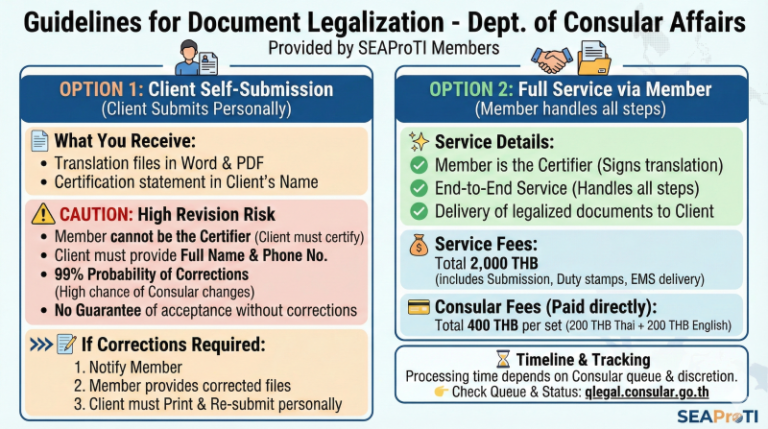
Why Translated Documents Often Require Revisions During the Legalisation Process
When submitting translated documents for legalisation to the Department of Legalisation, Ministry of Foreign Affairs, many clients are understandably puzzled as to why a translation that has already been checked for accuracy is still requested to undergo further revisions. This misunderstanding is common, as many people assume that legalisation is merely a linguistic verification of the translation. When revisions are requested, it is therefore often assumed—incorrectly—that the issue lies with the translator.
In reality, document legalisation is not a linguistic process. It is an administrative procedure governed by official regulations, internal guidelines, and the discretionary authority of the relevant government agency. The review conducted by officers of the Department of Legalisation extends beyond the correctness of wording and includes the document’s format, consistency between the source text and the translation, spelling of personal names, data presentation, use of formal and official language, and the ability to clearly establish traceability between the translated document and the original.
Accordingly, when a translated document is requested to be revised during the legalisation stage, this does not indicate a linguistic error or a lack of professionalism on the part of the translator or the certified translation provider. Rather, it reflects the need to align the document with the specific requirements and administrative standards of the certifying authority, which may differ from general translation principles or from practices applied to other types of documents.
Another factor that frequently necessitates revisions is changes in the internal review practices of government agencies. Such practices may be adjusted in response to policy shifts or internal directives without prior public notice. As a result, a document type that was successfully legalised in the past may later be subject to revision requests when resubmitted, even if the document itself remains essentially the same.
For this reason, the Southeast Asian Association of Professional Translators and Interpreters considers it essential to provide this explanation as a standard reference for its members when advising clients. Members should clarify that revisions requested during the legalisation process are a normal part of administrative procedures, do not constitute deficiencies in the translation itself, and do not affect the substantive content of the document.
Clear and transparent communication with clients from the outset helps prevent misunderstandings and fosters confidence in the work of certified translators and translation certifiers. Members are therefore encouraged to inform clients in advance that revision requests may occur and that such requests are a routine aspect of the legalisation process, intended to ensure that documents can be legally recognised and used abroad without complications.
Conclusion
Revisions to translated documents during the legalisation process are not indicative of translation errors, but rather the result of administrative review conducted in accordance with governmental regulations, practices, and discretion. Explaining the nature of this process to clients from the beginning helps reduce confusion and concern, facilitates smoother legalisation procedures, and ultimately protects the client’s interests by ensuring that the documents are legally valid and fully usable in all relevant jurisdictions.
About Certified Translators, Translation Certifiers, and Certified Interpreters of SEAProTI
The Southeast Asian Association of Professional Translators and Interpreters (SEAProTI) has formally announced the qualifications and requirements for registration of Certified Translators, Translation Certification Providers, and Certified Interpreters in Sections 9 and 10 of the Royal Gazette, published by the Secretariat of the Cabinet, Office of the Prime Minister of Thailand, on 25 July 2024 (Vol. 141, Part 66 Ng, p. 100). Certified Translators, Translation Certification Providers, and Certified Interpreters
The Council of State has proposed the enactment of a Royal Decree, granting registered translators and recognized translation certifiers from professional associations or accredited language institutions the authority to provide legally valid translation certification (Letter to SEAProTI dated April 28, 2025)
SEAProTI is the first professional association in Thailand and Southeast Asia to implement a comprehensive certification system for translators, certifiers, and interpreters.
Head Office: Baan Ratchakru Building, No. 33, Room 402, Soi Phahonyothin 5, Phahonyothin Road, Phaya Thai District, Bangkok 10400, Thailand
Email: hello@seaproti.com | Tel.: (+66) 2-114-3128 (Office hours: Mon–Fri, 09:00–17:00)
ทำไมเอกสารแปลจึงต้องมีการแก้ไขในขั้นตอนการนิติกรณ์
ในการยื่นขอรับรองนิติกรณ์เอกสารแปล ณ กองนิติกรณ์เอกสารและสัญชาติ กระทรวงการต่างประเทศ ลูกค้าจำนวนไม่น้อยมักเกิดข้อสงสัยว่าเหตุใดเอกสารแปลที่ผ่านการตรวจสอบความถูกต้องแล้วจึงยังถูกขอให้แก้ไขเพิ่มเติม ความเข้าใจคลาดเคลื่อนในประเด็นนี้เป็นเรื่องที่พบได้ทั่วไป เนื่องจากหลายคนมองว่าการนิติกรณ์เป็นเพียงการตรวจสอบความถูกต้องของการแปลในเชิงภาษา และเมื่อมีการขอแก้ไขจึงเข้าใจไปว่าเป็นความผิดพลาดของนักแปล
ในความเป็นจริง การนิติกรณ์เอกสารไม่ใช่กระบวนการทางภาษา หากแต่เป็นกระบวนการทางปกครองที่อยู่ภายใต้ระเบียบ แนวปฏิบัติ และดุลพินิจของหน่วยงานราชการ การพิจารณาของเจ้าหน้าที่กองนิติกรณ์เอกสารและสัญชาติจึงครอบคลุมมากกว่าความถูกต้องของถ้อยคำ โดยรวมถึงรูปแบบเอกสาร ความสอดคล้องระหว่างต้นฉบับกับคำแปล การสะกดชื่อบุคคล การจัดวางข้อมูล การใช้ถ้อยคำทางการ ตลอดจนความสามารถในการเชื่อมโยงและตรวจสอบย้อนกลับกับเอกสารต้นฉบับได้อย่างชัดเจน
ดังนั้น การที่เอกสารแปลถูกขอให้แก้ไขในขั้นตอนนิติกรณ์จึงมิได้หมายความว่าการแปลมีความผิดพลาดในเชิงภาษา หรือสะท้อนถึงความไม่เป็นมืออาชีพของนักแปลหรือผู้รับรองการแปล หากแต่เป็นผลจากการปรับเอกสารให้เป็นไปตามข้อกำหนดเฉพาะของหน่วยงานผู้รับรอง ซึ่งอาจแตกต่างจากหลักการแปลทั่วไปหรือแนวปฏิบัติที่ใช้กับเอกสารประเภทอื่น
อีกปัจจัยหนึ่งที่มักทำให้เกิดการขอแก้ไขเอกสาร คือการเปลี่ยนแปลงแนวทางการตรวจพิจารณาของหน่วยงานราชการ แนวปฏิบัติเหล่านี้อาจมีการปรับเปลี่ยนตามนโยบายหรือข้อสั่งการภายใน โดยไม่จำเป็นต้องมีการประกาศล่วงหน้า ส่งผลให้เอกสารแปลที่เคยผ่านการรับรองมาแล้วในอดีต อาจถูกขอให้แก้ไขเมื่อยื่นใหม่ในช่วงเวลาต่อมา แม้จะเป็นเอกสารประเภทเดียวกันก็ตาม
สมาคมวิชาชีพนักแปลและล่ามแห่งเอเชียตะวันออกเฉียงใต้จึงเห็นความจำเป็นในการจัดทำคำอธิบายนี้ เพื่อให้สมาชิกใช้เป็นแนวทางในการชี้แจงแก่ลูกค้าอย่างเป็นระบบและเป็นมาตรฐานเดียวกัน โดยควรอธิบายให้ลูกค้าเข้าใจว่า การแก้ไขเอกสารในขั้นตอนนิติกรณ์เป็นส่วนหนึ่งของกระบวนการทางราชการ มิใช่ความบกพร่องของนักแปลหรือผู้รับรองการแปล และมิได้กระทบต่อสาระสำคัญของเอกสารแต่อย่างใด
การสื่อสารกับลูกค้าอย่างตรงไปตรงมาตั้งแต่ก่อนเริ่มกระบวนการ จะช่วยลดความเข้าใจผิดและสร้างความเชื่อมั่นต่อการทำงานของนักแปลรับรองและผู้รับรองการแปลได้อย่างมีประสิทธิภาพ สมาชิกควรชี้แจงให้ลูกค้าทราบล่วงหน้าว่า การขอแก้ไขเอกสารเป็นสิ่งที่อาจเกิดขึ้นได้เสมอในกระบวนการนิติกรณ์ และเป็นขั้นตอนปกติที่มีวัตถุประสงค์เพื่อให้เอกสารสามารถผ่านการรับรองและนำไปใช้ในต่างประเทศได้อย่างถูกต้องตามกฎหมาย
สรุป
การแก้ไขเอกสารแปลในขั้นตอนการนิติกรณ์ไม่ใช่ข้อผิดพลาดของการแปล แต่เป็นผลจากการตรวจพิจารณาตามระเบียบ แนวปฏิบัติ และดุลพินิจของหน่วยงานราชการ การชี้แจงให้ลูกค้าเข้าใจถึงลักษณะของกระบวนการนี้ตั้งแต่ต้น จะช่วยลดความสับสน ความกังวล และทำให้กระบวนการนิติกรณ์ดำเนินไปอย่างราบรื่น ทั้งยังเป็นการคุ้มครองผลประโยชน์ของลูกค้าเอง เพื่อให้เอกสารสามารถใช้งานได้อย่างสมบูรณ์ในทางกฎหมายในทุกประเทศที่เกี่ยวข้อง
เกี่ยวกับนักแปลรับรอง ผู้รับรองการแปล และล่ามรับรองของสมาคมวิชาชีพนักแปลและล่ามแห่งเอเชียตะวันออกเฉียงใต้
สมาคมวิชาชีพนักแปลและล่ามแห่งเอเชียตะวันออกเฉียงใต้ (SEAProTI) ได้ประกาศหลักเกณฑ์และคุณสมบัติผู้ที่ขึ้นทะเบียนเป็น “นักแปลรับรอง (Certified Translators) และผู้รับรองการแปล (Translation Certification Providers) และล่ามรับรอง (Certified Interpreters)” ของสมาคม หมวดที่ 9 และหมวดที่ 10 ในราชกิจจานุเบกษา ของสำนักเลขาธิการคณะรัฐมนตรี ในสำนักนายกรัฐมนตรี แห่งราชอาณาจักรไทย ลงวันที่ 25 ก.ค. 2567 เล่มที่ 141 ตอนที่ 66 ง หน้า 100 อ่านฉบับเต็มได้ที่: นักแปลรับรอง ผู้รับรองการแปล และล่ามรับรอง
สำนักคณะกรรมการกฤษฎีกาเสนอให้ตราเป็นพระราชกฤษฎีกา โดยกำหนดให้นักแปลที่ขึ้นทะเบียน รวมถึงผู้รับรองการแปลจากสมาคมวิชาชีพหรือสถาบันสอนภาษาที่มีการอบรมและขึ้นทะเบียน สามารถรับรองคำแปลได้ (จดหมายถึงสมาคม SEAProTI ลงวันที่ 28 เม.ย. 2568)
สมาคมวิชาชีพนักแปลและล่ามแห่งเอเชียตะวันออกเฉียงใต้ เป็นสมาคมวิชาชีพแห่งแรกในประเทศไทยและภูมิภาคเอเชียตะวันออกเฉียงใต้ที่มีระบบรับรองนักแปลรับรอง ผู้รับรองการแปล และล่ามรับรอง
สำนักงานใหญ่: อาคารบ้านราชครู เลขที่ 33 ห้อง 402 ซอยพหลโยธิน 5 ถนนพหลโยธิน แขวงพญาไท เขตพญาไท กรุงเทพมหานคร 10400 ประเทศไทย
อีเมล: hello@seaproti.com โทรศัพท์: (+66) 2-114-3128 (เวลาทำการ: วันจันทร์–วันศุกร์ เวลา 09.00–17.00 น.