



Thailand’s Accession to the Apostille Convention: Legal Principles, Institutional Mechanisms, and Implications for Business and Civil Society
18 December 2025, Bangkok – The cross-border use of official documents constitutes a fundamental mechanism facilitating international mobility in education, employment, and economic activity. Traditionally, such documents have been subject to a chain legalisation process, requiring authentication by multiple authorities in both the issuing and receiving states. This system is widely regarded as time-consuming, costly, and procedurally complex.
The Convention Abolishing the Requirement of Legalisation for Foreign Public Documents (1961) commonly known as the Apostille Convention was adopted to address these shortcomings. The Convention has since become an international standard, with a broad and expanding membership among states.
This article examines the legal foundations and operational mechanisms of the Apostille Convention, the role of competent authorities, the scope of public documents covered, and the anticipated impacts of Thailand’s accession on business operations and civil society. It further situates Thailand’s accession within the broader context of international legal harmonisation and economic diplomacy.
Legal Principles and Objectives of the Apostille Convention
The Apostille Convention is an international treaty adopted under the auspices of the Hague Conference on Private International Law (HCCH). Its principal objective is the elimination of multi-layered legalisation requirements traditionally imposed on foreign public documents.
Under the Convention, a public document issued in one Contracting State, once certified by an Apostille issued by the competent authority of the issuing state, must be accepted in all other Contracting States without further authentication by embassies or consular authorities. This mechanism substantially reduces procedural barriers, administrative burdens, and associated costs in international document use.
Competent Authority and Institutional Responsibilities
In Thailand, the Department of Consular Affairs, Ministry of Foreign Affairs, has been designated as the Competent Authority under the Apostille Convention. Its principal responsibilities include:
- Verifying the authenticity of signatures, official capacity, and seals or stamps appearing on public documents;
- Issuing Apostille certificates; and
- Maintaining records of Apostille issuance for verification and traceability purposes.
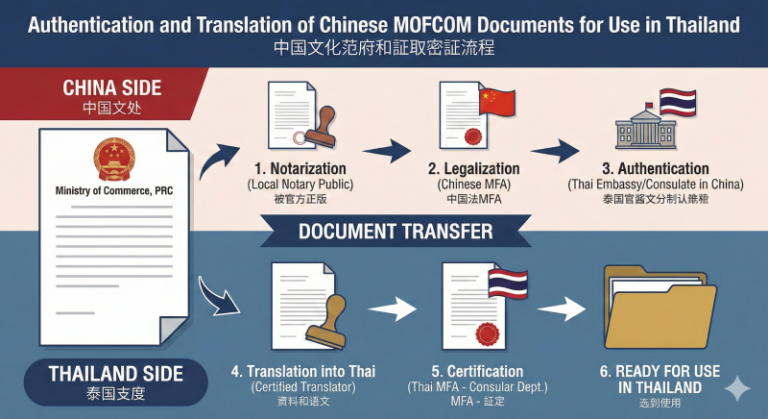
It is crucial to note that an Apostille certifies only the authenticity of the signature, seal, or stamp affixed to a document. It does not attest to the substantive accuracy of the document’s content, nor does it extend to the certification of translations. The acceptance of translated documents remains subject to the legal requirements of the receiving state.
Scope of Public Documents under the Apostille Convention
The Convention applies exclusively to public documents, which generally include:
(1) Documents issued by courts or judicial officers;
(2) Administrative documents such as birth certificates, household registrations, and death certificates;
(3) Notarial acts; and
(4) Official certificates attached to private documents, such as certifications of registration or authentication of signatures.
The classification of a document as “public” is determined by the law and practice of the issuing Contracting State. Importantly, even if a document is not considered a public document under the law of the receiving state, the Apostille remains legally valid once issued in accordance with the Convention.
Structure and Content of the Apostille Certificate
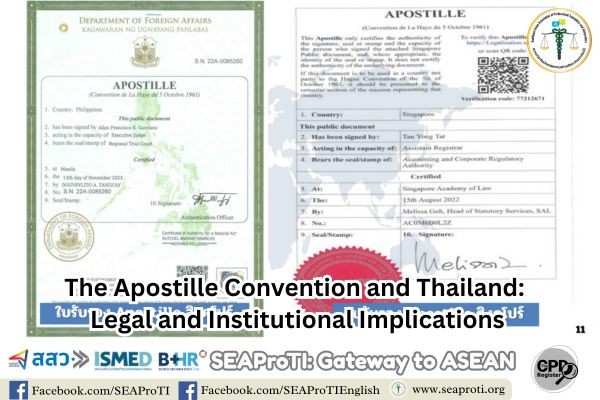
While the physical design of Apostille certificates may vary among Contracting States, the Convention mandates the inclusion of ten standardised data elements: the issuing country, the signatory, the signatory’s capacity, the seal or stamp, the place of issuance, the date, the issuing authority, the reference number, the official seal or stamp, and the signature. These uniform elements ensure international recognisability and legal certainty.
Implications for Business and Civil Society
Thailand’s accession to the Apostille Convention is expected to generate significant benefits for multiple stakeholder groups, including students pursuing education abroad, individuals seeking overseas employment, and businesses engaged in cross-border transactions. Documents commonly used in international commerce such as certificates of incorporation, certificates of origin, and certificates of free sale will be processed more efficiently, thereby accelerating commercial operations and reducing transaction costs.
At the macroeconomic level, accession aligns with Thailand’s proactive economic diplomacy strategy. The Apostille system enhances transparency, reduces documentary disputes, strengthens confidence among international partners, and harmonises Thailand’s document authentication practices with global standards.
Nevertheless, certain challenges must be acknowledged. These include potential reductions in government revenue derived from legalisation fees, the need for investment in administrative and technological infrastructure, and transitional uncertainty among domestic agencies regarding the acceptance of foreign documents. Despite these concerns, the overall benefits to the public and the private sector substantially outweigh the anticipated drawbacks.
Thailand’s Accession Status
Thailand has been a member of the HCCH since 2021 and has subsequently established national and sub-national mechanisms to assess readiness for accession to the Apostille Convention. Following extensive institutional preparation, the Thai Cabinet approved accession in December 2025.
The next procedural step involves the deposit of the instrument of accession with the Government of the Netherlands, the depositary of the Convention. Subject to the Convention’s procedural timeline, Thailand is expected to become a full Contracting State approximately eight months after the deposit, barring objections from existing Contracting States.
Conclusion
The Apostille Convention represents a pivotal instrument of international legal cooperation aimed at facilitating the cross-border use of public documents. Thailand’s accession signifies a strategic commitment to administrative modernisation, legal harmonisation, and international best practices. By reducing procedural barriers and enhancing documentary efficiency, the Convention is poised to strengthen Thailand’s competitiveness, promote international engagement, and advance legal certainty in an increasingly interconnected global environment.
References
- Hague Conference on Private International Law. (1961). Convention abolishing the requirement of legalization for foreign public documents.
- Hague Conference on Private International Law. (2024). Status table: Convention of 5 October 1961 (Apostille Convention).
- Ministry of Foreign Affairs of Thailand, Department of Consular Affairs. (2024). Preparation for Thailand’s accession to the Apostille Convention.
The Southeast Asian Association of Professional Translators and Interpreters (SEAProTI) has formally announced the qualifications and requirements for registration of Certified Translators, Translation Certification Providers, and Certified Interpreters in Sections 9 and 10 of the Royal Gazette, published by the Secretariat of the Cabinet, Office of the Prime Minister of Thailand, on 25 July 2024 (Vol. 141, Part 66 Ng, p. 100). Certified Translators, Translation Certification Providers, and Certified Interpreters
The Council of State has proposed the enactment of a Royal Decree, granting registered translators and recognized translation certifiers from professional associations or accredited language institutions the authority to provide legally valid translation certification (Letter to SEAProTI dated April 28, 2025)
SEAProTI is the first professional association in Thailand and Southeast Asia to implement a comprehensive certification system for translators, certifiers, and interpreters.
Head Office: Baan Ratchakru Building, No. 33, Room 402, Soi Phahonyothin 5, Phahonyothin Road, Phaya Thai District, Bangkok 10400, Thailand
Email: hello@seaproti.com | Tel.: (+66) 2-114-3128 (Office hours: Mon–Fri, 09:00–17:00)
การเข้าเป็นภาคีอนุสัญญาอะพอสทิลล์ (Apostille Convention): หลักการ กลไกทางกฎหมาย และผลกระทบต่อภาคธุรกิจและประชาสังคมไทย
18 ธันวาคม 2568, กรุงเทพมหานคร – กระบวนการรับรองเอกสารระหว่างประเทศถือเป็นกลไกสำคัญที่เอื้อให้การเคลื่อนย้ายบุคคล การศึกษา การทำงาน และการดำเนินกิจกรรมทางเศรษฐกิจข้ามพรมแดนเป็นไปอย่างราบรื่น อย่างไรก็ตาม ระบบการรับรองเอกสารแบบดั้งเดิมที่ใช้กันมาอย่างยาวนาน หรือที่เรียกว่า Chain Legalisation มักก่อให้เกิดความล่าช้า ต้นทุนสูง และความซับซ้อนเชิงระบบ อนุสัญญาว่าด้วยการยกเลิกการรับรองเอกสารสาธารณะจากต่างประเทศ ค.ศ. 1961 หรือที่รู้จักในชื่อ อนุสัญญาอะพอสทิลล์ (Apostille Convention) จึงถูกจัดทำขึ้นเพื่อแก้ไขข้อจำกัดดังกล่าว และได้กลายเป็นมาตรฐานสากลที่มีประเทศภาคีเข้าร่วมอย่างกว้างขวาง
บทความนี้มีวัตถุประสงค์เพื่ออธิบายหลักการของอนุสัญญาอะพอสทิลล์ บทบาทของหน่วยงานผู้มีอำนาจ ขอบเขตของเอกสารที่อยู่ภายใต้อนุสัญญา รวมถึงการวิเคราะห์ผลกระทบเชิงบวกและเชิงลบต่อภาคธุรกิจและประชาสังคมไทย ภายใต้บริบทการเตรียมความพร้อมของประเทศไทยในการเข้าเป็นภาคีอนุสัญญาดังกล่าว
หลักการและวัตถุประสงค์ของอนุสัญญาอะพอสทิลล์
อนุสัญญาอะพอสทิลล์เป็นอนุสัญญาระหว่างประเทศภายใต้กรอบของ การประชุมกรุงเฮกว่าด้วยกฎหมายระหว่างประเทศแผนกคดีบุคคล (Hague Conference on Private International Law: HCCH) โดยมีวัตถุประสงค์หลักในการ ยกเลิกข้อกำหนดการรับรองเอกสารแบบหลายขั้นตอน ซึ่งต้องผ่านหน่วยงานรัฐหลายแห่งในประเทศต้นทางและประเทศปลายทาง
กลไกสำคัญของอนุสัญญานี้คือ การกำหนดให้เอกสารมหาชนที่ออกโดยรัฐภาคี หากได้รับการรับรองด้วยอะพอสทิลล์ จากหน่วยงานผู้มีอำนาจของรัฐต้นทางแล้ว จะสามารถนำไปใช้ในรัฐภาคีอื่นได้โดยไม่ต้องผ่านการรับรองเพิ่มเติมจากสถานทูตหรือกงสุลของประเทศปลายทาง อันเป็นการลดขั้นตอน ต้นทุน และระยะเวลาอย่างมีนัยสำคัญ
หน่วยงานผู้มีอำนาจและขอบเขตอำนาจหน้าที่
สำหรับประเทศไทย กรมการกงสุล กระทรวงการต่างประเทศ ได้รับการแต่งตั้งให้เป็น หน่วยงานผู้มีอำนาจ (Competent Authority) ภายใต้อนุสัญญาอะพอสทิลล์ โดยมีอำนาจหน้าที่หลัก ได้แก่
- การตรวจสอบความถูกต้องแท้จริงของลายมือชื่อ ตำแหน่งหน้าที่ และตราประทับบนเอกสารมหาชน
- การออกใบรับรองอะพอสทิลล์
- การจัดเก็บและบริหารข้อมูลการออกใบรับรองเพื่อการตรวจสอบย้อนหลัง
ทั้งนี้ การรับรองแบบอะพอสทิลล์เป็นการรับรอง ความแท้จริงของลายมือชื่อและตราประทับเท่านั้น ไม่ครอบคลุมถึงความถูกต้องของเนื้อหาในเอกสาร หรือคำแปลเอกสาร ซึ่งยังคงอยู่ภายใต้ข้อกำหนดและดุลพินิจของหน่วยงานในประเทศปลายทาง
เอกสารมหาชนภายใต้อนุสัญญาอะพอสทิลล์
อนุสัญญาอะพอสทิลล์ใช้บังคับกับ เอกสารมหาชน (Public Documents) เท่านั้น ซึ่งโดยทั่วไปครอบคลุมถึง
(1) เอกสารที่ออกโดยศาลหรือเจ้าหน้าที่ที่เกี่ยวข้องกับกระบวนการยุติธรรม
(2) เอกสารทางการปกครอง เช่น สูติบัตร ทะเบียนบ้าน และมรณบัตร
(3) เอกสารโนตารี
(4) ใบรับรองทางการที่เกี่ยวข้องกับการจดทะเบียนหรือการรับรองลายมือชื่อ
อย่างไรก็ตาม ขอบเขตของคำว่า “เอกสารมหาชน” ขึ้นอยู่กับกฎหมายและแนวปฏิบัติของรัฐภาคีต้นทาง และแม้เอกสารดังกล่าวจะไม่ถูกจัดเป็นเอกสารมหาชนตามนิยามของรัฐภาคีปลายทาง ผลของการรับรองด้วยอะโพสทิลยังคงมีผลสมบูรณ์ตามอนุสัญญา
โครงสร้างของใบรับรองอะพอสทิลล์
แม้รูปแบบทางกายภาพของใบรับรองอะพอสทิลล์จะแตกต่างกันไปในแต่ละรัฐภาคี แต่อย่างน้อยจะต้องประกอบด้วยข้อมูลสาระสำคัญ 10 ประการ ได้แก่ ประเทศที่ออกเอกสาร ผู้ลงนาม ตำแหน่งหน้าที่ของผู้ลงนาม ตราประทับของหน่วยงาน สถานที่ วันที่ออก หน่วยงานผู้ออก เลขที่อ้างอิง ตราประทับ และลายมือชื่อ ซึ่งเป็นมาตรฐานที่กำหนดไว้ภายใต้อนุสัญญา
ผลกระทบต่อภาคธุรกิจและประชาสังคม
การเข้าเป็นภาคีอนุสัญญาอะพอสทิลล์ก่อให้เกิดผลเชิงบวกอย่างชัดเจนต่อหลายภาคส่วน โดยเฉพาะนักเรียน นักศึกษา ผู้ที่ประสงค์จะทำงานในต่างประเทศ และภาคธุรกิจที่ต้องใช้เอกสารทางการในการดำเนินกิจกรรมข้ามพรมแดน เช่น หนังสือรับรองบริษัท ใบรับรองถิ่นกำเนิดสินค้า หรือใบรับรองการจำหน่ายสินค้าเสรี การลดขั้นตอนการรับรองเอกสารช่วยให้การดำเนินธุรกิจมีความรวดเร็ว เพิ่มขีดความสามารถในการแข่งขัน และลดต้นทุนโดยรวม
ในระดับมหภาค การเข้าร่วมอนุสัญญายังสอดคล้องกับนโยบายการทูตเศรษฐกิจเชิงรุกของประเทศไทย โดยช่วยเสริมสร้างความเชื่อมั่นของประเทศคู่ค้า ลดความเสี่ยงของข้อพิพาทด้านเอกสาร และยกระดับมาตรฐานการบริหารจัดการเอกสารของรัฐให้สอดคล้องกับแนวปฏิบัติสากล
อย่างไรก็ตาม ผลกระทบเชิงลบที่อาจเกิดขึ้น ได้แก่ รายได้ภาครัฐจากค่าธรรมเนียมการรับรองเอกสารที่ลดลง ความจำเป็นในการลงทุนพัฒนาระบบงานใหม่ และความไม่มั่นใจของบางหน่วยงานในการยอมรับเอกสารจากต่างประเทศในระยะเริ่มต้น แต่เมื่อพิจารณาในภาพรวม ประโยชน์ที่ประชาชนและภาคธุรกิจได้รับมีน้ำหนักมากกว่าผลกระทบเชิงลบดังกล่าวอย่างมีนัยสำคัญ
สถานะการเข้าเป็นภาคีของประเทศไทย
ประเทศไทยได้เข้าเป็นสมาชิกของ HCCH ตั้งแต่ปี พ.ศ. 2564 และต่อมาได้มีการจัดตั้งกลไกระดับชาติในการพิจารณาความพร้อมในการเข้าเป็นภาคีอนุสัญญาอะพอสทิลล์กระทั่งคณะรัฐมนตรีมีมติเห็นชอบให้ประเทศไทยเข้าร่วมเป็นภาคีอย่างเป็นทางการ โดยขั้นตอนถัดไปคือการยื่นภาคยานุวัติต่อรัฐบาลเนเธอร์แลนด์ในฐานะผู้เก็บรักษาอนุสัญญา ซึ่งคาดว่ากระบวนการทั้งหมดจะแล้วเสร็จภายในระยะเวลาประมาณแปดเดือน
บทสรุป
อนุสัญญาอะพอสทิลล์เป็นกลไกทางกฎหมายระหว่างประเทศที่มุ่งลดอุปสรรคในการใช้เอกสารข้ามพรมแดน และมีบทบาทสำคัญต่อการอำนวยความสะดวกด้านการศึกษา การทำงาน และการค้า การที่ประเทศไทยเตรียมเข้าเป็นภาคีอนุสัญญาดังกล่าวสะท้อนถึงความมุ่งมั่นในการยกระดับมาตรฐานการบริหารจัดการเอกสารของรัฐให้สอดคล้องกับแนวปฏิบัติสากล และเป็นก้าวสำคัญในการเสริมสร้างความสามารถในการแข่งขันของประเทศในเวทีโลก
เอกสารอ้างอิง
- Hague Conference on Private International Law. (1961). Convention abolishing the requirement of legalization for foreign public documents.
- Hague Conference on Private International Law. (2024). Status table: Convention of 5 October 1961 (Apostille Convention).
- Ministry of Foreign Affairs of Thailand, Department of Consular Affairs. (2024). Preparation for Thailand’s accession to the Apostille Convention.
สมาคมวิชาชีพนักแปลและล่ามแห่งเอเชียตะวันออกเฉียงใต้ (SEAProTI) ได้ประกาศหลักเกณฑ์และคุณสมบัติผู้ที่ขึ้นทะเบียนเป็น “นักแปลรับรอง (Certified Translators) และผู้รับรองการแปล (Translation Certification Providers) และล่ามรับรอง (Certified Interpreters)” ของสมาคม หมวดที่ 9 และหมวดที่ 10 ในราชกิจจานุเบกษา ของสำนักเลขาธิการคณะรัฐมนตรี ในสำนักนายกรัฐมนตรี แห่งราชอาณาจักรไทย ลงวันที่ 25 ก.ค. 2567 เล่มที่ 141 ตอนที่ 66 ง หน้า 100 อ่านฉบับเต็มได้ที่: นักแปลรับรอง ผู้รับรองการแปล และล่ามรับรอง
สำนักคณะกรรมการกฤษฎีกา เสนอให้ตราเป็นพระราชกฤษฎีกา โดยกำหนดให้นักแปลที่ขึ้นทะเบียน รวมถึงผู้รับรองการแปลจากสมาคมวิชาชีพหรือสถาบันสอนภาษาที่มีการอบรมและขึ้นทะเบียน สามารถรับรองคำแปหฟลได้ (จดหมายถึงสมาคม SEAProTI ลงวันที่ 28 เม.ย. 2568)
สมาคมวิชาชีพนักแปลและล่ามแห่งเอเชียตะวันออกเฉียงใต้ เป็นสมาคมวิชาชีพแห่งแรกในประเทศไทยและภูมิภาคเอเชียตะวันออกเฉียงใต้ที่มีระบบรับรองนักแปลรับรอง ผู้รับรองการแปล และล่ามรับรอง
สำนักงานใหญ่: อาคารบ้านราชครู เลขที่ 33 ห้อง 402 ซอยพหลโยธิน 5 ถนนพหลโยธิน แขวงพญาไท เขตพญาไท กรุงเทพมหานคร 10400 ประเทศไทย
อีเมล: hello@seaproti.com โทรศัพท์: (+66) 2-114-3128 (เวลาทำการ: วันจันทร์–วันศุกร์ เวลา 09.00–17.00 น.