


The Role of Forensic Linguists in Social Media Defamation Cases
Linguistic Analysis, Implied Meaning, and Supreme Court Precedents
Author: Wanitcha Sumanat, Forensic Linguist and President of the Southeast Asian Association of Professional Translators and Interpreters
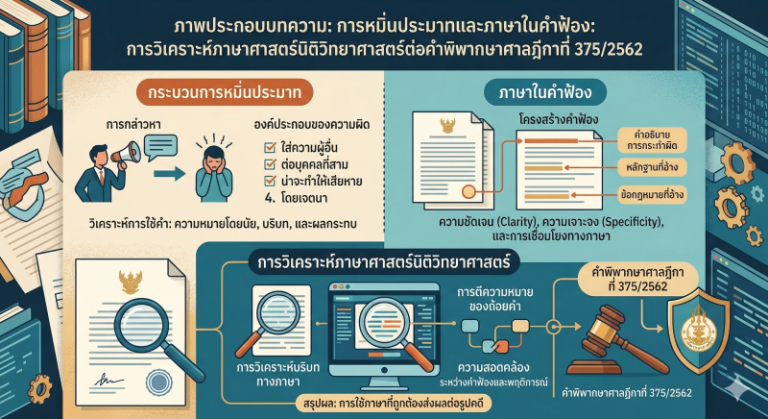
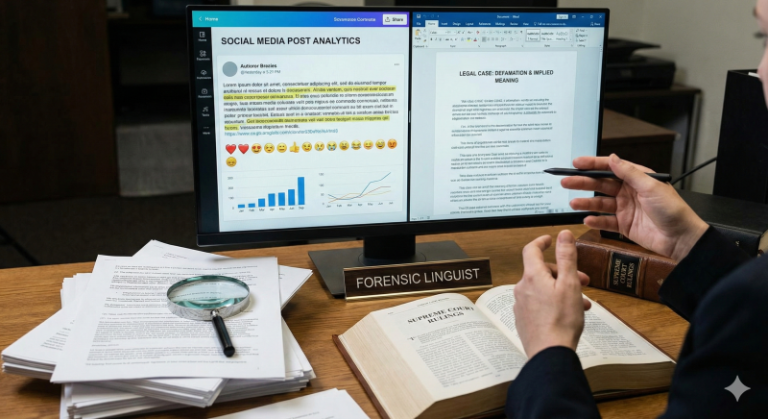
23 January 2026, Bangkok — The rapid expansion of social media, particularly Facebook, has transformed interpersonal communication from limited private circles into broadly accessible public spaces. A few lines of text or a single photograph can cause serious harm to an individual’s reputation, dignity, and credibility. In this context, defamation cases are no longer just about whether a statement is “false.” They are also about what it means, how it affects society, and what the speaker meant to say.
Forensic linguists therefore play a crucial role in assisting courts to analyze language systematically, in a manner consistent with the evolving jurisprudence of the Thai Supreme Court in digital-age defamation cases.
Elements of Defamation under Supreme Court Jurisprudence
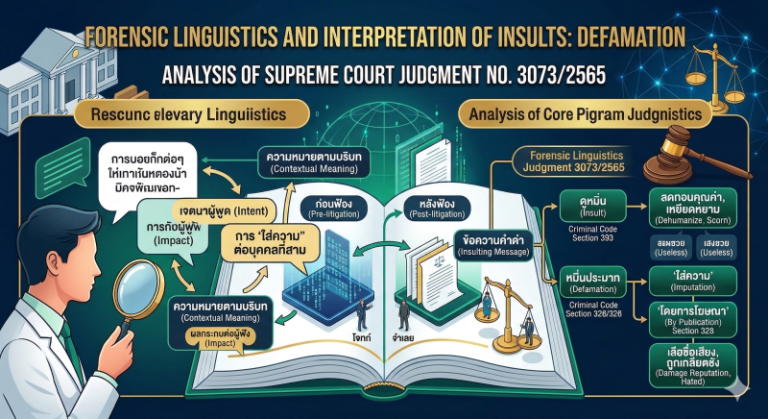
Thai Supreme Court precedents have consistently held that defamation under Section 326 of the Criminal Code does not require the use of vulgar language or explicit accusations. Instead, the court considers whether the communication is made to a third party; the message or act enables third parties to understand that the person concerned is of bad character; and the communication is likely to damage reputation, expose the person to contempt, or cause them to be hated.
In numerous decisions, the Supreme Court has emphasized that the meaning understood by the audience is the decisive factor, rather than the defendant’s subjective intention or subsequent explanations.
Implied Meaning and Linguistic Imputation
In cases where a defendant posts statements concerning “failure to repay a debt” together with photographs of the plaintiff, even without explicitly using words such as “fraud” or “cheating,” the Supreme Court has often found that such communication allows third parties to reasonably infer that the plaintiff is dishonest or deceitful.
Forensic linguists play a key role in explaining this phenomenon academically by demonstrating how language in real-world contexts operates through pragmatic meaning, the interaction between text and images, and the relational background among the poster, the person referred to, and the audience. Accordingly, defamation may arise without direct or explicit accusations.
Social Media and Reputational Harm
Supreme Court jurisprudence clearly recognizes Facebook as a public or semi-public forum. Posting content that is accessible to others therefore constitutes communication to third parties in full legal terms.
Forensic linguists assist the court in assessing who the intended and actual audience is, whether the audience has a relationship with the plaintiff, and the extent to which the content has the potential to damage real-world social reputation.
This analysis conforms to the Supreme Court’s principles, which stipulate that the communication’s likelihood of causing reputational harm suffices as proof of actual damage.
Honest Opinion and the Exception under Section 329
Defendants in such cases often invoke Section 329 of the Criminal Code, claiming that their statements constitute honest opinion. The Supreme Court has established that such protection applies only where the commentary serves the public interest, remains within necessary limits, and avoids excessive or disproportionate language or methods.
Forensic linguists assist the court in distinguishing whether a post constitutes neutral reporting of facts or a value judgment targeting an individual’s character. Where postings function as public shaming, coercion, or a substitute for lawful debt recovery proceedings, courts have consistently ruled that such conduct does not qualify as honest opinion.
Institutional Role of Forensic Linguists
Forensic linguists affiliated with the Southeast Asian Association of Professional Translators and Interpreters act as independent experts rather than parties to the dispute. Their role includes explaining language as evidentiary material, linking linguistic choices to social and legal consequences, and reducing reliance on purely subjective judicial impressions.
This function strengthens linguistic justice and aligns with the development of criminal law in the digital era.
Conclusion
Supreme Court jurisprudence in social media defamation cases demonstrates that language is not merely a tool of communication but a mechanism capable of constructing or destroying reputation. Forensic linguistic analysis is therefore an essential component in enabling the justice system to understand the real-world effects of language in contemporary society in a comprehensive and principled manner.
References
- Criminal Code of Thailand, Sections 326 and 329.
- Thai Supreme Court decisions on defamation by publication (various cases).
- Shuy, R. W. (2014). Linguistic battles in trademark disputes. Oxford University Press.
- Tiersma, P. M. (1999). Legal language. University of Chicago Press.
About Certified Translators, Translation Certifiers, and Certified Interpreters of SEAProTI
The Southeast Asian Association of Professional Translators and Interpreters (SEAProTI) has officially shared the qualifications and requirements for becoming Certified Translators, Translation Certification Providers, and Certified Interpreters in Sections 9 and 10 of the Royal Gazette, which was published by the Prime Minister’s Office in Thailand on July 25, 2024. Certified Translators, Translation Certification Providers, and Certified Interpreters
The Council of State has proposed the enactment of a Royal Decree, granting registered translators and recognised translation certifiers from professional associations or accredited language institutions the authority to provide legally valid translation certification (Letter to SEAProTI dated April 28, 2025)
SEAProTI is the first professional association in Thailand and Southeast Asia to implement a comprehensive certification system for translators, certifiers, and interpreters.
Head Office: Baan Ratchakru Building, No. 33, Room 402, Soi Phahonyothin 5, Phahonyothin Road, Phaya Thai District, Bangkok 10400, Thailand
Email: hello@seaproti.com | Tel.: (+66) 2-114-3128 (Office hours: Mon–Fri, 09:00–17:00)
บทบาทของนักนิติภาษาศาสตร์ในคดีหมิ่นประมาทบนสื่อสังคมออนไลน์:
การวิเคราะห์ภาษา ความหมายโดยนัย และแนวคำพิพากษาศาลฎีกา
ผู้แต่ง: วณิชชา สุมานัส นักนิติภาษาศาสตร์ และนายกสมาคมวิชาชีพนักแปลและล่ามแห่งเอเชียตะวันออกเฉียงใต้
23 มกราคม 2569, กรุงเทพมหานคร – การขยายตัวของสื่อสังคมออนไลน์ โดยเฉพาะ Facebook ทำให้การสื่อสารระหว่างบุคคลเปลี่ยนจากวงจำกัดไปสู่พื้นที่สาธารณะอย่างกว้างขวาง ข้อความเพียงไม่กี่บรรทัด หรือภาพถ่ายเพียงภาพเดียว อาจก่อให้เกิดผลกระทบต่อชื่อเสียง เกียรติยศ และความน่าเชื่อถือของบุคคลอย่างรุนแรง ในบริบทนี้ คดีหมิ่นประมาทมิได้เป็นเพียงการพิจารณาว่ามีการ “พูดเท็จ” หรือไม่ หากแต่เป็นการพิจารณา ความหมาย ผลทางสังคม และเจตนาที่สื่อผ่านภาษา
นักนิติภาษาศาสตร์ (forensic linguist) จึงมีบทบาทสำคัญในการช่วยศาลวิเคราะห์ภาษาอย่างเป็นระบบ สอดคล้องกับแนวคำพิพากษาศาลฎีกาที่พัฒนาอย่างต่อเนื่องในคดีหมิ่นประมาทยุคดิจิทัล
องค์ประกอบความผิดฐานหมิ่นประมาทตามแนวคำพิพากษาศาลฎีกา
แนวคำพิพากษาศาลฎีกาวางหลักมาโดยสม่ำเสมอว่า ความผิดฐานหมิ่นประมาทตามประมวลกฎหมายอาญา มาตรา 326 ไม่จำเป็นต้องใช้ถ้อยคำหยาบคายหรือกล่าวหาโดยตรง หากแต่พิจารณาว่าเป็นการสื่อสารต่อบุคคลที่สาม ข้อความหรือการกระทำนั้น ทำให้บุคคลที่สามเข้าใจได้ว่า ผู้ถูกกล่าวหาเป็นบุคคลไม่ดี มีลักษณะน่าจะทำให้เสียชื่อเสียง ถูกดูหมิ่น หรือถูกเกลียดชัง
ศาลฎีกาหลายคดีชี้ชัดว่า ความหมายที่เกิดขึ้นในความเข้าใจของผู้รับสาร เป็นหัวใจของการวินิจฉัย ไม่ใช่เพียงความตั้งใจหรือคำอธิบายภายหลังของจำเลย
ความหมายโดยนัย (Implied Meaning) และการใส่ความทางภาษา
ในคดีที่จำเลยโพสต์ข้อความเกี่ยวกับ “การเป็นหนี้ไม่ชำระ” ควบคู่กับภาพถ่ายของโจทก์ แม้จะไม่ได้ใช้คำว่า “โกง” หรือ “ฉ้อโกง” โดยตรง ศาลฎีกามักวินิจฉัยว่า การสื่อสารดังกล่าวสามารถทำให้บุคคลที่สาม อนุมานได้โดยสมเหตุสมผล ว่าโจทก์เป็นคนทุจริตหรือหลอกลวง นักนิติภาษาศาสตร์มีบทบาทสำคัญในการอธิบายปรากฏการณ์นี้ในเชิงวิชาการ โดยชี้ให้เห็นว่า ภาษาในโลกจริงทำงานผ่าน ความหมายเชิงบริบท (pragmatic meaning) การเชื่อมโยงข้อความกับภาพ ภูมิหลังความสัมพันธ์ระหว่างผู้โพสต์ ผู้ถูกกล่าวหา และผู้อ่าน การใส่ความจึงอาจเกิดขึ้นได้โดย ไม่ต้องกล่าวหาอย่างตรงไปตรงมา
สื่อสังคมออนไลน์กับผลกระทบต่อชื่อเสียง
แนวคำพิพากษาศาลฎีกายอมรับอย่างชัดเจนว่า Facebook เป็นพื้นที่สาธารณะหรือกึ่งสาธารณะ การโพสต์ข้อความที่เปิดให้ผู้อื่นเข้าถึงได้ ย่อมถือว่าเป็นการเผยแพร่ต่อบุคคลที่สามโดยสมบูรณ์ นักนิติภาษาศาสตร์ช่วยศาลวิเคราะห์ว่า กลุ่มเป้าหมายของผู้รับสารคือใคร ผู้รับสารมีความสัมพันธ์กับโจทก์หรือไม่ ข้อความมีศักยภาพสร้างความเสียหายต่อภาพลักษณ์ในสังคมจริงเพียงใด การวิเคราะห์นี้สอดคล้องกับแนวคำพิพากษาที่ถือว่า ไม่จำเป็นต้องพิสูจน์ความเสียหายที่เกิดขึ้นจริง หากมีลักษณะ “น่าจะ” ทำให้เสียชื่อเสียงก็เพียงพอ
การแสดงความคิดเห็นโดยสุจริตกับข้อยกเว้นตามมาตรา 329
จำเลยในคดีลักษณะนี้มักอ้างข้อยกเว้นตามประมวลกฎหมายอาญา มาตรา 329 ว่าเป็นการแสดงความคิดเห็นโดยสุจริต ศาลฎีกาได้วางหลักว่า การจะได้รับความคุ้มครอง ต้องเป็นการติชม เพื่อประโยชน์สาธารณะ อยู่ในขอบเขตจำเป็น ไม่ใช้ถ้อยคำหรือวิธีการที่เกินสมควร นักนิติภาษาศาสตร์ช่วยศาลแยกแยะว่า การโพสต์ดังกล่าวเป็น
การรายงานข้อเท็จจริงอย่างเป็นกลาง หรือ การกล่าวหาเชิงตัดสินคุณค่าบุคคล (value judgment) เมื่อการโพสต์มีลักษณะเป็นการประจาน กดดัน หรือแทนการใช้สิทธิดำเนินคดีทางกฎหมาย ศาลจึงวินิจฉัยว่า ไม่เป็นการกระทำโดยสุจริต
บทบาทเชิงสถาบันของนักนิติภาษาศาสตร์
นักนิติภาษาศาสตร์จาก สมาคมวิชาชีพนักแปลและล่ามแห่งเอเชียตะวันออกเฉียงใต้ ทำหน้าที่เป็นผู้เชี่ยวชาญอิสระ ไม่ใช่คู่ความ โดยช่วยศาล อธิบายภาษาในฐานะพยานหลักฐาน เชื่อมโยงภาษาเข้ากับผลทางสังคมและกฎหมาย ลดการพึ่งพาดุลพินิจเชิงความรู้สึก
บทบาทดังกล่าวช่วยเสริมสร้างความยุติธรรมเชิงภาษา (linguistic justice) และสอดคล้องกับพัฒนาการของกฎหมายอาญาในยุคดิจิทัล
บทสรุป
แนวคำพิพากษาศาลฎีกาในคดีหมิ่นประมาทบนสื่อสังคมออนไลน์สะท้อนให้เห็นว่า ภาษาไม่ใช่เพียงเครื่องมือสื่อสาร แต่เป็นกลไกสร้างหรือทำลายชื่อเสียง การวิเคราะห์เชิงนิติภาษาศาสตร์จึงเป็นองค์ประกอบสำคัญในการทำให้กระบวนการยุติธรรมสามารถเข้าใจผลจริงของถ้อยคำในสังคมร่วมสมัยได้อย่างรอบด้าน
เอกสารอ้างอิง
- ประมวลกฎหมายอาญา มาตรา 326, 329
- คำพิพากษาศาลฎีกาว่าด้วยความผิดฐานหมิ่นประมาทโดยการโฆษณา (หลายคดี)
- Shuy, R. W. (2014). Linguistic battles in trademark disputes. Oxford University Press.Tiersma, P. M. (1999). Legal language. University of Chicago Press.