


Certified Interpreters in Thailand: Legal Status, Domestic and International Recognition, and Their Distinction from Court Interpreters
28 December 2025, Bangkok – This article aims to analyze the legal status of Certified Interpreters in Thailand by examining the structural distinctions between certified interpreters, court-registered interpreters, and the concept often falsely claimed of “Certified Court Interpreters,” which has no legal basis in the Thai legal system. The article further explains the recognition of Thailand’s certified interpreters by state agencies, courts, and private institutions, both domestically and internationally. It argues that interpreter certification in Thailand is grounded in professional institutional accreditation rather than in the courts’ administrative registration practices. The misuse of legally inaccurate terminology may adversely affect litigants’ rights, the credibility of judicial proceedings, and the long-term legitimacy of the interpreting profession as a whole.
Keywords: Certified interpreters, court interpreters, professional certification, access to justice, forensic linguistics
Introduction
Cross-linguistic communication in judicial and administrative processes is not merely a linguistic activity but a fundamental mechanism linked to the protection of basic human rights, particularly the right to information, the right to a fair trial, and the right to equal access to public services. In this context, the status of interpreters cannot be assessed solely on the basis of language proficiency; it must also be examined through the lenses of certification structures, professional accountability, and institutional recognition. In Thailand, however, persistent confusion remains between the terms “court interpreter,” “registered interpreter,” and “certified interpreter,” leading to the use of terminology that lacks legal foundation. This article therefore seeks to clarify the legal and institutional realities surrounding certified interpreters in Thailand in a systematic and academically rigorous manner.
The Status of Court Interpreters in the Thai Legal System
Within the Thai legal system, no statutory provision recognizes the status of a “Certified Court Interpreter.” This term does not appear in any Act, ministerial regulation, or notification published in the Royal Thai Government Gazette. In practice, Thai courts may maintain lists of interpreters for administrative convenience in judicial proceedings. However, such registration constitutes merely an internal administrative measure and is undertaken in accordance with the framework of the United Nations’ standards on civil and political rights, which require states to provide linguistic assistance in order to safeguard the right to a fair trial. Importantly, such registration does not amount to professional certification, nor does it confer a legal status equivalent to that arising from certification by a professional body.
The use of the term “Certified Court Interpreter” in the Thai context therefore represents an inappropriate transplantation of foreign legal concepts that are incompatible with Thailand’s legal structure. This mischaracterization risks creating the false impression that Thai courts operate a professional interpreter certification regime, which, in reality, they do not.
Interpreter Certification in Thailand by a Professional Body
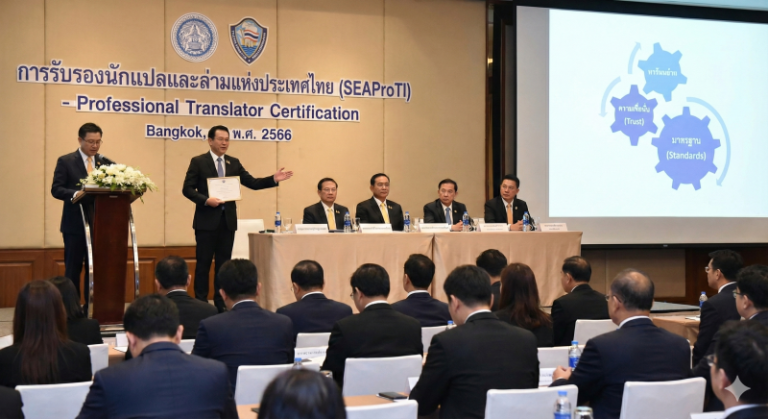
Systematic interpreter certification in Thailand is administered by the Southeast Asian Association of Professional Translators and Interpreters (SEAProTI), a professional organization that establishes structured mechanisms for assessing interpreters’ qualifications, competencies, and adherence to professional ethics. Such certification constitutes institutional accreditation and has been formally recognized through publication in the Royal Thai Government Gazette under the Office of the Secretariat of the Prime Minister pursuant to a Cabinet resolution.
Certified interpreters under this framework do not merely function as individual service providers. Rather, they are recognized professionals operating within a system of institutional oversight, accountability, and verifiable standards, which distinguishes them fundamentally from interpreters engaged on an ad hoc basis by courts or individual agencies.
Domestic Recognition of Certified Interpreters in Thailand
In practice, certified interpreters in Thailand are widely recognized and utilized by government agencies, Thai courts, and private-sector entities. This recognition is particularly evident in proceedings involving foreign nationals, human rights protection, medical services, and cross-border commercial transactions. In such contexts, institutional certification is often prioritized over mere inclusion on a registry, as certification reflects standardized competence, professional accountability, and the capacity for post hoc verification in the event of disputes.
Thai courts themselves, especially in cases subject to scrutiny by foreign embassies or international bodies, increasingly emphasize the use of certified interpreters to enhance procedural credibility and to mitigate risks related to human rights compliance.
International Recognition
Thailand’s certified interpreters are also recognized in international contexts, including by foreign courts, governmental agencies abroad, and multinational private organizations. Such recognition is not grounded in the nationality of the interpreter but in universally accepted principles of professional certification—namely, the existence of a competent professional body, systematic assessment of qualifications, enforceable ethical standards, and institutional accountability.
In civil cases, family law proceedings, immigration matters, and other legal processes involving Thai nationals overseas, certification issued in Thailand can therefore function as credible evidence of professional reliability and competence at the international level.
Conclusion
Thailand does not have “Certified Court Interpreters” as a matter of law, nor does such a status appear in the Royal Thai Government Gazette. What Thailand does possess is a professionally certified interpreter system grounded in a legally recognized professional organization. Certified Interpreters in Thailand are acknowledged by state agencies, courts, and private institutions both domestically and internationally. The misuse of legally inaccurate terminology—such as claims that Thailand has certified court interpreters—is therefore not merely a semantic issue but a structural problem that may undermine individual rights, judicial legitimacy, and the long-term credibility of the interpreting profession.
Verification of Certified Interpreter Status and the Prevention of Professional Misrepresentation
Interpreter certification in Thailand does not end with initial assessment and recognition. It also entails ongoing mechanisms for verification and professional oversight administered by SEAProTI as the certifying authority. This verification system serves to protect service users, state agencies, and the integrity of the profession itself.
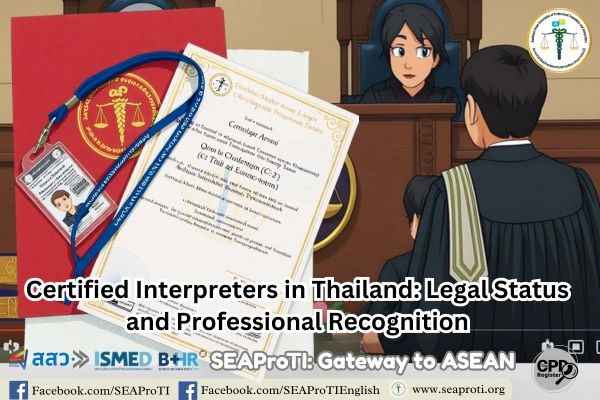
In practice, the credentials of a certified interpreter may be verified by requesting the interpreter’s professional license authorizing the practice of certified interpreting under the name of SEAProTI. This license constitutes formal evidence of certified status. In addition, certified interpreters are required to possess a professional identification card issued by the association, bearing the interpreter’s name, registration number, and certification status, all of which are traceable and verifiable. Any individual claiming to be a certified interpreter, or using the designation “Certified Interpreter,” without being able to produce such a license or professional identification card with a valid registration number, must be regarded as engaging in professional misrepresentation.
Such verification mechanisms reflect core international principles of professional certification, namely that certification must extend beyond nominal designation to encompass transparency, traceability, and institutional accountability. Requiring certified interpreters to hold verifiable licenses and professional identification thus serves as a safeguard for users’ rights, reduces the risk of false claims, and reinforces trust in interpreting services across judicial, medical, and international communication contexts.
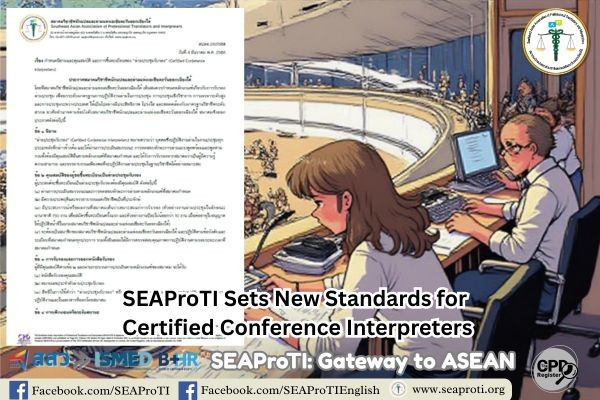
Announcement of the Office of the Judiciary: Re: Application for Registration as Court Interpreters of the Office of the Judiciary for Fiscal Year B.E. 2565 (2022)
References
- Mikkelson, H. (2016). Introduction to court interpreting. Routledge.
- Pöchhacker, F. (2015). Introducing interpreting studies (2nd ed.). Routledge.
- United Nations. (2016). International Covenant on Civil and Political Rights. United Nations Treaty Series.
- Southeast Asian Association of Professional Translators and Interpreters. (Year). Notification on the certification of translators and interpreters. Royal Thai Government Gazette.
- Royal Thai Government Gazette. (Year). Notification of the Office of the Prime Minister on the recognition of professional organizations. Office of the Secretariat of the Prime Minister.
About Certified Translators, Translation Certifiers, and Certified Interpreters of SEAProTI
The Southeast Asian Association of Professional Translators and Interpreters (SEAProTI) has formally announced the qualifications and requirements for registration of Certified Translators, Translation Certification Providers, and Certified Interpreters in Sections 9 and 10 of the Royal Gazette, published by the Secretariat of the Cabinet, Office of the Prime Minister of Thailand, on 25 July 2024 (Vol. 141, Part 66 Ng, p. 100). Certified Translators, Translation Certification Providers, and Certified Interpreters
The Council of State has proposed the enactment of a Royal Decree, granting registered translators and recognised translation certifiers from professional associations or accredited language institutions the authority to provide legally valid translation certification (Letter to SEAProTI dated April 28, 2025)
SEAProTI is the first professional association in Thailand and Southeast Asia to implement a comprehensive certification system for translators, certifiers, and interpreters.
Head Office: Baan Ratchakru Building, No. 33, Room 402, Soi Phahonyothin 5, Phahonyothin Road, Phaya Thai District, Bangkok 10400, Thailand
Email: hello@seaproti.com | Tel.: (+66) 2-114-3128 (Office hours: Mon–Fri, 09:00–17:00)
ล่ามรับรอง (Certified Interpreters) ในประเทศไทย: สถานะทางกฎหมาย การยอมรับในและต่างประเทศ และความแตกต่างจากล่ามศาล
28 ธันวาคม 2568, ธันวาคม 2568 – บทความนี้มีวัตถุประสงค์เพื่อวิเคราะห์สถานะทางกฎหมายของล่ามรับรอง (Certified Interpreters) ในประเทศไทย โดยมุ่งอธิบายความแตกต่างเชิงโครงสร้างระหว่างล่ามรับรอง ล่ามขึ้นทะเบียนของศาล และแนวคิดที่ถูกแอบอ้างว่าเป็น “ล่ามศาลรับรอง” ซึ่งไม่ปรากฏฐานกฎหมายในระบบกฎหมายไทย บทความยังอธิบายการยอมรับล่ามรับรองของประเทศไทยโดยหน่วยงานรัฐ ศาล และภาคเอกชน ทั้งในประเทศและต่างประเทศ เพื่อชี้ให้เห็นว่าการรับรองล่ามในประเทศไทยตั้งอยู่บนฐานขององค์กรวิชาชีพ มิใช่การขึ้นทะเบียนเชิงปฏิบัติการของศาล และการใช้ถ้อยคำที่คลาดเคลื่อนอาจส่งผลกระทบต่อสิทธิของคู่ความ ความน่าเชื่อถือของกระบวนการยุติธรรม และความชอบธรรมของวิชาชีพล่ามในภาพรวม
คำสำคัญ: ล่ามรับรอง, ล่ามศาล, การรับรองวิชาชีพ, การเข้าถึงความยุติธรรม, นิติภาษาศาสตร์
บทนำ
การสื่อสารข้ามภาษาในกระบวนการยุติธรรมและการบริหารราชการมิใช่เพียงกิจกรรมทางภาษา หากแต่เป็นกลไกพื้นฐานที่เชื่อมโยงกับสิทธิขั้นพื้นฐานของมนุษย์ โดยเฉพาะสิทธิในการรับรู้ข้อมูล สิทธิในการได้รับการพิจารณาคดีอย่างเป็นธรรม และสิทธิในการเข้าถึงบริการของรัฐอย่างเท่าเทียม ในบริบทดังกล่าว สถานะของ “ล่าม” จึงไม่อาจพิจารณาได้เพียงจากความสามารถทางภาษา แต่ต้องพิจารณาจากโครงสร้างการรับรอง ความรับผิด และการยอมรับในระดับสถาบัน อย่างไรก็ตาม สังคมไทยยังคงมีความสับสนระหว่างคำว่า “ล่ามศาล” “ล่ามขึ้นทะเบียน” และ “ล่ามรับรอง” ซึ่งนำไปสู่การใช้ถ้อยคำที่ไม่มีฐานกฎหมายรองรับ บทความนี้จึงมุ่งอธิบายข้อเท็จจริงทางกฎหมายและเชิงสถาบันของล่ามรับรองในประเทศไทยอย่างเป็นระบบ
สถานะของล่ามศาลในระบบกฎหมายไทย
ในระบบกฎหมายไทย ไม่ปรากฏบทบัญญัติใดที่รับรองสถานะของ “ล่ามศาลรับรอง” หรือ Certified Court Interpreter อย่างเป็นทางการ ไม่ว่าจะในระดับพระราชบัญญัติ กฎกระทรวง หรือประกาศในราชกิจจานุเบกษา ศาลไทยในทางปฏิบัติอาจจัดให้มีการขึ้นทะเบียนรายชื่อล่ามเพื่อความสะดวกในการเรียกใช้งานในคดีต่าง ๆ แต่การขึ้นทะเบียนดังกล่าวเป็นเพียงมาตรการทางปกครองภายใน และเป็นไปตามกรอบกติกาขององค์การสหประชาชาติว่าด้วยสิทธิพลเมืองและสิทธิทางการเมือง ซึ่งกำหนดให้รัฐต้องจัดให้มีความช่วยเหลือด้านภาษาเพื่อคุ้มครองสิทธิในการพิจารณาคดีอย่างเป็นธรรม ทั้งนี้ การขึ้นทะเบียนดังกล่าวมิได้เป็นการรับรองมาตรฐานวิชาชีพ และไม่ก่อให้เกิดสถานะทางกฎหมายที่เทียบเท่าการรับรองโดยองค์กรวิชาชีพ มิได้เป็นการรับรองมาตรฐานวิชาชีพ และไม่ก่อให้เกิดสถานะทางกฎหมายที่เทียบเท่าการรับรองโดยองค์กรวิชาชีพ
การนำคำว่า “ล่ามศาลรับรอง” มาใช้ในบริบทของประเทศไทยจึงเป็นการนำแนวคิดจากต่างประเทศมาใช้โดยไม่สอดคล้องกับโครงสร้างกฎหมายไทย และอาจก่อให้เกิดความเข้าใจผิดว่าศาลไทยมีระบบการรับรองล่ามเชิงวิชาชีพโดยตรง ซึ่งในความเป็นจริงมิได้เป็นเช่นนั้น
การรับรองล่ามในประเทศไทยโดยองค์กรวิชาชีพ
การรับรองล่ามอย่างเป็นระบบในประเทศไทยดำเนินการโดย สมาคมวิชาชีพนักแปลและล่ามแห่งเอเชียตะวันออกเฉียงใต้ (SEAProTI) ซึ่งเป็นองค์กรวิชาชีพที่จัดให้มีกระบวนการประเมินคุณสมบัติ ความสามารถ และจรรยาบรรณของผู้ประกอบวิชาชีพล่าม การรับรองดังกล่าวมีลักษณะเป็นการรับรองเชิงสถาบัน และมีการประกาศรับรองในราชกิจจานุเบกษาภายใต้สำนักเลขาธิการในสำนักนายกรัฐมนตรีตามมติคณะรัฐมนตรี
ล่ามรับรองภายใต้ระบบดังกล่าวจึงมิได้มีสถานะเพียงผู้ให้บริการรายบุคคล หากแต่เป็นผู้ประกอบวิชาชีพที่อยู่ภายใต้กลไกกำกับดูแล ความรับผิด และมาตรฐานที่ตรวจสอบได้ ซึ่งแตกต่างอย่างมีนัยสำคัญจากล่ามที่ได้รับการเรียกใช้งานเป็นครั้งคราวโดยศาลหรือหน่วยงานใดหน่วยงานหนึ่ง
การยอมรับล่ามรับรองภายในประเทศไทย
ในทางปฏิบัติ ล่ามรับรองของประเทศไทยได้รับการยอมรับจากหน่วยงานของรัฐ ศาล และภาคเอกชนอย่างต่อเนื่อง โดยเฉพาะในคดีหรือกระบวนการที่เกี่ยวข้องกับชาวต่างชาติ การคุ้มครองสิทธิมนุษยชน การแพทย์ และการดำเนินธุรกรรมข้ามชาติ หน่วยงานเหล่านี้ให้ความสำคัญกับสถานะการรับรองมากกว่าการเป็นเพียงล่ามที่มีรายชื่ออยู่ในบัญชีใดบัญชีหนึ่ง เนื่องจากการรับรองสะท้อนถึงมาตรฐาน ความรับผิด และความสามารถในการตรวจสอบย้อนหลังหากเกิดข้อพิพาท
ศาลไทยเองในหลายกรณี โดยเฉพาะคดีที่ถูกตรวจสอบจากสถานทูตหรือหน่วยงานต่างประเทศ ได้ให้ความสำคัญกับการใช้ล่ามที่มีสถานะการรับรอง เพื่อเสริมความน่าเชื่อถือของกระบวนการพิจารณาคดีและลดความเสี่ยงด้านสิทธิมนุษยชน
การยอมรับในระดับระหว่างประเทศ
ล่ามรับรองของประเทศไทยยังได้รับการยอมรับในบริบทระหว่างประเทศ ทั้งโดยศาลในต่างประเทศ หน่วยงานราชการต่างประเทศ และองค์กรเอกชนข้ามชาติ การยอมรับดังกล่าวมิได้ตั้งอยู่บนสัญชาติของล่าม หากแต่อยู่บนหลักการสากลของการรับรองวิชาชีพ กล่าวคือ การมีองค์กรวิชาชีพที่รับรองคุณสมบัติอย่างเป็นระบบ มีจรรยาบรรณ และมีกลไกความรับผิดเชิงสถาบัน
ในคดีแพ่ง คดีครอบครัว คดีอพยพย้ายถิ่น และกระบวนการทางกฎหมายอื่น ๆ ที่เกี่ยวข้องกับคนไทยในต่างประเทศ สถานะของล่ามรับรองจากประเทศไทยจึงสามารถทำหน้าที่เป็นหลักฐานแสดงความน่าเชื่อถือและความเป็นมืออาชีพได้ในระดับสากล
บทสรุป
ประเทศไทยไม่มี “ล่ามศาลรับรอง” (Certified Court Interpreter) ตามกฎหมาย และไม่ปรากฎในราชกิจจานุเบกษา แต่มีระบบการรับรองล่ามโดยองค์กรวิชาชีพที่มีฐานะทางกฎหมายชัดเจน ล่ามรับรอง (Certified Interpreters) ของประเทศไทยได้รับการยอมรับจากหน่วยงานรัฐ ศาล และภาคเอกชน ทั้งในประเทศและต่างประเทศ การใช้ถ้อยคำที่ไม่สอดคล้องกับฐานกฎหมาย เช่น การอ้างว่ามี “ล่ามศาลรับรอง” จึงไม่เพียงเป็นปัญหาทางถ้อยคำ หากแต่เป็นปัญหาเชิงโครงสร้างที่อาจกระทบต่อสิทธิของประชาชน ความชอบธรรมของกระบวนการยุติธรรม และความน่าเชื่อถือของวิชาชีพล่ามในระยะยาว
การตรวจสอบคุณสมบัติล่ามรับรองและการป้องกันการแอบอ้างสถานะวิชาชีพ
การรับรองล่ามในประเทศไทยมิได้สิ้นสุดเพียงการผ่านการประเมินเพื่อให้ได้รับสถานะ “ล่ามรับรอง (Certified Interpreters)” หากแต่ยังรวมถึงกลไกการตรวจสอบและยืนยันคุณสมบัติอย่างต่อเนื่องโดยองค์กรวิชาชีพ กล่าวคือ สมาคมวิชาชีพนักแปลและล่ามแห่งเอเชียตะวันออกเฉียงใต้ (SEAProTI) ในฐานะองค์กรผู้รับรอง มีอำนาจและหน้าที่ในการตรวจสอบสถานะของผู้ประกอบวิชาชีพล่ามรับรอง เพื่อคุ้มครองทั้งผู้ใช้บริการ หน่วยงานรัฐ และความน่าเชื่อถือของวิชาชีพโดยรวม
ในทางปฏิบัติ การตรวจสอบคุณสมบัติล่ามรับรองสามารถกระทำได้โดยการขอดู ใบอนุญาต (License) เพื่อประกอบวิชาชีพล่ามรับรองในนามสมาคมวิชาชีพนักแปลและล่ามแห่งเอเชียตะวันออกเฉียงใต้ ซึ่งเป็นเอกสารแสดงสถานะการรับรองอย่างเป็นทางการ นอกจากนี้ ล่ามรับรองต้องมี บัตรวิชาชีพ ที่ออกโดยสมาคม ซึ่งระบุชื่อ เลขทะเบียน และสถานะการรับรองที่สามารถตรวจสอบย้อนกลับได้ หากบุคคลใดอ้างตนว่าเป็นล่ามรับรองหรือใช้คำว่า Certified Interpreter โดยไม่สามารถแสดงใบอนุญาตหรือบัตรวิชาชีพที่มีเลขทะเบียนดังกล่าวได้ ย่อมถือได้ว่าเป็น การแอบอ้างสถานะทางวิชาชีพ
กลไกการตรวจสอบดังกล่าวสะท้อนหลักการสำคัญของการรับรองวิชาชีพในระดับสากล กล่าวคือ การรับรองมิใช่เพียงการประกาศสถานะ แต่ต้องมาพร้อมความสามารถในการตรวจสอบ ความโปร่งใส และความรับผิดเชิงสถาบัน การกำหนดให้ล่ามรับรองต้องมีใบอนุญาตและบัตรวิชาชีพที่ตรวจสอบได้ จึงทำหน้าที่เป็นกลไกคุ้มครองสิทธิของผู้ใช้บริการ ลดความเสี่ยงจากการแอบอ้าง และเสริมสร้างความเชื่อมั่นต่อการใช้ล่ามในกระบวนการยุติธรรม การแพทย์ และการติดต่อระหว่างประเทศ
อ่านฉบับเต็ม: ประกาศสำนักงานศาลยุติธรรม เรื่อง การขอขึ้นทะเบียนล่ามของสำนักงานศาลยุติธรรม ประจำปีงบประมาณ พ.ศ. ๒๕๖๕
เอกสารอ้างอิง (References)
- Mikkelson, H. (2016). Introduction to court interpreting. Routledge.
- Pöchhacker, F. (2015). Introducing interpreting studies (2nd ed.). Routledge.
- United Nations. (2016). International covenant on civil and political rights. United Nations Treaty Series.
- สมาคมวิชาชีพนักแปลและล่ามแห่งเอเชียตะวันออกเฉียงใต้. (ปีที่ประกาศ). ประกาศการรับรองวิชาชีพนักแปลและล่าม. ราชกิจจานุเบกษา.
- ราชกิจจานุเบกษา. (ปีที่ประกาศ). ประกาศสำนักนายกรัฐมนตรีเกี่ยวกับการรับรององค์กรวิชาชีพ. สำนักเลขาธิการนายกรัฐมนตรี.
เกี่ยวกับนักแปลรับรอง ผู้รับรองการแปล และล่ามรับรองของสมาคมวิชาชีพนักแปลและล่ามแห่งเอเชียตะวันออกเฉียงใต้
สมาคมวิชาชีพนักแปลและล่ามแห่งเอเชียตะวันออกเฉียงใต้ (SEAProTI) ได้ประกาศหลักเกณฑ์และคุณสมบัติผู้ที่ขึ้นทะเบียนเป็น “นักแปลรับรอง (Certified Translators) และผู้รับรองการแปล (Translation Certification Providers) และล่ามรับรอง (Certified Interpreters)” ของสมาคม หมวดที่ 9 และหมวดที่ 10 ในราชกิจจานุเบกษา ของสำนักเลขาธิการคณะรัฐมนตรี ในสำนักนายกรัฐมนตรี แห่งราชอาณาจักรไทย ลงวันที่ 25 ก.ค. 2567 เล่มที่ 141 ตอนที่ 66 ง หน้า 100 อ่านฉบับเต็มได้ที่: นักแปลรับรอง ผู้รับรองการแปล และล่ามรับรอง
สำนักคณะกรรมการกฤษฎีกา เสนอให้ตราเป็นพระราชกฤษฎีกา โดยกำหนดให้นักแปลที่ขึ้นทะเบียน รวมถึงผู้รับรองการแปลจากสมาคมวิชาชีพหรือสถาบันสอนภาษาที่มีการอบรมและขึ้นทะเบียน สามารถรับรองคำแปลได้ (จดหมายถึงสมาคม SEAProTI ลงวันที่ 28 เม.ย. 2568)
สมาคมวิชาชีพนักแปลและล่ามแห่งเอเชียตะวันออกเฉียงใต้ เป็นสมาคมวิชาชีพแห่งแรกและแห่งเดียวในประเทศไทยและภูมิภาคเอเชียตะวันออกเฉียงใต้ที่มีระบบรับรองนักแปลรับรอง ผู้รับรองการแปล และล่ามรับรอง
สำนักงานใหญ่: อาคารบ้านราชครู เลขที่ 33 ห้อง 402 ซอยพหลโยธิน 5 ถนนพหลโยธิน แขวงพญาไท เขตพญาไท กรุงเทพมหานคร 10400 ประเทศไทย
อีเมล: hello@seaproti.com โทรศัพท์: (+66) 2-114-3128 (เวลาทำการ: วันจันทร์–วันศุกร์ เวลา 09.00–17.00 น.