



Institutional Differences among Interpreters in Thailand:
A Comparative Analysis of Roles, Functions, and Use between General Interpreters, Government-Registered Interpreters, and SEAProTI-Certified Interpreters
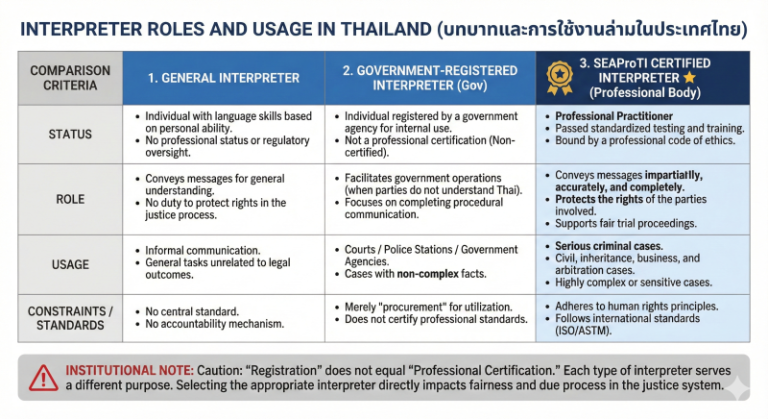
30 December 2025, Bangkok — This article aims to analyze and compare the roles, functions, and scope of use of three categories of interpreters in Thailand: (1) general interpreters, (2) interpreters registered with government agencies, and (3) interpreters certified by a professional association. The analysis is grounded in an institutional analysis framework and human rights principles. The central concept of the article is the clear distinction between “registration for operational use” and “professional certification,” which are frequently conflated in public discourse. The findings indicate that the selection of an interpreter who is not appropriate to the nature of a case and its level of complexity may directly affect the principle of due process of law and the rights of the parties, particularly in cases involving foreign nationals.
Keywords: court interpreting, registration, professional certification, human rights, justice system
Interpreters play a crucial role in the justice system, as they serve as the mechanism through which individuals who are unable to effectively use the language of the court or state authorities can access rights, liberties, and fair trial guarantees. However, in the Thai context, the status of interpreters is often misunderstood—most notably through the indiscriminate use of the term “certified interpreter” to refer to all interpreters without regard to their institutional standing. This article therefore seeks to explain the structural differences among various categories of interpreters in order to promote accurate understanding in both legal and professional terms.
General Interpreters: A Role Based on Individual Linguistic Skills
General interpreters are individuals who possess language proficiency and perform interpreting tasks based on personal skills. This group has no specific legal status, no formal ethical oversight, and no centralized professional standards. Consequently, the use of general interpreters is appropriate only in contexts that do not involve legal rights, obligations, or binding legal consequences, such as everyday communication or informal activities.
A key limitation of general interpreters is the absence of accountability mechanisms and post-hoc review. This deficiency renders them particularly unsuitable for use in judicial proceedings, where interpreting errors may have direct and serious implications for individual rights.
Government-Registered Interpreters: An Administrative Instrument
Government-registered interpreters are individuals who have been selected or listed for use within specific state agencies, such as courts or police departments. Such registration serves an administrative purpose, enabling government processes to function when language barriers arise. Importantly, this form of registration does not constitute professional certification.
These interpreters are typically deployed in cases involving uncomplicated facts or urgent situations, such as preliminary investigations. Nevertheless, registration does not confer the status of a “certified interpreter” in a professional sense, nor does it imply that the interpreter has received systematic training in professional ethics or human rights protection.
Interpreters Certified by Professional Associations: Standard-Based Practitioners
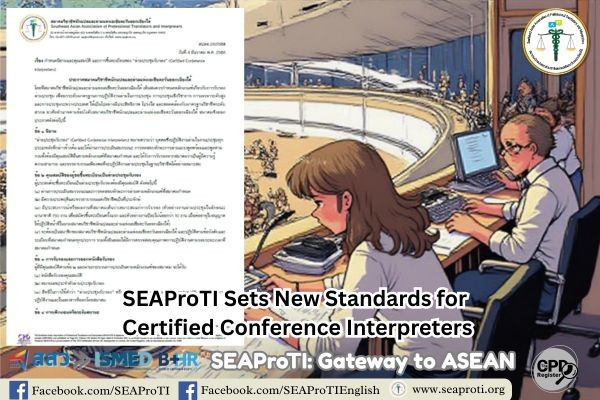
Interpreters certified by professional associations are individuals who have undergone examinations, training, and ethical assessments in accordance with standards established by the professional body. Their role extends beyond linguistic transfer; they function as a mechanism for safeguarding the rights of the parties and for upholding the principle of a fair trial.
The use of certified interpreters is particularly appropriate in serious criminal cases, high-value civil disputes, inheritance cases, and arbitration proceedings, all of which require high levels of accuracy, neutrality, and legal contextual understanding. These interpreters are subject to a formal code of ethics and accountability mechanisms, aligning their practice with international human rights principles. In the Thai context, this category includes interpreters certified by SEAProTI.
Comparative Institutional Analysis and Implications for the Justice System
From an institutional perspective, the three categories of interpreters clearly differ in purpose and scope of use. Employing general interpreters in judicial contexts, or misconstruing government registration as professional certification, can lead to structural misunderstandings and may adversely affect the rights of litigants—especially in cases involving linguistic and legal complexity.
Conclusion
This article argues that clearly distinguishing between “registration for operational use” and “professional certification” is a matter of both policy and human rights significance. Selecting interpreters who are appropriate to the nature of a case is not merely a question of procedural efficiency; it constitutes a fundamental element of the rule of law and of justice in society.
References
- Hale, S. (2014). The discourse of court interpreting. John Benjamins.
- Mikkelson, H. (2016). Introduction to court interpreting (2nd ed.). Routledge.
- United Nations. (1966). International Covenant on Civil and Political Rights. United Nations Treaty Series.
- Wadensjö, C. (1998). Interpreting as interaction. Longman.
About Certified Translators, Translation Certifiers, and Certified Interpreters of SEAProTI
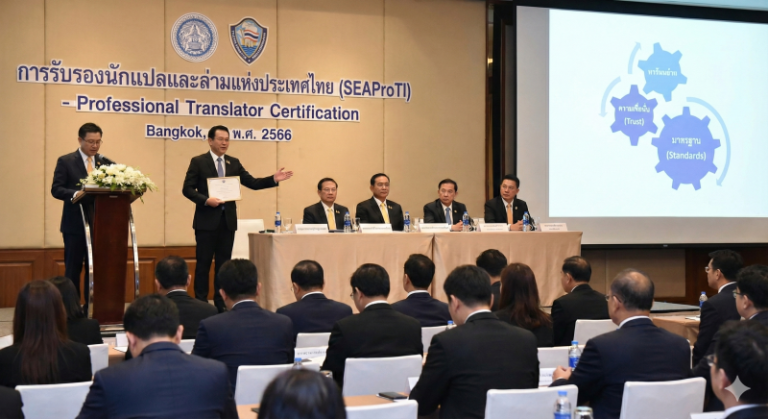
The Southeast Asian Association of Professional Translators and Interpreters (SEAProTI) has formally announced the qualifications and requirements for registration of Certified Translators, Translation Certification Providers, and Certified Interpreters in Sections 9 and 10 of the Royal Gazette, published by the Secretariat of the Cabinet, Office of the Prime Minister of Thailand, on 25 July 2024 (Vol. 141, Part 66 Ng, p. 100). Certified Translators, Translation Certification Providers, and Certified Interpreters
The Council of State has proposed the enactment of a Royal Decree, granting registered translators and recognised translation certifiers from professional associations or accredited language institutions the authority to provide legally valid translation certification (Letter to SEAProTI dated April 28, 2025)
SEAProTI is the first professional association in Thailand and Southeast Asia to implement a comprehensive certification system for translators, certifiers, and interpreters.
Head Office: Baan Ratchakru Building, No. 33, Room 402, Soi Phahonyothin 5, Phahonyothin Road, Phaya Thai District, Bangkok 10400, Thailand
Email: hello@seaproti.com | Tel.: (+66) 2-114-3128 (Office hours: Mon–Fri, 09:00–17:00)
ความแตกต่างเชิงสถาบันของล่ามในประเทศไทย:
การเปรียบเทียบบทบาท หน้าที่ และการใช้งานระหว่างล่ามทั่วไป ล่ามขึ้นทะเบียนของหน่วยงานราชการ และล่ามรับรองของ SEAProTI
30 ธันวาคม 2568, กรุงเทพมหานคร – บทความนี้มีวัตถุประสงค์เพื่อวิเคราะห์และเปรียบเทียบบทบาท หน้าที่ และขอบเขตการใช้งานของล่ามสามประเภทในประเทศไทย ได้แก่ (1) ล่ามทั่วไป (2) ล่ามขึ้นทะเบียนของหน่วยงานราชการ และ (3) ล่ามรับรองของสมาคมวิชาชีพเอกชน โดยใช้กรอบการวิเคราะห์เชิงสถาบัน (institutional analysis) และหลักสิทธิมนุษยชนเป็นฐาน แนวคิดสำคัญของบทความคือการแยกความแตกต่างระหว่าง “การขึ้นทะเบียนเพื่อใช้งาน” กับ “การรับรองวิชาชีพ” ซึ่งมักถูกใช้สับสนในบริบทสาธารณะ ผลการวิเคราะห์ชี้ให้เห็นว่าการเลือกใช้ล่ามที่ไม่เหมาะสมกับลักษณะคดีและระดับความซับซ้อน อาจส่งผลกระทบโดยตรงต่อหลักการพิจารณาคดีอย่างเป็นธรรม (due process of law) และสิทธิของคู่ความ โดยเฉพาะในคดีที่เกี่ยวข้องกับชาวต่างชาติ
คำสำคัญ: ล่ามศาล, การขึ้นทะเบียน, การรับรองวิชาชีพ, สิทธิมนุษยชน, กระบวนการยุติธรรม
ล่ามมีบทบาทสำคัญอย่างยิ่งในกระบวนการยุติธรรม เนื่องจากเป็นกลไกที่ทำให้บุคคลซึ่งไม่สามารถใช้ภาษาของศาลหรือหน่วยงานรัฐได้อย่างมีประสิทธิภาพ สามารถเข้าถึงสิทธิ เสรีภาพ และการพิจารณาคดีอย่างเป็นธรรม อย่างไรก็ตาม ในบริบทของประเทศไทย สถานะของล่ามมักถูกเข้าใจคลาดเคลื่อน โดยเฉพาะการใช้คำว่า “ล่ามรับรอง” เพื่ออ้างถึงล่ามทุกประเภทโดยไม่แยกแยะฐานะทางสถาบัน บทความนี้จึงมุ่งอธิบายความแตกต่างเชิงโครงสร้างของล่ามแต่ละประเภท เพื่อสร้างความเข้าใจที่ถูกต้องทั้งในเชิงกฎหมายและวิชาชีพ
ล่ามทั่วไป: บทบาทเชิงทักษะส่วนบุคคล
ล่ามทั่วไปหมายถึงบุคคลที่มีความสามารถทางภาษาและสามารถทำหน้าที่ถ่ายทอดสารระหว่างภาษาได้โดยอาศัยทักษะส่วนบุคคล ล่ามกลุ่มนี้ไม่มีสถานะทางกฎหมายเฉพาะ ไม่มีการกำกับด้านจริยธรรม หรือมาตรฐานวิชาชีพกลาง การใช้งานล่ามทั่วไปจึงเหมาะสมเฉพาะในบริบทที่ไม่เกี่ยวข้องกับสิทธิ หน้าที่ หรือผลทางกฎหมายโดยตรง เช่น การสื่อสารในชีวิตประจำวันหรือกิจกรรมไม่เป็นทางการ
ข้อจำกัดสำคัญของล่ามทั่วไปคือการขาดกลไกความรับผิด (accountability) และการตรวจสอบย้อนหลัง ซึ่งทำให้ไม่เหมาะสมอย่างยิ่งต่อการนำไปใช้ในกระบวนการยุติธรรมที่มีผลผูกพันต่อสิทธิของบุคคล
ล่ามขึ้นทะเบียนของหน่วยงานราชการ: เครื่องมือเชิงระบบ
ล่ามขึ้นทะเบียนของหน่วยงานราชการเป็นบุคคลที่ได้รับการคัดเลือกหรือบันทึกรายชื่อไว้เพื่อใช้งานภายในหน่วยงานของรัฐ เช่น ศาลหรือสำนักงานตำรวจ การขึ้นทะเบียนในลักษณะนี้มีวัตถุประสงค์เชิงบริหาร (administrative purpose) เพื่อให้กระบวนการของรัฐสามารถดำเนินไปได้ มิใช่การรับรองมาตรฐานวิชาชีพ
ล่ามประเภทนี้มักถูกใช้งานในคดีที่มีข้อเท็จจริงไม่ซับซ้อน หรือกรณีเร่งด่วน เช่น การสอบสวนเบื้องต้น อย่างไรก็ดี การขึ้นทะเบียนไม่ก่อให้เกิดสถานะ “ล่ามรับรอง” ในเชิงวิชาชีพ และไม่ได้หมายความว่าล่ามดังกล่าวผ่านการฝึกอบรมเชิงจริยธรรมหรือการคุ้มครองสิทธิมนุษยชนอย่างเป็นระบบ
ล่ามรับรองของสมาคมวิชาชีพ: ผู้ประกอบวิชาชีพเชิงมาตรฐาน
ล่ามรับรองของสมาคมวิชาชีพเอกชนเป็นผู้ที่ผ่านกระบวนการสอบ การอบรม และการประเมินด้านจริยธรรมตามมาตรฐานที่กำหนดโดยองค์กรวิชาชีพ ล่ามกลุ่มนี้มีบทบาทมากกว่าการถ่ายทอดภาษา กล่าวคือ ทำหน้าที่เป็นกลไกคุ้มครองสิทธิของคู่ความ และสนับสนุนหลักการพิจารณาคดีอย่างเป็นธรรม
การใช้งานล่ามรับรองเหมาะสมกับคดีอาญาร้ายแรง คดีแพ่งที่มีมูลค่าสูง คดีมรดก หรืออนุญาโตตุลาการ ซึ่งต้องการความแม่นยำ ความเป็นกลาง และความเข้าใจบริบททางกฎหมายในระดับสูง ล่ามกลุ่มนี้ยังอยู่ภายใต้จรรยาบรรณวิชาชีพและกลไกการตรวจสอบ ซึ่งสอดคล้องกับแนวคิดสิทธิมนุษยชนสากล
การวิเคราะห์เชิงเปรียบเทียบและผลกระทบต่อกระบวนการยุติธรรม
เมื่อพิจารณาเชิงสถาบัน จะเห็นได้ว่าล่ามทั้งสามประเภทมีวัตถุประสงค์และขอบเขตการใช้งานที่แตกต่างกันอย่างชัดเจน การนำล่ามทั่วไปหรือการตีความการขึ้นทะเบียนของรัฐว่าเป็นการรับรองวิชาชีพ อาจนำไปสู่ความเข้าใจผิดเชิงโครงสร้าง และกระทบต่อสิทธิของคู่ความ โดยเฉพาะในคดีที่มีความซับซ้อนด้านภาษาและกฎหมาย
บทสรุป
บทความนี้เสนอว่า การแยกความแตกต่างระหว่าง “การขึ้นทะเบียนเพื่อใช้งาน” กับ “การรับรองวิชาชีพ” เป็นประเด็นสำคัญเชิงนโยบายและเชิงสิทธิมนุษยชน การเลือกใช้ล่ามที่เหมาะสมกับลักษณะคดีไม่เพียงเป็นเรื่องของประสิทธิภาพทางกระบวนการ หากแต่เป็นองค์ประกอบพื้นฐานของหลักนิติธรรมและความยุติธรรมในสังคม
เอกสารอ้างอิง (References)
- Hale, S. (2014). The discourse of court interpreting. John Benjamins.
- Mikkelson, H. (2016). Introduction to court interpreting (2nd ed.). Routledge.
- United Nations. (1966). International Covenant on Civil and Political Rights. United Nations Treaty Series.
- Wadensjö, C. (1998). Interpreting as interaction. Longman.
เกี่ยวกับนักแปลรับรอง ผู้รับรองการแปล และล่ามรับรองของสมาคมวิชาชีพนักแปลและล่ามแห่งเอเชียตะวันออกเฉียงใต้
สมาคมวิชาชีพนักแปลและล่ามแห่งเอเชียตะวันออกเฉียงใต้ (SEAProTI) ได้ประกาศหลักเกณฑ์และคุณสมบัติผู้ที่ขึ้นทะเบียนเป็น “นักแปลรับรอง (Certified Translators) และผู้รับรองการแปล (Translation Certification Providers) และล่ามรับรอง (Certified Interpreters)” ของสมาคม หมวดที่ 9 และหมวดที่ 10 ในราชกิจจานุเบกษา ของสำนักเลขาธิการคณะรัฐมนตรี ในสำนักนายกรัฐมนตรี แห่งราชอาณาจักรไทย ลงวันที่ 25 ก.ค. 2567 เล่มที่ 141 ตอนที่ 66 ง หน้า 100 อ่านฉบับเต็มได้ที่: นักแปลรับรอง ผู้รับรองการแปล และล่ามรับรอง
สำนักคณะกรรมการกฤษฎีกา เสนอให้ตราเป็นพระราชกฤษฎีกา โดยกำหนดให้นักแปลที่ขึ้นทะเบียน รวมถึงผู้รับรองการแปลจากสมาคมวิชาชีพหรือสถาบันสอนภาษาที่มีการอบรมและขึ้นทะเบียน สามารถรับรองคำแปลได้ (จดหมายถึงสมาคม SEAProTI ลงวันที่ 28 เม.ย. 2568)
สมาคมวิชาชีพนักแปลและล่ามแห่งเอเชียตะวันออกเฉียงใต้ เป็นสมาคมวิชาชีพแห่งแรกและแห่งเดียวในประเทศไทยและภูมิภาคเอเชียตะวันออกเฉียงใต้ที่มีระบบรับรองนักแปลรับรอง ผู้รับรองการแปล และล่ามรับรอง
สำนักงานใหญ่: อาคารบ้านราชครู เลขที่ 33 ห้อง 402 ซอยพหลโยธิน 5 ถนนพหลโยธิน แขวงพญาไท เขตพญาไท กรุงเทพมหานคร 10400 ประเทศไทย
อีเมล: hello@seaproti.com โทรศัพท์: (+66) 2-114-3128 (เวลาทำการ: วันจันทร์–วันศุกร์ เวลา 09.00–17.00 น.