


Why Thai Notarial Service Attorneys Should Not Certify the Accuracy of Translated Documents: A Legal, Professional, and Linguistic Risk Analysis
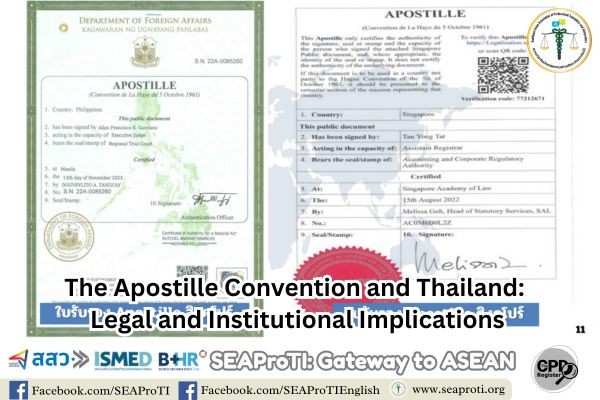
18 December 2025, Bangkok — This article examines the legal and professional reasoning behind why Thai Notarial Service Attorneys (NSAs) should not certify the accuracy of translated documents. It highlights the limitations of English-language competence among many practitioners and clarifies the functional distinction between certifying signatures and assessing the substantive accuracy of translated content. In addition, the article emphasizes a crucial point: the NSA mechanism is a domestic construct in Thailand and is not recognized under the Hague Apostille Convention. Consequently, certifications issued by NSAs have no international legal effect when compared to Apostille authentication or the notarial systems of Hague Contracting States. The article therefore proposes a clear division of roles between NSAs and certified translators to protect consumers and enhance the credibility of Thai translations in international contexts.
Roles and Scope of the Notarial Service Attorney
The core functions of an NSA include witnessing and certifying signatures, verifying identity, attesting copies, and certifying the execution of agreements.
However, their authority does not extend to examining document content, assessing linguistic accuracy, or certifying translation quality.
Put simply, NSAs verify form and identity, not content and language.
Lack of Hague Convention Status: A Critical Misconception
Despite common public misunderstanding, the NSA system in Thailand is not equivalent to a Notary Public system under the Hague framework.
- Many Hague member states use notaries public with internationally recognized competence.
- Thailand employs Notarial Service Attorneys created solely under the domestic regulations of the Lawyers Council of Thailand.
Moreover, an Apostille must be issued by a competent government authority, not by the Lawyers Council, nor by individual attorneys.
Therefore, documents certified by NSAs cannot constitute an Apostille and may be rejected in cross-border transactions, particularly in the context of translated documents.
Linguistic Limitations and Professional Risk
Most Thai attorneys have not undergone advanced language proficiency testing or structured English-language training for translation accuracy assessment. Consequently, they generally lack the necessary expertise to interpret specialized terminology, verify substantive consistency, and identify linguistic, semantic, and legal errors.
This exposes consumers to significant risk, as inaccurately certified translations can result in legal or administrative harm.
International Best Practice: Separation of Roles
Developed countries and Hague Contracting States—including Germany, France, Spain, Australia, and Japan—maintain a clear separation between the role of the notary and that of the translator. Translation accuracy is entrusted to sworn translators, certified translators, accredited translation professionals—rather than notarial officers.
Policy Recommendations
To reduce confusion and increase the credibility of Thai documents intended for foreign use, Thailand should reinforce a strict separation of roles between NSAs and translation professionals, promote certification systems for qualified translators, communicate the legal status and limitations of NSAs accurately, and avoid using NSA certification for translations intended for international submission.
References
- HCCH. (2023). Apostille Handbook: Guide to the Convention Abolishing the Requirement of Legalisation for Foreign Public Documents. The Hague.
- European Commission. (2019). Standards for sworn translation. Brussels.
- Australian Government. (2021). Certified translation guidelines and international recognition policy. Canberra.
- Sathirathai, P. (2022). Language competency in the Thai legal sector. Journal of Asian Legal Practice, 14(2), 45–63.
About Certified Translators, Translation Certifiers, and Certified Interpreters of SEAProTI
The Southeast Asian Association of Professional Translators and Interpreters (SEAProTI) has formally announced the qualifications and requirements for registration of Certified Translators, Translation Certification Providers, and Certified Interpreters in Sections 9 and 10 of the Royal Gazette, published by the Secretariat of the Cabinet, Office of the Prime Minister of Thailand, on 25 July 2024 (Vol. 141, Part 66 Ng, p. 100). Certified Translators, Translation Certification Providers, and Certified Interpreters
The Council of State has proposed the enactment of a Royal Decree, granting registered translators and recognized translation certifiers from professional associations or accredited language institutions the authority to provide legally valid translation certification (Letter to SEAProTI dated April 28, 2025)
SEAProTI is the first professional association in Thailand and Southeast Asia to implement a comprehensive certification system for translators, certifiers, and interpreters.
Head Office: Baan Ratchakru Building, No. 33, Room 402, Soi Phahonyothin 5, Phahonyothin Road, Phaya Thai District, Bangkok 10400, Thailand
Email: hello@seaproti.com | Tel.: (+66) 2-114-3128 (Office hours: Mon–Fri, 09:00–17:00)
เหตุใดทนายความผู้ให้บริการรับรองเอกสารและลายมือชื่อของไทยจึงไม่ควรรับรองความถูกต้องของคำแปลเอกสาร: บทวิเคราะห์เชิงกฎหมาย มาตรฐานวิชาชีพ และความเสี่ยงด้านภาษา
18 ธันวาคม 2568, กรุงเทพมหานคร – บทความนี้วิเคราะห์เหตุผลเชิงนโยบายและมาตรฐานวิชาชีพเกี่ยวกับการที่ทนายความผู้ให้บริการรับรองเอกสารและลายมือชื่อ (Notarial Service Attorney: NSA) ของไทยไม่ควรทำหน้าที่รับรองความถูกต้องของคำแปลเอกสาร โดยชี้ให้เห็นถึงข้อจำกัดด้านทักษะภาษาอังกฤษของผู้ประกอบวิชาชีพจำนวนมาก และความแตกต่างเชิงหน้าที่ระหว่างการรับรองลายมือชื่อกับการประเมินความถูกต้องของเนื้อหาเอกสาร นอกจากนี้บทความยังชี้ให้เห็นข้อเท็จจริงสำคัญว่า NSA เป็นระบบเฉพาะภายในประเทศไทยและ ไม่ได้อยู่ภายใต้อนุสัญญากรุงเฮก (Hague Apostille Convention) จึงไม่ก่อผลทางกฎหมายระหว่างประเทศเมื่อเทียบกับ Apostille หรือระบบรับรองเอกสารของประเทศภาคีเฮก บทความจึงเสนอข้อแยกบทบาทระหว่าง NSA กับผู้เชี่ยวชาญด้านการแปล เพื่อคุ้มครองผู้บริโภคและยกระดับมาตรฐานงานแปลไทยในบริบทระหว่างประเทศ
บทบาทและขอบเขตของ Notarial Service Attorney
หน้าที่หลักของ NSA ได้แก่
- รับรองลายมือชื่อ
- รับรองเอกลักษณ์บุคคล
- รับรองสำเนาถูกต้อง
- รับรองการลงลายมือชื่อของคู่สัญญา
แต่ไม่ครอบคลุมถึงการ:
- ตรวจสอบเนื้อหาเอกสาร
- ประเมินความถูกต้องด้านภาษา
- รับรองคุณภาพคำแปล
กล่าวคือ NSA ทำหน้าที่ตรวจสอบ “รูปแบบและตัวบุคคล” ไม่ใช่ “เนื้อหาและภาษา”
NSA ไม่อยู่ภายใต้อนุสัญญากรุงเฮก: ความเข้าใจผิดที่ต้องแก้ไข
NSA ไม่ใช่ระบบ Notary Public ของประเทศภาคีเฮก
ประเทศที่เข้าร่วมอนุสัญญาเฮกอาจใช้ Notary Public แต่ในไทยคือ Notarial Service Attorney ซึ่งสร้างโดยระเบียบของสภาทนายความในประเทศเท่านั้น
Apostille ต้องออกโดยหน่วยงานรัฐ
- ไม่ใช่สภาทนายความ
- ไม่ใช่ทนายความ
เอกสารที่ NSA รับรองไม่ใช่ Apostille
และอาจถูกปฏิเสธเมื่อนำไปใช้ในธุรกรรมต่างประเทศ โดยเฉพาะเอกสารแปล
ข้อจำกัดด้านทักษะภาษาและความเสี่ยง
ทนายความไทยส่วนใหญ่ไม่ได้รับการทดสอบหรือฝึกอบรมด้านภาษาอังกฤษเพื่อประเมินความถูกต้องของคำแปล ส่งผลให้ความสามารถในการทำความเข้าใจศัพท์เฉพาะ ตรวจสอบความสอดคล้องของเนื้อหา ตรวจจับข้อผิดพลาดเชิงไวยากรณ์หรือกฎหมาย อยู่ในระดับจำกัด จึงเพิ่มความเสี่ยงต่อการรับรองคำแปลที่ผิดพลาดและสร้างความเสียหายต่อประชาชน
แนวปฏิบัติสากล: แยกบทบาท Notarial และ Translator
ประเทศพัฒนาแล้ว และประเทศภาคีเฮก เช่น เยอรมนี ฝรั่งเศส สเปน ออสเตรเลีย ญี่ปุ่น กำหนดระบบแยกหน้าที่ระหว่างผู้รับรองลายมือชื่อ กับผู้เชี่ยวชาญด้านการแปล (Sworn/Certified Translators)
ข้อเสนอเชิงนโยบาย
เพื่อลดความสับสนและเพิ่มความน่าเชื่อถือของเอกสารไทย ควรแยกบทบาท NSA กับผู้รับรองคำแปล ส่งเสริมระบบรับรองนักแปลวิชาชีพ ประชาสัมพันธ์สถานะของ NSA อย่างถูกต้อง หลีกเลี่ยงการใช้ NSA รับรองคำแปลเพื่อนำไปใช้ในต่างประเทศ
บรรณานุกรม
- HCCH. (2023). Apostille Handbook: Guide to the Convention Abolishing the Requirement of Legalisation for Foreign Public Documents. The Hague.
- European Commission. (2019). Standards for sworn translation. Brussels.
- Australian Government. (2021). Certified translation guidelines and international recognition policy. Canberra.
- Sathirathai, P. (2022). Language competency in the Thai legal sector. Journal of Asian Legal Practice, 14(2), 45–63.
เกี่ยวกับนักแปลรับรอง ผู้รับรองการแปล และล่ามรับรองของสมาคมวิชาชีพนักแปลและล่ามแห่งเอเชียตะวันออกเฉียงใต้
สมาคมวิชาชีพนักแปลและล่ามแห่งเอเชียตะวันออกเฉียงใต้ (SEAProTI) ได้ประกาศหลักเกณฑ์และคุณสมบัติผู้ที่ขึ้นทะเบียนเป็น “นักแปลรับรอง (Certified Translators) และผู้รับรองการแปล (Translation Certification Providers) และล่ามรับรอง (Certified Interpreters)” ของสมาคม หมวดที่ 9 และหมวดที่ 10 ในราชกิจจานุเบกษา ของสำนักเลขาธิการคณะรัฐมนตรี ในสำนักนายกรัฐมนตรี แห่งราชอาณาจักรไทย ลงวันที่ 25 ก.ค. 2567 เล่มที่ 141 ตอนที่ 66 ง หน้า 100 อ่านฉบับเต็มได้ที่: นักแปลรับรอง ผู้รับรองการแปล และล่ามรับรอง
สำนักคณะกรรมการกฤษฎีกา เสนอให้ตราเป็นพระราชกฤษฎีกา โดยกำหนดให้นักแปลที่ขึ้นทะเบียน รวมถึงผู้รับรองการแปลจากสมาคมวิชาชีพหรือสถาบันสอนภาษาที่มีการอบรมและขึ้นทะเบียน สามารถรับรองคำแปหฟลได้ (จดหมายถึงสมาคม SEAProTI ลงวันที่ 28 เม.ย. 2568)
สมาคมวิชาชีพนักแปลและล่ามแห่งเอเชียตะวันออกเฉียงใต้ เป็นสมาคมวิชาชีพแห่งแรกในประเทศไทยและภูมิภาคเอเชียตะวันออกเฉียงใต้ที่มีระบบรับรองนักแปลรับรอง ผู้รับรองการแปล และล่ามรับรอง
สำนักงานใหญ่: อาคารบ้านราชครู เลขที่ 33 ห้อง 402 ซอยพหลโยธิน 5 ถนนพหลโยธิน แขวงพญาไท เขตพญาไท กรุงเทพมหานคร 10400 ประเทศไทย
อีเมล: hello@seaproti.com โทรศัพท์: (+66) 2-114-3128 (เวลาทำการ: วันจันทร์–วันศุกร์ เวลา 09.00–17.00 น.