


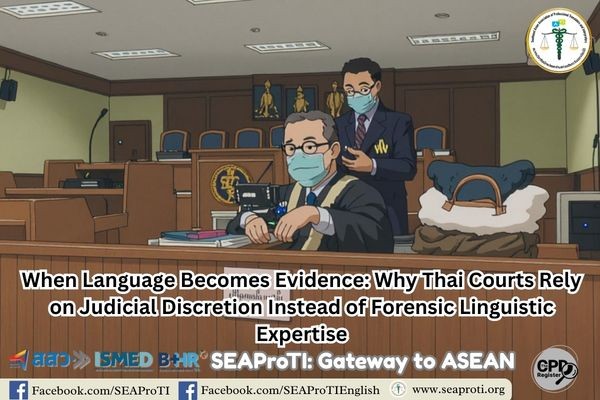
When Language Becomes Evidence:
Why Thai Courts Rely on Judicial Discretion Instead of Forensic Linguistic Expertise
Author: Wanitcha Sumanat, president of the Southeast Asian Association of Professional Translators and Interpreters (SEAProTI), arbitrator, mediator, and forensic linguist.
Abstract
This article examines a structural issue within the Thai justice system concerning the interpretation of foreign-language evidence in defamation cases. It focuses on the judicial practice of relying on discretion rather than engaging forensic linguistics experts, despite language functioning as primary evidence in such cases. Using legal and comparative analysis, the study highlights gaps in Thai procedural law, the absence of institutional integration of forensic linguistics, and the implications for fairness and international standards. It concludes by proposing policy recommendations to enhance the use of linguistic evidence in Thai courts.
Keywords: forensic linguistics, defamation, expert evidence, judicial discretion, linguistic evidence
1. Introduction
In an increasingly globalized legal environment, cross-linguistic disputes are becoming more prevalent, particularly in defamation cases where meaning, tone, and intent are central to legal determination. In such contexts, language is not merely a medium of communication but constitutes primary evidence.
However, in Thailand, courts frequently rely on judicial discretion to interpret foreign-language content rather than systematically engage experts in linguistics or forensic linguistics. This practice raises critical questions regarding evidentiary standards, interpretive accuracy, and alignment with international legal practices.
2. Thai Legal Framework and Judicial Discretion
Under the Thai Civil and Criminal Procedure Codes, courts possess broad discretion in evaluating evidence. Judges are empowered to determine whether to admit expert testimony and how much weight to assign to it. There is no statutory requirement mandating the use of linguistic experts in cases involving foreign-language evidence.
Thai Supreme Court jurisprudence reinforces this principle. For example, Supreme Court Decision No. 1651/2511 affirms that expert opinions do not bind courts and that courts may independently assess their evidentiary value. Consequently, expert linguistic analysis is often treated as optional rather than essential.
3. The Absence of Institutionalized Forensic Linguistics
Internationally, forensic linguistics is widely recognized as a critical tool in legal interpretation, particularly in analyzing meaning, intent, and discourse (Coulthard & Johnson, 2010; Solan & Tiersma, 2005).
In Thailand, however, forensic linguistics has not been formally institutionalized within the judicial system. Although professional bodies such as the Southeast Asian Association of Professional Translators and Interpreters contribute to professional standards and certification, there is no formal mechanism for integrating such expertise into court proceedings.
4. Comparative Legal Perspectives
In contrast, common law jurisdictions place significant emphasis on expert evidence. In the United States, the Daubert v. Merrell Dow Pharmaceuticals, Inc. (1993) decision established criteria for the admissibility of expert testimony, requiring scientific validity and methodological reliability.
Similarly, in the United Kingdom, cases such as R v. Evans [2009] demonstrate the use of linguistic analysis in evaluating digital and textual evidence. In Australia, Honeysett v The Queen [2014] clarified the boundaries and admissibility of expert opinion.
These examples illustrate that, in many jurisdictions, linguistic expertise is not optional but integral to adjudicating cases involving language interpretation.
5. Implications for Fairness and Accuracy
The absence of expert linguistic input in Thai court proceedings may lead to interpretive inaccuracies, particularly in cases involving implicature, tone, intent, and cultural context (Gibbons, 2003).
In defamation law, even subtle differences in wording can significantly alter legal outcomes. Without specialized analysis, courts risk misinterpreting the meaning, potentially undermining the fairness of proceedings and the parties’ rights.
6. Policy Recommendations
To address these challenges, several reforms are recommended. These include developing judicial guidelines for handling cross-linguistic cases, establishing a formal registry of forensic linguists, strengthening collaboration with professional organizations, and providing judicial training on linguistic evidence.
7. Conclusion
As cross-border communication continues to expand, courts must recognize language as a complex and technical form of evidence. Reliance solely on judicial discretion may be insufficient to address this complexity. The integration of forensic linguistic expertise into the judicial process is therefore not merely desirable but necessary to ensure accuracy, fairness, and alignment with international standards.
References:
- Coulthard, M., & Johnson, A. (2010). An introduction to forensic linguistics: Language in evidence (2nd ed.). Routledge.
- Daubert v. Merrell Dow Pharmaceuticals, Inc., 509 U.S. 579 (1993).
- Gibbons, J. (2003). Forensic linguistics: An introduction to language in the justice system. Blackwell Publishing.
- Honeysett v The Queen [2014] HCA 29.
- R v. Evans [2009] EWCA Crim 650.
- Solan, L. M., & Tiersma, P. M. (2005). Speaking of crime: The language of criminal justice. University of Chicago Press.
- Supreme Court of Thailand Decision No. 1651/2511.
About certified translators, translation certifiers, and certified interpreters associated with SEAProTI.
The Southeast Asian Association of Professional Translators and Interpreters (SEAProTI) has officially shared the qualifications and requirements for becoming Certified Translators, Translation Certification Providers, and Certified Interpreters in Sections 9 and 10 of the Royal Gazette, which was published by the Prime Minister’s Office in Thailand on July 25, 2024. Certified Translators, Translation Certification Providers, and Certified Interpreters
The Council of State has proposed the enactment of a Royal Decree, granting registered translators and recognised translation certifiers from professional associations or accredited language institutions the authority to provide legally valid translation certification (Letter to SEAProTI dated April 28, 2025)
SEAProTI is the first professional association in Thailand and Southeast Asia to implement a comprehensive certification system for translators, certifiers, and interpreters.
Head Office: Baan Ratchakru Building, No. 33, Room 402, Soi Phahonyothin 5, Phahonyothin Road, Phaya Thai District, Bangkok 10400, Thailand
Email: hello@seaproti.com | Tel.: (+66) 2-114-3128 (Office hours: Mon–Fri, 09:00–17:00).
เมื่อ “ภาษา” คือพยานหลัก:
การใช้ดุลพินิจศาลแทนผู้เชี่ยวชาญด้านนิติภาษาศาสตร์ในคดีหมิ่นประมาทข้ามภาษาในประเทศไทย
ผู้แต่ง: วณิชชา สุมานัส นายกสมาคมวิชาชีพนักแปลและล่ามแห่งเอเชียตะวันออกเฉียงใต้ (SEAProTI) อนุญาโตตุลาการ ผู้ไกล่เกลี่ย และผู้เชี่ยวชาญด้านนิติภาษาศาสตร์
บทคัดย่อ
บทความนี้วิเคราะห์ปัญหาเชิงโครงสร้างของกระบวนการยุติธรรมไทยในคดีหมิ่นประมาทที่เกี่ยวข้องกับภาษาต่างประเทศ โดยมุ่งเน้นการที่ศาลใช้ดุลพินิจในการตีความภาษาแทนการอาศัยผู้เชี่ยวชาญด้านนิติภาษาศาสตร์ (forensic linguistics) ทั้งที่ภาษาในคดีดังกล่าวมีสถานะเป็นพยานหลัก การศึกษานี้ใช้การวิเคราะห์เชิงกฎหมายเปรียบเทียบและนิติภาษาศาสตร์ เพื่อชี้ให้เห็นช่องว่างของกฎหมายไทย การขาดกลไกเชิงสถาบัน และผลกระทบต่อความเป็นธรรม พร้อมเสนอแนวทางเชิงนโยบายเพื่อยกระดับมาตรฐานการใช้หลักฐานทางภาษาให้สอดคล้องกับสากล
คำสำคัญ: นิติภาษาศาสตร์, หมิ่นประมาท, พยานผู้เชี่ยวชาญ, ดุลพินิจศาล, หลักฐานทางภาษา
1. บทนำ
ในยุคโลกาภิวัตน์ ข้อพิพาททางกฎหมายที่เกี่ยวข้องกับภาษาต่างประเทศเพิ่มขึ้นอย่างมีนัยสำคัญ โดยเฉพาะในคดีหมิ่นประมาทที่ “ความหมายของถ้อยคำ” เป็นหัวใจของข้อพิพาท ภาษาในบริบทดังกล่าวมิได้เป็นเพียงเครื่องมือสื่อสาร หากแต่เป็นพยานหลักที่สะท้อนเจตนาและผลทางกฎหมายโดยตรง อย่างไรก็ตาม แนวปฏิบัติของศาลไทยยังคงอาศัยดุลพินิจของผู้พิพากษาในการตีความภาษาเป็นสำคัญ แทนที่จะใช้ผู้เชี่ยวชาญด้านนิติภาษาศาสตร์อย่างเป็นระบบ
บทความนี้มีวัตถุประสงค์เพื่อวิเคราะห์สาเหตุเชิงโครงสร้างของปรากฏการณ์ดังกล่าว โดยใช้กรอบกฎหมายไทยควบคู่กับการเปรียบเทียบกับต่างประเทศ และเสนอแนวทางพัฒนาเพื่อให้การพิจารณาคดีที่เกี่ยวข้องกับภาษามีความแม่นยำและเป็นธรรมยิ่งขึ้น
2. กรอบกฎหมายไทยและบทบาทของดุลพินิจศาล
ภายใต้ประมวลกฎหมายวิธีพิจารณาความแพ่งและประมวลกฎหมายวิธีพิจารณาความอาญา ศาลมีอำนาจในการรับฟังและประเมินพยานหลักฐานอย่างกว้างขวาง โดยไม่มีข้อกำหนดที่บังคับให้ต้องใช้ผู้เชี่ยวชาญในกรณีที่มีประเด็นทางภาษา
แนววินิจฉัยของศาลฎีกาหลายคดีสะท้อนหลักการดังกล่าว เช่น คำพิพากษาศาลฎีกาที่ 1651/2511 ซึ่งวางหลักว่าศาลมีอำนาจในการชั่งน้ำหนักพยานหลักฐานตามดุลพินิจ และไม่จำเป็นต้องผูกพันกับความเห็นของผู้เชี่ยวชาญเสมอไป หลักการนี้ทำให้บทบาทของผู้เชี่ยวชาญด้านภาษาในทางปฏิบัติถูกลดทอนลง
3. นิติภาษาศาสตร์ในฐานะศาสตร์ที่ยังไม่ถูกบูรณาการ
ในระดับสากล นิติภาษาศาสตร์ได้รับการยอมรับอย่างกว้างขวางในฐานะเครื่องมือสำคัญในการวิเคราะห์ภาษาในบริบททางกฎหมาย (Coulthard & Johnson, 2010; Solan & Tiersma, 2005) โดยเฉพาะในระบบ common law ที่ให้ความสำคัญกับ expert testimony
ในทางตรงกันข้าม ประเทศไทยยังไม่มีระบบรับรองผู้เชี่ยวชาญด้านนิติภาษาศาสตร์ในเชิงสถาบัน แม้จะมีองค์กรวิชาชีพ เช่น Southeast Asian Association of Professional Translators and Interpreters ที่พยายามพัฒนามาตรฐานวิชาชีพ แต่ยังไม่มีการเชื่อมโยงอย่างเป็นทางการกับกระบวนการยุติธรรม
4. การวิเคราะห์เปรียบเทียบกับต่างประเทศ
ในระบบกฎหมายสหรัฐอเมริกา การใช้ผู้เชี่ยวชาญอยู่ภายใต้หลักเกณฑ์ที่ชัดเจน เช่น Daubert standard ซึ่งกำหนดให้ศาลต้องประเมินความน่าเชื่อถือของพยานผู้เชี่ยวชาญตามหลักวิทยาศาสตร์ ในคดี Daubert v. Merrell Dow Pharmaceuticals, Inc., 509 U.S. 579 (1993) ศาลสูงสุดของสหรัฐได้วางหลักเกณฑ์เกี่ยวกับการรับฟังผู้เชี่ยวชาญอย่างเป็นระบบ
ในสหราชอาณาจักร คดี R v. Evans [2009] EWCA Crim 650 แสดงให้เห็นถึงการใช้การวิเคราะห์ภาษาในการประเมินหลักฐานดิจิทัล ขณะที่ในออสเตรเลีย คดี Honeysett v The Queen [2014] HCA 29 ได้เน้นย้ำขอบเขตของความเห็นผู้เชี่ยวชาญ
แนวปฏิบัติเหล่านี้สะท้อนให้เห็นว่า ในระบบ common law ผู้เชี่ยวชาญด้านภาษาไม่ได้เป็นเพียงตัวเลือก แต่เป็นองค์ประกอบสำคัญในคดีที่เกี่ยวข้องกับการตีความข้อความ
5. ผลกระทบต่อความเป็นธรรมในกระบวนการยุติธรรม
การที่ศาลตีความภาษาโดยปราศจากผู้เชี่ยวชาญอาจนำไปสู่ความคลาดเคลื่อนในการตีความ โดยเฉพาะในกรณีที่เกี่ยวข้องกับความหมายแฝง (implicature) เจตนา (intent) และบริบททางวัฒนธรรม (Gibbons, 2003)
ในคดีหมิ่นประมาท ความแตกต่างเพียงเล็กน้อยในถ้อยคำสามารถเปลี่ยนผลทางกฎหมายได้อย่างมีนัยสำคัญ ดังนั้น การขาดการวิเคราะห์เชิงนิติภาษาศาสตร์จึงอาจส่งผลกระทบโดยตรงต่อความเป็นธรรมของคู่ความ
6. ข้อเสนอเชิงนโยบาย
เพื่อแก้ไขปัญหาดังกล่าว บทความนี้เสนอให้มีการพัฒนาในหลายระดับ ได้แก่ การกำหนดแนวปฏิบัติของศาลเกี่ยวกับการใช้ผู้เชี่ยวชาญในคดีข้ามภาษา การจัดตั้งระบบขึ้นทะเบียนผู้เชี่ยวชาญด้านนิติภาษาศาสตร์ การส่งเสริมบทบาทขององค์กรวิชาชีพ และการอบรมผู้พิพากษาเกี่ยวกับการใช้ภาษาเป็นพยานหลัก
7. บทสรุป
การพิจารณาคดีในยุคโลกาภิวัตน์จำเป็นต้องคำนึงถึงความซับซ้อนของภาษาในฐานะพยานหลัก การพึ่งพาดุลพินิจของศาลเพียงอย่างเดียวอาจไม่เพียงพอในการรองรับความซับซ้อนดังกล่าว การบูรณาการผู้เชี่ยวชาญด้านนิติภาษาศาสตร์เข้าสู่กระบวนการยุติธรรมจึงเป็นก้าวสำคัญในการยกระดับมาตรฐานความยุติธรรมของประเทศไทยให้สอดคล้องกับสากล
References
- Coulthard, M., & Johnson, A. (2010). An introduction to forensic linguistics: Language in evidence (2nd ed.). Routledge.
- Daubert v. Merrell Dow Pharmaceuticals, Inc., 509 U.S. 579 (1993).
- Gibbons, J. (2003). Forensic linguistics: An introduction to language in the justice system. Blackwell Publishing.
- Honeysett v The Queen [2014] HCA 29.
- R v. Evans [2009] EWCA Crim 650.
- Solan, L. M., & Tiersma, P. M. (2005). Speaking of crime: The language of criminal justice. University of Chicago Press.
- Supreme Court of Thailand Decision No. 1651/2511.
สมาคมวิชาชีพนักแปลและล่ามแห่งเอเชียตะวันออกเฉียงใต้ (SEAProTI) ได้ประกาศหลักเกณฑ์และคุณสมบัติของผู้ที่ขึ้นทะเบียนเป็น “นักแปลรับรอง (Certified Translators) และผู้รับรองการแปล (Translation Certification Providers) และล่ามรับรอง (Certified Interpreters)” ของสมาคม หมวดที่ 9 และหมวดที่ 10 ในราชกิจจานุเบกษา ของสำนักเลขาธิการคณะรัฐมนตรี ในสำนักนายกรัฐมนตรี แห่งราชอาณาจักรไทย ลงวันที่ 25 ก.ค. 2567 เล่มที่ 141 ตอนที่ 66 ง หน้า 100 อ่านฉบับเต็มได้ที่: นักแปลรับรอง ผู้รับรองการแปล และล่ามรับรอง
สำนักคณะกรรมการกฤษฎีกาเสนอให้ตราเป็นพระราชกฤษฎีกา โดยกำหนดให้นักแปลที่ขึ้นทะเบียน รวมถึงผู้รับรองการแปลจากสมาคมวิชาชีพหรือสถาบันสอนภาษาที่มีการอบรมและขึ้นทะเบียน สามารถรับรองคำแปลได้ (จดหมายถึงสมาคม SEAProTI ลงวันที่ 28 เม.ย. 2568)
สมาคมวิชาชีพนักแปลและล่ามแห่งเอเชียตะวันออกเฉียงใต้เป็นสมาคมวิชาชีพแห่งแรกและแห่งเดียวในประเทศไทยและภูมิภาคเอเชียตะวันออกเฉียงใต้ที่มีระบบรับรองนักแปลรับรอง ผู้รับรองการแปล และล่ามรับรอง
สำนักงานใหญ่: อาคารบ้านราชครู เลขที่ 33 ห้อง 402 ซอยพหลโยธิน 5 ถนนพหลโยธิน แขวงพญาไท เขตพญาไท กรุงเทพมหานคร 10400 ประเทศไทย
อีเมล: hello@seaproti.com โทรศัพท์: (+66) 2-114-3128 (เวลาทำการ: วันจันทร์–วันศุกร์ เวลา 09.00–17.00 น.