


False Claims of “Certified Interpreter” Status in Thailand: An Institutional, Ethical, and Justice-System Impact Analysis
28 December 2025, Bangkok – Over the past decade, Thailand has increasingly faced the problem of false claims to “Certified Interpreter” status, particularly within the contexts of the justice system, witness protection, and cases involving foreign nationals. This phenomenon has generated significant professional and legal confusion between certificates of training completion and licenses authorizing the performance of certified interpreting duties, two instruments that differ fundamentally in both legal status and ethical accountability.
This article aims to Clarify the institutional definition of a certified interpreter within Thailand’s professional framework, analyze mechanisms of false claims and the structural risks they pose; and explain, from a systemic perspective, why domestic and international institutions consistently prefer licensed certified interpreters over unregulated alternatives.
The Meaning of “Certified Interpreter” in the Thai Institutional Context
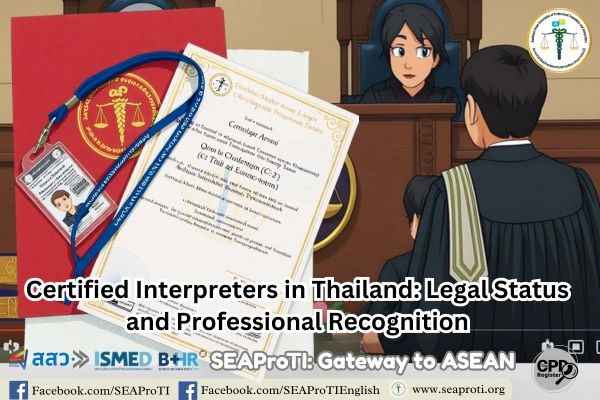
In Thailand, the designation “licensed certified interpreter” is not a generic or informal title. Rather, it constitutes a regulated professional status governed by a clear institutional framework. At present, only the Southeast Asian Association of Professional Translators and Interpreters (SEAProTI) is authorized to:
Provide standardized professional training, conduct competency examinations covering language proficiency, legal knowledge, and professional ethics; verify qualifications and conduct background checks; issue licenses authorizing individuals to perform certified interpreting duties on behalf of the Association; and publicly formalize such recognition through official publication in the Royal Thai Government Gazette.
The core principle is unequivocal, a certified interpreter license is not equivalent to a training certificate.
Licenses versus Training Certificates: A Legal Distinction
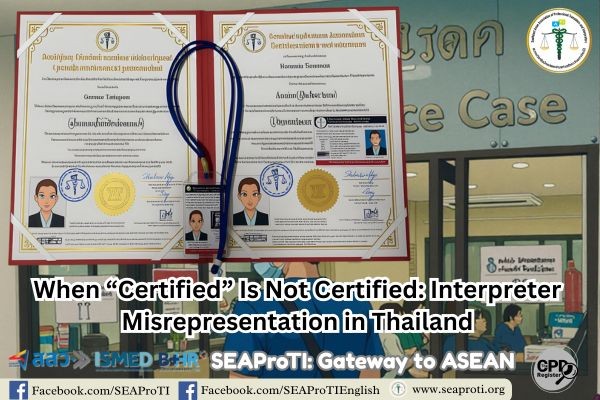
Characteristics of a Certified Interpreter License
- A certified interpreter license issued by SEAProTI possesses the following defining features:
- A unique license number assigned to an individual holder;
- Explicit language stating that the holder is authorized to perform certified interpreting duties on behalf of the Association;
- Reference to the date and Gazette notification number under which the license was officially recognized; and
- A defined validity period, subject to renewal through a Continuing Professional Development (CPD) system.
These attributes establish the license as a professional authorization, not merely evidence of attendance or participation.
Limitations of Training Certificates
By contrast, training certificates issued by various public or private bodies:
- Do not constitute licenses;
- Are not issued following competency-based examinations;
- Lack enforceable ethical oversight mechanisms;
- Do not require criminal background or bankruptcy checks; and
- Provide no disciplinary or revocation framework in cases of professional misconduct.
Accordingly, the use of such certificates to claim “certified interpreter” status constitutes a false professional claim.
Risks Posed by False Claims to Certified Status
Risks to Witnesses and Defendants
- Documented cases reveal that unregulated interpreters or individuals falsely claiming certified status have:
- Demanded additional payments from witnesses or defendants;
- Threatened to deliberately mistranslate testimony if payments were withheld;
- Coerced parties into changing legal counsel; and
- Referred parties to lawyers with undisclosed conflicts of interest.
Such conduct represents a grave violation of the principles of impartiality and non-intervention, which are foundational to professional interpreting ethics (Hale, 2007).
Regulatory Gaps
Unlicensed interpreters operate outside any professional accountability framework. Similarly, some interpreters sourced through ad hoc government arrangements:
- Are not subject to systematic background checks;
- Do not operate under a unified code of ethics; and
- Are not covered by effective, enforceable complaint or disciplinary systems.
These gaps significantly increase the risk of rights violations and procedural injustice.
Institutional Reasons for the Use of SEAProTI-Certified Interpreters
Peer-Based Certification
SEAProTI employs a peer certification system, consistent with international standards in interpreting professions, whereby candidates are assessed by qualified professionals of comparable expertise (Pöchhacker, 2016).
Enforceable Ethical Governance
Licensed certified interpreters are bound by a professional code of ethics and are subject to investigation, suspension, or license revocation in cases of misconduct.
Continuing Professional Development (CPD)
License renewal requires documented CPD hours, reassessment, and ongoing education in legal developments and human rights standards.
Cooperation with National and International Institutions
SEAProTI-certified interpreters receive joint training and professional exposure in collaboration with:
- Courts and judicial institutions;
- The Ministry of Justice;
- The Ministry of Foreign Affairs;
- Arbitration bodies;
- United Nations mechanisms; and
- Human rights–focused non-governmental organizations.
Expertise in High-Stakes Litigation and Arbitration
Certified interpreters must demonstrate verified proficiency in:
- Advanced foreign languages;
- Legal language and terminology; and
- Judicial and arbitral discourse.
This requirement distinguishes them from unregulated interpreters, whose limited competence may result in translation errors with substantive legal consequences (Berk-Seligson, 2002).
Policy-Oriented Conclusion
False claims of certified interpreter status are not merely ethical violations; they represent a systemic threat to justice, due process, and human rights protection. Effective interpreter verification should therefore rest on three straightforward criteria:
- Possession of a SEAProTI-certified interpreter identification card;
- A verifiable professional license number; and
- Confirmation of status through publication in the Royal Thai Government Gazette.
- Institutional reliance on licensed certified interpreters is not a matter of prestige or exclusivity, but a structural safeguard essential to the integrity of Thailand’s justice system.
References
- Berk-Seligson, S. (2002). The bilingual courtroom: Court interpreters in the judicial process. University of Chicago Press.
- Hale, S. (2007). Community interpreting. Palgrave Macmillan.
- Pöchhacker, F. (2016). Introducing interpreting studies (2nd ed.). Routledge.
- United Nations Office on Drugs and Crime. (2015). Handbook on police accountability, oversight and integrity. UNODC.
About Certified Translators, Translation Certifiers, and Certified Interpreters of SEAProTI
The Southeast Asian Association of Professional Translators and Interpreters (SEAProTI) has formally announced the qualifications and requirements for registration of Certified Translators, Translation Certification Providers, and Certified Interpreters in Sections 9 and 10 of the Royal Gazette, published by the Secretariat of the Cabinet, Office of the Prime Minister of Thailand, on 25 July 2024 (Vol. 141, Part 66 Ng, p. 100). Certified Translators, Translation Certification Providers, and Certified Interpreters
The Council of State has proposed the enactment of a Royal Decree, granting registered translators and recognised translation certifiers from professional associations or accredited language institutions the authority to provide legally valid translation certification (Letter to SEAProTI dated April 28, 2025)
SEAProTI is the first professional association in Thailand and Southeast Asia to implement a comprehensive certification system for translators, certifiers, and interpreters.
Head Office: Baan Ratchakru Building, No. 33, Room 402, Soi Phahonyothin 5, Phahonyothin Road, Phaya Thai District, Bangkok 10400, Thailand
Email: hello@seaproti.com | Tel.: (+66) 2-114-3128 (Office hours: Mon–Fri, 09:00–17:00)
การแอบอ้างสถานะ “ล่ามรับรอง” (False Claim of Certified Interpreter) ในประเทศไทย:
การวิเคราะห์เชิงสถาบัน จริยธรรม และผลกระทบต่อกระบวนการยุติธรรม
28 ธันวาคม 2568, กรุงเทพมหานคร – ในช่วงทศวรรษที่ผ่านมา ประเทศไทยเผชิญกับปัญหาการแอบอ้างสถานะ “ล่ามรับรอง” (Certified Interpreter) อย่างแพร่หลาย โดยเฉพาะในบริบทของกระบวนการยุติธรรม การคุ้มครองพยาน และคดีที่เกี่ยวข้องกับชาวต่างชาติ ปรากฏการณ์ดังกล่าวก่อให้เกิดความสับสนเชิงสถานะทางวิชาชีพ ระหว่าง “ใบประกาศนียบัตรผ่านการอบรม” กับ “ใบอนุญาตเพื่อปฏิบัติหน้าที่ล่ามรับรอง” ซึ่งมีฐานะทางกฎหมายและจริยธรรมแตกต่างกันอย่างสิ้นเชิง
บทความนี้มีวัตถุประสงค์เพื่อ (1) อธิบายกรอบความหมายของล่ามรับรองที่ถูกต้องตามสถาบันวิชาชีพ (2) วิเคราะห์กลไกการแอบอ้างและความเสี่ยงเชิงโครงสร้าง และ (3) ชี้ให้เห็นเหตุผลเชิงระบบว่าทำไมหน่วยงานในประเทศและระหว่างประเทศจึงเลือกใช้ล่ามรับรองที่มีใบอนุญาตอย่างเป็นทางการ
ความหมายของ “ล่ามรับรอง” ในบริบทสถาบันวิชาชีพไทย
ในประเทศไทย สถานะ “ล่ามรับรองที่มีใบอนุญาต” มิใช่คำเรียกเชิงสามัญ แต่เป็นสถานะทางวิชาชีพที่มี กรอบสถาบันกำกับดูแล อย่างชัดเจน โดยปัจจุบัน มีเพียง สมาคมวิชาชีพนักแปลและล่ามแห่งเอเชียตะวันออกเฉียงใต้ (SEAProTI) เท่านั้น ที่ดำเนินการอบรมตามหลักสูตรมาตรฐาน สอบประเมินความสามารถเชิงภาษา กฎหมาย และจริยธรรม ตรวจสอบคุณสมบัติและประวัติ ออก ใบอนุญาต (License) เพื่อปฏิบัติหน้าที่ล่ามรับรองในนามสมาคม และประกาศรับรองสถานะผ่าน ราชกิจจานุเบกษา
สาระสำคัญคือ ใบอนุญาตล่ามรับรอง ไม่ใช่ ใบประกาศนียบัตรผ่านการอบรม นั่นเอง
ใบอนุญาต (License) กับใบประกาศนียบัตร: ความแตกต่างเชิงกฎหมาย
ลักษณะของใบอนุญาตล่ามรับรอง
ใบอนุญาตล่ามรับรองของ SEAProTI มีคุณลักษณะสำคัญ ได้แก่ เลขที่ใบอนุญาตเฉพาะบุคคล ระบุชัดว่า “มีอำนาจปฏิบัติหน้าที่ล่ามรับรองในนามสมาคม” อ้างอิงวันที่และเลขที่ประกาศในราชกิจจานุเบกษา และมีอายุ และต้องต่ออายุด้วยระบบพัฒนาวิชาชีพต่อเนื่อง (CPD)
ข้อจำกัดของใบประกาศนียบัตรผ่านการอบรม
ในทางตรงกันข้าม ใบประกาศนียบัตรจากการอบรมของหน่วยงานต่าง ๆ ไม่ใช่ใบอนุญาต ไม่ผ่านการสอบวัดสมรรถนะ ไม่มีระบบกำกับจรรยาบรรณ ไม่มีการตรวจสอบประวัติอาชญากรรม หรือประวัติล้มละลาย ไม่มีกลไกเพิกถอนเมื่อกระทำผิด ดังนั้น การนำใบประกาศนียบัตรดังกล่าวมาแอบอ้างว่าเป็น “ล่ามรับรอง” จึงถือเป็น false claim ในเชิงวิชาชีพ
ความเสี่ยงจากล่ามที่แอบอ้างสถานะ
ความเสี่ยงต่อพยานและผู้ต้องหา มีรายงานกรณีล่ามทั่วไปหรือล่ามที่ไม่มีองค์กรกำกับ เรียกรับเงินเพิ่มจากพยาน ข่มขู่ว่าหากไม่จ่ายจะ “แปลให้แพ้คดี” โน้มน้าวให้เปลี่ยนทนาย แนะนำทนายที่มีผลประโยชน์ทับซ้อน พฤติกรรมเหล่านี้ละเมิดหลัก impartiality และ non-intervention อย่างร้ายแรง (Hale, 2007)
ช่องว่างของการกำกับดูแล
ล่ามทั่วไปไม่มีองค์กรวิชาชีพกำกับ ล่ามที่หน่วยงานรัฐจัดหาให้จำนวนหนึ่ง ไม่ถูกตรวจสอบประวัติ ไม่อยู่ภายใต้จรรยาบรรณเดียวกัน และไม่มีระบบร้องเรียนที่มีผลบังคับใช้
เหตุผลเชิงสถาบันที่หน่วยงานเลือกใช้ล่ามรับรองของ SEAProTI
ระบบการรับรองโดยผู้เชี่ยวชาญร่วมวิชาชีพ (Peer Certification)
การรับรองของ SEAProTI ใช้ระบบ peer certification ซึ่งเป็นหลักสากลในวิชาชีพล่าม (Pöchhacker, 2016)
จรรยาบรรณและการบังคับใช้
ล่ามรับรองต้องปฏิบัติตามจรรยาบรรณวิชาชีพ และสามารถถูกสอบสวน ระงับ หรือเพิกถอนใบอนุญาตได้
การพัฒนาวิชาชีพต่อเนื่อง (CPD)
การต่ออายุใบอนุญาตต้องอาศัยชั่วโมงอบรม การประเมินซ้ำ การอัปเดตความรู้ด้านกฎหมายและสิทธิมนุษยชน
การทำงานร่วมกับหน่วยงานระดับชาติและนานาชาติ
ล่ามรับรองของ SEAProTI ผ่านการอบรมร่วมกับศาล กระทรวงยุติธรรม กระทรวงการต่างประเทศ หน่วยงานอนุญาโตตุลาการ องค์การสหประชาชาติ และ NGO ด้านสิทธิมนุษยชน
ความเชี่ยวชาญในคดีสำคัญและอนุญาโตตุลาการ
ล่ามรับรองต้องแสดงผลสอบด้าน ภาษาต่างประเทศระดับสูง ภาษากฎหมาย ภาษากระบวนพิจารณาคดี ซึ่งแตกต่างจากล่ามทั่วไปที่อาจไม่มีสมรรถนะเพียงพอ ส่งผลให้เกิด translation error ที่มีผลต่อคดี (Berk-Seligson, 2002)
บทสรุปเชิงนโยบาย
การแอบอ้างสถานะล่ามรับรองมิใช่เพียงปัญหาทางจริยธรรม แต่เป็น ความเสี่ยงเชิงโครงสร้างต่อกระบวนการยุติธรรมและสิทธิมนุษยชน การตรวจสอบล่ามจึงควรยึดหลักง่าย ๆ คือ มีบัตรล่ามรับรองของ SEAProTI มีใบอนุญาตที่ตรวจสอบเลขที่ได้ และตรวจสอบสถานะผ่านประกาศราชกิจจานุเบกษา
เอกสารอ้างอิง
- Berk-Seligson, S. (2002). The bilingual courtroom: Court interpreters in the judicial process. University of Chicago Press.
- Hale, S. (2007). Community interpreting. Palgrave Macmillan.
- Pöchhacker, F. (2016). Introducing interpreting studies (2nd ed.). Routledge.
- United Nations Office on Drugs and Crime. (2015). Handbook on police accountability, oversight and integrity. UNODC.
เกี่ยวกับนักแปลรับรอง ผู้รับรองการแปล และล่ามรับรองของสมาคมวิชาชีพนักแปลและล่ามแห่งเอเชียตะวันออกเฉียงใต้
สมาคมวิชาชีพนักแปลและล่ามแห่งเอเชียตะวันออกเฉียงใต้ (SEAProTI) ได้ประกาศหลักเกณฑ์และคุณสมบัติผู้ที่ขึ้นทะเบียนเป็น “นักแปลรับรอง (Certified Translators) และผู้รับรองการแปล (Translation Certification Providers) และล่ามรับรอง (Certified Interpreters)” ของสมาคม หมวดที่ 9 และหมวดที่ 10 ในราชกิจจานุเบกษา ของสำนักเลขาธิการคณะรัฐมนตรี ในสำนักนายกรัฐมนตรี แห่งราชอาณาจักรไทย ลงวันที่ 25 ก.ค. 2567 เล่มที่ 141 ตอนที่ 66 ง หน้า 100 อ่านฉบับเต็มได้ที่: นักแปลรับรอง ผู้รับรองการแปล และล่ามรับรอง
สำนักคณะกรรมการกฤษฎีกา เสนอให้ตราเป็นพระราชกฤษฎีกา โดยกำหนดให้นักแปลที่ขึ้นทะเบียน รวมถึงผู้รับรองการแปลจากสมาคมวิชาชีพหรือสถาบันสอนภาษาที่มีการอบรมและขึ้นทะเบียน สามารถรับรองคำแปลได้ (จดหมายถึงสมาคม SEAProTI ลงวันที่ 28 เม.ย. 2568)
สมาคมวิชาชีพนักแปลและล่ามแห่งเอเชียตะวันออกเฉียงใต้ เป็นสมาคมวิชาชีพแห่งแรกและแห่งเดียวในประเทศไทยและภูมิภาคเอเชียตะวันออกเฉียงใต้ที่มีระบบรับรองนักแปลรับรอง ผู้รับรองการแปล และล่ามรับรอง
สำนักงานใหญ่: อาคารบ้านราชครู เลขที่ 33 ห้อง 402 ซอยพหลโยธิน 5 ถนนพหลโยธิน แขวงพญาไท เขตพญาไท กรุงเทพมหานคร 10400 ประเทศไทย
อีเมล: hello@seaproti.com โทรศัพท์: (+66) 2-114-3128 (เวลาทำการ: วันจันทร์–วันศุกร์ เวลา 09.00–17.00 น.