


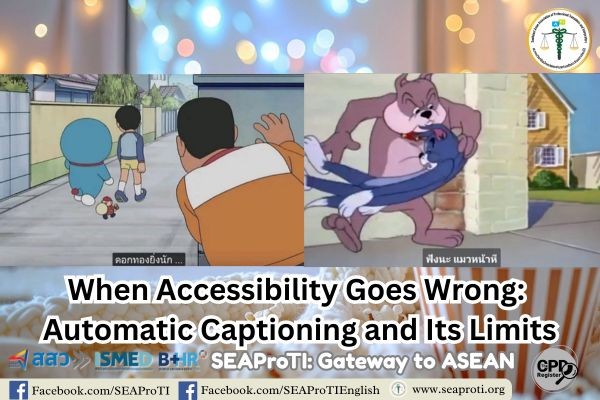
Captioning from Hell in the Name of Accessibility:
The Limits of Automatic Subtitling Systems for the Deaf and Hard of Hearing on Digital Platforms
By Wanitcha Sumanat, President, Southeast Asian Association of Professional Translators and Interpreters (SEAProTI) and Forensic Linguist
26 December 2025, Singapore – In recent years, major digital platforms have invested heavily in accessibility features aimed at users who are deaf or hard of hearing. One of the most prominent measures has been the deployment of automatic speech recognition and machine translation systems to generate real-time captions and subtitles for video content. At a policy level, these efforts signal a commendable intention to reduce informational inequality and broaden access to digital media.
Yet a growing body of widely shared examples, including cases of severely distorted, misleading, or offensive captions circulating on social media, reveals that such technologies remain structurally limited. These limitations do not merely affect linguistic accuracy; they have direct consequences for comprehension, cultural appropriateness, and, ultimately, the dignity of the users they are meant to serve.
This article examines the shortcomings of automatic captioning systems for deaf and hard-of-hearing users on social media platforms, drawing on perspectives from sociolinguistics, translation studies, and the ethics of communication.
Transcription Is Not the Same as Understanding Language
Automatic speech-to-text systems operate by matching acoustic patterns to linguistic data. They do not understand language as a form of social action. Audio in video clips—especially cartoons, comedy sketches, memes, or performative speech—often relies on intonation, rhythm, imitation, exaggeration, and non-lexical vocalizations. These elements carry meaning that cannot be captured through phonetic analysis alone.
When such sounds are mechanically converted into written words without contextual interpretation, the resulting text frequently diverges radically from the speaker’s intended meaning. These errors are then passed directly into automated translation pipelines, compounding the distortion at every stage.
Lexical Translation and Cultural Breakdown
Most machine translation systems continue to privilege lexical equivalence, particularly when situational and cultural context is absent. Words with multiple meanings or strong pragmatic force are therefore rendered literally, without regard for how meaning shifts across contexts.
This problem is especially visible with colloquial expressions, animal metaphors, teasing language, or playful insults. In one context, such expressions may function as friendly banter or humor; in another, they may carry sexual, vulgar, or socially inappropriate connotations. Automated systems are unable to distinguish these nuances. The result is not merely mistranslation but captions that violate social norms and ethical standards of communication.
Captions for the Deaf: A Higher Level of Responsibility
For hearing audiences, subtitles are supplementary. Sound remains the primary source of information. For deaf and hard-of-hearing users, however, captions are the only channel through which content is accessed. Errors in this context directly shape understanding, narrative coherence, and interpretation of speaker intent.
From an ethical standpoint, deploying inadequately tested systems for vulnerable user groups under the banner of accessibility risks creating a new form of inequality that might be called low-quality access. This runs counter to the fundamental principle of accessibility, which is not mere availability but meaningful and equitable participation.
Policy Lessons from Streaming Platforms
Recent developments among several major streaming services offer an instructive contrast. Many have moved away from fully automated workflows and reinstated human translators and editors, using AI as a support tool rather than as the final arbiter of meaning. This hybrid model has demonstrably improved subtitle quality, reduced ethical risks, and restored user trust.
These cases suggest that the problem is not technology itself, but the absence of clearly defined linguistic accountability within platform governance.
Conclusion
Subtitling is not a purely technical output; it is a social and linguistic act. Automatic captioning systems for deaf and hard-of-hearing users, though often motivated by good intentions, can produce harm when divorced from linguistic knowledge, cultural awareness, and ethical responsibility.
The so-called “captions from hell” should not be dismissed as humorous glitches. They are critical case studies reminding us that speed and cost efficiency cannot replace accountability in language use. In the domain of accessibility, human expertise remains indispensable—and will continue to be so for the foreseeable future.
The Southeast Asian Association of Professional Translators and Interpreters (SEAProTI) has formally announced the qualifications and requirements for registration of Certified Translators, Translation Certification Providers, and Certified Interpreters in Sections 9 and 10 of the Royal Gazette, published by the Secretariat of the Cabinet, Office of the Prime Minister of Thailand, on 25 July 2024 (Vol. 141, Part 66 Ng, p. 100). Certified Translators, Translation Certification Providers, and Certified Interpreters
The Council of State has proposed the enactment of a Royal Decree, granting registered translators and recognised translation certifiers from professional associations or accredited language institutions the authority to provide legally valid translation certification (Letter to SEAProTI dated April 28, 2025)
SEAProTI is the first professional association in Thailand and Southeast Asia to implement a comprehensive certification system for translators, certifiers, and interpreters.
Head Office: Baan Ratchakru Building, No. 33, Room 402, Soi Phahonyothin 5, Phahonyothin Road, Phaya Thai District, Bangkok 10400, Thailand
Email: hello@seaproti.com | Tel.: (+66) 2-114-3128 (Office hours: Mon–Fri, 09:00–17:00)
ซับนรกในนามของการเข้าถึง: ข้อจำกัดของระบบซับอัตโนมัติสำหรับผู้พิการทางการได้ยินบนแพลตฟอร์มดิจิทัล
บทความโดย วณิชชา สุมานัส นายกสมาคมวิชาชีพนักแปลและล่ามแห่งเอเชียตะวันออกเฉียงใต้ และนักนิติภาษาศาสตร์
26 ธันวาคม 2568, สิงคโปร์ – ในช่วงไม่กี่ปีที่ผ่านมา แพลตฟอร์มดิจิทัลขนาดใหญ่ได้พยายามพัฒนาระบบ accessibility เพื่อรองรับผู้พิการทางการได้ยิน โดยหนึ่งในมาตรการสำคัญคือการใช้ระบบถอดเสียงและแปลอัตโนมัติ (automatic captions and translation) เพื่อสร้างซับไตเติลจากเสียงในคลิปวิดีโอแบบเรียลไทม์ ความตั้งใจดังกล่าวสะท้อนความพยายามลดความเหลื่อมล้ำด้านการเข้าถึงข้อมูล อย่างไรก็ตาม กรณีศึกษาจำนวนมาก รวมถึง ตัวอย่างซับผิดพลาดอย่างรุนแรงที่แพร่หลายในสื่อสังคมออนไลน์ ชี้ให้เห็นว่า เทคโนโลยีดังกล่าวยังมีข้อจำกัดเชิงโครงสร้างที่อาจส่งผลกระทบต่อทั้งความเข้าใจ ความเหมาะสมทางภาษา และศักดิ์ศรีของผู้ใช้
บทความนี้มุ่งวิเคราะห์ปัญหาของระบบซับอัตโนมัติสำหรับผู้พิการทางการได้ยิน โดยเฉพาะในกรณีของแพลตฟอร์มโซเชียลมีเดีย ผ่านกรอบภาษาศาสตร์เชิงสังคม การแปล และจริยธรรมของการสื่อสาร
การถอดเสียงไม่ใช่การ “เข้าใจภาษา”
ระบบถอดเสียงอัตโนมัติ (speech-to-text) ทำงานโดยอาศัยการจับคู่รูปแบบเสียงกับคลังข้อมูลภาษา แต่ไม่ได้ “เข้าใจ” ภาษาในฐานะการกระทำทางสังคม (social action) เสียงในคลิปวิดีโอ โดยเฉพาะคลิปการ์ตูน คลิปตลก หรือคลิปที่มีการเลียนเสียง มักประกอบด้วยอารมณ์ น้ำเสียง การเน้นจังหวะ และเสียงอุทานที่ไม่สามารถแยกความหมายได้ด้วยการวิเคราะห์เชิงสัทศาสตร์เพียงอย่างเดียว
เมื่อระบบถอดเสียงแปลงเสียงเหล่านี้เป็นคำโดยปราศจากบริบท ผลลัพธ์จึงมักเป็นข้อความที่ผิดจากเจตนาการสื่อสารเดิมอย่างสิ้นเชิง ซึ่งความผิดพลาดนี้จะถูกส่งต่อไปยังขั้นตอนการแปลโดยอัตโนมัติทันที
การแปลเชิงพจนานุกรมกับความล้มเหลวทางวัฒนธรรม
ระบบแปลอัตโนมัติส่วนใหญ่ยังคงยึดหลักการแปลเชิงคำศัพท์ (lexical equivalence) เป็นหลัก โดยเฉพาะในกรณีที่ขาดข้อมูลบริบทเชิงสถานการณ์ (situational context) และเชิงวัฒนธรรม (cultural context) คำที่มีความหมายหลากหลายหรือมีนัยเชิงปฏิบัติ (pragmatic meaning) จึงมักถูกแปลแบบตรงตัว
กรณีคำเรียกสัตว์ คำล้อเลียน หรือคำในภาษาพูด ซึ่งในบริบทหนึ่งเป็นคำเป็นมิตรหรือใช้เชิงอุปมา แต่ในอีกบริบทหนึ่งอาจมีนัยทางเพศหรือความไม่เหมาะสม ระบบแปลอัตโนมัติไม่สามารถแยกแยะความแตกต่างดังกล่าวได้ ผลคือซับไตเติลที่ไม่เพียง “ผิดความหมาย” แต่ยังละเมิดบรรทัดฐานทางสังคมและจริยธรรมการสื่อสาร
ซับไตเติลสำหรับผู้พิการทางการได้ยิน: ความรับผิดชอบที่สูงกว่าปกติ
ซับไตเติลทั่วไปทำหน้าที่เสริมเสียง ผู้ชมยังสามารถใช้การได้ยินเป็นแหล่งข้อมูลหลัก แต่ซับไตเติลสำหรับผู้พิการทางการได้ยินคือ แหล่งข้อมูลเดียว ในการรับรู้เนื้อหา ความผิดพลาดของซับประเภทนี้จึงมีผลโดยตรงต่อความเข้าใจ การรับรู้เรื่องราว และการตีความเจตนาของผู้พูด
จากมุมมองด้านจริยธรรม การนำระบบที่ยังไม่พร้อมเชิงคุณภาพมาใช้กับกลุ่มเปราะบาง โดยอ้างเหตุผลด้านการเข้าถึง อาจกลายเป็นการสร้างความเหลื่อมล้ำรูปแบบใหม่ กล่าวคือ เป็นการ “ให้การเข้าถึงที่ด้อยคุณภาพ” ซึ่งขัดกับหลักการพื้นฐานของ accessibility ที่ควรมุ่งสร้างความเท่าเทียม ไม่ใช่เพียงความมีอยู่ของบริการ
บทเรียนเชิงนโยบายจากแพลตฟอร์มสตรีมมิง
พัฒนาการของแพลตฟอร์มสตรีมมิงบางรายในระยะหลังสะท้อนบทเรียนสำคัญ กล่าวคือ การกลับมาใช้มนุษย์ในกระบวนการแปลและตรวจแก้ซับไตเติล โดยผสมผสาน AI ในฐานะเครื่องมือช่วย ไม่ใช่ผู้ตัดสินความหมายขั้นสุดท้าย แนวทางนี้ช่วยยกระดับคุณภาพซับไตเติล ลดความเสี่ยงเชิงจริยธรรม และสร้างความเชื่อมั่นให้กับผู้ใช้ในระยะยาว
กรณีดังกล่าวชี้ให้เห็นว่า ปัญหาไม่ได้อยู่ที่การใช้เทคโนโลยี แต่คือการใช้เทคโนโลยีโดยไม่กำหนดกรอบความรับผิดชอบทางภาษาอย่างชัดเจน
บทสรุป
ซับไตเติลไม่ใช่ผลผลิตทางเทคนิค หากแต่เป็นการกระทำทางภาษาและสังคม ระบบซับอัตโนมัติสำหรับผู้พิการทางการได้ยิน แม้จะเกิดจากเจตนาที่ดี แต่หากขาดความเข้าใจในภาษาศาสตร์ วัฒนธรรม และจริยธรรม อาจสร้างผลกระทบที่รุนแรงกว่าการไม่ให้บริการเสียอีก
บทเรียนจาก “ซับนรก” เหล่านี้จึงไม่ใช่เรื่องขำขัน หากแต่เป็นกรณีศึกษาสำคัญที่ย้ำเตือนว่า ความเร็วและความประหยัดไม่อาจทดแทนความรับผิดชอบทางภาษาได้ และในบริบทของ accessibility มนุษย์ยังคงมีบทบาทที่เทคโนโลยีไม่อาจแทนที่ได้ในอนาคตอันใกล้
สมาคมวิชาชีพนักแปลและล่ามแห่งเอเชียตะวันออกเฉียงใต้ (SEAProTI) ได้ประกาศหลักเกณฑ์และคุณสมบัติผู้ที่ขึ้นทะเบียนเป็น “นักแปลรับรอง (Certified Translators) และผู้รับรองการแปล (Translation Certification Providers) และล่ามรับรอง (Certified Interpreters)” ของสมาคม หมวดที่ 9 และหมวดที่ 10 ในราชกิจจานุเบกษา ของสำนักเลขาธิการคณะรัฐมนตรี ในสำนักนายกรัฐมนตรี แห่งราชอาณาจักรไทย ลงวันที่ 25 ก.ค. 2567 เล่มที่ 141 ตอนที่ 66 ง หน้า 100 อ่านฉบับเต็มได้ที่: นักแปลรับรอง ผู้รับรองการแปล และล่ามรับรอง
สำนักคณะกรรมการกฤษฎีกา เสนอให้ตราเป็นพระราชกฤษฎีกา โดยกำหนดให้นักแปลที่ขึ้นทะเบียน รวมถึงผู้รับรองการแปลจากสมาคมวิชาชีพหรือสถาบันสอนภาษาที่มีการอบรมและขึ้นทะเบียน สามารถรับรองคำแปหฟลได้ (จดหมายถึงสมาคม SEAProTI ลงวันที่ 28 เม.ย. 2568)
สมาคมวิชาชีพนักแปลและล่ามแห่งเอเชียตะวันออกเฉียงใต้ เป็นสมาคมวิชาชีพแห่งแรกและแห่งเดียวในประเทศไทยและภูมิภาคเอเชียตะวันออกเฉียงใต้ที่มีระบบรับรองนักแปลรับรอง ผู้รับรองการแปล และล่ามรับรอง
สำนักงานใหญ่: อาคารบ้านราชครู เลขที่ 33 ห้อง 402 ซอยพหลโยธิน 5 ถนนพหลโยธิน แขวงพญาไท เขตพญาไท กรุงเทพมหานคร 10400 ประเทศไทย
อีเมล: hello@seaproti.com โทรศัพท์: (+66) 2-114-3128 (เวลาทำการ: วันจันทร์–วันศุกร์ เวลา 09.00–17.00 น.