


Verification of Certified Translator Licenses in Thailand: Regulatory Framework and Professional Significance
21 December 2025, Bangkok — This article presents guidelines for verifying the authenticity of certified translator licenses in Thailand, with emphasis on the regulatory framework of the Southeast Asian Association of Professional Translators and Interpreters (SEAProTI). It also examines the effects of verification mechanisms on document credibility, legal recognition, and professional standards at the international level. Furthermore, the discussion draws connections to global standards such as ISO and the certification systems of international translation associations including NAATI and ATA as comparative frameworks for academic analysis.
Introduction
Thailand’s translation industry continues to expand due to increasing demand for official documents, legal instruments, international contracts, and submissions to foreign authorities. Without mechanisms for verifying the credentials of translators, service users may face legal risks and financial consequences (Pym, 2014). Certification systems therefore constitute a crucial component in quality assurance and confidence-building for both domestic and international stakeholders.
SEAProTI and the Translator Certification Framework in Thailand
SEAProTI functions as the central professional body responsible for establishing standards and issuing Certified Translator licenses at the C1–C3 levels. Its certification criteria include linguistic proficiency, subject-matter competence, and adherence to professional ethics. Verification of licenses may be performed through:
- Checking official membership lists on the association’s website
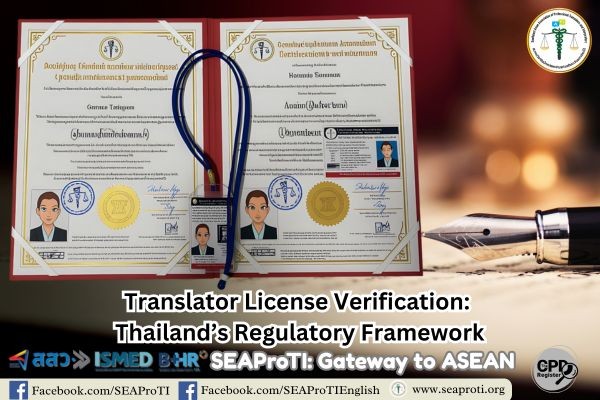
- Inspecting the association’s certification stamp, which must include:
- Membership number
- License level
- Expiry date
- Signature of the association president
Such verification mechanisms help reduce risks of document forgery and strengthen the credibility of certified translations in governmental and consular procedures (Hertog, 2021).
Importance of License Verification
The verification of translator credentials is significant on multiple levels:
Document credibility
Certified translations issued by unauthorized translators may be rejected by embassies, courts, or administrative authorities.
Consumer protection
Verification reduces risks of fraud and prevents unnecessary expenses for reissued documents.
Professional standards
Certification frameworks promote governance and accountability (Hale, 2020).
International alignment
Transparent systems and accessible registries support alignment with international standards, including:
- NAATI (Australia)
- ATA (United States)
- ISO 17100
Comparison with International Standards
SEAProTI’s framework shares multiple features with NAATI and ATA, such as:
- Skills-based examinations
- License renewal requirements
- Professional codes of ethics
- Online registers for credential-holder verification
Research in translation certification confirms that accessible registries reduce forgery, improve transparency, and enhance the status of the profession (Chan, 2017).
Conclusion
Verification of certified translator licenses plays an essential role in ensuring credibility and maintaining professional standards. Public databases, license-stamp inspection, and verification by telephone or email help safeguard service users and elevate certification systems to international expectations. These mechanisms are vital for recognition of certified translations in governmental and cross-border contexts.
References
- Chan, S. (2017). The development of translator certification systems in Asia. Translation and Interpreting Studies, 12(2), 145–162.
- Hale, S. (2020). Community interpreting: Research and practice in Australia. Routledge.
- Hertog, E. (2021). Legal translation and interpreting: Certification and quality assurance systems. Journal of Legal Translation, 5(1), 33–52.
- Pym, A. (2014). Exploring translation theories (2nd ed.). Routledge.
About Certified Translators, Translation Certifiers, and Certified Interpreters of SEAProTI
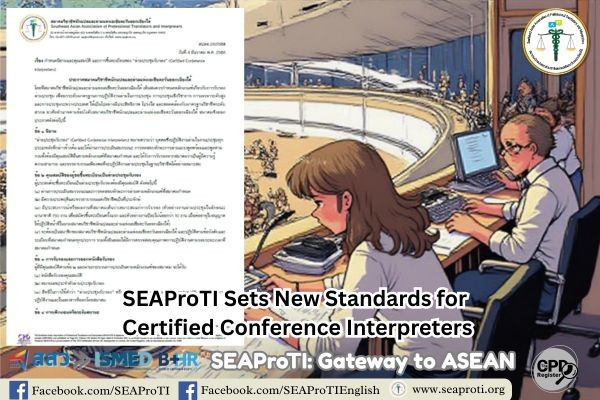
The Southeast Asian Association of Professional Translators and Interpreters (SEAProTI) has formally announced the qualifications and requirements for registration of Certified Translators, Translation Certification Providers, and Certified Interpreters in Sections 9 and 10 of the Royal Gazette, published by the Secretariat of the Cabinet, Office of the Prime Minister of Thailand, on 25 July 2024 (Vol. 141, Part 66 Ng, p. 100). Certified Translators, Translation Certification Providers, and Certified Interpreters
The Council of State has proposed the enactment of a Royal Decree, granting registered translators and recognized translation certifiers from professional associations or accredited language institutions the authority to provide legally valid translation certification (Letter to SEAProTI dated April 28, 2025)
SEAProTI is the first professional association in Thailand and Southeast Asia to implement a comprehensive certification system for translators, certifiers, and interpreters.
Head Office: Baan Ratchakru Building, No. 33, Room 402, Soi Phahonyothin 5, Phahonyothin Road, Phaya Thai District, Bangkok 10400, Thailand
Email: hello@seaproti.com | Tel.: (+66) 2-114-3128 (Office hours: Mon–Fri, 09:00–17:00)
การตรวจสอบความถูกต้องของใบอนุญาตนักแปลรับรองในประเทศไทย: กรอบมาตรฐานและความสำคัญเชิงวิชาชีพ
บทนำ
อุตสาหกรรมการแปลในประเทศไทยเติบโตอย่างต่อเนื่องตามความต้องการด้านเอกสารราชการ นิติกรรม สัญญาระหว่างประเทศ และกระบวนการยื่นเอกสารในหน่วยงานระหว่างประเทศ หากปราศจากกลไกตรวจสอบความถูกต้องของผู้แปล ผู้ใช้บริการอาจประสบกับความเสี่ยงด้านกฎหมายและผลเสียทางเศรษฐกิจ (Pym, 2014) ดังนั้น ระบบการรับรองนักแปลจึงเป็นองค์ประกอบสำคัญที่ช่วยกำกับคุณภาพและสร้างความเชื่อมั่นต่อผู้ใช้บริการในระดับประเทศและต่างประเทศ
SEAProTI และกรอบการรับรองนักแปลในประเทศไทย
SEAProTI ทำหน้าที่เป็นองค์กรกลางด้านมาตรฐานวิชาชีพและออกใบอนุญาต Certified Translator ระดับ C1–C3 โดยใช้เกณฑ์ตามมาตรฐานทักษะภาษา ความรู้เฉพาะด้าน และจรรยาบรรณวิชาชีพ การตรวจสอบใบอนุญาตสามารถทำได้ผ่าน:
- การตรวจสอบรายชื่อทางการบนเว็บไซต์สมาคม
- การตรวจตราตราประทับที่ต้องประกอบด้วย
- หมายเลขสมาชิก
- ระดับใบอนุญาต
- วันหมดอายุ
- ลายเซ็นนายกสมาคม
ความสำคัญของการตรวจสอบใบอนุญาต
การตรวจสอบความถูกต้องของผู้แปลมีความสำคัญในหลายระดับ ดังนี้:
ความน่าเชื่อถือของเอกสาร
เอกสารรับรองของนักแปลที่ไม่ได้รับอนุญาตอาจถูกปฏิเสธจากสถานทูตหรือศาล
การคุ้มครองผู้บริโภค
ลดความเสี่ยงด้านการฉ้อโกงและค่าใช้จ่ายซ้ำซ้อน
มาตรฐานเชิงวิชาชีพ
ระบบการรับรองช่วยสร้างระบบกำกับ (governance) และ accountability (Hale, 2020)
ความเป็นสากล
รายชื่อและระบบตรวจสอบที่โปร่งใสช่วยเสริมความเข้ากันได้กับมาตรฐานต่างประเทศ เช่น
- NAATI (ออสเตรเลีย)
- ATA (สหรัฐฯ)
- ISO 17100
ระบบของ SEAProTI มีความคล้ายคลึงกับ NAATI และ ATA ในด้าน:
- การสอบวัดความสามารถ
- การต่ออายุใบอนุญาต
- จรรยาบรรณวิชาชีพ
- ระบบตรวจสอบผู้ถือใบอนุญาตออนไลน์
สรุป
ระบบการตรวจสอบใบอนุญาตนักแปลรับรองมีบทบาทสำคัญในการสร้างความน่าเชื่อถือและมาตรฐานทางวิชาชีพ การมีฐานข้อมูลสมาชิก การตรวจสอบตราประทับและใบอนุญาต ตลอดจนช่องทางตรวจสอบทางโทรศัพท์และอีเมล ช่วยคุ้มครองผู้ใช้บริการและยกระดับมาตรฐานสู่ระดับสากล อันเป็นปัจจัยสำคัญต่อการยอมรับเอกสารในระดับราชการและนานาชาติ
บรรณานุกรม
- Chan, S. (2017). The development of translator certification systems in Asia. Translation and Interpreting Studies, 12(2), 145–162.
- Hale, S. (2020). Community interpreting: Research and practice in Australia. Routledge.
- Hertog, E. (2021). Legal translation and interpreting: Certification and quality assurance systems. Journal of Legal Translation, 5(1), 33–52.
- Pym, A. (2014). Exploring translation theories (2nd ed.). Routledge.
สมาคมวิชาชีพนักแปลและล่ามแห่งเอเชียตะวันออกเฉียงใต้ (SEAProTI) ได้ประกาศหลักเกณฑ์และคุณสมบัติผู้ที่ขึ้นทะเบียนเป็น “นักแปลรับรอง (Certified Translators) และผู้รับรองการแปล (Translation Certification Providers) และล่ามรับรอง (Certified Interpreters)” ของสมาคม หมวดที่ 9 และหมวดที่ 10 ในราชกิจจานุเบกษา ของสำนักเลขาธิการคณะรัฐมนตรี ในสำนักนายกรัฐมนตรี แห่งราชอาณาจักรไทย ลงวันที่ 25 ก.ค. 2567 เล่มที่ 141 ตอนที่ 66 ง หน้า 100 อ่านฉบับเต็มได้ที่: นักแปลรับรอง ผู้รับรองการแปล และล่ามรับรอง
สำนักคณะกรรมการกฤษฎีกา เสนอให้ตราเป็นพระราชกฤษฎีกา โดยกำหนดให้นักแปลที่ขึ้นทะเบียน รวมถึงผู้รับรองการแปลจากสมาคมวิชาชีพหรือสถาบันสอนภาษาที่มีการอบรมและขึ้นทะเบียน สามารถรับรองคำแปหฟลได้ (จดหมายถึงสมาคม SEAProTI ลงวันที่ 28 เม.ย. 2568)
สมาคมวิชาชีพนักแปลและล่ามแห่งเอเชียตะวันออกเฉียงใต้ เป็นสมาคมวิชาชีพแห่งแรกในประเทศไทยและภูมิภาคเอเชียตะวันออกเฉียงใต้ที่มีระบบรับรองนักแปลรับรอง ผู้รับรองการแปล และล่ามรับรอง
สำนักงานใหญ่: อาคารบ้านราชครู เลขที่ 33 ห้อง 402 ซอยพหลโยธิน 5 ถนนพหลโยธิน แขวงพญาไท เขตพญาไท กรุงเทพมหานคร 10400 ประเทศไทย
อีเมล: hello@seaproti.com โทรศัพท์: (+66) 2-114-3128 (เวลาทำการ: วันจันทร์–วันศุกร์ เวลา 09.00–17.00 น.