


Official Document Translation and Translator’s Liability in the Legalization Process
A Legal, Ethical, and Professional Analysis in the Thai Context
31 December 2025, Bangkok — The translation of official documents for use abroad constitutes a critically important process in the contexts of migration, education, employment, and engagement with foreign state authorities and diplomatic missions. Although, in practice, this process is often perceived merely as “paperwork” or an “administrative procedure,” from a legal perspective, the translation of official documents constitutes an act with direct legal consequences for the document holder.
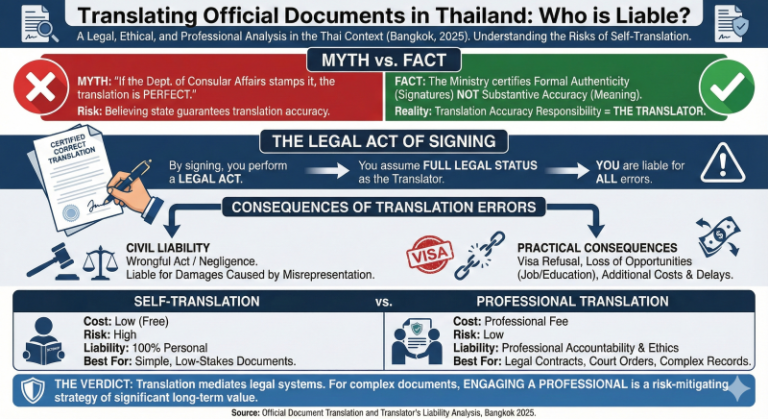
In Thailand, document legalization by the Department of Consular Affairs, Ministry of Foreign Affairs serves to certify the formal authenticity of documents and translations. However, a common misconception persists that consular legalization equates to official verification of the substantive accuracy of the translated content. This article seeks to clarify that responsibility for translation accuracy—and liability in the event of errors—remains with the translator, whether a professional translator or an individual who translates their own documents.
The Legal Nature of Document Legalization
From a legal standpoint, legalization is a process that certifies the source, authenticity, and formal validity of a document or translation, rather than an examination of its substantive content or semantic accuracy. This principle aligns with international practice, which clearly distinguishes between:
- Formal authenticity, and
- Substantive accuracy.
Accordingly, the Department of Consular Affairs does not function as an evaluator of translation quality and bears no legal responsibility for errors arising from inaccurate translations. Such responsibility is transferred to the individual who signs and certifies the translation.
Legal Status of the Translator in Cases of Self-Translation
When a document owner prepares a translation independently and signs it as a Certified Correct Translation, that individual assumes full legal status as a translator. The legal consequences of this status include:
- Full responsibility for the accuracy of the translation in all respects;
- Inability to claim the role of a mere applicant or document submitter in order to evade liability; and
- Exposure to civil liability if translation errors cause damage.
From a jurisprudential perspective, such certification constitutes a representation of fact to state authorities and third parties. If the representation is false or materially inaccurate, it may give rise to liability under civil law principles.
Legal Liability Arising from Translation Errors
Civil Liability
Translation errors that cause damage to oneself or others may constitute a wrongful act or negligence, particularly where such errors arise from a lack of due care. Common examples include incorrect legal terminology, misrepresentation of personal status, or inaccurate translation of official titles or institutional names. Resulting damages may include visa refusal, loss of educational or employment opportunities, or additional costs incurred for resubmission and reprocessing.
Administrative Consequences and Indirect Legal Effects
Although the translator is not a public official, inaccurate translations may prompt foreign authorities to:
- Reject the submitted documents;
- Request revised or additional translations; or
- Question the credibility and reliability of the applicant.
While these outcomes may not constitute formal legal sanctions, they carry significant implications for individual rights and opportunities.
Ethical Responsibility of the Translator
From an ethical standpoint, official document translation must be grounded in honesty, diligence, and professional competence. Certifying a translation without adequate linguistic or contextual knowledge may constitute a breach of the duty of care, a foundational principle of translation ethics (Pym, 2012).
Scholars in legal translation emphasize that legal translators act as legal mediators between linguistic systems. Even minor inaccuracies can result in materially different legal consequences (Šarčević, 1997).
Discussion: Translation as a Legal Act
The analysis demonstrates that official document translation should not be regarded as a mere mechanical transfer of text based on standardized templates. Rather, it constitutes a legally consequential act, particularly where the translator personally certifies the translation. The primary risk does not lie solely in grammatical structure, but in interpretation and terminological choices that must align precisely with legal context and administrative frameworks.
Conclusion
This article argues that while self-translation for the purpose of document legalization is legally permissible and may reduce financial costs, it entails full legal and ethical liability for the translator. Decisions to translate official documents independently should therefore be based on a clear understanding of the potential legal consequences. Where documents are complex or involve substantial legal rights, engaging a professional translator operating within a recognized framework of accountability and professional standards remains a risk-mitigating strategy of significant long-term value.
References
- Department of Consular Affairs, Ministry of Foreign Affairs of Thailand. (2023). Legalization of documents.
- Gouadec, D. (2007). Translation as a profession. John Benjamins Publishing Company.
- Pym, A. (2012). On translator ethics: Principles for mediation between cultures. John Benjamins Publishing Company.
- Šarčević, S. (1997). New approach to legal translation. Kluwer Law International.
About Certified Translators, Translation Certifiers, and Certified Interpreters of SEAProTI
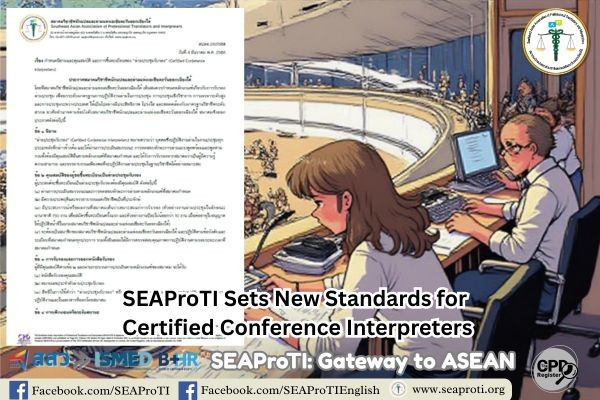
The Southeast Asian Association of Professional Translators and Interpreters (SEAProTI) has formally announced the qualifications and requirements for registration of Certified Translators, Translation Certification Providers, and Certified Interpreters in Sections 9 and 10 of the Royal Gazette, published by the Secretariat of the Cabinet, Office of the Prime Minister of Thailand, on 25 July 2024 (Vol. 141, Part 66 Ng, p. 100). Certified Translators, Translation Certification Providers, and Certified Interpreters
The Council of State has proposed the enactment of a Royal Decree, granting registered translators and recognised translation certifiers from professional associations or accredited language institutions the authority to provide legally valid translation certification (Letter to SEAProTI dated April 28, 2025)
SEAProTI is the first professional association in Thailand and Southeast Asia to implement a comprehensive certification system for translators, certifiers, and interpreters.
Head Office: Baan Ratchakru Building, No. 33, Room 402, Soi Phahonyothin 5, Phahonyothin Road, Phaya Thai District, Bangkok 10400, Thailand
Email: hello@seaproti.com | Tel.: (+66) 2-114-3128 (Office hours: Mon–Fri, 09:00–17:00)
การแปลเอกสารราชการและความรับผิดของผู้แปลในกระบวนการรับรองนิติกรณ์
การวิเคราะห์เชิงกฎหมาย จริยธรรม และวิชาชีพในบริบทประเทศไทย
31 ธันวาคม 2568, กรุงเทพมหานคร – การแปลเอกสารราชการเพื่อใช้ในต่างประเทศเป็นกระบวนการที่มีความสำคัญอย่างยิ่งในบริบทของการย้ายถิ่น การศึกษา การทำงาน และการติดต่อกับหน่วยงานรัฐหรือสถานทูตต่างประเทศ แม้ในทางปฏิบัติ กระบวนการดังกล่าวจะถูกมองว่าเป็น “งานเอกสาร” หรือ “ขั้นตอนทางธุรการ” แต่ในเชิงกฎหมาย การแปลเอกสารราชการเป็นการกระทำที่ก่อให้เกิดผลทางกฎหมายโดยตรงต่อผู้ใช้เอกสาร
ในประเทศไทย การรับรองนิติกรณ์โดย กรมการกงสุล กระทรวงการต่างประเทศ มีบทบาทในการรับรองความถูกต้องเชิงรูปแบบของเอกสารและคำแปล อย่างไรก็ดี ความเข้าใจที่คลาดเคลื่อนซึ่งพบได้บ่อย คือการเชื่อว่าการประทับตรานิติกรณ์เท่ากับการรับรองความถูกต้องของเนื้อหาคำแปล บทความนี้มีวัตถุประสงค์เพื่อชี้ให้เห็นว่า ความถูกต้องของการแปลและความรับผิดในกรณีเกิดความผิดพลาด ยังคงตกอยู่กับ “ผู้แปล” ไม่ว่าจะเป็นนักแปลวิชาชีพหรือเจ้าของเอกสารที่แปลด้วยตนเอง
ลักษณะทางกฎหมายของการรับรองนิติกรณ์
ในเชิงกฎหมาย การรับรองนิติกรณ์ (legalization) เป็นกระบวนการรับรองแหล่งที่มาและความแท้จริงของเอกสารหรือคำแปล มิใช่การตรวจสอบสาระหรือความถูกต้องของเนื้อหา หลักการนี้สอดคล้องกับแนวปฏิบัติสากลที่แยกความรับผิดระหว่าง
- การรับรองความถูกต้องเชิงรูปแบบ (formal authenticity) และ
- ความถูกต้องเชิงเนื้อหา (substantive accuracy)
กรมการกงสุลจึงไม่ทำหน้าที่เป็นผู้ประเมินคุณภาพการแปล และไม่รับผิดชอบต่อผลทางกฎหมายที่เกิดจากการแปลผิดพลาด ความรับผิดดังกล่าวถูกส่งผ่านไปยังผู้ที่ลงนามรับรองคำแปลโดยตรง
สถานะทางกฎหมายของผู้แปลในกรณีแปลด้วยตนเอง
เมื่อเจ้าของเอกสารจัดทำคำแปลด้วยตนเองและลงนามรับรองคำแปลในลักษณะ Certified Correct Translation บุคคลดังกล่าวย่อมมีสถานะทางกฎหมายเป็น “ผู้แปล” อย่างสมบูรณ์ ผลที่ตามมาคือ
- ต้องรับผิดในความถูกต้องของการแปลทุกประการ
- ไม่สามารถอ้างสถานะเป็นเพียง “ผู้ยื่นเอกสาร” เพื่อหลีกเลี่ยงความรับผิด
- อยู่ภายใต้หลักความรับผิดทางแพ่ง หากการแปลผิดก่อให้เกิดความเสียหาย
ในเชิงนิติศาสตร์ การกระทำดังกล่าวถือเป็นการแสดงเจตนารับรองข้อเท็จจริง (representation) ต่อหน่วยงานรัฐและบุคคลที่สาม ซึ่งหากเป็นเท็จหรือคลาดเคลื่อน อาจก่อให้เกิดความรับผิดตามกฎหมายแพ่ง
ความรับผิดทางกฎหมายจากการแปลผิด
ความรับผิดทางแพ่ง
การแปลผิดที่ก่อให้เกิดความเสียหายแก่ตนเองหรือผู้อื่น อาจเข้าข่ายการกระทำละเมิด โดยเฉพาะในกรณีที่ความผิดพลาดนั้นเกิดจากความประมาทเลินเล่อ เช่น การใช้คำทางกฎหมายผิด การแปลสถานภาพบุคคลคลาดเคลื่อน หรือการแปลตำแหน่งราชการไม่ตรงกับความเป็นจริง ความเสียหายที่เกิดขึ้นอาจอยู่ในรูปของการถูกปฏิเสธวีซ่า การเสียโอกาสทางการศึกษา หรือค่าใช้จ่ายในการดำเนินการใหม่
ผลทางปกครองและผลกระทบทางอ้อม
แม้ผู้แปลจะไม่อยู่ในฐานะเจ้าหน้าที่รัฐ แต่การแปลผิดอาจส่งผลให้หน่วยงานต่างประเทศ
- ปฏิเสธการรับเอกสาร
- ขอเอกสารเพิ่มเติมหรือคำแปลใหม่
- ตั้งข้อสงสัยต่อความน่าเชื่อถือของผู้ยื่นคำขอ
ผลกระทบเหล่านี้แม้ไม่ใช่โทษทางกฎหมายโดยตรง แต่มีนัยสำคัญในเชิงสิทธิและโอกาสของบุคคล
ความรับผิดเชิงจริยธรรมของผู้แปล
ในทางจริยธรรม การแปลเอกสารราชการต้องตั้งอยู่บนหลักความซื่อสัตย์ ความรอบคอบ และความสามารถทางวิชาชีพ การลงนามรับรองคำแปลโดยปราศจากความรู้หรือความเข้าใจเพียงพอ อาจถือเป็นการฝ่าฝืนหลัก duty of care ซึ่งเป็นหลักพื้นฐานของจริยธรรมวิชาชีพการแปล (Pym, 2012)
นักวิชาการด้านการแปลกฎหมายชี้ว่า ผู้แปลเอกสารทางกฎหมายทำหน้าที่เป็น “ผู้อำนวยการสื่อสารทางกฎหมายระหว่างระบบภาษา” (legal mediator) ซึ่งความผิดพลาดเพียงเล็กน้อยอาจนำไปสู่ผลทางกฎหมายที่แตกต่างอย่างมีนัยสำคัญ (Šarčević, 1997)
อภิปรายผล: การแปลในฐานะการกระทำทางกฎหมาย
ผลการวิเคราะห์ชี้ให้เห็นว่า การแปลเอกสารราชการไม่ควรถูกมองว่าเป็นเพียงการถ่ายโอนถ้อยคำตามแบบฟอร์ม แต่เป็นการกระทำที่มีผลผูกพันทางกฎหมายโดยตรง โดยเฉพาะในบริบทที่ผู้แปลเป็นผู้รับรองคำแปลด้วยตนเอง ความเสี่ยงจึงไม่ได้อยู่ที่โครงสร้างภาษาเท่านั้น หากแต่อยู่ที่การตีความและการเลือกใช้คำที่สอดคล้องกับบริบทกฎหมายและโครงสร้างราชการ
สรุป
บทความนี้เสนอว่า การแปลเอกสารราชการเพื่อขอรับรองนิติกรณ์ด้วยตนเอง แม้จะชอบด้วยกฎหมายและช่วยลดต้นทุน แต่แลกมาด้วยความรับผิดทางกฎหมายและจริยธรรมอย่างเต็มรูปแบบของผู้แปล การตัดสินใจแปลเองจึงควรตั้งอยู่บนความเข้าใจถึงผลทางกฎหมายที่อาจเกิดขึ้น หากเอกสารมีความซับซ้อนหรือมีผลทางสิทธิสูง การใช้ผู้แปลวิชาชีพที่มีกรอบความรับผิดและมาตรฐานรองรับ ยังคงเป็นแนวทางที่ลดความเสี่ยงในระยะยาวได้อย่างมีนัยสำคัญ
References
- Department of Consular Affairs, Ministry of Foreign Affairs of Thailand. (2023). Legalization of documents.
- Gouadec, D. (2007). Translation as a profession. John Benjamins Publishing Company.
- Pym, A. (2012). On translator ethics: Principles for mediation between cultures. John Benjamins Publishing Company.
- Šarčević, S. (1997). New approach to legal translation. Kluwer Law International.
เกี่ยวกับนักแปลรับรอง ผู้รับรองการแปล และล่ามรับรองของสมาคมวิชาชีพนักแปลและล่ามแห่งเอเชียตะวันออกเฉียงใต้
สมาคมวิชาชีพนักแปลและล่ามแห่งเอเชียตะวันออกเฉียงใต้ (SEAProTI) ได้ประกาศหลักเกณฑ์และคุณสมบัติผู้ที่ขึ้นทะเบียนเป็น “นักแปลรับรอง (Certified Translators) และผู้รับรองการแปล (Translation Certification Providers) และล่ามรับรอง (Certified Interpreters)” ของสมาคม หมวดที่ 9 และหมวดที่ 10 ในราชกิจจานุเบกษา ของสำนักเลขาธิการคณะรัฐมนตรี ในสำนักนายกรัฐมนตรี แห่งราชอาณาจักรไทย ลงวันที่ 25 ก.ค. 2567 เล่มที่ 141 ตอนที่ 66 ง หน้า 100 อ่านฉบับเต็มได้ที่: นักแปลรับรอง ผู้รับรองการแปล และล่ามรับรอง
สำนักคณะกรรมการกฤษฎีกา เสนอให้ตราเป็นพระราชกฤษฎีกา โดยกำหนดให้นักแปลที่ขึ้นทะเบียน รวมถึงผู้รับรองการแปลจากสมาคมวิชาชีพหรือสถาบันสอนภาษาที่มีการอบรมและขึ้นทะเบียน สามารถรับรองคำแปลได้ (จดหมายถึงสมาคม SEAProTI ลงวันที่ 28 เม.ย. 2568)
สมาคมวิชาชีพนักแปลและล่ามแห่งเอเชียตะวันออกเฉียงใต้ เป็นสมาคมวิชาชีพแห่งแรกและแห่งเดียวในประเทศไทยและภูมิภาคเอเชียตะวันออกเฉียงใต้ที่มีระบบรับรองนักแปลรับรอง ผู้รับรองการแปล และล่ามรับรอง
สำนักงานใหญ่: อาคารบ้านราชครู เลขที่ 33 ห้อง 402 ซอยพหลโยธิน 5 ถนนพหลโยธิน แขวงพญาไท เขตพญาไท กรุงเทพมหานคร 10400 ประเทศไทย
อีเมล: hello@seaproti.com โทรศัพท์: (+66) 2-114-3128 (เวลาทำการ: วันจันทร์–วันศุกร์ เวลา 09.00–17.00 น.