



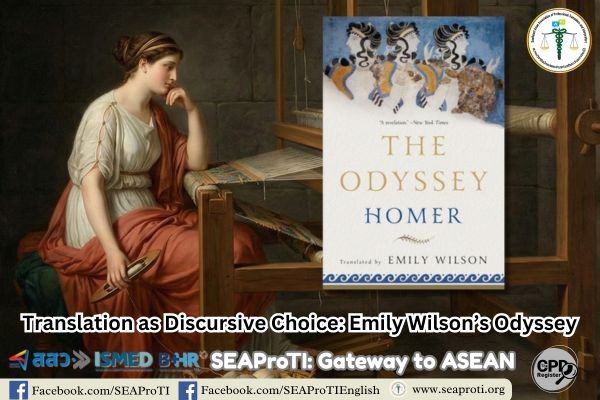
Translation as Discursive Choice: A Case Study of The Odyssey Translated by Emily Wilson
4 January 2026, Bangkok – This article aims to analyze translation as a process of discursive choice, using as a case study the English translation of The Odyssey by Homer produced by Emily Wilson, a British classicist and translator. Wilson is the first woman to translate this Greek epic into English in its entirety. The article argues that translation is not a neutral transfer of meaning but rather a series of decisions that reflect ideological frameworks, social values, and cultural biases specific to each historical period. Through an analysis of the Greek term ἀμφίπολοι (amphipoloi), which was rendered with moralized connotations in earlier translations but translated more neutrally in Wilson’s version, the study highlights the relationship between language, translation, and discursive power. It emphasizes the ethical responsibility of translators as active producers of meaning.
Keywords: discursive translation, classical translation, gender bias, translation ethics, The Odyssey
Introduction
In contemporary translation studies, the long-standing assumption that translation functions as a neutral transfer of meaning has been increasingly questioned. Many scholars argue that translation is a form of social and discursive practice deeply intertwined with power, ideology, and cultural context (Venuti, 1995; Tymoczko, 2003). Emily Wilson’s statement that “a translator always makes choices” reflects a theoretical stance that positions the translator as an active agent in the construction of meaning rather than a passive conduit.
The purpose of this article is to examine Wilson’s translation of The Odyssey in order to demonstrate how lexical choices in translation can operate as forms of discursive intervention, challenging traditional interpretations shaped by the gender norms and moral frameworks of earlier translating cultures.
Theoretical Framework: Translation as Discursive Practice
Critical translation theory conceptualizes language not merely as a communicative tool but as a mechanism for producing and sustaining power relations (Fairclough, 1995). From this perspective, translation does not simply mirror the source text; it also reflects the translator’s worldview and the norms of the target culture.
Venuti’s (1995) concept of translator’s invisibility explains how translations that emphasize fluency and naturalness in the target language often conceal the ideological decisions underlying the translated text. Such apparent transparency can mask interpretive interventions that significantly reshape the source text’s meanings.
The Term ἀμφίπολοι (amphipoloi) and the Problem of Moralized Meaning
In Ancient Greek, the term ἀμφίπολοι refers to “female attendants” or “women servants” and carries no inherent sexual or moral connotations (Liddell et al., 1996). However, English translations from the nineteenth and early twentieth centuries frequently rendered the term as whores, sluts, or wenches, thereby introducing moral judgments absent from the original text.
These lexical choices reflect Victorian social values that linked women’s social position to sexual morality. As a result, female characters in The Odyssey were systematically interpreted in a derogatory light, despite the lack of textual evidence in the Greek original to support such readings.
Emily Wilson’s Translation: Restoring Semantic Neutrality
Wilson translates ἀμφίπολοι as “maids”, a term that closely corresponds to the functional and social meaning of the Greek original while avoiding moral judgment. This decision is not merely lexical but ideological, as it challenges a long-standing translation tradition that embedded gendered bias into the English reception of the epic.
As Wilson (2018) argues, a responsible translation should not reproduce the translator’s own moral framework but should instead allow readers to encounter the worldview of the source text within its historical context. Translation, in this sense, becomes an ethical practice as much as a linguistic one.
Discussion: Translation, Power, and Responsibility
This case study demonstrates that translation is a site where discursive power operates subtly yet decisively. Minor shifts in moral or evaluative language can transform the representation of entire groups of characters and shape cultural interpretations over generations.
Translators, therefore, cannot plausibly claim complete neutrality. Instead, they must recognize their role as agents who shape meaning and bear responsibility for the social and cultural consequences of their linguistic choices.
Conclusion
This article argues that translation should be understood as an inherently discursive act grounded in choice. Emily Wilson’s translation of The Odyssey illustrates how returning to meanings closer to the source text can function as a powerful critique of entrenched biases within translation traditions. In a global context where translation plays a crucial role in the production and circulation of knowledge, ethical awareness on the part of translators is not optional but essential.
References
- Fairclough, N. (1995). Critical discourse analysis: The critical study of language. London, UK: Longman.
- Liddell, H. G., Scott, R., & Jones, H. S. (1996). A Greek–English lexicon (9th ed.). Oxford, UK: Oxford University Press.
- Tymoczko, M. (2003). Ideology and the position of the translator. In M. Calzada Pérez (Ed.), Apropos of ideology (pp. 181–201). Manchester, UK: St. Jerome.
- Venuti, L. (1995). The translator’s invisibility: A history of translation. London, UK: Routledge.
- Wilson, E. (2018). The Odyssey (Trans.). New York, NY: W. W. Norton & Company.
About Certified Translators, Translation Certifiers, and Certified Interpreters of SEAProTI
The Southeast Asian Association of Professional Translators and Interpreters (SEAProTI) has formally announced the qualifications and requirements for registration of Certified Translators, Translation Certification Providers, and Certified Interpreters in Sections 9 and 10 of the Royal Gazette, published by the Secretariat of the Cabinet, Office of the Prime Minister of Thailand, on 25 July 2024 (Vol. 141, Part 66 Ng, p. 100). Certified Translators, Translation Certification Providers, and Certified Interpreters
The Council of State has proposed the enactment of a Royal Decree, granting registered translators and recognised translation certifiers from professional associations or accredited language institutions the authority to provide legally valid translation certification (Letter to SEAProTI dated April 28, 2025)
SEAProTI is the first professional association in Thailand and Southeast Asia to implement a comprehensive certification system for translators, certifiers, and interpreters.
Head Office: Baan Ratchakru Building, No. 33, Room 402, Soi Phahonyothin 5, Phahonyothin Road, Phaya Thai District, Bangkok 10400, Thailand
Email: hello@seaproti.com | Tel.: (+66) 2-114-3128 (Office hours: Mon–Fri, 09:00–17:00)
การแปลในฐานะการเลือกเชิงวาทกรรม: กรณีศึกษาการแปล The Odyssey ของ Emily Wilson
4 มกราคม 2569, กรุงเทพมหานคร – บทความนี้มุ่งวิเคราะห์การแปลในฐานะกระบวนการเลือกเชิงวาทกรรม (discursive choice) โดยใช้กรณีศึกษาการแปล The Odyssey ของโฮเมอร์โดย Emily Wilson นักคลาสสิกและนักแปลชาวอังกฤษ ผู้เป็นสตรีคนแรกที่แปลมหากาพย์กรีกเรื่องนี้เป็นภาษาอังกฤษอย่างสมบูรณ์ บทความเสนอว่าการแปลไม่ใช่การถ่ายทอดความหมายอย่างเป็นกลาง หากแต่เป็นการตัดสินใจที่สะท้อนกรอบอุดมการณ์ ค่านิยมทางสังคม และอคติของผู้แปลในแต่ละยุคสมัย ผ่านการวิเคราะห์คำภาษากรีก ἀμφίπολοι (amphipoloi) ซึ่งถูกแปลอย่างมีนัยเชิงศีลธรรมในงานแปลก่อนหน้า และถูกปรับให้เป็นกลางมากขึ้นในงานแปลของ Wilson บทความนี้ชี้ให้เห็นถึงความสัมพันธ์ระหว่างภาษา การแปล และอำนาจทางวาทกรรม โดยเน้นบทบาทความรับผิดชอบเชิงจริยธรรมของนักแปลในฐานะผู้สร้างความหมาย
คำสำคัญ: การแปลเชิงวาทกรรม, การแปลคลาสสิก, อคติทางเพศ, จริยธรรมการแปล, The Odyssey
ในงานศึกษาด้านการแปลร่วมสมัย แนวคิดที่ว่าการแปลเป็นกระบวนการถ่ายทอดความหมายอย่างเป็นกลาง (neutral transfer) ได้ถูกตั้งคำถามอย่างต่อเนื่อง นักวิชาการจำนวนมากเสนอว่าการแปลคือการปฏิบัติการทางสังคมและวาทกรรมที่เกี่ยวข้องกับอำนาจ อุดมการณ์ และบริบททางวัฒนธรรม (Venuti, 1995; Tymoczko, 2003) คำกล่าวของ Emily Wilson ที่ว่า “A translator always makes choices” จึงสะท้อนจุดยืนทางทฤษฎีที่มองผู้แปลในฐานะผู้มีบทบาทเชิงรุกในการสร้างความหมาย
บทความนี้มีวัตถุประสงค์เพื่อวิเคราะห์กรณีศึกษาการแปล The Odyssey ของ Wilson เพื่อแสดงให้เห็นว่าการเลือกคำในการแปลสามารถทำหน้าที่เป็นการแทรกแซงเชิงวาทกรรม (discursive intervention) ที่ท้าทายการอ่านแบบดั้งเดิมซึ่งถูกกำหนดโดยอคติทางเพศและศีลธรรมของสังคมผู้แปลในอดีต
กรอบแนวคิด: การแปลในฐานะการปฏิบัติการเชิงวาทกรรม
ทฤษฎีการแปลเชิงวิพากษ์มองว่าภาษาไม่ใช่เพียงเครื่องมือสื่อสาร แต่เป็นกลไกในการสร้างและคงไว้ซึ่งความสัมพันธ์เชิงอำนาจ (Fairclough, 1995) ในบริบทนี้ การแปลไม่เพียงสะท้อนต้นฉบับ หากแต่สะท้อน โลกทัศน์ของผู้แปล และ บรรทัดฐานของสังคมเป้าหมาย
Venuti (1995) เสนอแนวคิดเรื่อง translator’s invisibility เพื่ออธิบายว่าการแปลแบบที่อ้างความเป็นธรรมชาติและความลื่นไหลในภาษาเป้าหมาย มักปกปิดการตัดสินใจเชิงอุดมการณ์ของผู้แปลไว้เบื้องหลังความ “อ่านง่าย” ของตัวบท
คำว่า ἀμφίπολοι (amphipoloi) และปัญหาการเติมความหมายเชิงศีลธรรม
คำว่า ἀμφίπολοι ในภาษากรีกโบราณหมายถึง “หญิงรับใช้” หรือ “ผู้ช่วยหญิง” โดยไม่มีนัยเชิงศีลธรรมหรือทางเพศ (Liddell et al., 1996) อย่างไรก็ตาม งานแปลภาษาอังกฤษในศตวรรษที่ 19 และต้นศตวรรษที่ 20 กลับเลือกใช้คำอย่าง whores, sluts หรือ wenches ซึ่งเพิ่มมิติของการตัดสินเชิงศีลธรรมที่ไม่ปรากฏในต้นฉบับ
การเลือกคำดังกล่าวสะท้อนค่านิยมของสังคมวิกตอเรียที่ผูกโยงสถานะของผู้หญิงเข้ากับศีลธรรมทางเพศ และส่งผลให้ตัวละครหญิงใน The Odyssey ถูกตีความในเชิงลบอย่างเป็นระบบ แม้ต้นฉบับจะไม่ได้สนับสนุนการอ่านเช่นนั้น
การแปลของ Emily Wilson: การคืนความเป็นกลางเชิงความหมาย
Wilson เลือกแปลคำว่า ἀμφίπολοι เป็น “maids” ซึ่งเป็นคำที่ใกล้เคียงกับความหมายเชิงหน้าที่ในต้นฉบับ และหลีกเลี่ยงการตัดสินเชิงศีลธรรม การตัดสินใจนี้ไม่ได้เป็นเพียงการเลือกคำศัพท์ หากแต่เป็นการท้าทายประเพณีการแปลที่สืบทอดอคติทางเพศมาอย่างยาวนาน
ดังที่ Wilson (2018) ระบุ การแปลที่ดีไม่ควรทำให้ตัวบท “สะท้อนศีลธรรมของผู้แปล” แต่ควรเปิดพื้นที่ให้ผู้อ่านเข้าใจโลกทัศน์ของต้นฉบับในบริบทของมันเอง การแปลในลักษณะนี้จึงเป็นการปฏิบัติการเชิงจริยธรรมมากพอ ๆ กับการปฏิบัติการเชิงภาษา
อภิปรายผล: การแปล อำนาจ และความรับผิดชอบ
กรณีศึกษานี้แสดงให้เห็นว่า การแปลเป็นพื้นที่ที่อำนาจเชิงวาทกรรมถูกใช้อย่างแยบยล การเพิ่มหรือลดนัยทางศีลธรรมเพียงเล็กน้อยสามารถเปลี่ยนภาพของกลุ่มตัวละครทั้งหมด และส่งผลต่อการอ่านเชิงวัฒนธรรมในระยะยาว
ดังนั้น ผู้แปลจึงไม่อาจอ้างความเป็นกลางอย่างสมบูรณ์ได้ แต่ต้องตระหนักถึงบทบาทของตนในฐานะผู้มีอำนาจในการกำหนดความหมาย และต้องรับผิดชอบต่อผลทางสังคมของการเลือกเชิงภาษาเหล่านั้น
บทสรุป
บทความนี้เสนอว่าการแปลควรถูกทำความเข้าใจในฐานะการเลือกเชิงวาทกรรมที่หลีกเลี่ยงไม่ได้ กรณีการแปล The Odyssey ของ Emily Wilson แสดงให้เห็นว่าการกลับไปสู่ความหมายที่ใกล้เคียงต้นฉบับมากขึ้น สามารถทำหน้าที่เป็นการวิพากษ์อคติที่ฝังรากอยู่ในประเพณีการแปลได้อย่างมีพลัง ในโลกที่การแปลมีบทบาทต่อการสร้างความรู้และความเข้าใจระหว่างวัฒนธรรม ความตระหนักเชิงจริยธรรมของผู้แปลจึงเป็นสิ่งจำเป็นอย่างยิ่ง
เอกสารอ้างอิง
- Fairclough, N. (1995). Critical discourse analysis: The critical study of language. London, UK: Longman.
- Liddell, H. G., Scott, R., & Jones, H. S. (1996). A Greek–English lexicon (9th ed.). Oxford, UK: Oxford University Press.
- Tymoczko, M. (2003). Ideology and the position of the translator. In M. Calzada Pérez (Ed.), Apropos of ideology (pp. 181–201). Manchester, UK: St. Jerome.
- Venuti, L. (1995). The translator’s invisibility: A history of translation. London, UK: Routledge.
- Wilson, E. (2018). The Odyssey (Trans.). New York, NY: W. W. Norton & Company.
เกี่ยวกับนักแปลรับรอง ผู้รับรองการแปล และล่ามรับรองของสมาคมวิชาชีพนักแปลและล่ามแห่งเอเชียตะวันออกเฉียงใต้
สมาคมวิชาชีพนักแปลและล่ามแห่งเอเชียตะวันออกเฉียงใต้ (SEAProTI) ได้ประกาศหลักเกณฑ์และคุณสมบัติผู้ที่ขึ้นทะเบียนเป็น “นักแปลรับรอง (Certified Translators) และผู้รับรองการแปล (Translation Certification Providers) และล่ามรับรอง (Certified Interpreters)” ของสมาคม หมวดที่ 9 และหมวดที่ 10 ในราชกิจจานุเบกษา ของสำนักเลขาธิการคณะรัฐมนตรี ในสำนักนายกรัฐมนตรี แห่งราชอาณาจักรไทย ลงวันที่ 25 ก.ค. 2567 เล่มที่ 141 ตอนที่ 66 ง หน้า 100 อ่านฉบับเต็มได้ที่: นักแปลรับรอง ผู้รับรองการแปล และล่ามรับรอง
สำนักคณะกรรมการกฤษฎีกา เสนอให้ตราเป็นพระราชกฤษฎีกา โดยกำหนดให้นักแปลที่ขึ้นทะเบียน รวมถึงผู้รับรองการแปลจากสมาคมวิชาชีพหรือสถาบันสอนภาษาที่มีการอบรมและขึ้นทะเบียน สามารถรับรองคำแปลได้ (จดหมายถึงสมาคม SEAProTI ลงวันที่ 28 เม.ย. 2568)
สมาคมวิชาชีพนักแปลและล่ามแห่งเอเชียตะวันออกเฉียงใต้ เป็นสมาคมวิชาชีพแห่งแรกและแห่งเดียวในประเทศไทยและภูมิภาคเอเชียตะวันออกเฉียงใต้ที่มีระบบรับรองนักแปลรับรอง ผู้รับรองการแปล และล่ามรับรอง
สำนักงานใหญ่: อาคารบ้านราชครู เลขที่ 33 ห้อง 402 ซอยพหลโยธิน 5 ถนนพหลโยธิน แขวงพญาไท เขตพญาไท กรุงเทพมหานคร 10400 ประเทศไทย
อีเมล: hello@seaproti.com โทรศัพท์: (+66) 2-114-3128 (เวลาทำการ: วันจันทร์–วันศุกร์ เวลา 09.00–17.00 น.