



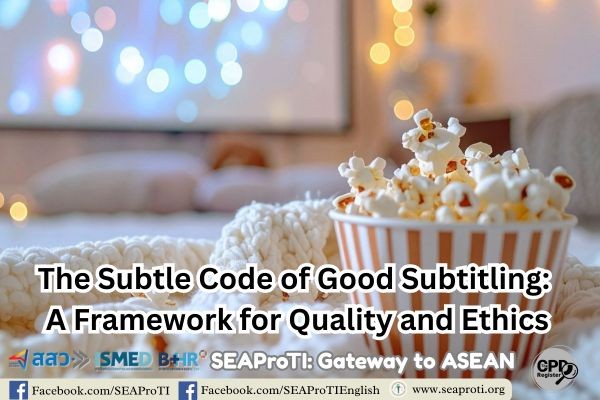
The Subtle Code of Good Subtitling: A Professional Framework for Quality and Ethics in Audiovisual Translation
16 December 2025, Bangkok – The rapid expansion of global streaming platforms and audiovisual content distribution has elevated subtitling from a peripheral linguistic service to a core mechanism of cross-cultural communication. However, this growth has also exposed persistent challenges related to quality assurance, professional ethics, and working conditions within the subtitling industry. The Subtle Code of Good Subtitling, developed by Subtler’s Association (Subtle) in collaboration with its Audiovisual Translation Europe (AVTE) partner associations, constitutes a comprehensive framework of recommended best practices aimed at addressing these challenges. This article examines the conceptual foundations, objectives, and structural components of the Code, situating it within broader academic and professional discourses on audiovisual translation standards and professionalization.
Introduction
Subtitling is no longer merely a technical process of transferring dialogue from one language to another. It is a highly constrained form of audiovisual translation (AVT) that requires linguistic precision, cultural mediation, ethical responsibility, and adherence to technical norms (Díaz Cintas & Remael, 2021). Despite its significance, the subtitling profession has historically lacked universally binding standards governing quality, conduct, and working conditions, leading to inconsistent practices across markets and platforms.
In response to this gap, Subtle together with its AVTE partner associations developed the Subtle Code of Good Subtitling as a structured framework of recommended best practices. Rather than functioning as a prescriptive legal instrument, the Code serves as a normative reference point for professionals, agencies, educators, and stakeholders across the audiovisual translation ecosystem.
Objectives of the Subtle Code of Good Subtitling
The framework is underpinned by three interrelated objectives.
Consolidation of Established Standards and Practices
First, the Code seeks to formally consolidate existing standards and professional practices that are already widely followed by experienced audiovisual translators and endorsed by recognized scholars in the field. Academic research has long emphasized the importance of readability, synchrony, segmentation, and semantic accuracy in subtitling (Gottlieb, 2004; Pedersen, 2011). The Subtle Code systematizes these dispersed norms into an integrated reference framework, bridging the divide between academic theory and professional practice.
Safeguarding Professional Quality and Ethics
Second, the Code safeguards Subtle’s core principles of quality, professionalism, and ethical responsibility. In an industry increasingly shaped by automation, crowdsourcing, and downward price pressure, professional subtitlers face heightened risks of deskilling and ethical erosion (Abend-David, 2019). By articulating shared values and expectations, the Code encourages members to maintain the highest achievable standards while reinforcing professional identity and accountability.
Guidance for Industry Stakeholders and Consistency of Practice
Third, the framework is designed not only for subtitlers but also for agencies, clients, platform operators, and educators. By providing clear guidance on quality criteria, conduct, and working conditions, the Code promotes greater consistency across the subtitling workflow, from commissioning and production to delivery and evaluation. This aligns with broader calls within translation studies for multi-stakeholder quality governance rather than translator-centered evaluation alone (Biel, 2011).
Structural Components of the Code
The Subtle Code of Good Subtitling consists of four interrelated documents, each addressing a distinct dimension of professional subtitling practice.
Code of Conduct
The Code of Conduct establishes ethical and professional principles governing the behavior of subtitlers and agencies. It addresses issues such as professional integrity, confidentiality, respect for authorship, avoidance of plagiarism, and responsible use of technology, including machine translation and AI-assisted tools. In doing so, it resonates with existing ethical frameworks proposed by professional translation associations while adapting them to the specific constraints of audiovisual translation (Pym, 2012).
Guide to Subtitling (forthcoming)
The forthcoming Guide to Subtitling is intended to provide detailed, practice-oriented guidance on subtitling techniques, conventions, and decision-making processes. While not yet published, its inclusion reflects the recognition that ethical principles must be complemented by concrete technical and linguistic guidance in order to be operationalized effectively in professional contexts.
Recommended Quality Criteria for Subtitling
The Recommended Quality Criteria for Subtitling articulate measurable and evaluative benchmarks for assessing subtitle quality. These criteria encompass linguistic accuracy, functional equivalence, readability, timing, segmentation,
Significance for the Professionalization of Subtitling
Taken together, the four documents position the Subtle Code of Good Subtitling as a comprehensive governance framework rather than a purely technical manual. It contributes to the ongoing professionalization of subtitling by articulating shared norms, clarifying expectations, and strengthening the link between quality, ethics, and labor conditions. Importantly, the Code also provides a common reference point for dialogue between practitioners, academics, and industry stakeholders, fostering greater alignment between theory, practice, and policy.and audience accessibility. Such criteria align closely with functionalist approaches to translation quality, which emphasize purpose and audience reception rather than purely formal equivalence (Nord, 2018).
Recommended Working Conditions for Agency Work
The Recommended Working Conditions for Agency Work address structural and economic dimensions of subtitling practice, including fair remuneration, reasonable deadlines, transparent workflows, and professional communication. This component is particularly significant, as academic research increasingly recognizes working conditions as a determinant of translation quality and professional sustainability (Moorkens, 2017).
Conclusion
The Subtle Code of Good Subtitling represents a significant step toward greater coherence and professionalism in the field of audiovisual translation. By consolidating established standards, safeguarding ethical principles, and addressing working conditions alongside quality criteria, the framework responds to both longstanding academic concerns and contemporary industry challenges. As audiovisual content continues to shape global communication, such normative frameworks will play a crucial role in ensuring that subtitling remains not only technically competent but also ethically grounded and professionally sustainable.
References
- Abend-David, D. (2019). Media and translation: An interdisciplinary approach. Bloomsbury Academic.
- Biel, Ł. (2011). Training translators or translation service providers? The Interpreter and Translator Trainer, 5(1), 61–80. https://doi.org/10.1080/13556509.2011.10798814
- Díaz Cintas, J., & Remael, A. (2021). Subtitling: Concepts and practices (2nd ed.). Routledge. https://doi.org/10.4324/9780429455331
- Gottlieb, H. (2004). Subtitles and international anglification. Nordic Journal of English Studies, 3(1), 219–230.
- Moorkens, J. (2017). Under pressure: Translation in times of austerity. Perspectives, 25(3), 464–477. https://doi.org/10.1080/0907676X.2016.1213045
- Nord, C. (2018). Translating as a purposeful activity: Functionalist approaches explained (2nd ed.). Routledge.
- Pedersen, J. (2011). Subtitling norms for television: An exploration focusing on extralinguistic cultural references. John Benjamins. https://doi.org/10.1075/btl.98
- Pym, A. (2012). On translator ethics: Principles for mediation between cultures. John Benjamins. https://doi.org/10.1075/btl.104
About Certified Translators, Translation Certifiers, and Certified Interpreters of SEAProTI
The Southeast Asian Association of Professional Translators and Interpreters (SEAProTI) has formally announced the qualifications and requirements for registration of Certified Translators, Translation Certification Providers, and Certified Interpreters in Sections 9 and 10 of the Royal Gazette, published by the Secretariat of the Cabinet, Office of the Prime Minister of Thailand, on 25 July 2024 (Vol. 141, Part 66 Ng, p. 100). Certified Translators, Translation Certification Providers, and Certified Interpreters
The Council of State has proposed the enactment of a Royal Decree, granting registered translators and recognized translation certifiers from professional associations or accredited language institutions the authority to provide legally valid translation certification (Letter to SEAProTI dated April 28, 2025)
SEAProTI is the first professional association in Thailand and Southeast Asia to implement a comprehensive certification system for translators, certifiers, and interpreters.
Head Office: Baan Ratchakru Building, No. 33, Room 402, Soi Phahonyothin 5, Phahonyothin Road, Phaya Thai District, Bangkok 10400, Thailand
Email: hello@seaproti.com | Tel.: (+66) 2-114-3128 (Office hours: Mon–Fri, 09:00–17:00)
The Subtle Code of Good Subtitling: กรอบวิชาชีพเพื่อคุณภาพและจริยธรรมในงานแปลโสตทัศน์
16 ธันวาคม 2025, กรุงเทพมหานคร — การขยายตัวอย่างรวดเร็วของแพลตฟอร์มสตรีมมิ่งระดับโลกและการกระจายเนื้อหาโสตทัศน์ข้ามพรมแดน ได้ยกระดับงานซับไตเติลจากบทบาทรองด้านภาษา ให้กลายเป็นกลไกหลักของการสื่อสารข้ามวัฒนธรรม อย่างไรก็ตาม การเติบโตดังกล่าวได้เปิดเผยปัญหาเรื้อรังที่สำคัญ ทั้งด้านการประกันคุณภาพ จริยธรรมวิชาชีพ และสภาพการทำงานในอุตสาหกรรมซับไตเติล
The Subtle Code of Good Subtitling ซึ่งพัฒนาโดย Subtler’s Association ร่วมกับเครือข่ายสมาคมพันธมิตรด้านการแปลโสตทัศน์แห่งยุโรป (Audiovisual Translation Europe: AVTE) จึงเกิดขึ้นในฐานะกรอบแนวปฏิบัติที่ครอบคลุม เพื่อรับมือกับความท้าทายเหล่านี้ บทความนี้มุ่งวิเคราะห์รากฐานเชิงแนวคิด วัตถุประสงค์ และโครงสร้างของ Code ดังกล่าว พร้อมทั้งวางตำแหน่งของกรอบนี้ไว้ในบริบทของการอภิปรายทางวิชาการและวิชาชีพด้านมาตรฐานและการยกระดับสถานะของงานแปลโสตทัศน์
บทนำ
การทำซับไตเติลในปัจจุบันไม่ใช่เพียงกระบวนการถ่ายทอดบทสนทนาจากภาษาหนึ่งไปสู่อีกภาษาหนึ่งเท่านั้น หากแต่เป็นรูปแบบหนึ่งของการแปลโสตทัศน์ (Audiovisual Translation: AVT) ที่มีข้อจำกัดสูง ต้องอาศัยความแม่นยำทางภาษา การไกล่เกลี่ยทางวัฒนธรรม ความรับผิดชอบเชิงจริยธรรม และการปฏิบัติตามบรรทัดฐานทางเทคนิคอย่างเคร่งครัด (Díaz Cintas & Remael, 2021)
แม้งานซับไตเติลจะมีบทบาทสำคัญต่อการเข้าถึงเนื้อหาระดับโลก แต่วิชาชีพนี้กลับขาดมาตรฐานที่มีผลผูกพันในระดับสากลมาอย่างยาวนาน ทั้งในด้านคุณภาพ จรรยาบรรณ และสภาพการทำงาน ส่งผลให้แนวปฏิบัติมีความแตกต่างกันอย่างมากระหว่างตลาดและแพลตฟอร์ม
เพื่อตอบสนองต่อช่องว่างดังกล่าว Subtle และสมาคมพันธมิตร AVTE จึงร่วมกันพัฒนา The Subtle Code of Good Subtitling ขึ้นในฐานะกรอบอ้างอิงเชิงบรรทัดฐาน (normative framework) มิใช่เครื่องมือทางกฎหมาย แต่เป็นจุดยึดร่วมสำหรับผู้ประกอบวิชาชีพ หน่วยงาน ผู้สอน และผู้มีส่วนได้ส่วนเสียในระบบนิเวศของงานแปลโสตทัศน์
วัตถุประสงค์ของ The Subtle Code of Good Subtitling
กรอบดังกล่าวตั้งอยู่บนวัตถุประสงค์หลัก 3 ประการที่เชื่อมโยงถึงกัน
1. การรวบรวมและจัดระบบมาตรฐานและแนวปฏิบัติที่มีอยู่
ประการแรก Code มีเป้าหมายในการรวบรวมและจัดระบบมาตรฐานและแนวปฏิบัติทางวิชาชีพที่ผู้แปลโสตทัศน์ที่มีประสบการณ์ใช้อยู่แล้ว และได้รับการยอมรับจากนักวิชาการในสาขานี้ งานวิจัยจำนวนมากชี้ให้เห็นถึงความสำคัญของความอ่านง่าย การสอดคล้องกับภาพและเสียง การแบ่งบรรทัด และความถูกต้องเชิงความหมายในงานซับไตเติล (Gottlieb, 2004; Pedersen, 2011)
The Subtle Code ทำหน้าที่รวบรวมบรรทัดฐานที่กระจัดกระจายเหล่านี้ให้เป็นกรอบอ้างอิงเดียว ช่วยเชื่อมช่องว่างระหว่างทฤษฎีทางวิชาการกับการปฏิบัติงานจริง
2. การคุ้มครองคุณภาพและจริยธรรมวิชาชีพ
ประการที่สอง Code ทำหน้าที่ปกป้องคุณค่าหลักของ Subtle ได้แก่ คุณภาพ ความเป็นมืออาชีพ และความรับผิดชอบทางจริยธรรม ในบริบทที่อุตสาหกรรมถูกขับเคลื่อนด้วยระบบอัตโนมัติ การจ้างงานแบบ crowdsourcing และแรงกดดันด้านราคา ผู้แปลซับไตเติลต้องเผชิญความเสี่ยงต่อการลดทอนทักษะและการเสื่อมถอยของจริยธรรม (Abend-David, 2019)
การกำหนดคุณค่าและความคาดหวังร่วมกันอย่างชัดเจนช่วยเสริมสร้างอัตลักษณ์ทางวิชาชีพ ความรับผิดชอบ และมาตรฐานการทำงานที่ยั่งยืน
3. แนวทางสำหรับผู้มีส่วนได้ส่วนเสียและการสร้างความสม่ำเสมอ
ประการที่สาม กรอบนี้มิได้ออกแบบมาเพื่อผู้แปลเท่านั้น แต่ยังมุ่งให้แนวทางแก่เอเจนซี ลูกค้า ผู้ให้บริการแพลตฟอร์ม และสถาบันการศึกษา ด้วยการกำหนดเกณฑ์ด้านคุณภาพ จริยธรรม และสภาพการทำงานอย่างชัดเจน Code ช่วยสร้างความสม่ำเสมอในทุกขั้นตอนของกระบวนการ ตั้งแต่การว่าจ้าง การผลิต ไปจนถึงการประเมินผลงาน
แนวคิดนี้สอดคล้องกับข้อเสนอในงานศึกษาการแปลที่เรียกร้องให้มีระบบกำกับคุณภาพแบบพหุภาคี ไม่ใช่การประเมินจากมุมมองของนักแปลเพียงฝ่ายเดียว (Biel, 2011)
โครงสร้างของ The Subtle Code of Good Subtitling
The Subtle Code ประกอบด้วยเอกสารหลัก 4 ฉบับ ซึ่งครอบคลุมมิติที่แตกต่างกันของวิชาชีพซับไตเติล
1. Code of Conduct (จรรยาบรรณวิชาชีพ)
เอกสารนี้กำหนดหลักจริยธรรมและมาตรฐานความประพฤติของผู้แปลและเอเจนซี ครอบคลุมประเด็นสำคัญ เช่น ความซื่อสัตย์ทางวิชาชีพ การรักษาความลับ ความเคารพต่อความเป็นเจ้าของผลงาน การหลีกเลี่ยงการลอกเลียน และการใช้เทคโนโลยีอย่างรับผิดชอบ รวมถึงเครื่องมือแปลอัตโนมัติและ AI
แนวคิดดังกล่าวสอดคล้องกับกรอบจริยธรรมของสมาคมวิชาชีพด้านการแปลในระดับสากล แต่ได้รับการปรับให้เหมาะสมกับข้อจำกัดเฉพาะของงานแปลโสตทัศน์ (Pym, 2012)
2. Guide to Subtitling (กำลังจะเผยแพร่)
คู่มือการทำซับไตเติลที่กำลังพัฒนานี้ มีเป้าหมายเพื่อให้แนวทางเชิงปฏิบัติด้านเทคนิค ขนบการเขียนซับ และกระบวนการตัดสินใจของผู้แปล แม้จะยังไม่เผยแพร่ แต่การบรรจุเอกสารนี้ไว้ในโครงสร้างสะท้อนให้เห็นว่า หลักจริยธรรมจะมีความหมายได้จริง ก็ต่อเมื่อมีแนวทางเชิงเทคนิคที่นำไปใช้ได้ในทางปฏิบัติ
3. เกณฑ์คุณภาพที่แนะนำสำหรับงานซับไตเติล
เอกสารนี้กำหนดเกณฑ์การประเมินคุณภาพซับไตเติลอย่างเป็นระบบ ครอบคลุมความถูกต้องทางภาษา ความเทียบเท่าเชิงหน้าที่ ความอ่านง่าย การกำหนดเวลา การแบ่งบรรทัด และการเข้าถึงของผู้ชม เกณฑ์เหล่านี้สอดคล้องกับแนวคิดเชิงหน้าที่ (functionalist approaches) ที่ให้ความสำคัญกับวัตถุประสงค์และประสบการณ์ของผู้รับสาร มากกว่าความเทียบเท่าทางรูปแบบเพียงอย่างเดียว (Nord, 2018)
4. สภาพการทำงานที่แนะนำสำหรับการทำงานผ่านเอเจนซี
เอกสารฉบับนี้ให้ความสำคัญกับมิติด้านโครงสร้างและเศรษฐกิจของงานซับไตเติล เช่น ค่าตอบแทนที่เป็นธรรม กำหนดเวลาที่เหมาะสม กระบวนการทำงานที่โปร่งใส และการสื่อสารอย่างมืออาชีพ ประเด็นนี้มีความสำคัญอย่างยิ่ง เนื่องจากงานวิจัยจำนวนมากชี้ให้เห็นว่าสภาพการทำงานมีผลโดยตรงต่อคุณภาพงานแปลและความยั่งยืนของวิชาชีพ (Moorkens, 2017)
ความสำคัญต่อการยกระดับวิชาชีพซับไตเติล
เมื่อพิจารณาโดยรวม เอกสารทั้งสี่ฉบับทำให้ The Subtle Code of Good Subtitling เป็นมากกว่าคู่มือเทคนิค แต่เป็นกรอบกำกับดูแลวิชาชีพอย่างรอบด้าน กรอบนี้มีบทบาทสำคัญในการยกระดับงานซับไตเติล โดยการกำหนดบรรทัดฐานร่วม สร้างความชัดเจนในความคาดหวัง และเชื่อมโยงคุณภาพ จริยธรรม และสภาพการทำงานเข้าไว้ด้วยกัน
ที่สำคัญ Code ยังทำหน้าที่เป็นจุดอ้างอิงร่วมสำหรับการสนทนาและความร่วมมือระหว่างผู้ปฏิบัติงาน นักวิชาการ และผู้มีส่วนได้ส่วนเสียในอุตสาหกรรม ช่วยลดช่องว่างระหว่างทฤษฎี การปฏิบัติ และนโยบาย
บทสรุป
The Subtle Code of Good Subtitling ถือเป็นก้าวสำคัญในการสร้างความเป็นระบบและความเป็นมืออาชีพให้แก่งานแปลโสตทัศน์ ด้วยการรวบรวมมาตรฐานที่มีอยู่ การคุ้มครองจริยธรรมวิชาชีพ และการให้ความสำคัญกับสภาพการทำงานควบคู่กับคุณภาพของผลงาน กรอบนี้ตอบโจทย์ทั้งข้อถกเถียงทางวิชาการที่มีมาอย่างยาวนาน และความท้าทายในอุตสาหกรรมร่วมสมัย
ในยุคที่เนื้อหาโสตทัศน์มีบทบาทต่อการสื่อสารระดับโลกอย่างลึกซึ้ง กรอบบรรทัดฐานเช่นนี้จะมีบทบาทสำคัญในการทำให้งานซับไตเติลไม่เพียงแต่ “ถูกต้องทางเทคนิค” หากยัง “ยึดมั่นในจริยธรรม” และ “ยั่งยืนในฐานะวิชาชีพ”
References
- Abend-David, D. (2019). Media and translation: An interdisciplinary approach. Bloomsbury Academic.
- Biel, Ł. (2011). Training translators or translation service providers? The Interpreter and Translator Trainer, 5(1), 61–80. https://doi.org/10.1080/13556509.2011.10798814
- Díaz Cintas, J., & Remael, A. (2021). Subtitling: Concepts and practices (2nd ed.). Routledge. https://doi.org/10.4324/9780429455331
- Gottlieb, H. (2004). Subtitles and international anglification. Nordic Journal of English Studies, 3(1), 219–230.
- Moorkens, J. (2017). Under pressure: Translation in times of austerity. Perspectives, 25(3), 464–477. https://doi.org/10.1080/0907676X.2016.1213045
- Nord, C. (2018). Translating as a purposeful activity: Functionalist approaches explained (2nd ed.). Routledge.
- Pedersen, J. (2011). Subtitling norms for television: An exploration focusing on extralinguistic cultural references. John Benjamins. https://doi.org/10.1075/btl.98
- Pym, A. (2012). On translator ethics: Principles for mediation between cultures. John Benjamins. https://doi.org/10.1075/btl.104
เกี่ยวกับนักแปลรับรอง ผู้รับรองการแปล และล่ามรับรองของสมาคมวิชาชีพนักแปลและล่ามแห่งเอเชียตะวันออกเฉียงใต้
สมาคมวิชาชีพนักแปลและล่ามแห่งเอเชียตะวันออกเฉียงใต้ (SEAProTI) ได้ประกาศหลักเกณฑ์และคุณสมบัติผู้ที่ขึ้นทะเบียนเป็น “นักแปลรับรอง (Certified Translators) และผู้รับรองการแปล (Translation Certification Providers) และล่ามรับรอง (Certified Interpreters)” ของสมาคม หมวดที่ 9 และหมวดที่ 10 ในราชกิจจานุเบกษา ของสำนักเลขาธิการคณะรัฐมนตรี ในสำนักนายกรัฐมนตรี แห่งราชอาณาจักรไทย ลงวันที่ 25 ก.ค. 2567 เล่มที่ 141 ตอนที่ 66 ง หน้า 100 อ่านฉบับเต็มได้ที่: นักแปลรับรอง ผู้รับรองการแปล และล่ามรับรอง
สำนักคณะกรรมการกฤษฎีกาเสนอให้ตราเป็นพระราชกฤษฎีกา โดยกำหนดให้นักแปลที่ขึ้นทะเบียน รวมถึงผู้รับรองการแปลจากสมาคมวิชาชีพหรือสถาบันสอนภาษาที่มีการอบรมและขึ้นทะเบียน สามารถรับรองคำแปลได้ (จดหมายถึงสมาคม SEAProTI ลงวันที่ 28 เม.ย. 2568)
สมาคมวิชาชีพนักแปลและล่ามแห่งเอเชียตะวันออกเฉียงใต้ เป็นสมาคมวิชาชีพแห่งแรกในประเทศไทยและภูมิภาคเอเชียตะวันออกเฉียงใต้ที่มีระบบรับรองนักแปลรับรอง ผู้รับรองการแปล และล่ามรับรอง
สำนักงานใหญ่: อาคารบ้านราชครู เลขที่ 33 ห้อง 402 ซอยพหลโยธิน 5 ถนนพหลโยธิน แขวงพญาไท เขตพญาไท กรุงเทพมหานคร 10400 ประเทศไทย
อีเมล: hello@seaproti.com โทรศัพท์: (+66) 2-114-3128 (เวลาทำการ: วันจันทร์–วันศุกร์ เวลา 09.00–17.00 น.