


The Disadvantage of Thai Defendants in International Litigation:
A Forensic Linguistic, Legal, Cultural, and Professional Standards Analysis
Author: Wanitcha Sumanat, President, Southeast Asian Association of Professional Translators and Interpreters (SEAProTI)
This article aims to analyze the structural factors contributing to the disadvantage often faced by Thai defendants in legal proceedings abroad. It draws upon the frameworks of legal culture, forensic linguistics, and professional standards in international justice systems. The analysis reveals that the primary causes do not stem solely from the factual merits of the case, but rather from systemic mismatches between legal systems, evidentiary presentation standards, and linguistic and cultural understanding in cross-border contexts. The article proposes the elevation of professional standards, ethical witness preparation, and linguistic risk management as essential strategies to enhance the competitiveness of Thai parties in international legal arenas.
Keywords: forensic linguistics, legal culture, court interpreting, expert witness, international litigation
1. Introduction
In an era of globalization marked by increasing cross-border commercial disputes, investment arbitration, and transnational criminal cases, Thai nationals are increasingly involved in legal proceedings abroad. Empirical observations suggest that Thai defendants often find themselves at a disadvantage compared to parties from jurisdictions with greater familiarity with international legal systems. This article seeks to examine the underlying causes of such disadvantage and offers a structural explanation encompassing legal, linguistic, and professional dimensions.
2. Legal Culture Gap
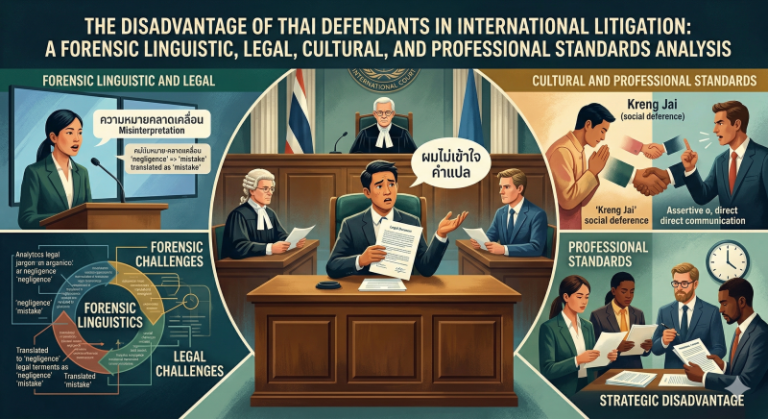
Legal systems in common law jurisdictions, such as the United States and the United Kingdom, place significant emphasis on consistency in testimony and witness credibility, particularly under rigorous cross-examination.
In practice, many Thai defendants are unfamiliar with the adversarial nature of such proceedings, where even minor inconsistencies in timelines or wording may be interpreted as a lack of credibility. As a result, courts may discount the evidentiary weight of testimony, even where the substantive facts are not inherently unfavorable.
3. Professional Standards of Expert Witnesses and Interpreters
In international legal proceedings, expert witnesses and court interpreters are expected to possess verifiable qualifications, including professional certification, subject-matter expertise, and independence.
However, in some Thai cases, individuals lacking internationally recognized credentials—such as teachers or general language users—are appointed as interpreters or expert witnesses. This practice exposes such testimony to effective challenges by opposing counsel, often leading to diminished evidentiary value or exclusion.
4. Misconceptions Regarding Authority and Networks
In certain domestic contexts, informal networks or personal connections may play a role in legal processes. However, judicial systems in many foreign jurisdictions are designed to ensure transparency, traceability, and strict adherence to evidentiary standards.
Any perceived attempt to influence proceedings outside formal channels may be viewed negatively and, in some cases, may have direct legal consequences, thereby undermining the credibility of the defendant.
5. Strategic Gaps in International Litigation
International litigation requires sophisticated strategic planning beyond substantive legal arguments, including the construction of a coherent and persuasive legal narrative.
Thai defendants often lack access to legal teams experienced in cross-border litigation, resulting in fragmented or unstructured presentation of facts. This places them at a disadvantage against opposing parties who deploy well-coordinated strategies in documentation, witness preparation, and courtroom communication.
6. Linguistic and Forensic Risks
Language in legal proceedings is not merely a medium of communication but a critical component of evidence. Even minor errors in translation or interpretation can significantly alter legal meaning.
Common issues include register mismatch in legal discourse, misinterpretation of pragmatic intent, and incomplete conveyance of tone or nuance. These issues may lead courts to perceive testimony as evasive or inconsistent, even in the absence of intent to mislead.
7. Courtroom Cultural Differences
Courtroom communication norms vary significantly across jurisdictions. In some systems, direct and concise responses are associated with credibility, whereas indirect or overly polite responses may be interpreted negatively.
Thai defendants, influenced by cultural norms that prioritize politeness and conflict avoidance, may unintentionally appear unclear or evasive in foreign courts, affecting judicial perception of their credibility.
8. Policy and Professional Recommendations
To mitigate these disadvantages, this article proposes several measures. First, the use of certified professional interpreters and translators should be institutionalized. Second, expert witness qualifications should align with international standards. Third, ethical and systematic witness preparation should be developed. Fourth, legal professionals should be trained in forensic linguistics and linguistic risk management. Fifth, specialized legal teams with expertise in cross-border litigation should be cultivated.
9. Conclusion
The disadvantage faced by Thai defendants in international litigation does not arise solely from the facts of the case but from structural mismatches between legal cultures, professional standards, and cross-linguistic communication. Addressing these gaps is essential to enhancing the effectiveness and fairness of Thai participation in international legal proceedings.
References
- Berk-Seligson, S. (2002). The bilingual courtroom: Court interpreters in the judicial process. University of Chicago Press.
- Cotterill, J. (2003). Language and power in court: A linguistic analysis of the O.J. Simpson trial. Palgrave Macmillan.
- Gibbons, J. (2003). Forensic linguistics: An introduction to language in the justice system. Blackwell.
- Hale, S. B. (2004). The discourse of court interpreting: Discourse practices of the law, the witness, and the interpreter. John Benjamins.
- Mikkelson, H. (2016). Introduction to court interpreting (2nd ed.). Routledge.
About certified translators, translation certifiers, and certified interpreters associated with SEAProTI.
The Southeast Asian Association of Professional Translators and Interpreters (SEAProTI) has officially shared the qualifications and requirements for becoming Certified Translators, Translation Certification Providers, and Certified Interpreters in Sections 9 and 10 of the Royal Gazette, which was published by the Prime Minister’s Office in Thailand on July 25, 2024. Certified Translators, Translation Certification Providers, and Certified Interpreters
The Council of State has proposed the enactment of a Royal Decree, granting registered translators and recognised translation certifiers from professional associations or accredited language institutions the authority to provide legally valid translation certification (Letter to SEAProTI dated April 28, 2025)
SEAProTI is the first professional association in Thailand and Southeast Asia to implement a comprehensive certification system for translators, certifiers, and interpreters.
Head Office: Baan Ratchakru Building, No. 33, Room 402, Soi Phahonyothin 5, Phahonyothin Road, Phaya Thai District, Bangkok 10400, Thailand
Email: hello@seaproti.com | Tel.: (+66) 2-114-3128 (Office hours: Mon–Fri, 09:00–17:00).
ความเสียเปรียบของจำเลยไทยในคดีระหว่างประเทศ:
การวิเคราะห์เชิงนิติภาษาศาสตร์ วัฒนธรรมทางกฎหมาย และมาตรฐานวิชาชีพ
ผู้แต่ง วณิชชา สุมานัส นายกสมาคมวิชาชีพนักแปลและล่ามแห่งเอเชียตะวันออกเฉียงใต้
บทความนี้มีวัตถุประสงค์เพื่อวิเคราะห์สาเหตุเชิงโครงสร้างที่ทำให้จำเลยไทยมักเสียเปรียบในกระบวนการพิจารณาคดีในต่างประเทศ โดยอาศัยกรอบแนวคิดด้านวัฒนธรรมทางกฎหมาย (legal culture) นิติภาษาศาสตร์ (forensic linguistics) และมาตรฐานวิชาชีพในกระบวนการยุติธรรมสากล ผลการวิเคราะห์พบว่า ปัจจัยสำคัญมิได้เกิดจากข้อเท็จจริงของคดีเพียงอย่างเดียว แต่เป็นผลจากความไม่สอดคล้องระหว่างระบบกฎหมาย มาตรฐานการนำเสนอพยานหลักฐาน และความเข้าใจเชิงภาษาและวัฒนธรรมในบริบทข้ามพรมแดน บทความเสนอให้มีการยกระดับมาตรฐานวิชาชีพ การเตรียมพยาน และการบริหารความเสี่ยงทางภาษา เพื่อเพิ่มความสามารถในการแข่งขันของคู่ความไทยในเวทีระหว่างประเทศ
คำสำคัญ: นิติภาษาศาสตร์, วัฒนธรรมทางกฎหมาย, ล่ามศาล, พยานผู้เชี่ยวชาญ, คดีระหว่างประเทศ
1. บทนำ
ในยุคโลกาภิวัตน์ที่ข้อพิพาททางการค้า การลงทุน และคดีอาญาข้ามพรมแดนเพิ่มขึ้นอย่างต่อเนื่อง บุคคลสัญชาติไทยจำนวนหนึ่งต้องเข้าสู่กระบวนการยุติธรรมในต่างประเทศ อย่างไรก็ตาม มีข้อสังเกตเชิงประจักษ์ว่าจำเลยไทยมักอยู่ในสถานะเสียเปรียบเมื่อเปรียบเทียบกับคู่ความจากประเทศที่มีประสบการณ์ในระบบกฎหมายสากลมากกว่า บทความนี้ตั้งคำถามสำคัญว่า “ความเสียเปรียบดังกล่าวเกิดจากปัจจัยใด” และเสนอคำอธิบายเชิงโครงสร้างที่ครอบคลุมทั้งมิติทางกฎหมาย ภาษา และวิชาชีพ
2. ความแตกต่างของวัฒนธรรมทางกฎหมาย (Legal Culture Gap)
ระบบกฎหมายในประเทศที่ใช้ระบบ common law เช่น สหรัฐอเมริกาและสหราชอาณาจักร ให้ความสำคัญอย่างยิ่งกับความสอดคล้องของคำให้การ (consistency) และความน่าเชื่อถือของพยาน (credibility) โดยเฉพาะภายใต้กระบวนการไต่สวนพยาน (cross-examination) ที่เข้มงวด
ในทางปฏิบัติ จำเลยไทยจำนวนไม่น้อยไม่คุ้นเคยกับแรงกดดันของการซักถามแบบ adversarial ซึ่งมุ่งตรวจสอบความไม่สอดคล้องในรายละเอียด การคลาดเคลื่อนเพียงเล็กน้อยในลำดับเหตุการณ์หรือถ้อยคำอาจถูกตีความว่าเป็นการให้การที่ไม่น่าเชื่อถือ ส่งผลให้ศาลลดน้ำหนักพยานหลักฐาน แม้ว่าข้อเท็จจริงโดยรวมจะไม่เสียเปรียบก็ตาม
3. ปัญหามาตรฐานวิชาชีพของพยานผู้เชี่ยวชาญและล่าม
ในกระบวนการยุติธรรมสากล พยานผู้เชี่ยวชาญ (expert witness) และล่ามศาล (court interpreter) ต้องมีคุณสมบัติที่ตรวจสอบได้ เช่น การรับรองวิชาชีพ (certification) ประสบการณ์เฉพาะทาง และความเป็นอิสระจากคู่ความ
อย่างไรก็ตาม ในหลายกรณีของไทย พบการใช้บุคคลที่ไม่มีคุณสมบัติตามมาตรฐานสากล เช่น ครู อาจารย์ หรือบุคคลทั่วไปที่มีทักษะภาษา แต่ไม่ได้รับการรับรองวิชาชีพ มาเป็นล่ามหรือพยานผู้เชี่ยวชาญ ปัญหานี้เปิดช่องให้ฝ่ายตรงข้ามสามารถโต้แย้งความน่าเชื่อถือของพยานได้โดยง่าย ส่งผลให้พยานหลักฐานถูกลดน้ำหนักหรือถูกตัดออกจากการพิจารณา
4. ความเข้าใจคลาดเคลื่อนเกี่ยวกับอำนาจและเครือข่าย
ในบางบริบทภายในประเทศ การใช้ความสัมพันธ์ส่วนบุคคลหรือการประสานงานนอกระบบอาจมีบทบาทในทางปฏิบัติ อย่างไรก็ตาม ระบบยุติธรรมในต่างประเทศ โดยเฉพาะในเขตอำนาจศาลที่มีความโปร่งใสสูง ถูกออกแบบให้สามารถตรวจสอบย้อนกลับได้ (traceability) และยึดหลักพยานหลักฐานเป็นสำคัญ
พฤติกรรมที่อาจถูกมองว่าเป็นการแทรกแซงหรือพยายามใช้อิทธิพลนอกกระบวนการ อาจกลายเป็นปัจจัยลบที่กระทบต่อภาพลักษณ์ของจำเลย และในบางกรณีอาจมีผลทางกฎหมายโดยตรง
5. ช่องว่างด้านกลยุทธ์การดำเนินคดีระหว่างประเทศ
การดำเนินคดีในบริบทระหว่างประเทศต้องอาศัยกลยุทธ์ที่ซับซ้อน ไม่เพียงแต่ข้อกฎหมาย แต่รวมถึงการสร้าง “เรื่องเล่าทางกฎหมาย” (legal narrative) ที่มีความสอดคล้องและโน้มน้าวใจ
จำเลยไทยจำนวนหนึ่งขาดการสนับสนุนจากทีมกฎหมายที่มีประสบการณ์ในคดีข้ามพรมแดน ส่งผลให้การนำเสนอข้อเท็จจริงขาดโครงสร้างเชิงกลยุทธ์ ไม่สามารถแข่งขันกับฝ่ายตรงข้ามที่มีการเตรียมคดีอย่างเป็นระบบ ทั้งในด้านเอกสาร พยาน และการสื่อสารต่อศาล
6. ความเสี่ยงเชิงภาษาและนิติภาษาศาสตร์
ภาษาในกระบวนการยุติธรรมมิใช่เพียงเครื่องมือสื่อสาร แต่เป็นส่วนหนึ่งของพยานหลักฐาน การแปลหรือการตีความที่คลาดเคลื่อนเพียงเล็กน้อยอาจเปลี่ยนแปลงความหมายทางกฎหมายได้อย่างมีนัยสำคัญ
ปัญหาที่พบบ่อย ได้แก่ การเลือกใช้คำที่ไม่สอดคล้องกับระดับภาษาในบริบทกฎหมาย (register mismatch) การตีความนัยทางวัจนปฏิบัติ (pragmatics) ที่ผิดพลาด และการถ่ายทอดน้ำเสียงหรือเจตนาไม่ครบถ้วน สิ่งเหล่านี้อาจทำให้คำให้การของจำเลยถูกตีความว่าไม่ตรงไปตรงมา หรือมีเจตนาหลีกเลี่ยงคำถาม
7. ความแตกต่างของวัฒนธรรมในห้องพิจารณาคดี
วัฒนธรรมการสื่อสารในห้องพิจารณาคดีของแต่ละประเทศมีความแตกต่างกันอย่างมีนัยสำคัญ ตัวอย่างเช่น ในบางระบบ การตอบคำถามอย่างตรงไปตรงมาและกระชับถือเป็นสัญญาณของความน่าเชื่อถือ ขณะที่การตอบอ้อมหรือการใช้ถ้อยคำสุภาพเชิงเลี่ยงอาจถูกตีความในทางลบ
จำเลยไทยซึ่งมักได้รับอิทธิพลจากวัฒนธรรมการสื่อสารแบบให้เกียรติและหลีกเลี่ยงความขัดแย้ง อาจถูกประเมินโดยศาลในต่างประเทศว่า “ไม่ชัดเจน” หรือ “ไม่น่าเชื่อถือ” แม้จะไม่มีเจตนาบิดเบือนข้อเท็จจริง
8. ข้อเสนอเชิงนโยบายและวิชาชีพ
เพื่อลดความเสียเปรียบของจำเลยไทยในคดีระหว่างประเทศ บทความเสนอแนวทางดังต่อไปนี้
- ประการแรก ควรส่งเสริมการใช้ล่ามและนักแปลที่ได้รับการรับรองตามมาตรฐานสากล
- ประการที่สอง ควรกำหนดเกณฑ์คุณสมบัติของพยานผู้เชี่ยวชาญให้สอดคล้องกับหลักเกณฑ์ระหว่างประเทศ
- ประการที่สาม ควรพัฒนาระบบการเตรียมพยานที่ยึดหลักจริยธรรมและสอดคล้องกับแนวปฏิบัติสากล
- ประการที่สี่ ควรส่งเสริมความรู้ด้านนิติภาษาศาสตร์และการบริหารความเสี่ยงทางภาษาในหมู่นักกฎหมายและผู้ปฏิบัติงาน
- ประการที่ห้า ควรพัฒนาทีมกฎหมายที่มีความเชี่ยวชาญด้านคดีข้ามพรมแดนและการดำเนินคดีเชิงกลยุทธ์
9. บทสรุป
ความเสียเปรียบของจำเลยไทยในคดีระหว่างประเทศมิได้เกิดจากข้อเท็จจริงของคดีเพียงอย่างเดียว หากแต่เป็นผลจากความไม่สอดคล้องเชิงโครงสร้างระหว่างวัฒนธรรมทางกฎหมาย มาตรฐานวิชาชีพ และการสื่อสารข้ามภาษา การยกระดับมาตรฐานในทุกมิติที่เกี่ยวข้องจึงเป็นเงื่อนไขสำคัญในการเพิ่มความสามารถในการแข่งขันของคู่ความไทยในเวทีระหว่างประเทศ
เอกสารอ้างอิง
- Berk-Seligson, S. (2002). The bilingual courtroom: Court interpreters in the judicial process. University of Chicago Press.
- Cotterill, J. (2003). Language and power in court: A linguistic analysis of the O.J. Simpson trial. Palgrave Macmillan.
- Gibbons, J. (2003). Forensic linguistics: An introduction to language in the justice system. Blackwell.
- Hale, S. B. (2004). The discourse of court interpreting: Discourse practices of the law, the witness and the interpreter. John Benjamins.
- Mikkelson, H. (2016). Introduction to court interpreting (2nd ed.). Routledge.
สมาคมวิชาชีพนักแปลและล่ามแห่งเอเชียตะวันออกเฉียงใต้ (SEAProTI) ได้ประกาศหลักเกณฑ์และคุณสมบัติของผู้ที่ขึ้นทะเบียนเป็น “นักแปลรับรอง (Certified Translators) และผู้รับรองการแปล (Translation Certification Providers) และล่ามรับรอง (Certified Interpreters)” ของสมาคม หมวดที่ 9 และหมวดที่ 10 ในราชกิจจานุเบกษา ของสำนักเลขาธิการคณะรัฐมนตรี ในสำนักนายกรัฐมนตรี แห่งราชอาณาจักรไทย ลงวันที่ 25 ก.ค. 2567 เล่มที่ 141 ตอนที่ 66 ง หน้า 100 อ่านฉบับเต็มได้ที่: นักแปลรับรอง ผู้รับรองการแปล และล่ามรับรอง
สำนักคณะกรรมการกฤษฎีกาเสนอให้ตราเป็นพระราชกฤษฎีกา โดยกำหนดให้นักแปลที่ขึ้นทะเบียน รวมถึงผู้รับรองการแปลจากสมาคมวิชาชีพหรือสถาบันสอนภาษาที่มีการอบรมและขึ้นทะเบียน สามารถรับรองคำแปลได้ (จดหมายถึงสมาคม SEAProTI ลงวันที่ 28 เม.ย. 2568)
สมาคมวิชาชีพนักแปลและล่ามแห่งเอเชียตะวันออกเฉียงใต้เป็นสมาคมวิชาชีพแห่งแรกและแห่งเดียวในประเทศไทยและภูมิภาคเอเชียตะวันออกเฉียงใต้ที่มีระบบรับรองนักแปลรับรอง ผู้รับรองการแปล และล่ามรับรอง
สำนักงานใหญ่: อาคารบ้านราชครู เลขที่ 33 ห้อง 402 ซอยพหลโยธิน 5 ถนนพหลโยธิน แขวงพญาไท เขตพญาไท กรุงเทพมหานคร 10400 ประเทศไทย
อีเมล: hello@seaproti.com โทรศัพท์: (+66) 2-114-3128 (เวลาทำการ: วันจันทร์–วันศุกร์ เวลา 09.00–17.00 น.