


Strategies for Preparing Medical Device Documentation from China, Korea, and Japan
for Efficient Submission to the Office of the Food and Drug Administration:
A Professional Proposal from the Southeast Asian Association of Professional Translators and Interpreters
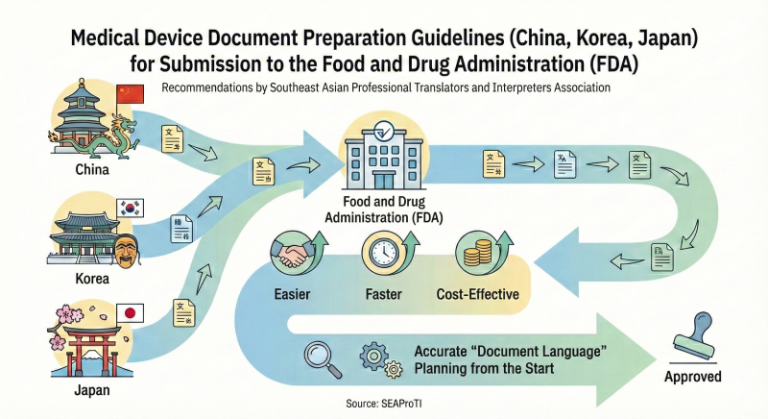
6 February 2026, Bangkok—The importation of medical devices from major manufacturing countries in Asia, namely China, Korea, and Japan, for distribution or use in Thailand is subject to regulatory review and approval by the Office of the Food and Drug Administration (FDA). One of the key factors affecting the speed, accuracy, and overall cost of this process is the preparation and translation of technical documentation and product-related materials.
In practice, the Southeast Asian Association of Professional Translators and Interpreters (SEAProTI) has consistently observed that recurring issues in FDA submissions do not usually arise from the medical devices themselves, but rather from ineffective language planning and inappropriate document translation strategies at the source. This article, therefore, presents a set of strategic recommendations aimed at reducing costs, minimizing regulatory risks, and improving the efficiency of medical device registration in Thailand.
Key Principles in FDA Documentation Review
In general, the FDA places greater emphasis on:
- the accuracy of content,
- the internal consistency of the entire documentation set, and
- the traceability and verifiability of information,
rather than strict adherence to the source language of the documents. In other words, documentation prepared in accurate, complete, and internally consistent English may be used as the primary basis for translation and submission to the FDA without contravening applicable legal or regulatory requirements.
Strategic Approaches Recommended by the Professional Association
1. Preparation of Documentation in English at the Country of Origin
Most medical device manufacturers in China, Korea, and Japan already possess the capacity to prepare technical documentation in English, as such documentation is commonly required for export and multi-jurisdictional registration. Key documents—including technical files, instructions for use (IFU), specifications, datasheets, and various certificates—should therefore be prepared in English at the source.
This approach significantly reduces the need for direct translation from the original Asian languages, which typically entails higher costs and greater risks of misinterpretation of specialized technical terminology.
2. Use of Previously Registered English Documentation
Where a medical device has already been registered in other jurisdictions or falls under internationally recognized regulatory frameworks, the English-language documentation used for those registrations may serve as the base documentation for submission in Thailand.
Using documentation that has already undergone regulatory scrutiny enhances credibility, reduces follow-up inquiries from regulators, and shortens the overall review timeline.
3. Translation from English into Thai by Professional Translators in Thailand
The association strongly recommends translating documentation from English into Thai using professional translators based in Thailand, for several reasons:
- English–Thai translation is significantly more cost-effective than Chinese–Thai, Korean–Thai, or Japanese–Thai translation pairs.
- Local translators are familiar with terminology and phrasing commonly used by the Thai FDA.
- Quality control, terminological consistency, and compliance with official document formats can be managed more effectively.
By contrast, direct translation from East Asian source languages into Thai—when not strictly necessary—often involves higher costs, longer turnaround times, and limited availability of suitably specialized translators.
Practices to Avoid in Document Preparation
SEAProTI advises against:
- multi-layered translation processes without a controlled central terminology,
- using multiple languages inconsistently within a single documentation set, and
- assigning medical device translation tasks to individuals lacking sufficient technical knowledge or regulatory awareness.
Such practices increase the likelihood of revision requests, additional regulatory inquiries, or rejection during the review process.
Conclusion
Systematic language planning from the outset, using English as the primary working language and translating into Thai through qualified professional translators within Thailand, constitutes an effective strategy for medical device submission to the FDA. This approach reduces costs, shortens processing time, and minimizes legal and regulatory risks.
Beyond benefiting importers and business operators, these practices also contribute to strengthening professional translation standards and enhancing the overall credibility of documentation within Thailand’s public health regulatory system.
References
Food and Drug Administration. (2023). Medical device regulations and submission guidelines. https://www.fda.gov
International Organization for Standardization. (2016). ISO 13485: Medical devices—Quality management systems—Requirements for regulatory purposes. ISO.
Office of the Food and Drug Administration, Thailand. (2022). Guidelines for medical device registration in Thailand. Bangkok: FDA Thailand.
Southeast Asian Association of Professional Translators and Interpreters. (2024). Professional guidelines for certified translation and interpreting. SEAProTI.
World Health Organization. (2017). Regulation of medical devices: A step-by-step guide. WHO Press.
About Certified Translators, Translation Certifiers, and Certified Interpreters of SEAProTI
The Southeast Asian Association of Professional Translators and Interpreters (SEAProTI) has officially shared the qualifications and requirements for becoming Certified Translators, Translation Certification Providers, and Certified Interpreters in Sections 9 and 10 of the Royal Gazette, which was published by the Prime Minister’s Office in Thailand on July 25, 2024. Certified Translators, Translation Certification Providers, and Certified Interpreters
The Council of State has proposed the enactment of a Royal Decree, granting registered translators and recognised translation certifiers from professional associations or accredited language institutions the authority to provide legally valid translation certification (Letter to SEAProTI dated April 28, 2025)
SEAProTI is the first professional association in Thailand and Southeast Asia to implement a comprehensive certification system for translators, certifiers, and interpreters.
Head Office: Baan Ratchakru Building, No. 33, Room 402, Soi Phahonyothin 5, Phahonyothin Road, Phaya Thai District, Bangkok 10400, Thailand
Email: hello@seaproti.com | Tel.: (+66) 2-114-3128 (Office hours: Mon–Fri, 09:00–17:00)
กลยุทธ์การจัดเตรียมเอกสารเครื่องมือแพทย์จากจีน เกาหลี และญี่ปุ่น
เพื่อยื่นต่อสำนักงานคณะกรรมการอาหารและยาอย่างมีประสิทธิภาพ:
ข้อเสนอเชิงวิชาชีพจากสมาคมวิชาชีพนักแปลและล่ามแห่งเอเชียตะวันออกเฉียงใต้
6 กุมภาพันธ์ 2569, กรุงเทพมหานคร – การนำเข้าเครื่องมือแพทย์จากประเทศผู้ผลิตหลักในเอเชีย ได้แก่ จีน เกาหลี และญี่ปุ่น เพื่อจำหน่ายหรือใช้งานในประเทศไทย จำเป็นต้องผ่านกระบวนการพิจารณาและอนุญาตจากสำนักงานคณะกรรมการอาหารและยา (อย.) ซึ่งหนึ่งในปัจจัยสำคัญที่มีผลต่อความรวดเร็ว ความถูกต้อง และต้นทุนของกระบวนการดังกล่าว คือ การจัดเตรียมและการแปลเอกสารทางเทคนิคและเอกสารกำกับผลิตภัณฑ์
ในทางปฏิบัติ สมาคมวิชาชีพนักแปลและล่ามแห่งเอเชียตะวันออกเฉียงใต้ (SEAProTI) พบว่าปัญหาที่เกิดซ้ำในกระบวนการยื่น อย. มักไม่ได้เกิดจากตัวผลิตภัณฑ์ หากแต่เกิดจากการวางแผนด้านภาษาและการแปลเอกสารที่ไม่เหมาะสมตั้งแต่ต้นทาง บทความนี้จึงนำเสนอแนวทางเชิงกลยุทธ์ที่ช่วยลดต้นทุน ลดความเสี่ยง และเพิ่มประสิทธิภาพในการขึ้นทะเบียนเครื่องมือแพทย์ในประเทศไทย
หลักการสำคัญในการพิจารณาเอกสารของ อย.
โดยหลักแล้ว อย. ให้ความสำคัญกับ
- ความถูกต้องของเนื้อหา
- ความสอดคล้องของเอกสารทั้งชุด
- ความสามารถในการตรวจสอบย้อนกลับของข้อมูล
มากกว่าการยึดติดกับ “ภาษาต้นฉบับ” ของเอกสาร กล่าวคือ เอกสารที่จัดทำเป็นภาษาอังกฤษอย่างถูกต้อง ครบถ้วน และสอดคล้องกันทั้งระบบ สามารถนำมาใช้เป็นฐานในการแปลและยื่นต่อ อย. ได้โดยไม่ขัดต่อหลักเกณฑ์ทางกฎหมายและระเบียบปฏิบัติ
แนวทางเชิงกลยุทธ์ที่แนะนำโดยสมาคมวิชาชีพฯ
1. การจัดทำเอกสารภาษาอังกฤษตั้งแต่ประเทศต้นทาง
ผู้ผลิตเครื่องมือแพทย์ในจีน เกาหลี และญี่ปุ่นส่วนใหญ่มีศักยภาพในการจัดทำเอกสารทางเทคนิคเป็นภาษาอังกฤษอยู่แล้ว เนื่องจากเอกสารเหล่านี้มักใช้สำหรับการส่งออกและการขึ้นทะเบียนในหลายประเทศ เอกสารสำคัญ เช่น Technical File, Instructions for Use (IFU), Specification, Datasheet และ Certificate ต่าง ๆ ควรถูกจัดทำเป็นภาษาอังกฤษตั้งแต่ต้นทาง
แนวทางนี้ช่วยลดความจำเป็นในการแปลจากภาษาต้นทางโดยตรง ซึ่งมักมีต้นทุนสูงและมีความเสี่ยงด้านการตีความศัพท์เทคนิคเฉพาะทาง
2. การใช้เอกสารภาษาอังกฤษที่เคยผ่านการจดทะเบียนมาก่อน
ในกรณีที่เครื่องมือแพทย์เคยผ่านการจดทะเบียนในประเทศอื่น หรืออยู่ภายใต้ระบบกำกับดูแลสากล เอกสารภาษาอังกฤษที่ใช้ในการจดทะเบียนดังกล่าวสามารถนำมาใช้เป็น “เอกสารฐาน” สำหรับการยื่น อย. ในประเทศไทยได้
การใช้เอกสารที่ผ่านการตรวจสอบมาแล้วในระดับหนึ่ง ช่วยเพิ่มความน่าเชื่อถือ ลดข้อซักถามจากหน่วยงานกำกับดูแล และลดระยะเวลาในการพิจารณา
3. การแปลจากภาษาอังกฤษเป็นภาษาไทยโดยนักแปลในประเทศไทย
สมาคมวิชาชีพฯ แนะนำให้ดำเนินการแปลเอกสารจากภาษาอังกฤษเป็นภาษาไทยโดยนักแปลวิชาชีพในประเทศไทย เนื่องจาก
การแปลอังกฤษ–ไทยมีต้นทุนต่ำกว่าคู่ภาษาจีน–ไทย, เกาหลี–ไทย, หรือญี่ปุ่น–ไทยอย่างมีนัยสำคัญ
นักแปลในประเทศมีความคุ้นเคยกับศัพท์เฉพาะที่ อย. ใช้จริง
สามารถควบคุมคุณภาพ ความสอดคล้องของศัพท์ และรูปแบบเอกสารได้ง่ายกว่า
ในทางตรงกันข้าม การแปลตรงจากภาษาต้นทางเอเชียตะวันออกไปเป็นภาษาไทยโดยไม่จำเป็น มักมีค่าใช้จ่ายสูง ใช้เวลานาน และมีนักแปลเฉพาะทางจำกัด
ข้อควรหลีกเลี่ยงในการจัดเตรียมเอกสาร
สมาคมวิชาชีพฯ ไม่แนะนำให้แปลเอกสารหลายทอดโดยไม่มีการควบคุมศัพท์กลาง ใช้เอกสารหลายภาษาในชุดเดียวกันโดยไม่สอดคล้อง มอบหมายงานแปลเอกสารเครื่องมือแพทย์ให้ผู้ที่ขาดความเข้าใจด้านเทคนิคและบริบทการกำกับดูแล
แนวปฏิบัติเหล่านี้เพิ่มความเสี่ยงต่อการถูกขอแก้ไขเอกสาร ซักถามเพิ่มเติม หรือถูกตีกลับจากกระบวนการพิจารณา
บทสรุป
การวางแผนด้านภาษาอย่างเป็นระบบตั้งแต่ต้นทาง โดยใช้ภาษาอังกฤษเป็นภาษากลาง และดำเนินการแปลเป็นภาษาไทยโดยนักแปลวิชาชีพในประเทศ เป็นกลยุทธ์ที่ช่วยให้การยื่นขออนุญาตเครื่องมือแพทย์ต่อ อย. เป็นไปอย่างมีประสิทธิภาพ ลดต้นทุน ลดเวลา และลดความเสี่ยงทางกฎหมาย
แนวทางดังกล่าวไม่เพียงเป็นประโยชน์ต่อผู้นำเข้าและผู้ประกอบการเท่านั้น แต่ยังช่วยส่งเสริมมาตรฐานวิชาชีพการแปลและความน่าเชื่อถือของเอกสารในระบบกำกับดูแลด้านสาธารณสุขของประเทศไทยโดยรวม
เอกสารอ้างอิง
- Food and Drug Administration. (2023). Medical device regulations and submission guidelines. https://www.fda.gov
- International Organization for Standardization. (2016). ISO 13485: Medical devices—Quality management systems—Requirements for regulatory purposes. ISO.
- Office of the Food and Drug Administration, Thailand. (2022). Guidelines for medical device registration in Thailand. Bangkok: FDA Thailand.
- Southeast Asian Association of Professional Translators and Interpreters. (2024). Professional guidelines for certified translation and interpreting. SEAProTI.
- World Health Organization. (2017). Regulation of medical devices: A step-by-step guide. WHO Press.
สมาคมวิชาชีพนักแปลและล่ามแห่งเอเชียตะวันออกเฉียงใต้ (SEAProTI) ได้ประกาศหลักเกณฑ์และคุณสมบัติของผู้ที่ขึ้นทะเบียนเป็น “นักแปลรับรอง (Certified Translators) และผู้รับรองการแปล (Translation Certification Providers) และล่ามรับรอง (Certified Interpreters)” ของสมาคม หมวดที่ 9 และหมวดที่ 10 ในราชกิจจานุเบกษา ของสำนักเลขาธิการคณะรัฐมนตรี ในสำนักนายกรัฐมนตรี แห่งราชอาณาจักรไทย ลงวันที่ 25 ก.ค. 2567 เล่มที่ 141 ตอนที่ 66 ง หน้า 100 อ่านฉบับเต็มได้ที่: นักแปลรับรอง ผู้รับรองการแปล และล่ามรับรอง
สำนักคณะกรรมการกฤษฎีกาเสนอให้ตราเป็นพระราชกฤษฎีกา โดยกำหนดให้นักแปลที่ขึ้นทะเบียน รวมถึงผู้รับรองการแปลจากสมาคมวิชาชีพหรือสถาบันสอนภาษาที่มีการอบรมและขึ้นทะเบียน สามารถรับรองคำแปลได้ (จดหมายถึงสมาคม SEAProTI ลงวันที่ 28 เม.ย. 2568)
สมาคมวิชาชีพนักแปลและล่ามแห่งเอเชียตะวันออกเฉียงใต้เป็นสมาคมวิชาชีพแห่งแรกและแห่งเดียวในประเทศไทยและภูมิภาคเอเชียตะวันออกเฉียงใต้ที่มีระบบรับรองนักแปลรับรอง ผู้รับรองการแปล และล่ามรับรอง
สำนักงานใหญ่: อาคารบ้านราชครู เลขที่ 33 ห้อง 402 ซอยพหลโยธิน 5 ถนนพหลโยธิน แขวงพญาไท เขตพญาไท กรุงเทพมหานคร 10400 ประเทศไทย
อีเมล: hello@seaproti.com โทรศัพท์: (+66) 2-114-3128 (เวลาทำการ: วันจันทร์–วันศุกร์ เวลา 09.00–17.00 น.