


The Structure of Professional Certification for Translators and Interpreters:
An Institutional Analysis of the Certified Translator, Certified Interpreter, and Translation Certification Provider System
30 December 2025, Bangkok – This article aims to explain and analyze the structure of professional certification for certified translators, certified interpreters, and translation certification providers under the regulatory framework of a professional translators and interpreters association. The analysis focuses on differences in professional roles, levels of expertise, and certification processes across each status. The article argues that professional certification is not merely the completion of training programs; rather, it constitutes an institutional mechanism that integrates training, assessment, professional accountability, and membership requirements. This mechanism serves to safeguard the quality of translation and interpreting services and to protect service users’ rights in legal, medical, and cross-linguistic communication contexts.
Keywords: certified translator, certified interpreter, professional certification, professional standards, translation and interpreting
In multilingual societies, translation and interpreting are not merely linguistic activities; they function as critical mechanisms for the protection of rights, access to justice, and equality in communication. Research in Translation Studies and Interpreting Studies consistently demonstrates that the quality of translators’ and interpreters’ work has a direct impact on the accuracy of information, decision-making processes, and legal or social outcomes (Pym, 2012; Hale, 2007).
For this reason, systems of professional certification have been developed to establish verifiable and standardized benchmarks of competence. These systems differ fundamentally from general training programs or self-claimed professional experience. This article therefore examines the institutional structure governing the certification of certified translators, certified interpreters, and translation certification providers as regulated by a professional association operating as a private professional body.
Certified Translators
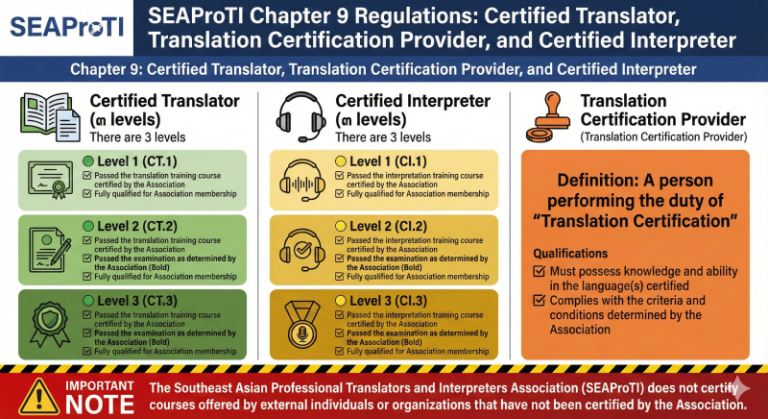
Certified translators are categorized into three levels, reflecting differences in skills, professional responsibility, and levels of expertise.
Level 1 Certified Translator (CT-1)
This entry-level certification requires candidates to complete a translation training program accredited by the association and to meet all eligibility requirements for association membership. This level emphasizes foundational competencies, ethical awareness, accuracy, and adherence to professional standards.
Level 2 Certified Translator (CT-2)
In addition to completing accredited training, candidates must pass a competency examination in accordance with criteria established by the association. This level represents a transition from training completion to formal professional assessment.
Level 3 Certified Translator (CT-3)
As the highest level of certification, candidates must successfully complete advanced training and examinations and demonstrate full compliance with ethical and membership requirements. This level is typically associated with high-risk domains such as legal and medical translation or documents with binding legal consequences.
Certified Interpreters
The certification structure for interpreters mirrors that of certified translators and consists of three levels: Level 1 (CI-1), Level 2 (CI-2), and Level 3 (CI-3).
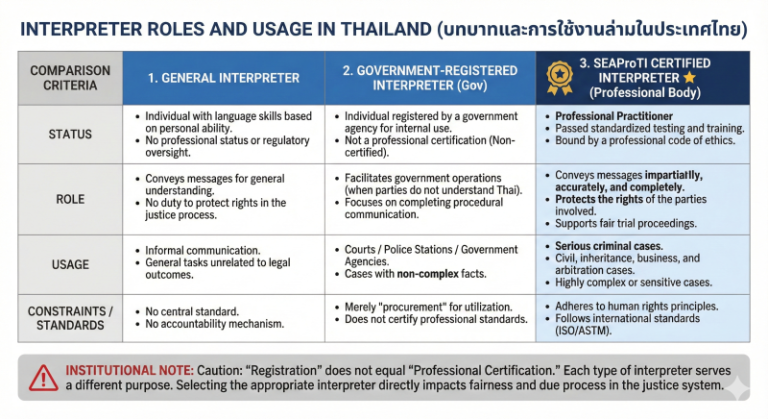
Interpreter certification places particular emphasis on examination-based assessment, reflecting the real-time nature of interpreting, its high-risk profile, and the impossibility of post-hoc correction. Empirical studies indicate that interpreting errors may have direct consequences for service users’ rights, particularly within judicial and medical settings (Hale, 2007; Wadensjö, 1998).
Translation Certification Providers
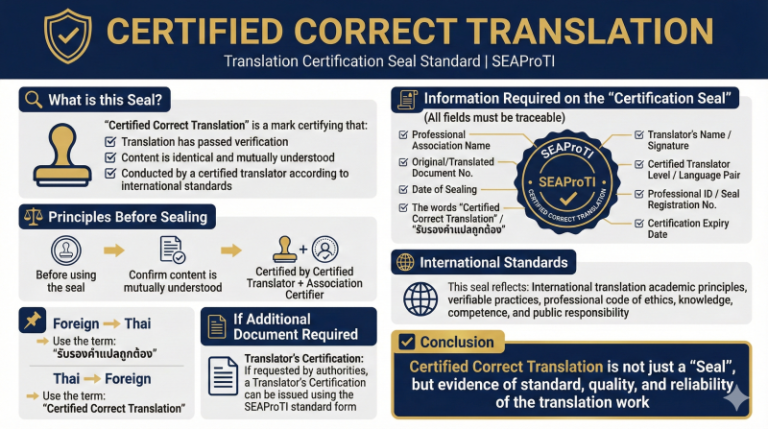
A translation certification provider is not equivalent to a certified translator. Instead, this role refers to an individual authorized to certify the accuracy of translations in language pairs for which they possess verified competence, in accordance with standards set by the association. This function entails significant professional responsibility, as certification represents an expert opinion addressed to third parties such as courts, government agencies, or international organizations.
The Principle of Non-Recognition of External Programs
The association adopts a core principle of non-recognition of external training programs that have not been formally accredited by the association. This principle aligns with the concept of professional self-regulation, under which professional bodies retain authority over standard-setting, training, and quality control. Such regulation is essential to prevent the dilution of standards and the misrepresentation of professional status without adequate assessment (Freidson, 2001).
Conclusion
The certification structure for certified translators, certified interpreters, and translation certification providers reflects a systematic and accountable approach to professional standardization that aligns with international norms. The tiered system does not merely assign hierarchical status; rather, it functions as a mechanism for risk management, user protection, and the long-term preservation of professional ethics within the fields of translation and interpreting.
References
- Freidson, E. (2001). Professionalism: The third logic. University of Chicago Press.
- Hale, S. B. (2007). Community interpreting. Palgrave Macmillan.
https://doi.org/10.1057/9780230593442 - Pym, A. (2012). On translator ethics: Principles for mediation between cultures. John Benjamins.
https://doi.org/10.1075/btl.104 - Wadensjö, C. (1998). Interpreting as interaction. Longman.
About Certified Translators, Translation Certifiers, and Certified Interpreters of SEAProTI
The Southeast Asian Association of Professional Translators and Interpreters (SEAProTI) has formally announced the qualifications and requirements for registration of Certified Translators, Translation Certification Providers, and Certified Interpreters in Sections 9 and 10 of the Royal Gazette, published by the Secretariat of the Cabinet, Office of the Prime Minister of Thailand, on 25 July 2024 (Vol. 141, Part 66 Ng, p. 100). Certified Translators, Translation Certification Providers, and Certified Interpreters
The Council of State has proposed the enactment of a Royal Decree, granting registered translators and recognised translation certifiers from professional associations or accredited language institutions the authority to provide legally valid translation certification (Letter to SEAProTI dated April 28, 2025)
SEAProTI is the first professional association in Thailand and Southeast Asia to implement a comprehensive certification system for translators, certifiers, and interpreters.
Head Office: Baan Ratchakru Building, No. 33, Room 402, Soi Phahonyothin 5, Phahonyothin Road, Phaya Thai District, Bangkok 10400, Thailand
Email: hello@seaproti.com | Tel.: (+66) 2-114-3128 (Office hours: Mon–Fri, 09:00–17:00)
โครงสร้างการรับรองนักแปลและล่ามวิชาชีพ:
การวิเคราะห์เชิงสถาบันของระบบ Certified Translator, Certified Interpreter และ Translation Certification Provider
30 ธันวาคม 2568, กรุงเทพมหานคร บทความนี้มีวัตถุประสงค์เพื่ออธิบายและวิเคราะห์โครงสร้างการรับรองนักแปลรับรอง ล่ามรับรอง และผู้รับรองการแปล ตามหลักเกณฑ์ของสมาคมวิชาชีพนักแปลและล่าม โดยมุ่งเน้นความแตกต่างเชิงบทบาท ระดับความเชี่ยวชาญ และกระบวนการรับรองในแต่ละสถานะ บทความชี้ให้เห็นว่า “การรับรองวิชาชีพ” มิได้เป็นเพียงการผ่านการอบรม แต่เป็นกลไกเชิงสถาบันที่ผูกโยงการฝึกอบรม การประเมินผล ความรับผิดชอบ และการเป็นสมาชิกวิชาชีพเข้าด้วยกัน เพื่อคุ้มครองคุณภาพงานแปล งานล่าม และสิทธิของผู้ใช้บริการในบริบททางกฎหมาย การแพทย์ และการสื่อสารข้ามภาษา
คำสำคัญ: นักแปลรับรอง, ล่ามรับรอง, การรับรองวิชาชีพ, มาตรฐานวิชาชีพ, การแปลและการล่าม
ในสังคมพหุภาษา การแปลและการล่ามมิได้เป็นเพียงกิจกรรมทางภาษา หากแต่เป็นกลไกสำคัญในการคุ้มครองสิทธิ การเข้าถึงกระบวนการยุติธรรม และความเสมอภาคในการสื่อสาร งานวิชาการด้าน Translation Studies และ Interpreting Studies ต่างยืนยันตรงกันว่าคุณภาพของนักแปลและล่ามมีผลโดยตรงต่อความถูกต้องของข้อมูล การตัดสินใจ และผลลัพธ์ทางกฎหมายหรือสังคม (Pym, 2012; Hale, 2007)
ด้วยเหตุนี้ ระบบการรับรองวิชาชีพ (certification) จึงถูกพัฒนาขึ้นเพื่อสร้างมาตรฐานกลางที่ตรวจสอบได้ แตกต่างจากการอบรมทั่วไปหรือการอ้างตนว่า “มีประสบการณ์” โดยบทความนี้จะวิเคราะห์โครงสร้างการรับรองนักแปลรับรอง ล่ามรับรอง และผู้รับรองการแปล ตามหลักเกณฑ์ของสมาคมในฐานะองค์กรวิชาชีพเอกชน
นักแปลรับรอง (Certified Translator)
นักแปลรับรองถูกแบ่งออกเป็น สามระดับ เพื่อสะท้อนความแตกต่างด้านทักษะ ความรับผิดชอบ และระดับความเชี่ยวชาญ
นักแปลรับรองระดับ ๑ (ปว.๑)
เป็นระดับเริ่มต้นของการรับรอง โดยผู้ขอรับการรับรองต้องผ่านการอบรมหลักสูตรการแปลที่สมาคมรับรอง และมีคุณสมบัติครบถ้วนในการเป็นสมาชิกสมาคม ระดับนี้มุ่งเน้นการสร้างรากฐานด้านจริยธรรม ความถูกต้อง และการปฏิบัติงานตามมาตรฐาน
นักแปลรับรองระดับ ๒ (ปว.๒)
นอกจากการผ่านการอบรมแล้ว ผู้ขอรับการรับรองต้องผ่านการสอบประเมินความสามารถตามเกณฑ์ที่สมาคมกำหนด ระดับนี้สะท้อนการยกระดับจาก “ผู้ผ่านการอบรม” ไปสู่ “ผู้ผ่านการประเมินความสามารถเชิงวิชาชีพ”
นักแปลรับรองระดับ ๓ (ปว.๓)
เป็นระดับสูงสุดของนักแปลรับรอง ผู้ขอรับการรับรองต้องผ่านทั้งการอบรมและการสอบในระดับที่เข้มข้นขึ้น และมีคุณสมบัติครบถ้วนด้านจริยธรรมและสถานะสมาชิก ระดับนี้มักเกี่ยวข้องกับงานที่มีความเสี่ยงสูง เช่น งานกฎหมาย การแพทย์ หรือเอกสารที่มีผลผูกพันทางกฎหมาย
ล่ามรับรอง (Certified Interpreter)
โครงสร้างการรับรองล่ามรับรองมีลักษณะสอดคล้องกับนักแปลรับรอง โดยแบ่งออกเป็น สามระดับ ได้แก่ ล่ามรับรองระดับ ๑ (ลว.๑) ระดับ ๒ (ลว.๒) และระดับ ๓ (ลว.๓)
การรับรองล่ามให้ความสำคัญเป็นพิเศษกับการประเมินผ่านการสอบ เนื่องจากการล่ามเป็นกิจกรรมที่เกิดขึ้นแบบเรียลไทม์ มีความเสี่ยงสูง และไม่สามารถแก้ไขภายหลังได้ งานวิจัยชี้ว่าความผิดพลาดของล่ามอาจส่งผลโดยตรงต่อสิทธิของผู้รับบริการ โดยเฉพาะในกระบวนการยุติธรรมและการแพทย์ (Hale, 2007; Wadensjö, 1998)
ผู้รับรองการแปล (Translation Certification Provider)
ผู้รับรองการแปลมิใช่นักแปลรับรองในความหมายเดียวกัน หากแต่เป็นบุคคลที่ทำหน้าที่ รับรองความถูกต้องของงานแปล ในภาษาที่ตนมีความรู้ความสามารถตามที่สมาคมกำหนด บทบาทนี้มีความสำคัญในเชิงความรับผิดชอบ เนื่องจากการรับรองการแปลเป็นการแสดงความเห็นเชิงวิชาชีพต่อบุคคลที่สาม เช่น ศาล หน่วยงานรัฐ หรือองค์กรระหว่างประเทศ
หลักการไม่รับรองหลักสูตรภายนอก
สมาคมกำหนดหลักการสำคัญว่า ไม่รับรองหลักสูตรของบุคคลหรือหน่วยงานภายนอก ที่ไม่ได้รับการรับรองจากสมาคม หลักการนี้สอดคล้องกับแนวคิดด้าน professional self-regulation ซึ่งให้องค์กรวิชาชีพเป็นผู้กำหนดมาตรฐาน ฝึกอบรม และควบคุมคุณภาพภายใน เพื่อป้องกันการลดทอนมาตรฐานและการอ้างสถานะทางวิชาชีพโดยปราศจากการประเมินที่เหมาะสม (Freidson, 2001)
บทสรุป
โครงสร้างการรับรองนักแปลรับรอง ล่ามรับรอง และผู้รับรองการแปล สะท้อนความพยายามในการสร้างมาตรฐานวิชาชีพที่เป็นระบบ ตรวจสอบได้ และสอดคล้องกับหลักสากล การแบ่งระดับมิได้เป็นเพียงการจัดลำดับเชิงสถานะ แต่เป็นกลไกในการบริหารความเสี่ยง คุ้มครองผู้ใช้บริการ และธำรงจริยธรรมของวิชาชีพการแปลและการล่ามในระยะยาว
เอกสารอ้างอิง
- Freidson, E. (2001). Professionalism: The third logic. University of Chicago Press.
- Hale, S. B. (2007). Community interpreting. Palgrave Macmillan.
https://doi.org/10.1057/9780230593442 - Pym, A. (2012). On translator ethics: Principles for mediation between cultures. John Benjamins.
https://doi.org/10.1075/btl.104 - Wadensjö, C. (1998). Interpreting as interaction. Longman.
เกี่ยวกับนักแปลรับรอง ผู้รับรองการแปล และล่ามรับรองของสมาคมวิชาชีพนักแปลและล่ามแห่งเอเชียตะวันออกเฉียงใต้
สมาคมวิชาชีพนักแปลและล่ามแห่งเอเชียตะวันออกเฉียงใต้ (SEAProTI) ได้ประกาศหลักเกณฑ์และคุณสมบัติผู้ที่ขึ้นทะเบียนเป็น “นักแปลรับรอง (Certified Translators) และผู้รับรองการแปล (Translation Certification Providers) และล่ามรับรอง (Certified Interpreters)” ของสมาคม หมวดที่ 9 และหมวดที่ 10 ในราชกิจจานุเบกษา ของสำนักเลขาธิการคณะรัฐมนตรี ในสำนักนายกรัฐมนตรี แห่งราชอาณาจักรไทย ลงวันที่ 25 ก.ค. 2567 เล่มที่ 141 ตอนที่ 66 ง หน้า 100 อ่านฉบับเต็มได้ที่: นักแปลรับรอง ผู้รับรองการแปล และล่ามรับรอง
สำนักคณะกรรมการกฤษฎีกา เสนอให้ตราเป็นพระราชกฤษฎีกา โดยกำหนดให้นักแปลที่ขึ้นทะเบียน รวมถึงผู้รับรองการแปลจากสมาคมวิชาชีพหรือสถาบันสอนภาษาที่มีการอบรมและขึ้นทะเบียน สามารถรับรองคำแปลได้ (จดหมายถึงสมาคม SEAProTI ลงวันที่ 28 เม.ย. 2568)
สมาคมวิชาชีพนักแปลและล่ามแห่งเอเชียตะวันออกเฉียงใต้ เป็นสมาคมวิชาชีพแห่งแรกและแห่งเดียวในประเทศไทยและภูมิภาคเอเชียตะวันออกเฉียงใต้ที่มีระบบรับรองนักแปลรับรอง ผู้รับรองการแปล และล่ามรับรอง
สำนักงานใหญ่: อาคารบ้านราชครู เลขที่ 33 ห้อง 402 ซอยพหลโยธิน 5 ถนนพหลโยธิน แขวงพญาไท เขตพญาไท กรุงเทพมหานคร 10400 ประเทศไทย
อีเมล: hello@seaproti.com โทรศัพท์: (+66) 2-114-3128 (เวลาทำการ: วันจันทร์–วันศุกร์ เวลา 09.00–17.00 น.