



Development of Assessment Criteria for C2–C3 Interpreting Certification
by the Southeast Asian Association of Professional Translators and Interpreters (SEAProTI)
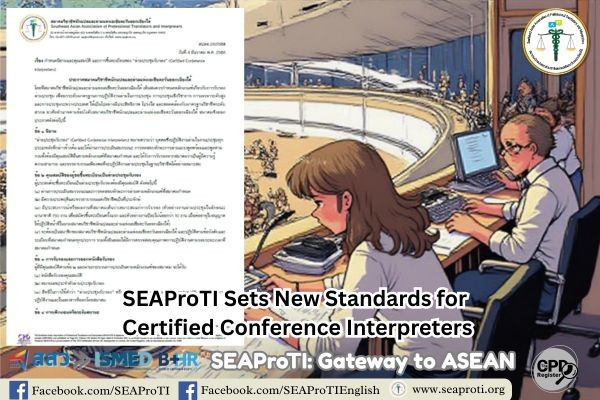
10 April 2026, Bangkok – The assessment of professional interpreting competence requires a systematic, transparent framework capable of accurately reflecting real-world performance. The Southeast Asian Association of Professional Translators and Interpreters (SEAProTI) has therefore developed certification criteria for interpreting at the C2–C3 levels based on a rubric, or band descriptor system, which is widely recognized in language and interpreting assessment. This approach emphasizes performance-based assessment, focusing on the interpreter’s ability to operate effectively in authentic communicative contexts rather than solely on theoretical knowledge (Hale, 2007; Pöchhacker, 2016).
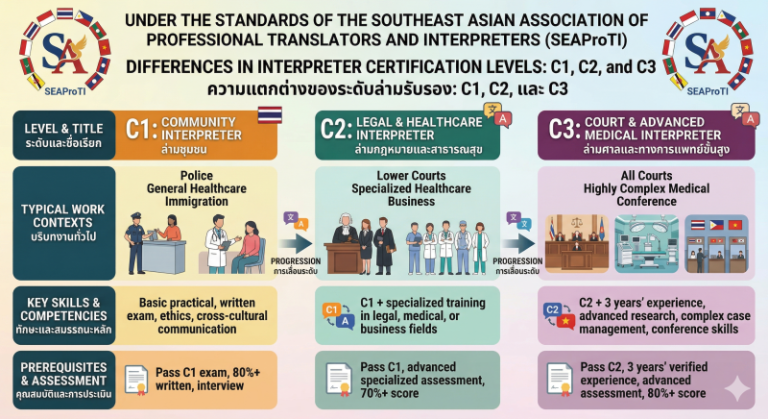
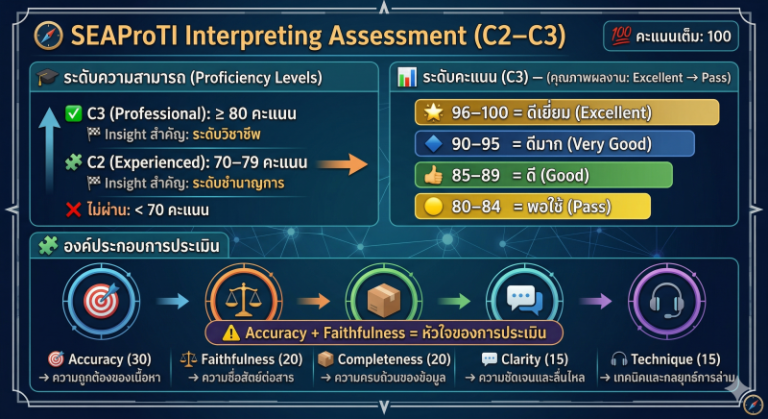
The SEAProTI assessment system is structured on a total score of 100 points and distinguishes two principal competency levels: C3, representing the professional level, and C2, representing the experienced level. Candidates who achieve a score of 80 or above are classified at the C3 level, indicating readiness to perform in professional interpreting contexts. Those scoring between 70 and 79 are placed at the C2 level, reflecting developing professional competence. Candidates scoring below 70 are considered not to have met the required standard, as they do not yet demonstrate sufficient competence for professional practice.
Structurally, the assessment framework comprises five core components: accuracy, faithfulness, completeness, clarity, and technique. These dimensions reflect a holistic assessment model that integrates both content fidelity and delivery performance (Gile, 2009). Accuracy carries the greatest weight, as it represents the interpreter’s ability to convey the source message precisely and without distortion. Faithfulness focuses on preserving the speaker’s intent, tone, and register, aligning with the concept of fidelity in translation and interpreting.
Completeness evaluates the extent to which all relevant information is conveyed without omission, while clarity assesses the fluency, intelligibility, and naturalness of delivery. Technique encompasses practical interpreting skills, including note-taking, time management, and the application of coping strategies, all of which are essential components of interpreting expertise (Setton & Dawrant, 2016).
A distinctive feature of the SEAProTI framework is its clear distinction between competency levels and performance quality. Candidates at the C3 level may demonstrate varying degrees of performance quality, ranging from pass to excellent, depending on their scores. In contrast, the C2 level reflects candidates who have not yet reached full professional competence. This distinction allows for a more nuanced evaluation of performance and supports long-term professional development.
In conclusion, the SEAProTI interpreting assessment framework represents a systematic and internationally aligned model that contributes to the advancement of professional interpreting standards in the region. The use of clearly defined rubrics enhances reliability and validity in assessment while providing a structured pathway for interpreter development in response to evolving professional demands.
References
- Gile, D. (2009). Basic concepts and models for interpreter and translator training (Revised ed.). John Benjamins.
- Hale, S. (2007). Community interpreting. Palgrave Macmillan.
- Pöchhacker, F. (2016). Introducing interpreting studies (2nd ed.). Routledge.
- Setton, R., & Dawrant, A. (2016). Conference interpreting: A trainer’s guide. John Benjamins.
For professional services, please visit: https://www.seaproti.org/practitioners/
About certified translators, translation certifiers, and certified interpreters associated with SEAProTI.
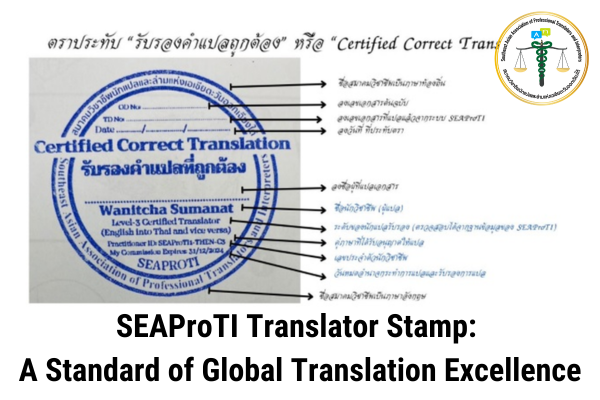
The Southeast Asian Association of Professional Translators and Interpreters (SEAProTI) has officially shared the qualifications and requirements for becoming Certified Translators, Translation Certification Providers, and Certified Interpreters in Sections 9 and 10 of the Royal Gazette, which was published by the Prime Minister’s Office in Thailand on July 25, 2024. Certified Translators, Translation Certification Providers, and Certified Interpreters
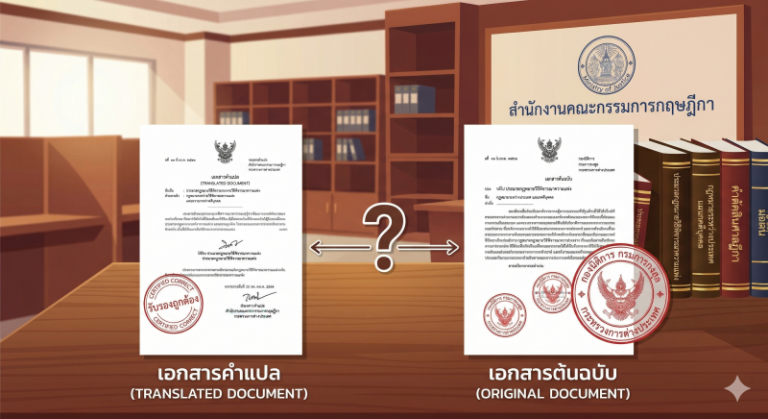
The Council of State has proposed the enactment of a Royal Decree, granting registered translators and recognised translation certifiers from professional associations or accredited language institutions the authority to provide legally valid translation certification (Letter to SEAProTI dated April 28, 2025)
SEAProTI is the first professional association in Thailand and Southeast Asia to implement a comprehensive certification system for translators, certifiers, and interpreters.
Head Office: Baan Ratchakru Building, No. 33, Room 402, Soi Phahonyothin 5, Phahonyothin Road, Phaya Thai District, Bangkok 10400, Thailand
Email: hello@seaproti.com | Tel.: (+66) 2-114-3128 (Office hours: Mon–Fri, 09:00–17:00).
การพัฒนาเกณฑ์การประเมินสมรรถนะการล่ามระดับ C2–C3
ของสมาคมวิชาชีพนักแปลและล่ามแห่งเอเชียตะวันออกเฉียงใต้ (SEAProTI)
การประเมินสมรรถนะของผู้ปฏิบัติงานล่ามในระดับวิชาชีพจำเป็นต้องอาศัยกรอบแนวคิดที่มีความเป็นระบบ โปร่งใส และสามารถสะท้อนความสามารถเชิงปฏิบัติได้อย่างแท้จริง สมาคมวิชาชีพนักแปลและล่ามแห่งเอเชียตะวันออกเฉียงใต้ (SEAProTI) จึงได้พัฒนาเกณฑ์การสอบล่ามรับรองในระดับ C2–C3 โดยอาศัยแนวทางการประเมินแบบ Rubric หรือ Band Descriptors ซึ่งเป็นเครื่องมือที่ได้รับการยอมรับอย่างแพร่หลายในงานประเมินสมรรถนะด้านภาษาและการแปลล่ามในระดับสากล ทั้งนี้ ระบบดังกล่าวมุ่งเน้นการประเมินเชิงสมรรถนะ (performance-based assessment) ที่สะท้อนความสามารถในการปฏิบัติงานจริงมากกว่าการวัดความรู้เชิงทฤษฎีเพียงอย่างเดียว (Hale, 2007; Pöchhacker, 2016)
ระบบการประเมินของ SEAProTI กำหนดคะแนนเต็ม 100 คะแนน และแบ่งระดับความสามารถออกเป็นสองระดับหลัก ได้แก่ ระดับ C3 ซึ่งถือเป็นระดับวิชาชีพ และระดับ C2 ซึ่งเป็นระดับชำนาญการ โดยผู้ที่ได้คะแนนตั้งแต่ 80 คะแนนขึ้นไปจะได้รับการจัดอยู่ในระดับ C3 ซึ่งสะท้อนถึงความสามารถในการปฏิบัติงานล่ามในบริบทวิชาชีพได้อย่างมีประสิทธิภาพ ขณะที่ผู้ที่ได้คะแนนระหว่าง 70 ถึง 79 คะแนนจะอยู่ในระดับ C2 ซึ่งแสดงถึงศักยภาพที่ยังอยู่ในช่วงพัฒนา ส่วนผู้ที่ได้คะแนนต่ำกว่า 70 คะแนนถือว่าไม่ผ่านเกณฑ์ เนื่องจากยังไม่สามารถแสดงสมรรถนะตามมาตรฐานที่กำหนดได้อย่างเพียงพอ
ในเชิงโครงสร้างการประเมิน เกณฑ์ดังกล่าวประกอบด้วยองค์ประกอบหลัก 5 ด้าน ได้แก่ ความถูกต้อง (accuracy) ความซื่อสัตย์ต่อเนื้อหา (faithfulness) ความครบถ้วน (completeness) ความชัดเจน (clarity) และเทคนิคการล่าม (technique) ซึ่งสะท้อนกรอบแนวคิดการประเมินแบบองค์รวม (holistic assessment) ที่ครอบคลุมทั้งมิติของเนื้อหาและกระบวนการถ่ายทอดสาร (Gile, 2009) โดยองค์ประกอบด้านความถูกต้องได้รับการกำหนดน้ำหนักสูงสุด เนื่องจากถือเป็นหัวใจของการล่ามที่ต้องรักษาความแม่นยำของสารต้นทางอย่างเคร่งครัด ในขณะที่ความซื่อสัตย์ต่อเนื้อหามุ่งเน้นการรักษาเจตนา น้ำเสียง และระดับภาษาของผู้พูด ซึ่งสอดคล้องกับแนวคิดเรื่อง fidelity ในการแปลและล่าม
ด้านความครบถ้วนเป็นการประเมินความสามารถในการถ่ายทอดสารได้อย่างครอบคลุมโดยไม่ตกหล่นข้อมูลสำคัญ ขณะที่ความชัดเจนเน้นการสื่อสารที่ลื่นไหล เข้าใจง่าย และเหมาะสมกับผู้รับสาร ส่วนเทคนิคการล่ามครอบคลุมทักษะเชิงปฏิบัติ เช่น การจดโน้ต การจัดการเวลา และการใช้กลยุทธ์ในการแก้ปัญหาเฉพาะหน้า ซึ่งล้วนเป็นองค์ประกอบสำคัญของความเชี่ยวชาญด้านการล่าม (Setton & Dawrant, 2016)
นอกจากนี้ ระบบการประเมินของ SEAProTI ยังมีความโดดเด่นในด้านการแยก “ระดับความสามารถ” ออกจาก “ระดับคุณภาพของผลงาน” อย่างชัดเจน กล่าวคือ ผู้สอบในระดับ C3 อาจมีระดับคุณภาพตั้งแต่พอใช้จนถึงดีเยี่ยม ขึ้นอยู่กับคะแนนรวม ขณะที่ระดับ C2 สะท้อนสถานะของผู้ที่ยังไม่ถึงระดับวิชาชีพเต็มรูปแบบ แนวทางดังกล่าวช่วยเพิ่มความละเอียดในการวิเคราะห์สมรรถนะ และเอื้อต่อการพัฒนาผู้สอบในระยะยาว
โดยสรุป เกณฑ์การประเมินการสอบล่ามของ SEAProTI เป็นกรอบการประเมินที่มีความเป็นระบบ สอดคล้องกับแนวคิดสากล และสามารถนำไปใช้ในการยกระดับมาตรฐานวิชาชีพล่ามในภูมิภาคได้อย่างมีประสิทธิภาพ การใช้ Rubric ที่มีคำอธิบายระดับ (band descriptors) ชัดเจนช่วยให้การประเมินมีความเที่ยงตรงและเชื่อถือได้มากยิ่งขึ้น อีกทั้งยังเป็นเครื่องมือสำคัญในการพัฒนาศักยภาพของผู้ปฏิบัติงานล่ามให้สอดคล้องกับความต้องการของตลาดวิชาชีพในปัจจุบัน
References
- Gile, D. (2009). Basic concepts and models for interpreter and translator training (Revised ed.). John Benjamins.
- Hale, S. (2007). Community interpreting. Palgrave Macmillan.
- Pöchhacker, F. (2016). Introducing interpreting studies (2nd ed.). Routledge.
- Setton, R., & Dawrant, A. (2016). Conference interpreting: A trainer’s guide. John Benjamins.
ติดต่อขอใช้บริการนักวิชาชีพของสมาคมได้ที่: https://www.seaproti.org/practitioners/
สมาคมวิชาชีพนักแปลและล่ามแห่งเอเชียตะวันออกเฉียงใต้ (SEAProTI) ได้ประกาศหลักเกณฑ์และคุณสมบัติของผู้ที่ขึ้นทะเบียนเป็น “นักแปลรับรอง (Certified Translators) และผู้รับรองการแปล (Translation Certification Providers) และล่ามรับรอง (Certified Interpreters)” ของสมาคม หมวดที่ 9 และหมวดที่ 10 ในราชกิจจานุเบกษา ของสำนักเลขาธิการคณะรัฐมนตรี ในสำนักนายกรัฐมนตรี แห่งราชอาณาจักรไทย ลงวันที่ 25 ก.ค. 2567 เล่มที่ 141 ตอนที่ 66 ง หน้า 100 อ่านฉบับเต็มได้ที่: นักแปลรับรอง ผู้รับรองการแปล และล่ามรับรอง
สำนักคณะกรรมการกฤษฎีกาเสนอให้ตราเป็นพระราชกฤษฎีกา โดยกำหนดให้นักแปลที่ขึ้นทะเบียน รวมถึงผู้รับรองการแปลจากสมาคมวิชาชีพหรือสถาบันสอนภาษาที่มีการอบรมและขึ้นทะเบียน สามารถรับรองคำแปลได้ (จดหมายถึงสมาคม SEAProTI ลงวันที่ 28 เม.ย. 2568)
สมาคมวิชาชีพนักแปลและล่ามแห่งเอเชียตะวันออกเฉียงใต้เป็นสมาคมวิชาชีพแห่งแรกและแห่งเดียวในประเทศไทยและภูมิภาคเอเชียตะวันออกเฉียงใต้ที่มีระบบรับรองนักแปลรับรอง ผู้รับรองการแปล และล่ามรับรอง
สำนักงานใหญ่: อาคารบ้านราชครู เลขที่ 33 ห้อง 402 ซอยพหลโยธิน 5 ถนนพหลโยธิน แขวงพญาไท เขตพญาไท กรุงเทพมหานคร 10400 ประเทศไทย
อีเมล: hello@seaproti.com โทรศัพท์: (+66) 2-114-3128 (เวลาทำการ: วันจันทร์–วันศุกร์ เวลา 09.00–17.00 น.