



Guidelines for Quality Subtitling in Croatia
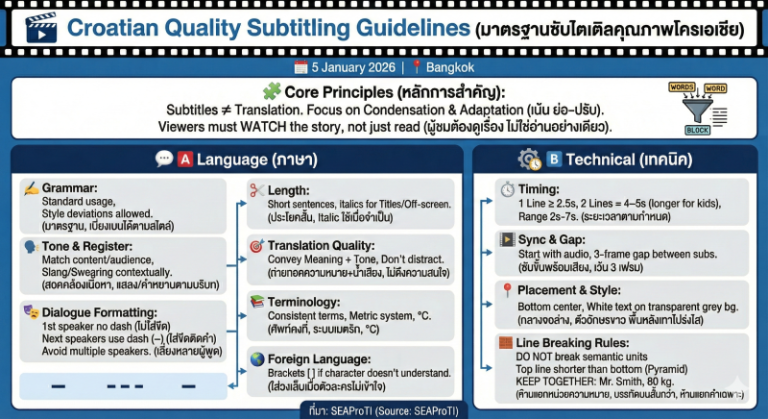
5 January 2026, Bangkok—Subtitles are written text displayed at the bottom of the screen that enable viewers to follow audiovisual content that would otherwise be inaccessible or difficult to understand. A defining feature of subtitling is condensation—often referred to as adaptation. Dialogue must be reduced so that viewers can follow the audiovisual narrative rather than spend excessive time reading. In audiovisual translation, readability and timing take precedence over translating every word or detail. The following guidelines reflect established subtitling practice in Croatia.
A. Language
1. Grammar and Spelling
Subtitles must be grammatically correct and conform to standard Croatian, unless the stylistic nature of the audiovisual content requires deviation from the norm.
2. Idiomatic Usage
Language must match the style and register of the audiovisual content and be appropriate for the target audience. This includes the use of:
- jargon
- colloquial language
- profanity
- figures of speech and stylistically marked expressions
Loanwords from the source language may be used only if they are well established in Croatian (e.g., “cool,” “chic”).
Expletives must reflect both the source material and the client’s requirements.
3. Dialogue Formatting
When a subtitle contains speech by two or more speakers:
- No dash is placed before the first speaker’s line
- A dash (–) is placed before each subsequent speaker’s line
- There is no space between the dash and the first word
- It is recommended to avoid including too many speakers in a single subtitle.
4. Length of the Translation
Long sentences should not be spread across multiple subtitles whenever possible. Instead, they should be divided into shorter sentences.
This may not always be feasible due to the syntactic structure of the original dialogue or timing constraints.
5. Use of Italics
Italics should be used sparingly so as not to distract viewers, who are already processing visual and auditory information.
Italics are typically used for:
- names of companies, hotels, vehicles, films, books, albums, TV series, song lyrics, and literary quotations
- quotations and reported speech
- narrator’s comments (unless narration dominates the programme; subtitler discretion applies)
- off-screen speakers (e.g. telephone, loudspeaker, unseen speaker), excluding cases of rapid shot changes or when a speaker continues speaking after leaving the frame
- emphasized individual words
- relevant written on-screen text necessary for understanding the plot
6. Translation Quality
A good translation conveys not only meaning but also style and tone. Standard language is generally preferred over loanwords or jargon, unless dictated by the audiovisual content.
High-quality subtitles are:
- faithful to the original
- unobtrusive
- supportive of narrative flow rather than attention-seeking
All audiovisual elements relevant to the story must be translated. Song lyrics are translated only if their meaning is relevant to the plot.
7. Terminology
For content containing specialized terminology, correct technical terms must be used. Terminology specific to a program or series must be consistent across all episodes.
This includes:
- verification of foreign personal and place names
- correct transcription from non-Latin scripts
- conversion of measurements into the metric system
- temperatures expressed in degrees Celsius
8. Additional Foreign Languages
When foreign languages appear in the program:
- Translations are placed in brackets only when characters do not understand the foreign language but the audience needs the information to follow the story
- If characters switch languages naturally (e.g., bilingual dialogue), translations are not placed in brackets
- When languages alternate frequently, bracketed translations are avoided, as viewers can hear the language change
B. Technical Aspects
1. Subtitle Duration
Subtitles must remain on screen long enough to be read comfortably while allowing viewers to follow the audiovisual content.
General guidelines:
- Single-line subtitle: minimum 2.5 seconds
- Two-line subtitle: 4–5 seconds
- Children’s programmes: slightly longer durations recommended
Absolute limits:
- Minimum: 2 seconds (very short subtitles)
- Maximum: 7 seconds, depending on complexity and audience
2. Time Coding
- Subtitles should appear in sync with speech
- Subtitles should not extend into the next scene unless scenes are very short and closely connected
- In Croatia, subtitles are not normally interrupted by shot changes within the same scene
- A minimum gap of three frames is required between consecutive subtitles
3. Positioning
- Subtitles are centered at the bottom of the screen
- Descriptive subtitles (e.g. speaker names in documentaries) are placed above dialogue subtitles, aligned left or right according to speaker position
- Descriptive subtitles may overlap on-screen text depending on client requirements
- Bold font may be used for clarity
- Only essential information is translated in descriptive subtitles
- A smaller font size is recommended
- Descriptive subtitles must not obscure the speaker’s face
4. Readability
Standard practice in Croatia uses:
- White text
- Transparent grey background
5. Subtitle Division and Layout
- Larger grammatical units should not be split across subtitles
- If a sentence spans multiple subtitles, each new subtitle must begin with a new clause or phrase
Incorrect:
I went to the post office to pay the bills, pick up a package and top up my mobile phone.
Correct:
I went to the post office to pay the bills, pick up a package and top up my mobile phone.
For two-line subtitles:
- Lines should ideally be of equal length
- If unequal, the upper line should be shorter
- Meaningful units must not be split(e.g.,. Mr. Smith, 80 kg)
About Certified Translators, Translation Certifiers, and Certified Interpreters of SEAProTI
The Southeast Asian Association of Professional Translators and Interpreters (SEAProTI) has formally announced the qualifications and requirements for registration of Certified Translators, Translation Certification Providers, and Certified Interpreters in Sections 9 and 10 of the Royal Gazette, published by the Secretariat of the Cabinet, Office of the Prime Minister of Thailand, on 25 July 2024 (Vol. 141, Part 66 Ng, p. 100). Certified Translators, Translation Certification Providers, and Certified Interpreters
The Council of State has proposed the enactment of a Royal Decree, granting registered translators and recognised translation certifiers from professional associations or accredited language institutions the authority to provide legally valid translation certification (Letter to SEAProTI dated April 28, 2025)
SEAProTI is the first professional association in Thailand and Southeast Asia to implement a comprehensive certification system for translators, certifiers, and interpreters.
Head Office: Baan Ratchakru Building, No. 33, Room 402, Soi Phahonyothin 5, Phahonyothin Road, Phaya Thai District, Bangkok 10400, Thailand
Email: hello@seaproti.com | Tel.: (+66) 2-114-3128 (Office hours: Mon–Fri, 09:00–17:00)
แนวทางการทำซับไตเติลคุณภาพในประเทศโครเอเชีย
5 มกราคม 2026, กรุงเทพฯ — ซับไตเติลคือข้อความที่ปรากฏบริเวณด้านล่างของจอภาพ มีหน้าที่ช่วยให้ผู้ชมสามารถรับชมเนื้อหาโสตทัศน์ที่อาจไม่สามารถเข้าถึงหรือเข้าใจได้โดยตรงจากเสียงต้นฉบับ ลักษณะสำคัญของการทำซับไตเติลคือ การย่อและปรับบทสนทนา (condensation หรือ adaptation) กล่าวคือ ผู้แปลจำเป็นต้องลดทอนข้อความ เพื่อให้ผู้ชมสามารถติดตามภาพและเนื้อเรื่องได้อย่างต่อเนื่อง โดยไม่ต้องเสียเวลาไปกับการอ่านมากเกินไป ในงานแปลโสตทัศน์ ความอ่านง่ายและจังหวะเวลาในการแสดงซับไตเติลจึงมีความสำคัญมากกว่าการแปลทุกคำอย่างตรงตัว แนวทางต่อไปนี้สะท้อนขนบปฏิบัติด้านซับไตเติลที่ใช้กันอย่างแพร่หลายในประเทศโครเอเชีย
ก. ด้านภาษา
1. ไวยากรณ์และการสะกดคำ
ซับไตเติลต้องใช้ภาษาที่ถูกต้องตามหลักไวยากรณ์และการสะกดคำของภาษาโครเอเชียมาตรฐาน เว้นแต่ลักษณะเชิงสไตล์ของเนื้อหาโสตทัศน์จะกำหนดให้เบี่ยงเบนจากภาษามาตรฐาน
2. การใช้ภาษาเชิงสำนวน
ภาษาที่ใช้ต้องสอดคล้องกับสไตล์และระดับภาษา (register) ของเนื้อหา และเหมาะสมกับกลุ่มผู้ชมเป้าหมาย ซึ่งอาจรวมถึง ภาษาวิชาชีพหรือศัพท์เฉพาะ ภาษาพูด คำหยาบหรือคำสบถ สำนวนโวหารและถ้อยคำที่มีนัยเชิงสไตล์
คำยืมจากภาษาต้นฉบับสามารถใช้ได้เฉพาะกรณีที่เป็นคำที่ใช้กันทั่วไปในภาษาโครเอเชียแล้ว เช่น cool, chic การใช้คำสบถต้องสอดคล้องทั้งกับต้นฉบับและข้อกำหนดของผู้ว่าจ้าง
3. รูปแบบบทสนทนา
เมื่อซับไตเติลหนึ่งบรรทัดมีผู้พูดมากกว่าหนึ่งคน ไม่ใส่ขีด (–) หน้าบรรทัดของผู้พูดคนแรก ให้ใส่ ขีด (–) หน้าบรรทัดของผู้พูดคนถัดไปทุกคน ไม่มีเว้นวรรคระหว่างขีดกับคำแรก ควรหลีกเลี่ยงการใส่ผู้พูดหลายคนเกินไปในซับไตเติลเดียว
4. ความยาวของคำแปล
ประโยคยาวไม่ควรถูกแบ่งออกเป็นหลายซับไตเติล หากสามารถแบ่งเป็นประโยคสั้นได้ควรทำเช่นนั้น อย่างไรก็ตาม ในบางกรณีอาจทำไม่ได้เนื่องจากโครงสร้างภาษาหรือข้อจำกัดด้านเวลา
5. การใช้ตัวเอียง (Italics)
ควรใช้ตัวเอียงให้น้อยที่สุด เพื่อไม่ให้รบกวนผู้ชมซึ่งต้องรับข้อมูลทั้งภาพและเสียงไปพร้อมกัน โดยทั่วไปจะใช้ตัวเอียงในกรณีต่อไปนี้
- ชื่อบริษัท โรงแรม ยานพาหนะ ภาพยนตร์ หนังสือ อัลบั้ม ซีรีส์ เนื้อเพลง และข้อความจากงานวรรณกรรม
- คำพูดอ้างอิงหรือคำพูดที่ถ่ายทอดทางอ้อม
- คำบรรยายของผู้เล่าเรื่อง (ยกเว้นกรณีที่ทั้งรายการเป็นการบรรยาย ซึ่งผู้ทำซับต้องพิจารณาเป็นกรณีไป)
- ผู้พูดนอกจอ เช่น ทางโทรศัพท์ ลำโพง หรือผู้ที่ไม่ปรากฏในภาพ (ไม่รวมกรณีเปลี่ยนมุมกล้องเร็ว หรือผู้พูดเดินออกจากเฟรมแต่ยังพูดต่อ)
- คำที่ต้องการเน้นเป็นพิเศษ
- ข้อความที่ปรากฏบนจอซึ่งจำเป็นต่อการเข้าใจเนื้อเรื่อง
6. คุณภาพของการแปล
การแปลที่ดีต้องถ่ายทอดทั้ง ความหมาย น้ำเสียง และสไตล์ ของต้นฉบับ โดยทั่วไปควรใช้ภาษามาตรฐาน แทนการใช้คำยืมหรือศัพท์แสลง เว้นแต่เนื้อหาจะกำหนดให้ใช้
ซับไตเติลคุณภาพควรมีลักษณะดังนี้
- ซื่อสัตย์ต่อเนื้อหาต้นฉบับ
- ไม่ดึงความสนใจมาที่ตัวซับเอง
- ช่วยพาผู้ชมติดตามเรื่องราวได้อย่างราบรื่น
องค์ประกอบโสตทัศน์ที่มีความสำคัญต่อเนื้อเรื่องต้องได้รับการแปล เนื้อเพลงจะแปลเฉพาะกรณีที่ความหมายมีบทบาทต่อโครงเรื่องเท่านั้น
7. ศัพท์เฉพาะ
เนื้อหาที่มีศัพท์เทคนิคต้องใช้คำศัพท์ที่ถูกต้อง และต้องใช้ให้ สม่ำเสมอตลอดทั้งรายการหรือซีรีส์ รวมถึง
- การตรวจสอบชื่อบุคคลและสถานที่จากต่างประเทศ
- การถอดเสียงจากอักษรหรือระบบการเขียนที่ไม่ใช่ละติน
- การแปลงหน่วยวัดเป็นระบบเมตริก
- การแสดงอุณหภูมิเป็นองศาเซลเซียส
8. ภาษาต่างประเทศเพิ่มเติม
เมื่อมีภาษาต่างประเทศปรากฏในรายการ
- ใช้วงเล็บเฉพาะกรณีที่ตัวละครไม่เข้าใจภาษานั้น แต่ผู้ชมจำเป็นต้องรู้เพื่อเข้าใจเรื่อง
- หากตัวละครสลับภาษาอย่างเป็นธรรมชาติ (เช่น บทสนทนาสองภาษา) จะไม่ใช้วงเล็บ
- หากมีการสลับภาษาบ่อย ควรหลีกเลี่ยงการใส่วงเล็บ เนื่องจากผู้ชมสามารถแยกแยะจากเสียงได้เอง
ข. ด้านเทคนิค
1. ระยะเวลาการแสดงซับไตเติล
ซับไตเติลต้องแสดงบนจอให้นานพอสำหรับการอ่าน โดยไม่รบกวนการติดตามภาพ
แนวทางทั่วไป
- ซับหนึ่งบรรทัด: อย่างน้อย 2.5 วินาที
- ซับสองบรรทัด: 4–5 วินาที
- รายการสำหรับเด็ก: ควรยาวกว่านี้เล็กน้อย
ขอบเขตสูงสุด–ต่ำสุด
- ต่ำสุด: 2 วินาที (ซับสั้นมาก)
- สูงสุด: 7 วินาที ขึ้นกับความซับซ้อนของข้อความและกลุ่มผู้ชม
2. การจับเวลา (Time Coding)
- ซับควรปรากฏพร้อมกับเสียงพูด
- ไม่ควรลากซับข้ามไปยังฉากถัดไป เว้นแต่ฉากสั้นและเชื่อมโยงกันมาก
- ในโครเอเชีย ไม่จำเป็นต้องตัดซับทุกครั้งที่เปลี่ยนมุมกล้องภายในฉากเดียว
- ต้องเว้นอย่างน้อย 3 เฟรม ระหว่างซับสองอันติดต่อกัน
3. ตำแหน่งการแสดง
- ซับไตเติลอยู่กึ่งกลางด้านล่างของจอ
- ซับเชิงบรรยาย (เช่น ชื่อผู้พูดในสารคดี) วางเหนือซับบทสนทนา โดยจัดซ้ายหรือขวาตามตำแหน่งผู้พูด
- อาจซ้อนทับข้อความบนจอได้ ขึ้นอยู่กับข้อกำหนดของผู้ว่าจ้าง
- สามารถใช้ตัวหนาเพื่อเพิ่มความชัดเจน
- แปลเฉพาะข้อมูลที่จำเป็น
- ควรใช้ฟอนต์ขนาดเล็กกว่า
- ห้ามบังใบหน้าของผู้พูด
4. ความอ่านง่าย
- แนวปฏิบัติมาตรฐานในโครเอเชียคือ
- ตัวอักษรสีขาว
- พื้นหลังสีเทาโปร่งใส
5. การแบ่งบรรทัดและการจัดวาง
- ไม่ควรแยกหน่วยไวยากรณ์ขนาดใหญ่ข้ามซับ
- หากประโยคยาว ต้องเริ่มซับใหม่ด้วยวลีหรืออนุประโยคใหม่
ตัวอย่างที่ไม่เหมาะสม
I went to the post office to pay the bills, pick up a package and top up my mobile phone.
ตัวอย่างที่เหมาะสม
I went to the post office to pay the bills, pick up a package and top up my mobile phone.
สำหรับซับสองบรรทัด
ความยาวของแต่ละบรรทัดควรใกล้เคียงกัน หากไม่เท่ากัน บรรทัดบนควรสั้นกว่า ห้ามแยกหน่วยความหมาย เช่น Mr. Smith, 80 kg
เกี่ยวกับนักแปลรับรอง ผู้รับรองการแปล และล่ามรับรองของสมาคมวิชาชีพนักแปลและล่ามแห่งเอเชียตะวันออกเฉียงใต้
สมาคมวิชาชีพนักแปลและล่ามแห่งเอเชียตะวันออกเฉียงใต้ (SEAProTI) ได้ประกาศหลักเกณฑ์และคุณสมบัติผู้ที่ขึ้นทะเบียนเป็น “นักแปลรับรอง (Certified Translators) และผู้รับรองการแปล (Translation Certification Providers) และล่ามรับรอง (Certified Interpreters)” ของสมาคม หมวดที่ 9 และหมวดที่ 10 ในราชกิจจานุเบกษา ของสำนักเลขาธิการคณะรัฐมนตรี ในสำนักนายกรัฐมนตรี แห่งราชอาณาจักรไทย ลงวันที่ 25 ก.ค. 2567 เล่มที่ 141 ตอนที่ 66 ง หน้า 100 อ่านฉบับเต็มได้ที่: นักแปลรับรอง ผู้รับรองการแปล และล่ามรับรอง
สำนักคณะกรรมการกฤษฎีกา เสนอให้ตราเป็นพระราชกฤษฎีกา โดยกำหนดให้นักแปลที่ขึ้นทะเบียน รวมถึงผู้รับรองการแปลจากสมาคมวิชาชีพหรือสถาบันสอนภาษาที่มีการอบรมและขึ้นทะเบียน สามารถรับรองคำแปลได้ (จดหมายถึงสมาคม SEAProTI ลงวันที่ 28 เม.ย. 2568)
สมาคมวิชาชีพนักแปลและล่ามแห่งเอเชียตะวันออกเฉียงใต้ เป็นสมาคมวิชาชีพแห่งแรกและแห่งเดียวในประเทศไทยและภูมิภาคเอเชียตะวันออกเฉียงใต้ที่มีระบบรับรองนักแปลรับรอง ผู้รับรองการแปล และล่ามรับรอง
สำนักงานใหญ่: อาคารบ้านราชครู เลขที่ 33 ห้อง 402 ซอยพหลโยธิน 5 ถนนพหลโยธิน แขวงพญาไท เขตพญาไท กรุงเทพมหานคร 10400 ประเทศไทย
อีเมล: hello@seaproti.com โทรศัพท์: (+66) 2-114-3128 (เวลาทำการ: วันจันทร์–วันศุกร์ เวลา 09.00–17.00 น.