


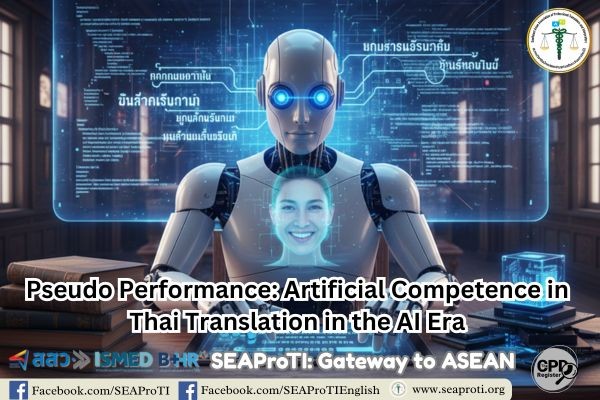
Pseudo Performance: Artificial Competence among Thai Translators in the Age of Artificial Intelligence—A Professional Analysis
By Wanitcha Sumanat, President, Southeast Asian Association of Professional Translators and Interpreters (SEAProTI) and Forensic Linguist
28 December 2025, Bangkok – The emergence of artificial intelligence in language-related applications, particularly machine translation systems and large language models, has brought about a profound structural transformation of the translation profession worldwide, including in Thailand. This transformation affects not only professional workflows but also the very understanding of what constitutes “competence” and “professionalism” in translation. This article proposes the concept of pseudo performance to explain a growing phenomenon in which translated outputs appear professional on the surface but are not grounded in the genuine professional competence of the human practitioner.
In the context of translation, pseudo performance refers to a condition in which superficial indicators of quality are enhanced by technology, while the human translator’s underlying knowledge, interpretive capacity, and decision-making ability do not develop accordingly. AI-generated translations often demonstrate high levels of grammatical accuracy, fluency, and stylistic conformity with target-language norms. However, these qualities reflect the capabilities of automated systems rather than the linguistic or professional competence of the tool user (Kenny, 2022).
From the perspective of translation theory, translation is not merely the transfer of lexical meaning but a complex process of interpretation, decision-making, and risk management under contextual constraints (Pym, 2012). Professional translators must be able to justify their lexical and structural choices, interpret legal, cultural, and institutional implications, and anticipate the potential impact of translated texts on recipients. By contrast, pseudo performance emerges when AI users are unable to explain or critically evaluate translation outputs independently and instead accept system-generated results as final solutions.
One of the key factors enabling the proliferation of pseudo performance in the Thai translation market lies in prevailing quality assessment practices that prioritize fluency and naturalness over contextual accuracy and professional accountability. In practice, many clients lack the linguistic expertise to verify source texts or evaluate semantic equivalence, leading them to rely primarily on readability as a quality indicator. As a result, translations that “read well” are often assumed to be accurate, even when they contain significant contextual or conceptual distortions (Risku, 2016).
AI technology further lowers the threshold for appearing competent by reducing the cost of producing professional-looking language. Contemporary systems can effectively emulate legal, medical, and academic registers, encouraging some users to bypass essential stages of skill development such as source-text analysis, semantic interrogation, and contextual validation. Consequently, apparent competence becomes a by-product of technological use rather than the outcome of sustained professional training and experience (Bowker & Buitrago Ciro, 2019).
A critical misconception in the age of artificial intelligence is the conflation of tool usage with linguistic competence. In reality, AI systems cannot assume responsibility for the consequences of translation, whether in the form of legal liability, rights violations, or risks to health and life. Responsibility remains firmly with the human agent who decides to adopt and disseminate system outputs (Floridi et al., 2018). Pseudo performance is therefore particularly dangerous because it creates an illusion of expertise without corresponding accountability.
The distinction between pseudo performance and genuine professional competence does not hinge on whether AI is used but on how decisions are made. Professional translators employ AI as a supportive tool, critically evaluate its outputs, and remain capable of systematically justifying their linguistic choices. Artificial competence, by contrast, arises when AI systems effectively dictate decisions, while humans merely approve outputs without understanding their implications or limitations.
Perhaps the most pervasive illusion fostered by AI-driven translation is the belief that “anyone can be a translator.” This belief not only devalues the profession economically but also undermines linguistic safety standards, particularly in high-stakes domains such as law, medicine, and public health, where translation errors can lead to irreversible harm and rights violations (Hale & Napier, 2013).
From both professional and policy perspectives, addressing pseudo performance does not require rejecting technological innovation. Rather, it necessitates a clear conceptual boundary that defines AI as a tool rather than a professional surrogate. Translator development in the AI era should therefore prioritize evaluative judgment, reasoned justification of linguistic decisions, and responsibility for translational outcomes, rather than mere technical proficiency with automated systems.
In conclusion, pseudo performance represents a form of rapidly acquired but unsustainable competence. Genuine professional performance, by contrast, develops gradually through accumulated knowledge, contextual understanding, and ethical responsibility—qualities that cannot be fully automated. Ultimately, what will distinguish professional translators in the AI era is not linguistic fluency alone, but the ability to assume responsibility for translation decisions in a manner that is reasoned, transparent, and professionally accountable.
References
- Bowker, L., & Buitrago Ciro, J. (2019). Machine translation and global research: Towards improved machine translation literacy in the scholarly community. Emerald Publishing.
- Floridi, L., Cowls, J., Beltrametti, M., Chatila, R., Chazerand, P., Dignum, V., … Vayena, E. (2018). AI4People—An ethical framework for a good AI society. Minds and Machines, 28(4), 689–707. https://doi.org/10.1007/s11023-018-9482-5
- Hale, S., & Napier, J. (2013). Research methods in interpreting: A practical resource. Bloomsbury.
- Kenny, D. (2022). Machine translation literacy and the ethics of post-editing. The Translator, 28(2), 123–140. https://doi.org/10.1080/13556509.2021.1963926
- Pym, A. (2012). On translator ethics: Principles for mediation between cultures. John Benjamins.
- Risku, H. (2016). Situated translation. In C. Angelelli & B. Baer (Eds.), Researching translation and interpreting (pp. 41–56). Routledge.
About Certified Translators, Translation Certifiers, and Certified Interpreters of SEAProTI
The Southeast Asian Association of Professional Translators and Interpreters (SEAProTI) has formally announced the qualifications and requirements for registration of Certified Translators, Translation Certification Providers, and Certified Interpreters in Sections 9 and 10 of the Royal Gazette, published by the Secretariat of the Cabinet, Office of the Prime Minister of Thailand, on 25 July 2024 (Vol. 141, Part 66 Ng, p. 100). Certified Translators, Translation Certification Providers, and Certified Interpreters
The Council of State has proposed the enactment of a Royal Decree, granting registered translators and recognised translation certifiers from professional associations or accredited language institutions the authority to provide legally valid translation certification (Letter to SEAProTI dated April 28, 2025)
SEAProTI is the first professional association in Thailand and Southeast Asia to implement a comprehensive certification system for translators, certifiers, and interpreters.
Head Office: Baan Ratchakru Building, No. 33, Room 402, Soi Phahonyothin 5, Phahonyothin Road, Phaya Thai District, Bangkok 10400, Thailand
Email: hello@seaproti.com | Tel.: (+66) 2-114-3128 (Office hours: Mon–Fri, 09:00–17:00)
Pseudo Performance: ความสามารถเทียมของนักแปลไทยในยุคปัญญาประดิษฐ์ และการวิเคราะห์ทางวิชาชีพ
บทความโดย วณิชชา สุมานัส นายกสมาคมวิชาชีพนักแปลและล่ามแห่งเอเชียตะวันออกเฉียงใต้ (SEAProTI) และผู้เชี่ยวชาญด้านนิติภาษาศาสตร์
28 ธันวาคม 2568, กรุงเทพมหานคร – การเกิดขึ้นของปัญญาประดิษฐ์ด้านภาษา โดยเฉพาะระบบแปลภาษาอัตโนมัติและโมเดลภาษาขนาดใหญ่ ได้สร้างการเปลี่ยนแปลงเชิงโครงสร้างต่อวิชาชีพการแปลในระดับสากล รวมถึงบริบทของประเทศไทย การเปลี่ยนแปลงดังกล่าวมิได้ส่งผลเพียงต่อกระบวนการทำงาน หากแต่กระทบต่อความเข้าใจเกี่ยวกับ “ความสามารถ” และ “ความเป็นวิชาชีพ” ของนักแปลโดยตรง บทความนี้เสนอแนวคิด Pseudo Performance เพื่ออธิบายปรากฏการณ์ที่ผลงานการแปลมีลักษณะภายนอกคล้ายงานมืออาชีพ แต่ไม่ได้ตั้งอยู่บนฐานสมรรถนะทางวิชาชีพของผู้ปฏิบัติงานอย่างแท้จริง
Pseudo Performance ในบริบทของการแปล หมายถึงสภาวะที่คุณภาพของงานแปลในระดับผิวเผินถูกยกระดับด้วยเทคโนโลยี ขณะที่ความรู้ ความเข้าใจ และความสามารถในการตัดสินใจเชิงภาษาของมนุษย์ไม่ได้พัฒนาไปพร้อมกัน งานแปลที่ผลิตโดย AI สามารถมีความถูกต้องทางไวยากรณ์ ความลื่นไหล และรูปแบบภาษาที่สอดคล้องกับภาษาปลายทางในระดับสูง อย่างไรก็ตาม คุณลักษณะเหล่านี้ไม่ได้สะท้อนความสามารถของผู้ใช้เครื่องมือ หากแต่สะท้อนศักยภาพของระบบอัตโนมัติ (Kenny, 2022)
ในเชิงทฤษฎีการแปล การแปลไม่ใช่เพียงการถ่ายโอนความหมายเชิงคำศัพท์ แต่เป็นกระบวนการตีความ การตัดสินใจ และการจัดการความเสี่ยงทางความหมายภายใต้ข้อจำกัดทางบริบท (Pym, 2012) นักแปลมืออาชีพต้องสามารถอธิบายเหตุผลของการเลือกคำ วิเคราะห์นัยแฝงทางกฎหมาย วัฒนธรรม และสถาบัน รวมถึงคาดการณ์ผลกระทบของข้อความต่อผู้รับสาร ในทางตรงกันข้าม Pseudo Performance เกิดขึ้นเมื่อผู้ใช้ AI ไม่สามารถอธิบายหรือประเมินผลลัพธ์ของงานแปลได้ด้วยตนเอง แต่กลับยอมรับ output ของระบบในฐานะคำตอบสุดท้าย
ปัจจัยสำคัญที่เอื้อให้ Pseudo Performance แพร่ขยายในวงการแปลไทย คือโครงสร้างการประเมินคุณภาพที่เน้นความลื่นไหลและความเป็นธรรมชาติของภาษา มากกว่าความถูกต้องเชิงบริบทและความรับผิดชอบเชิงวิชาชีพ ในทางปฏิบัติ ผู้ว่าจ้างจำนวนมากไม่สามารถตรวจสอบต้นฉบับหรือประเมินความสอดคล้องของเนื้อหาได้ จึงใช้การรับรู้ของผู้อ่านเป็นเกณฑ์หลัก งานแปลที่ “อ่านดี” จึงถูกเข้าใจว่าเป็นงานที่มีคุณภาพ แม้ว่าจะมีความคลาดเคลื่อนเชิงความหมายที่สำคัญก็ตาม (Risku, 2016)
AI มีบทบาทสำคัญในการลดต้นทุนของการ “ดูเหมือนมีความสามารถ” ระบบสามารถเลียนแบบ register ทางกฎหมาย การแพทย์ หรือวิชาการได้อย่างมีประสิทธิภาพ ส่งผลให้ผู้ใช้จำนวนหนึ่งข้ามกระบวนการพัฒนาทักษะพื้นฐาน เช่น การวิเคราะห์ข้อความต้นฉบับ การตั้งคำถามเชิงความหมาย และการตรวจสอบความสอดคล้องของบริบท ความสามารถที่ปรากฏจึงเป็นผลลัพธ์ของการใช้งานเทคโนโลยี ไม่ใช่ผลของการสั่งสมความรู้เชิงวิชาชีพ (Bowker & Buitrago Ciro, 2019)
ความเข้าใจผิดที่สำคัญในยุคปัญญาประดิษฐ์คือการเทียบ “การใช้เครื่องมือ” เข้ากับ “ความสามารถทางภาษา” ในความเป็นจริง AI ไม่สามารถรับผิดชอบต่อผลกระทบของงานแปล ไม่ว่าจะเป็นความเสียหายทางกฎหมาย การละเมิดสิทธิ หรือความเสี่ยงต่อสุขภาพและชีวิตของผู้รับสาร ความรับผิดชอบดังกล่าวยังคงเป็นภาระของมนุษย์ผู้ตัดสินใจใช้ผลลัพธ์ของระบบ (Floridi et al., 2018) Pseudo Performance จึงเป็นสภาวะที่อันตราย เพราะสร้างภาพลวงตาของความเชี่ยวชาญโดยปราศจากความรับผิดชอบที่สอดคล้องกัน
ความแตกต่างระหว่าง Pseudo Performance กับสมรรถนะวิชาชีพที่แท้จริงไม่ได้อยู่ที่การใช้หรือไม่ใช้ AI หากแต่อยู่ที่โครงสร้างการคิด นักแปลมืออาชีพใช้ AI เป็นเครื่องมือสนับสนุนกระบวนการตัดสินใจ วิเคราะห์และตรวจสอบผลลัพธ์อย่างมีวิจารณญาณ และสามารถอธิบายเหตุผลของการเลือกคำได้อย่างเป็นระบบ ในทางตรงกันข้าม ความสามารถเทียมเกิดขึ้นเมื่อ AI กลายเป็นผู้กำหนดการตัดสินใจหลัก โดยมนุษย์ทำหน้าที่เพียงผู้ยอมรับผลลัพธ์โดยไม่เข้าใจกลไกหรือผลกระทบของมัน
ภาพลวงตาที่รุนแรงที่สุดของยุค AI คือความเชื่อที่ว่า “ทุกคนสามารถเป็นนักแปลได้” ความเชื่อนี้ไม่ได้เพียงลดทอนคุณค่าทางเศรษฐกิจของวิชาชีพ แต่ยังบั่นทอนมาตรฐานความปลอดภัยทางภาษา โดยเฉพาะในงานที่มีความอ่อนไหวสูง เช่น งานกฎหมาย การแพทย์ และสาธารณสุข ซึ่งความผิดพลาดทางภาษาอาจนำไปสู่การละเมิดสิทธิหรือความเสียหายที่ไม่อาจย้อนกลับได้ (Hale & Napier, 2013)
ในเชิงวิชาชีพและนโยบาย ทางออกของปัญหา Pseudo Performance มิใช่การปฏิเสธเทคโนโลยี หากแต่เป็นการกำหนดเส้นแบ่งเชิงแนวคิดอย่างชัดเจนว่า AI เป็นเครื่องมือ ไม่ใช่ตัวแทนของวิชาชีพ การพัฒนานักแปลในยุคปัญญาประดิษฐ์จึงควรมุ่งเน้นการเสริมสร้างความสามารถในการประเมินผลลัพธ์ การอธิบายเหตุผลเชิงภาษา และการรับผิดชอบต่อผลกระทบของงานแปล มากกว่าการฝึกใช้เครื่องมือเพียงอย่างเดียว
โดยสรุป Pseudo Performance เป็นปรากฏการณ์ที่ทำให้ความสามารถดูเหมือนเกิดขึ้นอย่างรวดเร็ว แต่ขาดความยั่งยืนในระยะยาว ในขณะที่สมรรถนะวิชาชีพที่แท้จริงพัฒนาอย่างค่อยเป็นค่อยไปบนฐานของความรู้ ความเข้าใจ และความรับผิดชอบที่ไม่อาจถูกแทนที่ได้ด้วยระบบอัตโนมัติ ในท้ายที่สุด สิ่งที่จะคัดกรองความสามารถของนักแปลในยุค AI ไม่ใช่ระดับความลื่นไหลของภาษา หากแต่เป็นความสามารถในการรับผิดชอบต่อการตัดสินใจทางภาษาอย่างมีเหตุผลและตรวจสอบได้
References
- Bowker, L., & Buitrago Ciro, J. (2019). Machine translation and global research: Towards improved machine translation literacy in the scholarly community. Emerald Publishing.
- Floridi, L., Cowls, J., Beltrametti, M., Chatila, R., Chazerand, P., Dignum, V., … Vayena, E. (2018). AI4People—An ethical framework for a good AI society. Minds and Machines, 28(4), 689–707. https://doi.org/10.1007/s11023-018-9482-5
- Hale, S., & Napier, J. (2013). Research methods in interpreting: A practical resource. Bloomsbury.
- Kenny, D. (2022). Machine translation literacy and the ethics of post-editing. The Translator, 28(2), 123–140. https://doi.org/10.1080/13556509.2021.1963926
- Pym, A. (2012). On translator ethics: Principles for mediation between cultures. John Benjamins.
- Risku, H. (2016). Situated translation. In C. Angelelli & B. Baer (Eds.), Researching translation and interpreting (pp. 41–56). Routledge.
สมาคมวิชาชีพนักแปลและล่ามแห่งเอเชียตะวันออกเฉียงใต้ (SEAProTI) ได้ประกาศหลักเกณฑ์และคุณสมบัติผู้ที่ขึ้นทะเบียนเป็น “นักแปลรับรอง (Certified Translators) และผู้รับรองการแปล (Translation Certification Providers) และล่ามรับรอง (Certified Interpreters)” ของสมาคม หมวดที่ 9 และหมวดที่ 10 ในราชกิจจานุเบกษา ของสำนักเลขาธิการคณะรัฐมนตรี ในสำนักนายกรัฐมนตรี แห่งราชอาณาจักรไทย ลงวันที่ 25 ก.ค. 2567 เล่มที่ 141 ตอนที่ 66 ง หน้า 100 อ่านฉบับเต็มได้ที่: นักแปลรับรอง ผู้รับรองการแปล และล่ามรับรอง
สำนักคณะกรรมการกฤษฎีกา เสนอให้ตราเป็นพระราชกฤษฎีกา โดยกำหนดให้นักแปลที่ขึ้นทะเบียน รวมถึงผู้รับรองการแปลจากสมาคมวิชาชีพหรือสถาบันสอนภาษาที่มีการอบรมและขึ้นทะเบียน สามารถรับรองคำแปลได้ (จดหมายถึงสมาคม SEAProTI ลงวันที่ 28 เม.ย. 2568)
สมาคมวิชาชีพนักแปลและล่ามแห่งเอเชียตะวันออกเฉียงใต้ เป็นสมาคมวิชาชีพแห่งแรกและแห่งเดียวในประเทศไทยและภูมิภาคเอเชียตะวันออกเฉียงใต้ที่มีระบบรับรองนักแปลรับรอง ผู้รับรองการแปล และล่ามรับรอง
สำนักงานใหญ่: อาคารบ้านราชครู เลขที่ 33 ห้อง 402 ซอยพหลโยธิน 5 ถนนพหลโยธิน แขวงพญาไท เขตพญาไท กรุงเทพมหานคร 10400 ประเทศไทย
อีเมล: hello@seaproti.com โทรศัพท์: (+66) 2-114-3128 (เวลาทำการ: วันจันทร์–วันศุกร์ เวลา 09.00–17.00 น.