


Property Disputes:
A Legal, Forensic Linguistic, and Professional Language Services Analysis under SEAProTI Standards
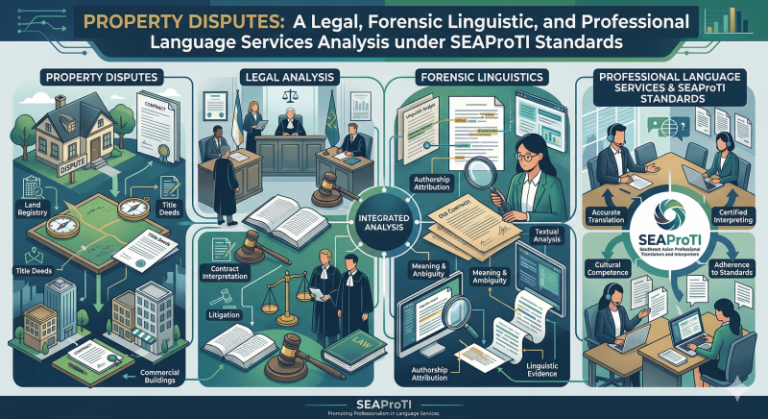
21 March 2026, Bangkok — Property disputes represent one of the most complex areas of law, both structurally and linguistically, particularly in contexts involving multiple languages, legal systems, and jurisdictions. This is especially evident in cross-border inheritance cases, foreign ownership of real estate, and disputes concerning sale agreements and transfers of title. In such contexts, the accuracy of language in legal documents is not merely a matter of communication; it directly affects the rights and obligations of the parties involved, as well as the outcome of judicial proceedings.
Within the framework of civil and commercial law, property disputes typically involve issues of ownership, possession, transfer of rights, and succession. These matters require a strict interpretation of legal texts. However, when disputes arise in cross-border contexts, their complexity increases significantly due to differences between legal systems, such as civil law and common law traditions, as well as the challenge of legal term equivalence. A single word choice may lead to divergent interpretations and materially affect proprietary rights.
In this context, forensic linguistics plays a crucial role in analyzing language used in legal documents, including contracts, wills, and land title instruments. One key issue is linguistic ambiguity, where terms may carry multiple meanings or vary across legal systems. Additionally, interpreting the intent of the parties requires careful consideration of both linguistic and legal contexts. If a translation fails to accurately reflect the original intent, it may result in further disputes or flawed judicial outcomes.
Under the standards of the Southeast Asian Association of Professional Translators and Interpreters, the roles of language professionals are clearly defined and systematically structured. A certified translator is responsible for transferring content from one language to another while preserving semantic accuracy and legal equivalence. In this context, translation is not merely linguistic substitution but effectively a form of “re-drafting within another legal system,” requiring deep expertise in both language and law.
At the same time, a translation certifier is responsible for reviewing and certifying the quality of translated documents. This includes ensuring fidelity to the source text, completeness of content, and technical and legal accuracy. This role is particularly critical when translated documents are submitted as evidence in court, where even minor errors may lead to significant legal consequences.
A certified interpreter, meanwhile, plays a vital role in legal proceedings such as hearings, witness examinations, and mediation sessions. The interpreter’s role extends beyond real-time language transfer to include conveying intent, nuance, and legal weight. Interpreters must maintain strict neutrality and accuracy while managing real-time communication risks, a task that demands advanced professional skills and a high level of accountability.
Errors in translation or interpretation in property disputes can lead to serious consequences, including loss of property rights, misinterpretation of contractual obligations, and potential civil or criminal liability. For this reason, SEAProTI’s professional standards emphasize competence, accountability, and traceability, ensuring reliability and trust in legal processes.
In conclusion, property disputes are not only legal disputes but also linguistic disputes. In an increasingly globalized world where cross-border transactions are common, the roles of certified translators, translation certifiers, and certified interpreters are essential in safeguarding accuracy, fairness, and integrity within the legal system. Language, in this context, is not merely a tool of communication but a mechanism that defines rights and justice.
References
- Cao, D. (2007). Translating law. Multilingual Matters.
- Gibbons, J. (2003). Forensic linguistics: An introduction to language in the justice system. Blackwell Publishing.
- Mellinkoff, D. (1963). The language of the law. Little, Brown and Company.
- Šarčević, S. (1997). New approach to legal translation. Kluwer Law International.
- Tiersma, P. M. (1999). Legal language. University of Chicago Press.
- Southeast Asian Association of Professional Translators and Interpreters. (2024). Professional standards and certification guidelines. SEAProTI Publications.
For professional services, please visit: https://www.seaproti.org/practitioners/
About certified translators, translation certifiers, and certified interpreters associated with SEAProTI.
The Southeast Asian Association of Professional Translators and Interpreters (SEAProTI) has officially shared the qualifications and requirements for becoming Certified Translators, Translation Certification Providers, and Certified Interpreters in Sections 9 and 10 of the Royal Gazette, which was published by the Prime Minister’s Office in Thailand on July 25, 2024. Certified Translators, Translation Certification Providers, and Certified Interpreters
The Council of State has proposed the enactment of a Royal Decree, granting registered translators and recognised translation certifiers from professional associations or accredited language institutions the authority to provide legally valid translation certification (Letter to SEAProTI dated April 28, 2025)
SEAProTI is the first professional association in Thailand and Southeast Asia to implement a comprehensive certification system for translators, certifiers, and interpreters.
Head Office: Baan Ratchakru Building, No. 33, Room 402, Soi Phahonyothin 5, Phahonyothin Road, Phaya Thai District, Bangkok 10400, Thailand
Email: hello@seaproti.com | Tel.: (+66) 2-114-3128 (Office hours: Mon–Fri, 09:00–17:00).
ข้อพิพาทเกี่ยวกับทรัพย์สิน:
การวิเคราะห์เชิงกฎหมาย นิติภาษาศาสตร์ และบทบาทของผู้เชี่ยวชาญด้านภาษาในมาตรฐาน SEAProTI
21 มีนาคม 2569, กรุงเทพมหานคร – ข้อพิพาทเกี่ยวกับทรัพย์สินเป็นหนึ่งในประเด็นทางกฎหมายที่มีความซับซ้อนอย่างยิ่ง ทั้งในเชิงโครงสร้างของกฎหมายและในเชิงการตีความภาษา โดยเฉพาะในบริบทที่เกี่ยวข้องกับหลายภาษา หลายระบบกฎหมาย และหลายเขตอำนาจศาล เช่น กรณีมรดกข้ามพรมแดน การถือครองอสังหาริมทรัพย์ของชาวต่างชาติ หรือข้อพิพาทเกี่ยวกับสัญญาซื้อขายและการโอนกรรมสิทธิ์ ความถูกต้องของภาษาในเอกสารจึงไม่ได้เป็นเพียงเรื่องของการสื่อสาร แต่เป็นปัจจัยที่มีผลโดยตรงต่อสิทธิและหน้าที่ของคู่กรณี รวมถึงผลลัพธ์ของคดีในกระบวนการยุติธรรม
ภายใต้กรอบของกฎหมายแพ่งและพาณิชย์ ข้อพิพาทเกี่ยวกับทรัพย์สินมักเกี่ยวข้องกับประเด็นเรื่องกรรมสิทธิ์ สิทธิครอบครอง การโอนสิทธิ และการสืบมรดก ซึ่งล้วนต้องอาศัยการตีความถ้อยคำในเอกสารอย่างเคร่งครัด อย่างไรก็ตาม เมื่อข้อพิพาทดังกล่าวมีลักษณะข้ามพรมแดน ความซับซ้อนจะเพิ่มขึ้นอย่างมีนัยสำคัญ เนื่องจากความแตกต่างของระบบกฎหมาย เช่น ระบบ civil law และ common law ตลอดจนปัญหาการเทียบเคียงคำศัพท์ทางกฎหมายที่ไม่สามารถแปลได้ตรงตัว การเลือกใช้คำเพียงคำเดียวอาจนำไปสู่การตีความที่แตกต่างกัน และอาจส่งผลกระทบต่อสิทธิในทรัพย์สินของคู่กรณีอย่างมีนัยสำคัญ
ในบริบทนี้ นิติภาษาศาสตร์จึงเข้ามามีบทบาทสำคัญในการวิเคราะห์ภาษาในเอกสารทางกฎหมาย ไม่ว่าจะเป็นสัญญา พินัยกรรม หรือเอกสารสิทธิในที่ดิน ประเด็นสำคัญประการหนึ่งคือความกำกวมของภาษา ซึ่งอาจเกิดจากคำที่มีความหมายหลายระดับ หรือมีความหมายแตกต่างกันในแต่ละระบบกฎหมาย นอกจากนี้ การตีความเจตนาของผู้ทำเอกสารยังต้องอาศัยการพิจารณาทั้งบริบททางภาษาและบริบททางกฎหมายควบคู่กันไป หากการแปลไม่สามารถสะท้อนเจตนาที่แท้จริงได้อย่างครบถ้วน ก็อาจนำไปสู่ข้อพิพาทเพิ่มเติมหรือการตัดสินคดีที่คลาดเคลื่อน
ภายใต้มาตรฐานของ Southeast Asian Association of Professional Translators and Interpreters บทบาทของผู้เชี่ยวชาญด้านภาษาถูกกำหนดไว้อย่างชัดเจนและเป็นระบบ โดยนักแปลรับรองมีหน้าที่ในการถ่ายทอดเนื้อหาจากภาษาหนึ่งไปยังอีกภาษาหนึ่งโดยคงไว้ซึ่งความเที่ยงตรงเชิงความหมายและความเทียบเท่าทางกฎหมาย การแปลในบริบทนี้ไม่ใช่เพียงการแปลคำ แต่เป็นการ “ร่างใหม่ในอีกระบบกฎหมายหนึ่ง” ซึ่งต้องอาศัยความเข้าใจเชิงลึกทั้งด้านภาษาและกฎหมาย
ในขณะเดียวกัน ผู้รับรองการแปลมีบทบาทในการตรวจสอบและรับรองคุณภาพของงานแปล โดยเน้นความสอดคล้องกับต้นฉบับ ความครบถ้วนของเนื้อหา และความถูกต้องในเชิงเทคนิคและกฎหมาย บทบาทนี้มีความสำคัญอย่างยิ่งเมื่อเอกสารแปลถูกนำไปใช้เป็นพยานหลักฐานในศาล เนื่องจากความผิดพลาดเพียงเล็กน้อยอาจนำไปสู่ผลกระทบทางกฎหมายที่ร้ายแรง
สำหรับล่ามรับรอง บทบาทของล่ามในข้อพิพาทเกี่ยวกับทรัพย์สินมิได้จำกัดอยู่เพียงการแปลคำพูดแบบทันที แต่ยังรวมถึงการถ่ายทอดเจตนา น้ำหนักของถ้อยคำ และนัยทางกฎหมายในกระบวนการพิจารณาคดี เช่น การไต่สวนหรือการสอบพยาน ล่ามต้องรักษาความเป็นกลางและความถูกต้องอย่างเคร่งครัด พร้อมทั้งจัดการความเสี่ยงด้านการสื่อสารที่เกิดขึ้นแบบเรียลไทม์ ซึ่งเป็นภารกิจที่ต้องอาศัยทักษะขั้นสูงและความรับผิดชอบทางวิชาชีพ
ความผิดพลาดในการแปลหรือการตีความในคดีทรัพย์สินสามารถก่อให้เกิดผลกระทบอย่างรุนแรง ไม่ว่าจะเป็นการสูญเสียสิทธิในทรัพย์สิน การตีความสัญญาที่คลาดเคลื่อน หรือแม้กระทั่งความรับผิดทางกฎหมายของผู้ที่เกี่ยวข้อง ด้วยเหตุนี้ มาตรฐานวิชาชีพของ SEAProTI จึงให้ความสำคัญกับความสามารถ ความรับผิดชอบ และความสามารถในการตรวจสอบย้อนกลับได้ เพื่อสร้างความเชื่อมั่นในกระบวนการยุติธรรม
กล่าวโดยสรุป ข้อพิพาทเกี่ยวกับทรัพย์สินเป็นทั้งข้อพิพาททางกฎหมายและข้อพิพาททางภาษาในเวลาเดียวกัน ในโลกที่การทำธุรกรรมข้ามพรมแดนเพิ่มขึ้นอย่างต่อเนื่อง บทบาทของนักแปลรับรอง ผู้รับรองการแปล และล่ามรับรองจึงมีความสำคัญอย่างยิ่งในการรักษาความถูกต้อง ความยุติธรรม และความน่าเชื่อถือของระบบกฎหมาย โดยเฉพาะในบริบทที่ภาษาไม่ได้เป็นเพียงเครื่องมือในการสื่อสาร แต่เป็นกลไกที่กำหนดสิทธิและความเป็นธรรมของคู่กรณีอย่างแท้จริง
เอกสารอ้างอิง
- Cao, D. (2007). Translating law. Multilingual Matters.
- Gibbons, J. (2003). Forensic linguistics: An introduction to language in the justice system. Blackwell Publishing.
- Mellinkoff, D. (1963). The language of the law. Little, Brown and Company.
- Šarčević, S. (1997). New approach to legal translation. Kluwer Law International.
- Tiersma, P. M. (1999). Legal language. University of Chicago Press.
- Southeast Asian Association of Professional Translators and Interpreters. (2024). Professional standards and certification guidelines. SEAProTI Publications.
ติดต่อขอใช้บริการนักวิชาชีพของสมาคมได้ที่: https://www.seaproti.org/practitioners/
สมาคมวิชาชีพนักแปลและล่ามแห่งเอเชียตะวันออกเฉียงใต้ (SEAProTI) ได้ประกาศหลักเกณฑ์และคุณสมบัติของผู้ที่ขึ้นทะเบียนเป็น “นักแปลรับรอง (Certified Translators) และผู้รับรองการแปล (Translation Certification Providers) และล่ามรับรอง (Certified Interpreters)” ของสมาคม หมวดที่ 9 และหมวดที่ 10 ในราชกิจจานุเบกษา ของสำนักเลขาธิการคณะรัฐมนตรี ในสำนักนายกรัฐมนตรี แห่งราชอาณาจักรไทย ลงวันที่ 25 ก.ค. 2567 เล่มที่ 141 ตอนที่ 66 ง หน้า 100 อ่านฉบับเต็มได้ที่: นักแปลรับรอง ผู้รับรองการแปล และล่ามรับรอง
สำนักคณะกรรมการกฤษฎีกาเสนอให้ตราเป็นพระราชกฤษฎีกา โดยกำหนดให้นักแปลที่ขึ้นทะเบียน รวมถึงผู้รับรองการแปลจากสมาคมวิชาชีพหรือสถาบันสอนภาษาที่มีการอบรมและขึ้นทะเบียน สามารถรับรองคำแปลได้ (จดหมายถึงสมาคม SEAProTI ลงวันที่ 28 เม.ย. 2568)
สมาคมวิชาชีพนักแปลและล่ามแห่งเอเชียตะวันออกเฉียงใต้เป็นสมาคมวิชาชีพแห่งแรกและแห่งเดียวในประเทศไทยและภูมิภาคเอเชียตะวันออกเฉียงใต้ที่มีระบบรับรองนักแปลรับรอง ผู้รับรองการแปล และล่ามรับรอง
สำนักงานใหญ่: อาคารบ้านราชครู เลขที่ 33 ห้อง 402 ซอยพหลโยธิน 5 ถนนพหลโยธิน แขวงพญาไท เขตพญาไท กรุงเทพมหานคร 10400 ประเทศไทย
อีเมล: hello@seaproti.com โทรศัพท์: (+66) 2-114-3128 (เวลาทำการ: วันจันทร์–วันศุกร์ เวลา 09.00–17.00 น.