




“Ninja Team” and Backchannel Negotiation in the Akara Gold Mine Dispute
An Academic Analysis of Backchannel Negotiation, State Risk Management, and the Resolution of the “Section 44 Misunderstanding”
Author: Wanitcha Sumanat – Arbitrator affiliated with the Ministry of Justice (Thailand); Mediator affiliated with the Ministry of Justice (Thailand), the Royal Thai Police, and the Ministry of Defence (Thailand)
21 February 2026, Bangkok — This article examines the role and significance of the so-called “Ninja Team,” reportedly an informal Thai working group engaged in off-the-record talks to help resolve the Akara gold mine dispute, which had entered international arbitration proceedings in Singapore. The dispute involved Kingsgate Consolidated Limited and proceeded under the Thailand–Australia Free Trade Agreement (TAFTA) and the UNCITRAL Arbitration Rules (1976) (italaw, n.d.). Drawing on the framework of principled negotiation and the “two-level games” approach, the article explains why an extra-institutional channel became an important supplementary mechanism when the case neared an award, and why the “misunderstanding regarding the use of Section 44” was presented as an issue requiring clarification before a settlement could be reached (Thai Rath, 2026a). The analysis suggests that the “Ninja Team” functioned as a backchannel that reduced litigation friction between the parties, created a trust-oriented communication space, and reframed the dispute within commitments that the state could credibly make within legal and political constraints. This contributed to an observable outcome: termination of the proceedings following the investor’s withdrawal of claims, and Thailand’s avoidance of compensation that had been feared earlier (Thai Rath, 2026; The Nation Thailand, 2026).
Keywords: backchannel negotiation; investor–state dispute; TAFTA; Section 44; UNCITRAL; public-sector risk management
Introduction
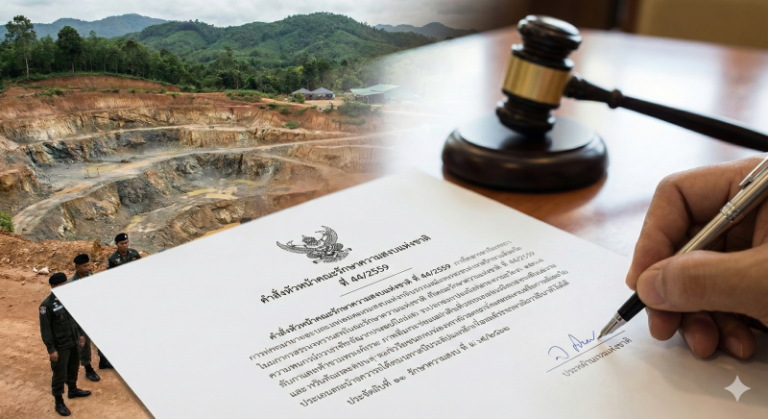
The Akara gold mine dispute is a case study illustrating the dynamics of investor–state conflicts in an era of economic globalization, where domestic regulatory measures may be interpreted as breaches of treaty obligations under investment and trade agreements, thereby triggering international arbitration. In the Thai context, a policy event repeatedly cited as a key turning point was Head of the National Council for Peace and Order (NCPO) Order No. 72/2559, which required operators associated with gold mining activities to cease operations from 1 January 2017 onward (Head of NCPO Order, 2016; Thai PBS, 2016).
However, in media coverage toward the end of the dispute, the focus was not confined to legal doctrine or factual controversies regarding environmental impacts and licensing. It expanded to questions of perception and trust between the state and the investor, particularly the claim that a “misunderstanding of Section 44” served as a catalyst escalating policy dissatisfaction into arbitration proceedings (Thai Rath, 2026a). Under conditions where the case was close to an award and Thailand faced significant fiscal risk, the establishment of a “Ninja Team” for off-the-record negotiation was portrayed as a key mechanism for closing the dispute (Thai Rath, 2026a).
This article poses three academic questions: (1) What role did the “Ninja Team” play as a supplementary state mechanism under the constraints of being a party in arbitration? (2) What working methods made backchannel negotiation effective in this context? (3) What policy lessons does the outcome offer for managing investor–state disputes, while avoiding reliance on non-public facts that remain undisclosed in the arbitral record?
Methodology and Data Sources
This study uses qualitative document analysis, drawing on four categories of public sources: (1) Head of NCPO Order No. 72/2559, which specifies the suspension of gold mining operations from 1 January 2017 (Head of NCPO Order, 2016); (2) public media reporting on the order at the time it was issued (Thai PBS, 2016); (3) media reporting describing the formation of the “Ninja Team” and the interpretive frame of the “Section 44 misunderstanding” (Thai Rath, 2026a); and (4) public information on the case status and termination, including databases and news reporting that the investor withdrew claims and proceedings were brought to an end (italaw, n.d.; Thai Rath, 2026; The Nation Thailand, 2026). The analysis synthesizes concepts from disclosed information and does not claim access to confidential facts from non-public negotiations.
Conceptual Framework
The primary conceptual lens is principled negotiation, which emphasizes separating people from the problem, focusing on interests rather than positions, and generating mutually acceptable options (Fisher et al., 2011). This framework helps explain why clarifying misunderstandings and reframing meanings can be a precondition for settlement, not merely bargaining over numbers.
A second lens is the two-level games approach, which posits that states must negotiate internationally while maintaining domestic legitimacy; therefore, any agreement must fall within a domestically acceptable “win-set” (Putnam, 1988). This helps clarify why the state may rely on a supplementary negotiation channel to sustain communication continuity, while binding decisions remain constrained by legal and political accountability.
Findings and Discussion
The “Ninja Team” as a Backchannel that Enhances State Institutional Capacity
Media reporting suggests that as the case neared an award, an informal working group, referred to as the “Ninja Team”, was established to conduct off-the-record discussions with representatives of the Thai operating entity and the parent company, in parallel with the official team working through formal channels (Thai Rath, 2026a). Theoretically, such a group can function as a backchannel that reduces the limitations of party-to-party communication in arbitration, where exchanges are often formalized, adversarial, and strategically constrained. This can make it difficult to explore options or craft face-saving concessions.
Backchannels may also serve state risk governance in high-stakes scenarios. Where a non-favorable award could generate substantial budgetary and political legitimacy costs, the state has incentives to expand instruments that increase exit options before an award is issued, without undermining its litigation capacity. Reporting that the resolution relied on a strategy of “preparing to fight the case while negotiating amicably” reflects that logic (The Nation Thailand, 2026).
Resolving the “Section 44 Misunderstanding” as Reframing the Meaning of the Dispute
Thai Rath reported that the “misunderstanding” surrounding the use of Section 44 was treated as a key trigger that escalated the conflict and thus required clarification through off-the-record discussions before settlement became feasible (Thai Rath, 2026a). Prioritizing this issue aligns with principled negotiation’s emphasis on managing perception, emotion, and trust before addressing substantive interests (Fisher et al., 2011). If the investor’s framing is that the state intentionally used extraordinary power to target the business, then numeric bargaining alone is unlikely to succeed because distrust renders future assurances ineffective. By contrast, reframing the issue from “malicious intent” to “a misunderstanding of administrative process and regulatory authority” can shift interaction from accusation toward designing verifiable solutions.
At the level of policy facts, Head of NCPO Order No. 72/2559 explicitly mandated suspension of gold mining operations from 1 January 2017 (Head of NCPO Order, 2016), and contemporaneous reporting described the order and its practical effects (Thai PBS, 2016). Connecting documentary facts to the parties’ perceptions becomes a key space in which backchannel actors may align interpretive baselines, even if the specific negotiation exchanges are not public.
Structuring Commitments Within Feasible Legal and Political Bounds: The Two-Level Constraint
In investor–state disputes, any resolution must satisfy the foreign counterparty while remaining defensible domestically in law, politics, and public legitimacy. Two-level games theory explains that negotiation succeeds when proposals fall within a domestic “win-set” (Putnam, 1988). On this reading, the “Ninja Team” could have served to test what options were discussable and to prevent talks from drifting into promises that the state could not legally or politically deliver.
Moreover, public information indicates the dispute proceeded under TAFTA and UNCITRAL rules (italaw, n.d.). This suggests that state communications had to manage not only litigation risk but also the longer-term credibility of Thailand as a rule-governed investment destination. A backchannel separate from the formal evidentiary battlefield may lower communication costs and allow recalibration without forcing either side into an early, public posture of defeat.
Outcomes and Policy Implications
The observable outcome reported by multiple sources was that Kingsgate withdrew its arbitration claims unconditionally and the tribunal terminated the proceedings, with Thailand avoiding compensation (Thai Rath, 2026; The Nation Thailand, 2026). The case database also records the outcome as “Settled,” consistent with termination without awaiting an award (italaw, n.d.).
As a policy lesson, the case suggests that “litigating” and “negotiating” need not be mutually exclusive; they can be designed as parallel strategies. Backchannel negotiation can expand option space, reduce misunderstandings, and manage trust, while formal proceedings maintain legality and public accountability. A key caution, however, is that effective backchannels require governance through state responsibility and accountability: flexibility achieved at the expense of legitimacy can become a long-term cost exceeding short-term gains.
Conclusion
This article argues that the “Ninja Team” operated as a backchannel mechanism that enhanced the state’s institutional capacity during a high-risk phase of an investor–state dispute, particularly when an award was approaching and downside fiscal exposure was significant. The backchannel’s significance lay in helping clarify the “Section 44 misunderstanding” and in structuring the dispute within feasible legal and political commitments. The ultimate result, termination of proceedings following withdrawal of claims and avoidance of compensation, highlights the value of a parallel dispute-management strategy that integrates formal litigation with principled, carefully governed extra-formal communication (Thai Rath, 2026; The Nation Thailand, 2026; Fisher et al., 2011; Putnam, 1988).
References
- คําสั่งหัวหน้าคณะรักษาความสงบแห่งชาติ. (2559, 13 ธันวาคม). คําสั่งหัวหน้าคณะรักษาความสงบแห่งชาติ ที่ 72/2559 เรื่อง การแก้ไขปัญหาผลกระทบจากการประกอบกิจการเหมืองแร่ทองคํา. https://library.parliament.go.th/sites/default/files/assets/files/give-take/content_ncpo/NALT-ncpo-head-order72-2559.pdf
- Fisher, R., Ury, W., & Patton, B. (2011). Getting to yes: Negotiating agreement without giving in (3rd ed.). Penguin Books.
- italaw. (n.d.). Kingsgate Consolidated Ltd. v. Thailand, PCA Case No. 2017-36/AA684. https://www.italaw.com/cases/5572
- Putnam, R. D. (1988). Diplomacy and domestic politics: The logic of two-level games. International Organization, 42(3), 427–460.
- Thai PBS. (2016, December 13). เปิดคำสั่งหัวหน้า คสช. 72/2559 “ยาแรง” แก้ปัญหาเหมืองทอง. https://www.thaipbs.or.th/news/content/258670
- Thai Rath. (2026, February 18). Kingsgate withdraws arbitration request, ending 8-year dispute without compensation from Thailand. https://en.thairath.co.th/news/politic/2915046
- The Nation Thailand. (2026, February 18). ‘Kingsgate’ drops lawsuit unconditionally, ending 8-year dispute without compensation. https://www.nationthailand.com/news/general/40062689
- ไทยรัฐ. (2569, 21 กุมภาพันธ์). “พีระพันธุ์” เผยความจริงเจรจาคดี “เหมืองทองอัครา” เปิดชื่อ “ทีมนินจา” เบื้องหลังความสำเร็จยุติค่าโง่หลายหมื่นล้าน. https://www.thairath.co.th/news/politic/2915559
- หากต้องการให้ “พร้อมส่งวารสาร” มากขึ้น ฉันสามารถปรับเป็นรูปแบบบทความเต็มตามโครง IMRaD (Introduction–Methods–Results–Discussion) เพิ่มทบทวนวรรณกรรมเฉพาะด้าน ISDS/UNCITRAL และเพิ่มเชิงอรรถอธิบายบริบทกฎหมายไทย (ม.44 และคำสั่ง 72/2559) โดยยังคง “ไม่มี bullet points” ตามที่กำหนดได้ทันที.
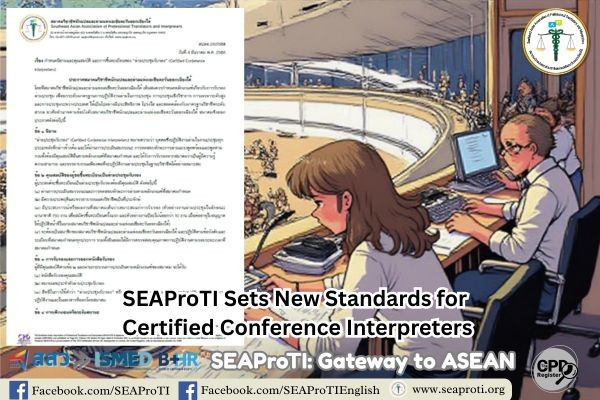
This section provides information about certified translators, translation certifiers, and certified interpreters associated with SEAProTI.
The Southeast Asian Association of Professional Translators and Interpreters (SEAProTI) has officially shared the qualifications and requirements for becoming Certified Translators, Translation Certification Providers, and Certified Interpreters in Sections 9 and 10 of the Royal Gazette, which was published by the Prime Minister’s Office in Thailand on July 25, 2024. Certified Translators, Translation Certification Providers, and Certified Interpreters
The Council of State has proposed the enactment of a Royal Decree, granting registered translators and recognised translation certifiers from professional associations or accredited language institutions the authority to provide legally valid translation certification (Letter to SEAProTI dated April 28, 2025)
SEAProTI is the first professional association in Thailand and Southeast Asia to implement a comprehensive certification system for translators, certifiers, and interpreters.
Head Office: Baan Ratchakru Building, No. 33, Room 402, Soi Phahonyothin 5, Phahonyothin Road, Phaya Thai District, Bangkok 10400, Thailand
Email: hello@seaproti.com | Tel.: (+66) 2-114-3128 (Office hours: Mon–Fri, 09:00–17:00)
“ทีมนินจา” กับการเจรจานอกรอบในข้อพิพาทเหมืองทองอัครา:
บทวิเคราะห์เชิงวิชาการว่าด้วย Backchannel Negotiation การจัดการความเสี่ยงของรัฐ และการคลี่คลายประเด็น “ความเข้าใจผิด ม.44”
ผู้แต่ง วณิชชา สุมานัส อนุญาโตตุลาการ สังกัดกระทรวงยุติธรรม, ผู้ไกล่เกลี่ย สังกัดกระทรวงยุติธรรม และสำนักงานตำรวจแห่งชาติ และกระทรวงกลาโหม
21 กุมภาพันธ์ 2569, กรุงเทพมหานคร – บทความนี้วิเคราะห์บทบาทและความสำคัญของ “ทีมนินจา” ซึ่งถูกกล่าวถึงว่าเป็นคณะทำงานไม่เป็นทางการของไทยในการเจรจานอกรอบเพื่อคลี่คลายข้อพิพาทเหมืองทองอัคราที่เข้าสู่กระบวนการอนุญาโตตุลาการระหว่างประเทศในสิงคโปร์ โดยคดีดังกล่าวเกี่ยวข้องกับบริษัท Kingsgate Consolidated Limited และดำเนินภายใต้กรอบความตกลงการค้าเสรีไทย–ออสเตรเลีย (TAFTA) และกติกา UNCITRAL Arbitration Rules (1976) (italaw, n.d.). บทความใช้กรอบแนวคิดการเจรจาเชิงหลักการ (principled negotiation) ร่วมกับแนวคิดการเมืองสองระดับ (two-level games) เพื่ออธิบายว่าเหตุใด “ช่องทางนอกระบบ” จึงกลายเป็นกลไกเสริมที่มีนัยสำคัญในช่วงคดีใกล้ถึงคำชี้ขาด และเหตุใด “ความเข้าใจผิดเกี่ยวกับการใช้อำนาจตามมาตรา 44” จึงถูกยกเป็นประเด็นที่ต้องคลี่คลายก่อนการปิดดีลยุติข้อพิพาท (ไทยรัฐ, 2026a). ผลการวิเคราะห์ชี้ว่า “ทีมนินจา” ทำหน้าที่เป็น backchannel ที่ช่วยลดแรงเสียดทานในฐานะคู่ความ สร้างพื้นที่สื่อสารเชิงความไว้วางใจ และจัดรูปปัญหาให้อยู่ในขอบเขตที่รัฐสามารถให้คำมั่นได้อย่างเป็นไปได้เชิงกฎหมายและเชิงการเมือง จนนำไปสู่ผลลัพธ์เชิงประจักษ์คือการยุติกระบวนพิจารณาโดยคู่กรณีถอนคำร้อง และรัฐไทยไม่ต้องชดใช้ค่าเสียหายตามที่กังวลในช่วงก่อนหน้า (Thai Rath, 2026; The Nation Thailand, 2026).
คำสำคัญ: การเจรจานอกรอบ, ข้อพิพาทรัฐ–นักลงทุน, TAFTA, มาตรา 44, UNCITRAL, การจัดการความเสี่ยงภาครัฐ
บทนำ
ข้อพิพาทเหมืองทองอัคราเป็นกรณีศึกษาที่สะท้อนพลวัตของข้อพิพาทรัฐ–นักลงทุนในยุคเศรษฐกิจโลกาภิวัตน์ เมื่อมาตรการเชิงกำกับของรัฐถูกตีความว่าเป็นการละเมิดพันธกรณีภายใต้ความตกลงการลงทุนและการค้า จนนำไปสู่กระบวนการอนุญาโตตุลาการระหว่างประเทศ ภายใต้ TAFTA และกติกา UNCITRAL Arbitration Rules (1976) (italaw, n.d.). ในบริบทไทย เหตุการณ์เชิงนโยบายที่ถูกยกเป็นจุดเปลี่ยนสำคัญ คือคำสั่งหัวหน้าคณะรักษาความสงบแห่งชาติที่ 72/2559 ซึ่งกำหนดให้ผู้ประกอบการที่เกี่ยวข้องกับกิจการเหมืองแร่ทองคำระงับการประกอบกิจการตั้งแต่วันที่ 1 มกราคม 2560 เป็นต้นไป (คําสั่งหัวหน้าคณะรักษาความสงบแห่งชาติ, 2559; Thai PBS, 2016).
อย่างไรก็ดี ในรายงานข่าวช่วงปลายข้อพิพาท ประเด็นมิได้จำกัดอยู่เพียงข้อกฎหมายหรือข้อเท็จจริงด้านสิ่งแวดล้อมและใบอนุญาต แต่ขยายมาสู่ “การรับรู้” และ “ความไว้วางใจ” ระหว่างรัฐกับเอกชน โดยเฉพาะการกล่าวถึง “ความเข้าใจผิด ม.44” ว่าเป็นชนวนที่ทำให้ความขัดแย้งยกระดับจากความไม่พอใจเชิงนโยบายไปสู่ข้อพิพาทในเวทีอนุญาโตฯ (ไทยรัฐ, 2026a). ภายใต้เงื่อนไขที่คดีใกล้ถึงคำชี้ขาดและรัฐเผชิญความเสี่ยงทางการคลังสูง การตั้ง “ทีมนินจา” เพื่อเจรจานอกรอบจึงถูกอธิบายว่าเป็นกลไกสำคัญในการปิดฉากข้อพิพาท (ไทยรัฐ, 2026a).
บทความนี้ตั้งคำถามเชิงวิชาการสามประการ ได้แก่ (1) “ทีมนินจา” มีบทบาทอย่างไรในฐานะกลไกเสริมของรัฐภายใต้ข้อจำกัดของการเป็นคู่ความในอนุญาโตฯ (2) เทคนิคการทำงานแบบใดที่ทำให้การเจรจานอกรอบมีประสิทธิผล และ (3) ผลลัพธ์ที่เกิดขึ้นสะท้อนบทเรียนเชิงนโยบายต่อการจัดการข้อพิพาทรัฐ–นักลงทุนอย่างไร โดยไม่ก้าวล่วงข้อเท็จจริงที่ไม่เปิดเผยในสำนวนคดี
วิธีวิจัยและแหล่งข้อมูล
บทความนี้ใช้ระเบียบวิธีเชิงคุณภาพแบบการวิเคราะห์เอกสาร โดยอาศัยแหล่งข้อมูลสาธารณะ 4 กลุ่ม ได้แก่ (1) เอกสารคำสั่งหัวหน้าคณะรักษาความสงบแห่งชาติที่ 72/2559 ซึ่งมีข้อความกำหนดการระงับการประกอบกิจการเหมืองทองคำตั้งแต่ 1 มกราคม 2560 (คําสั่งหัวหน้าคณะรักษาความสงบแห่งชาติ, 2559) (2) รายงานสื่อสาธารณะเกี่ยวกับคำสั่งดังกล่าวในช่วงออกคำสั่ง (Thai PBS, 2016) (3) รายงานข่าวที่อธิบายเบื้องหลังการตั้ง “ทีมนินจา” และกรอบการตีความประเด็น “ความเข้าใจผิด ม.44” (ไทยรัฐ, 2026a) และ (4) แหล่งข้อมูลเกี่ยวกับสถานะคดีและผลลัพธ์การยุติข้อพิพาทจากฐานข้อมูลคดีและสื่อที่รายงานการถอนคำร้องและการยุติกระบวนพิจารณา (italaw, n.d.; Thai Rath, 2026; The Nation Thailand, 2026). การวิเคราะห์มุ่งสังเคราะห์เชิงแนวคิดจากข้อมูลเปิดเผย ไม่อ้างว่าเข้าถึงข้อเท็จจริงภายในโต๊ะเจรจาที่ไม่เป็นสาธารณะ
กรอบแนวคิด
กรอบแนวคิดหลักประกอบด้วยแนวคิดการเจรจาเชิงหลักการที่มุ่งแยก “คนออกจากปัญหา” ให้ความสำคัญกับ “ผลประโยชน์” มากกว่าจุดยืน และสร้างทางเลือกที่ยอมรับได้ร่วมกัน (Fisher et al., 2011). กรอบนี้ช่วยอธิบายว่าทำไมการคลี่คลาย “ความเข้าใจผิด” และการเปลี่ยนกรอบความหมายจึงเป็นเงื่อนไขตั้งต้นของดีล มากกว่าการต่อรองตัวเลขเพียงอย่างเดียว
อีกกรอบหนึ่งคือแนวคิดการเมืองสองระดับ ซึ่งเสนอว่ารัฐต้องเจรจาบนโต๊ะระหว่างประเทศพร้อมกับรักษาความชอบธรรมและพื้นที่ยอมรับได้ในประเทศ ทำให้ข้อตกลงใด ๆ ต้องอยู่ใน “ชุดที่ยอมรับได้” ภายในประเทศด้วย (Putnam, 1988). กรอบนี้ช่วยทำความเข้าใจเหตุผลเชิงสถาบันว่าทำไมรัฐอาจต้องใช้ทีมเจรจา “เสริม” เพื่อรักษาความต่อเนื่องของการสื่อสาร โดยที่การตัดสินใจเชิงผูกพันยังต้องอยู่ในกรอบกฎหมายและการเมืองที่ตรวจสอบได้
ผลการวิเคราะห์และอภิปราย
“ทีมนินจา” ในฐานะ backchannel ที่เพิ่มขีดความสามารถเชิงสถาบันของรัฐ
รายงานข่าวระบุว่าในช่วงคดีใกล้ชี้ขาด มีการตั้งคณะทำงานไม่เป็นทางการที่เรียกว่า “ทีมนินจา” เพื่อหารือแบบนอกรอบกับตัวแทนบริษัทในไทยและบริษัทแม่ ควบคู่ไปกับทีมทางการที่รับผิดชอบงานตามระบบ (ไทยรัฐ, 2026a). หากวิเคราะห์ในเชิงทฤษฎี “ทีมนินจา” ทำหน้าที่เป็น backchannel ที่ช่วยลดข้อจำกัดของการสื่อสารในฐานะคู่ความ เพราะการสื่อสารในกรอบคดีมักมีลักษณะเป็นเอกสารและถ้อยคำเชิงต่อสู้ ซึ่งอาจทำให้ “การสำรวจทางเลือก” และ “การยอมถอยอย่างมีหน้า” เกิดขึ้นได้ยาก
backchannel ยังทำหน้าที่เชิงการจัดการความเสี่ยง (risk governance) ของรัฐในสถานการณ์ที่ต้นทุนความล้มเหลวสูง กล่าวคือ เมื่อความเสี่ยงของคำชี้ขาดไม่เป็นคุณต่อรัฐมีผลกระทบเชิงงบประมาณและความชอบธรรมทางการเมือง รัฐย่อมมีแรงจูงใจที่จะเพิ่มเครื่องมือที่ทำให้เกิดทางออกก่อนถึงคำชี้ขาด โดยไม่ลดทอนความสามารถในการสู้คดีในระบบ การที่สื่อบางแห่งรายงานว่าแนวทางการยุติข้อพิพาทเกิดจากยุทธศาสตร์ “เตรียมสู้คดีควบคู่กับการเจรจาอย่างเป็นมิตร” สะท้อนตรรกะดังกล่าว (The Nation Thailand, 2026).
การคลี่คลาย “ความเข้าใจผิด ม.44” ในฐานะการปรับกรอบความหมาย
ไทยรัฐรายงานสาระสำคัญว่า “ความเข้าใจผิด” เกี่ยวกับการใช้อำนาจตามมาตรา 44 ถูกมองว่าเป็นชนวนที่ทำให้ข้อพิพาทลุกลาม และเป็นประเด็นที่ต้องทำความเข้าใจนอกรอบเพื่อเปิดทางสู่การคลี่คลาย (ไทยรัฐ, 2026a). การวางประเด็นนี้เป็น “จุดเริ่ม” ของการเจรจา สอดคล้องกับแนวคิดการเจรจาเชิงหลักการที่เน้นการแยกคนออกจากปัญหาและจัดการอารมณ์/การรับรู้ก่อนเข้าสู่สาระผลประโยชน์ (Fisher et al., 2011). เมื่อคู่กรณีมีกรอบความเชื่อว่ารัฐ “จงใจ” ใช้อำนาจพิเศษเพื่อกระทบธุรกิจ การคุยเรื่องตัวเลขหรือเงื่อนไขใด ๆ มักไม่ก่อผล เพราะความไม่ไว้วางใจทำให้การรับประกันในอนาคตไร้น้ำหนัก ในทางกลับกัน หากปรับกรอบจาก “เจตนาร้าย” ไปสู่ “ความเข้าใจคลาดเคลื่อนในกระบวนการรัฐและอำนาจกำกับ” การสนทนาจะย้ายจากการกล่าวหาไปสู่การออกแบบทางออกที่ตรวจสอบได้
ในเชิงข้อเท็จจริงเชิงนโยบาย เอกสารคำสั่งหัวหน้า คสช. ที่ 72/2559 ระบุชัดถึงการระงับการประกอบกิจการเหมืองทองคำตั้งแต่ 1 มกราคม 2560 (คําสั่งหัวหน้าคณะรักษาความสงบแห่งชาติ, 2559) และมีรายงานสื่อช่วงปี 2559 ที่อธิบายการออกคำสั่งและผลของการสั่งระงับดังกล่าว (Thai PBS, 2016). การเชื่อมโยงข้อเท็จจริงเชิงเอกสารกับ “ความเข้าใจ” ของคู่กรณีจึงเป็นพื้นที่สำคัญที่ทีมเจรจานอกรอบอาจใช้เพื่อทำให้การตีความกลับมาอยู่บนฐานข้อมูลเดียวกัน แม้รายละเอียดของถ้อยคำในการเจรจาจะไม่เป็นสาธารณะก็ตาม
การจัดรูปปัญหาให้อยู่ในขอบเขตคำมั่นที่เป็นไปได้: บทบาทเชิง “สองระดับ”
ในข้อพิพาทรัฐ–นักลงทุน การตกลงใด ๆ ต้องไม่เพียงตอบโจทย์คู่กรณีต่างชาติ แต่ต้องผ่านเงื่อนไขภายในประเทศ ทั้งด้านกฎหมาย การเมือง และความชอบธรรมต่อสังคม แนวคิดการเมืองสองระดับช่วยอธิบายว่าการเจรจาจะสำเร็จได้เมื่อข้อเสนออยู่ใน “win-set” หรือชุดของผลลัพธ์ที่ฝ่ายภายในประเทศยอมรับได้ (Putnam, 1988). ภายใต้ตรรกะนี้ “ทีมนินจา” ในฐานะทีมไม่เป็นทางการอาจทำหน้าที่สำรวจขอบเขตทางเลือกที่ “คุยได้” ก่อนนำเข้าสู่ช่องทางทางการ และช่วยกันไม่ให้โต๊ะเจรจาหลุดไปสู่คำมั่นที่รัฐทำไม่ได้จริงหรือเสี่ยงผิดกฎหมาย
ยิ่งไปกว่านั้น แหล่งข้อมูลสาธารณะเกี่ยวกับสถานะคดีสะท้อนว่าเรื่องนี้อยู่ในกรอบความตกลงไทย–ออสเตรเลียและใช้กติกา UNCITRAL (italaw, n.d.). นัยสำคัญคือการสื่อสารของรัฐต้องระวังผลทางคดีและผลต่อภาพลักษณ์ความน่าเชื่อถือของประเทศในระยะยาว การมี backchannel ที่แยกออกจาก “สนามเอกสารคดี” จึงลดต้นทุนการสื่อสารและเพิ่มโอกาสให้เกิดการปรับเงื่อนไขโดยไม่ทำให้ฝ่ายใดฝ่ายหนึ่งถูกมองว่า “แพ้” ต่อสาธารณะเร็วเกินไป
ผลลัพธ์และความหมายเชิงนโยบาย
ผลลัพธ์เชิงประจักษ์ที่สื่อหลายแห่งรายงานตรงกันคือ Kingsgate ถอนคำร้องอนุญาโตฯโดยไม่มีเงื่อนไข และคณะอนุญาโตฯมีคำสั่งยุติกระบวนการ ทำให้ไทยไม่ต้องชดใช้ค่าเสียหาย (Thai Rath, 2026; The Nation Thailand, 2026). ฐานข้อมูลคดีการลงทุนยังระบุผลลัพธ์ว่า “Settled” ซึ่งสอดคล้องกับภาพของการยุติข้อพิพาทโดยไม่รอคำชี้ขาด (italaw, n.d.).
ในเชิงนโยบาย กรณีนี้ชี้ว่า “การสู้คดี” และ “การเจรจา” ไม่จำเป็นต้องเป็นทางเลือกที่ตัดกัน หากถูกออกแบบเป็นยุทธศาสตร์คู่ขนานที่เสริมกันได้ โดยการเจรจานอกรอบทำหน้าที่เพิ่มพื้นที่ของทางเลือก ลดความเข้าใจผิด และจัดการมิติความไว้วางใจ ขณะที่การดำเนินคดีตามระบบยังรักษาความชอบธรรมและกรอบนิติรัฐ อย่างไรก็ตาม บทเรียนสำคัญคือ backchannel ที่มีประสิทธิผลต้องถูกกำกับด้วยหลักความรับผิดรับชอบของรัฐ ไม่ให้เกิดการทับซ้อนอำนาจหรือความคลุมเครือด้านความโปร่งใส เพราะความคล่องตัวที่แลกมาด้วยความไม่ชอบธรรมในระยะยาวอาจกลายเป็นต้นทุนมากกว่าประโยชน์
สรุป
บทความนี้เสนอว่า “ทีมนินจา” มีบทบาทสำคัญในฐานะกลไก backchannel ที่เพิ่มขีดความสามารถเชิงสถาบันของรัฐในช่วงวิกฤตของข้อพิพาทรัฐ–นักลงทุน โดยเฉพาะเมื่อคดีอยู่ในจุดใกล้ชี้ขาดและความเสี่ยงของผลคำชี้ขาดสูง กลไกดังกล่าวมีนัยสำคัญในการคลี่คลายมิติ “ความเข้าใจผิด” เกี่ยวกับมาตรา 44 และในการจัดรูปปัญหาให้อยู่ในขอบเขตของคำมั่นที่เป็นไปได้ทั้งเชิงกฎหมายและเชิงการเมือง ผลลัพธ์สุดท้ายคือการยุติข้อพิพาทโดยการถอนคำร้องและการยุติกระบวนพิจารณาโดยไม่ต้องชดใช้ค่าเสียหายตามที่กังวล ซึ่งสะท้อนคุณค่าของการออกแบบยุทธศาสตร์การจัดการข้อพิพาทแบบคู่ขนานที่ผสานการสู้คดีในระบบกับการสื่อสารนอกระบบอย่างมีหลักการ (Thai Rath, 2026; The Nation Thailand, 2026; Fisher et al., 2011; Putnam, 1988).
เอกสารอ้างอิง
- คําสั่งหัวหน้าคณะรักษาความสงบแห่งชาติ. (2559, 13 ธันวาคม). คําสั่งหัวหน้าคณะรักษาความสงบแห่งชาติ ที่ 72/2559 เรื่อง การแก้ไขปัญหาผลกระทบจากการประกอบกิจการเหมืองแร่ทองคํา. https://library.parliament.go.th/sites/default/files/assets/files/give-take/content_ncpo/NALT-ncpo-head-order72-2559.pdf
- Fisher, R., Ury, W., & Patton, B. (2011). Getting to yes: Negotiating agreement without giving in (3rd ed.). Penguin Books.
- italaw. (n.d.). Kingsgate Consolidated Ltd. v. Thailand, PCA Case No. 2017-36/AA684. https://www.italaw.com/cases/5572
- Putnam, R. D. (1988). Diplomacy and domestic politics: The logic of two-level games. International Organization, 42(3), 427–460.
- Thai PBS. (2016, December 13). เปิดคำสั่งหัวหน้า คสช. 72/2559 “ยาแรง” แก้ปัญหาเหมืองทอง. https://www.thaipbs.or.th/news/content/258670
- Thai Rath. (2026, February 18). Kingsgate withdraws arbitration request, ending 8-year dispute without compensation from Thailand. https://en.thairath.co.th/news/politic/2915046
- The Nation Thailand. (2026, February 18). ‘Kingsgate’ drops lawsuit unconditionally, ending 8-year dispute without compensation. https://www.nationthailand.com/news/general/40062689
- ไทยรัฐ. (2569, 21 กุมภาพันธ์). “พีระพันธุ์” เผยความจริงเจรจาคดี “เหมืองทองอัครา” เปิดชื่อ “ทีมนินจา” เบื้องหลังความสำเร็จยุติค่าโง่หลายหมื่นล้าน. https://www.thairath.co.th/news/politic/2915559
- หากต้องการให้ “พร้อมส่งวารสาร” มากขึ้น ฉันสามารถปรับเป็นรูปแบบบทความเต็มตามโครง IMRaD (Introduction–Methods–Results–Discussion) เพิ่มทบทวนวรรณกรรมเฉพาะด้าน ISDS/UNCITRAL และเพิ่มเชิงอรรถอธิบายบริบทกฎหมายไทย (ม.44 และคำสั่ง 72/2559) โดยยังคง “ไม่มี bullet points” ตามที่กำหนดได้ทันที.
สำนักคณะกรรมการกฤษฎีกาเสนอให้ตราเป็นพระราชกฤษฎีกา โดยกำหนดให้นักแปลที่ขึ้นทะเบียน รวมถึงผู้รับรองการแปลจากสมาคมวิชาชีพหรือสถาบันสอนภาษาที่มีการอบรมและขึ้นทะเบียน สามารถรับรองคำแปลได้ (จดหมายถึงสมาคม SEAProTI ลงวันที่ 28 เม.ย. 2568)
สมาคมวิชาชีพนักแปลและล่ามแห่งเอเชียตะวันออกเฉียงใต้เป็นสมาคมวิชาชีพแห่งแรกและแห่งเดียวในประเทศไทยและภูมิภาคเอเชียตะวันออกเฉียงใต้ที่มีระบบรับรองนักแปลรับรอง ผู้รับรองการแปล และล่ามรับรอง
สำนักงานใหญ่: อาคารบ้านราชครู เลขที่ 33 ห้อง 402 ซอยพหลโยธิน 5 ถนนพหลโยธิน แขวงพญาไท เขตพญาไท กรุงเทพมหานคร 10400 ประเทศไทย
อีเมล: hello@seaproti.com โทรศัพท์: (+66) 2-114-3128 (เวลาทำการ: วันจันทร์–วันศุกร์ เวลา 09.00–17.00 น.