



Liability of Document Certification Service Providers When Documents Are Rejected by Foreign Authorities:
A Legal and Professional Ethics Analysis
20 December 2025, bangkok – Document certification and certified translation services are professional activities that directly affect the admissibility of documents in foreign jurisdictions, particularly for immigration, education, employment, and legal purposes. This article examines the liability of Notarial Services Attorneys (NSA) and certified translation providers when certified documents are rejected by foreign authorities. The analysis is based on the legal concept of a contract for work, civil liability, professional ethical standards, and consumer protection. The article further argues that using certified professionals under recognized professional bodies provides higher protection and minimizes potential disputes and litigation.
Introduction
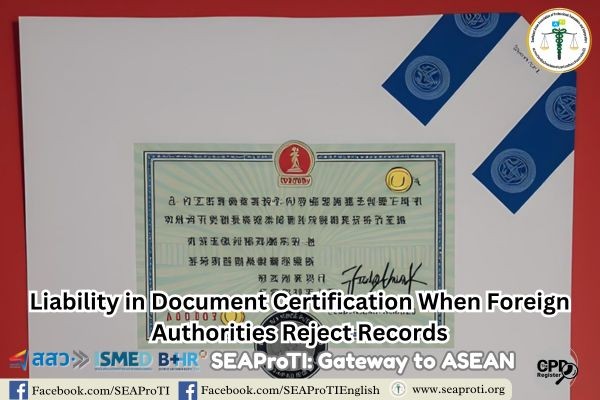
The use of documents abroad requires proper certification procedures such as certification by a Notarial Services Attorney, certified translation, or Apostille certification in countries that adhere to the Hague Convention. Failure in certification often results in financial loss, wasted time, and impediments to personal or business transactions. Therefore, understanding the legal implications and professional liability associated with document certification is crucial.
Legal Framework: Contract for Work and the Requirement of Result
Under the Thai Civil and Commercial Code, certification and translation services constitute a “contract for work,” where the achievement of a successful result is essential. Consequently, when documents are rejected by foreign authorities, the service is deemed unsuccessful, and the service provider may be liable for breach of contract, refund obligations, or damages (Thai Legal Institute, 2022).
Liability of Notarial Services Attorneys
Notarial Services Attorneys are legally obligated to review and certify documents with accuracy and suitability for use abroad. Failure to meet this standard—resulting in rejection—indicates a lack of due professional care. The consequences may include civil liability for breach of contract, potential disciplinary sanctions under professional conduct regulations, and reputational damage.
This aligns with the concept of professional duty of care and accountability (Jones, 2019).
Liability of Translators, Translation Agencies, and Legal Firms
Certified translation is likewise a professional service that must ensure a successful outcome. When certified translations are rejected, translators or agencies may be liable for compensation or refund. However, a major challenge is the absence of regulatory oversight for many translators or agencies not affiliated with professional associations, which limits the enforceability of ethical standards and consumer protection mechanisms (SEAProTI, 2025).
Consumer Protection and the Role of Professional Associations
Professional associations provide an essential function in regulating service standards by offering professional certification, ethical guidelines, complaint and dispute-resolution mechanisms, and disciplinary procedures. Such governance improves accountability and reduces disputes, thereby creating a more stable and reliable certification and translation market (Roberts & Shaw, 2020).
Preventive Measures
To minimize risk and protect clients, the following should be practiced:
- refund policies
- re-certification obligations
Conclusion
Certification and translation services represent contracts for work that require completion and successful use of documents in foreign jurisdictions. When certified documents are rejected, liability arises for both Notarial Services Attorneys (NSA) and translation providers. The level of oversight and ethical enforcement varies, making professional certification and association membership a critical factor in protecting consumers and ensuring quality service.
References
- Jones, M. (2019). Professional liability in legal document certification. Oxford University Press.
- Roberts, K., & Shaw, L. (2020). Ethics and governance in translation professions. Routledge.
- SEAProTI. (2025). Guidelines for certified translation and professional accountability in Southeast Asia. Bangkok: SEAProTI Publications.
- Thai Legal Institute. (2022). Commentary on the Thai Civil and Commercial Code: Contracts for Work. Bangkok: Winyuchon.
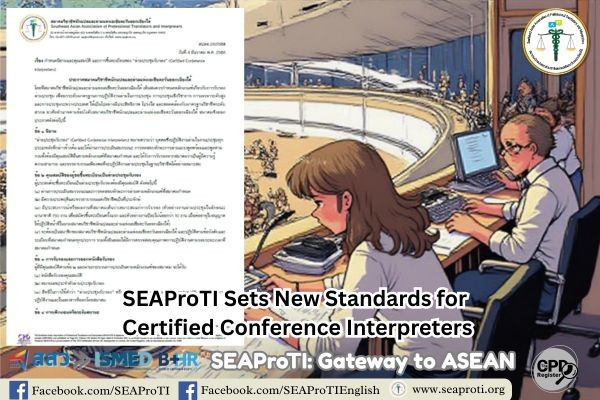
The Southeast Asian Association of Professional Translators and Interpreters (SEAProTI) has formally announced the qualifications and requirements for registration of Certified Translators, Translation Certification Providers, and Certified Interpreters in Sections 9 and 10 of the Royal Gazette, published by the Secretariat of the Cabinet, Office of the Prime Minister of Thailand, on 25 July 2024 (Vol. 141, Part 66 Ng, p. 100). Certified Translators, Translation Certification Providers, and Certified Interpreters
The Council of State has proposed the enactment of a Royal Decree, granting registered translators and recognized translation certifiers from professional associations or accredited language institutions the authority to provide legally valid translation certification (Letter to SEAProTI dated April 28, 2025)
SEAProTI is the first professional association in Thailand and Southeast Asia to implement a comprehensive certification system for translators, certifiers, and interpreters.
Head Office: Baan Ratchakru Building, No. 33, Room 402, Soi Phahonyothin 5, Phahonyothin Road, Phaya Thai District, Bangkok 10400, Thailand
Email: hello@seaproti.com | Tel.: (+66) 2-114-3128 (Office hours: Mon–Fri, 09:00–17:00)
ความรับผิดของผู้ให้บริการรับรองเอกสารเมื่อเอกสารถูกปฏิเสธจากประเทศปลายทาง: การวิเคราะห์เชิงกฎหมายและจริยธรรมวิชาชีพ
การนำเอกสารไปใช้ต่างประเทศจำเป็นต้องผ่านกระบวนการรับรองที่เหมาะสม เช่น การรับรองโดย Notarial Services Attorney การรับรองคำแปล หรือการรับรองตามอนุสัญญา Apostille สำหรับประเทศที่เข้าร่วม ความล้มเหลวในการรับรองเอกสารย่อมนำไปสู่ความเสียหายต่อผู้ว่าจ้าง ทั้งด้านค่าใช้จ่ายและระยะเวลา ดังนั้น ความเข้าใจเกี่ยวกับขอบเขตความรับผิดตามกฎหมายจึงเป็นสิ่งจำเป็น
กรอบกฎหมาย: สัญญาจ้างทำของและผลสำเร็จของงาน
ตามประมวลกฎหมายแพ่งและพาณิชย์ไทย สัญญารับรองเอกสารและคำแปลจัดเป็น “สัญญาจ้างทำของ” ซึ่งมีลักษณะสำคัญคือความสำเร็จของงานเป็นสาระสำคัญ หากงานไม่บรรลุผล เช่น เอกสารถูกปฏิเสธในประเทศปลายทาง ย่อมถือว่าเป็นการไม่ปฏิบัติตามสัญญา ผู้ว่าจ้างมีสิทธิเรียกร้องค่าเสียหายหรือคืนค่าจ้างได้ (สำนักกฎหมายไทย, 2565)
ความรับผิดของ Notarial Services Attorney
ผู้ประกอบวิชาชีพทนายความที่เป็น Notarial Services Attorney มีหน้าที่ตรวจสอบความถูกต้อง รูปแบบ และความเหมาะสมของการรับรองเอกสารเพื่อการใช้ต่างประเทศ ความผิดพลาดจนเอกสารถูกปฏิเสธสะท้อนถึงการไม่ใช้ความระมัดระวังตามมาตรฐานวิชาชีพ ซึ่งอาจนำไปสู่
ความรับผิดทางแพ่งจากการผิดสัญญา
ความรับผิดด้านมรรยาททนายความตามกฎหมายว่าด้วยทนายความ
หลักการนี้สอดคล้องกับแนวคิดเรื่องมาตรฐานวิชาชีพหรือ professional duty of care (Jones, 2019)
ความรับผิดของนักแปล ร้านแปล และเอเจนซี่
งานรับรองคำแปลเป็นบริการเชิงวิชาชีพที่ต้องรับผิดชอบผลสำเร็จของงานเช่นเดียวกัน หากคำแปลถูกปฏิเสธ ผู้ให้บริการอาจต้องคืนค่าบริการหรือชดใช้ค่าเสียหาย อย่างไรก็ตาม ความท้าทายสำคัญคือ ผู้ให้บริการจำนวนมากไม่สังกัดสมาคมหรือสภาวิชาชีพ จึงไม่มีกรอบกำกับด้านจรรยาบรรณหรือกระบวนการร้องเรียน ทำให้ผู้บริโภคเสียเปรียบ (SEAProTI, 2025)
การคุ้มครองผู้บริโภคและบทบาทสมาคมวิชาชีพ
การมีองค์กรกำกับ เช่น สมาคมนักแปลและล่าม ช่วยเพิ่มระดับความคุ้มครองผ่าน มาตรฐานวิชาชีพ ระบบร้องเรียน แนวปฏิบัติด้านจรรยาบรรณ กลไกไกล่เกลี่ยก่อนฟ้อง ซึ่งช่วยลดข้อพิพาทและสร้างเสถียรภาพในตลาดบริการแปล (Roberts & Shaw, 2020)
แนวทางป้องกันปัญหา
เพื่อให้เกิดความปลอดภัยแก่ผู้ใช้บริการ แนะนำดังนี้ ตรวจสอบคุณวุฒิหรือใบอนุญาต สอบถามว่ารูปแบบรับรองสามารถใช้ในประเทศปลายทางได้ ทำข้อตกลงลายลักษณ์อักษร เช่น คืนเงินเมื่อเอกสารถูกปฏิเสธ รับรองใหม่โดยไม่คิดค่าใช้จ่าย หรือเลือกบริการที่สังกัดสมาคมหรือได้รับการรับรอง
สรุป
งานรับรองเอกสารและคำแปลเป็นสัญญาจ้างทำของที่ต้องบรรลุผลสำเร็จ หากเอกสารถูกปฏิเสธ ผู้ให้บริการย่อมมีความรับผิด ไม่ว่าจะเป็น Notarial Services Attorney หรือผู้ให้บริการรับรองคำแปล ความแตกต่างสำคัญคือระดับการกำกับดูแลและจรรยาบรรณ โดยการเลือกใช้ผู้เชี่ยวชาญที่อยู่ภายใต้องค์กรวิชาชีพเป็นเครื่องมือป้องกันความเสียหายและเพิ่มทางเลือกการเยียวยาให้แก่ผู้บริโภค
เอกสารอ้างอิง
- Jones, M. (2019). Professional liability in legal document certification. Oxford University Press.
- Roberts, K., & Shaw, L. (2020). Ethics and governance in translation professions. Routledge.
- SEAProTI. (2025). Guidelines for certified translation and professional accountability in Southeast Asia. Bangkok: SEAProTI Publications.
- สำนักกฎหมายไทย. (2565). คำอธิบายกฎหมายแพ่งและพาณิชย์ว่าด้วยสัญญาจ้างทำของ. กรุงเทพฯ: วิญญูชน.
เกี่ยวกับนักแปลรับรอง ผู้รับรองการแปล และล่ามรับรองของสมาคมวิชาชีพนักแปลและล่ามแห่งเอเชียตะวันออกเฉียงใต้
สมาคมวิชาชีพนักแปลและล่ามแห่งเอเชียตะวันออกเฉียงใต้ (SEAProTI) ได้ประกาศหลักเกณฑ์และคุณสมบัติผู้ที่ขึ้นทะเบียนเป็น “นักแปลรับรอง (Certified Translators) และผู้รับรองการแปล (Translation Certification Providers) และล่ามรับรอง (Certified Interpreters)” ของสมาคม หมวดที่ 9 และหมวดที่ 10 ในราชกิจจานุเบกษา ของสำนักเลขาธิการคณะรัฐมนตรี ในสำนักนายกรัฐมนตรี แห่งราชอาณาจักรไทย ลงวันที่ 25 ก.ค. 2567 เล่มที่ 141 ตอนที่ 66 ง หน้า 100 อ่านฉบับเต็มได้ที่: นักแปลรับรอง ผู้รับรองการแปล และล่ามรับรอง
สำนักคณะกรรมการกฤษฎีกา เสนอให้ตราเป็นพระราชกฤษฎีกา โดยกำหนดให้นักแปลที่ขึ้นทะเบียน รวมถึงผู้รับรองการแปลจากสมาคมวิชาชีพหรือสถาบันสอนภาษาที่มีการอบรมและขึ้นทะเบียน สามารถรับรองคำแปหฟลได้ (จดหมายถึงสมาคม SEAProTI ลงวันที่ 28 เม.ย. 2568)
สมาคมวิชาชีพนักแปลและล่ามแห่งเอเชียตะวันออกเฉียงใต้ เป็นสมาคมวิชาชีพแห่งแรกในประเทศไทยและภูมิภาคเอเชียตะวันออกเฉียงใต้ที่มีระบบรับรองนักแปลรับรอง ผู้รับรองการแปล และล่ามรับรอง
สำนักงานใหญ่: อาคารบ้านราชครู เลขที่ 33 ห้อง 402 ซอยพหลโยธิน 5 ถนนพหลโยธิน แขวงพญาไท เขตพญาไท กรุงเทพมหานคร 10400 ประเทศไทย
อีเมล: hello@seaproti.com โทรศัพท์: (+66) 2-114-3128 (เวลาทำการ: วันจันทร์–วันศุกร์ เวลา 09.00–17.00 น.