


Guidelines for the Authentication and Translation of Chinese-Language Documents
Issued by the Ministry of Commerce of the People’s Republic of China for Use in Thailand
This article aims to explain two principal approaches to the authentication and translation of Chinese-language documents issued by the Ministry of Commerce of the People’s Republic of China for use in Thailand and to analyze the suitability of each approach in light of the requirements of different recipient authorities.
Approach One: Preparing the Document in English in the Country of Origin
The first approach is commonly adopted in cases where the document must undergo legalization by the Department of Consular Affairs, Ministry of Foreign Affairs of Thailand, which applies a clearly defined procedure for document comparison and verification.
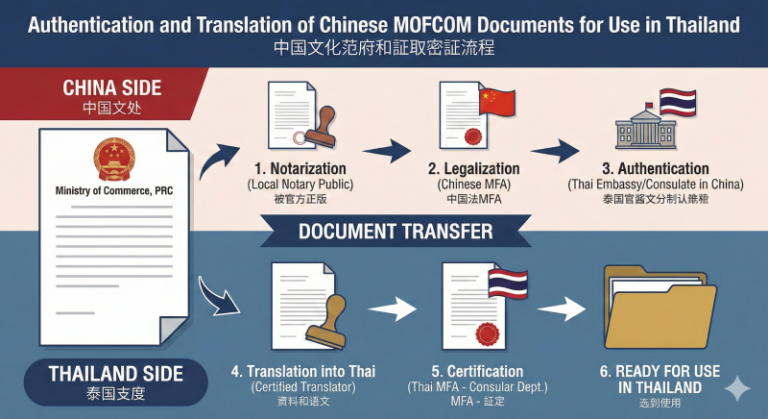
This process begins with requesting the issuance of a certified copy of the document from the Ministry of Commerce of the People’s Republic of China in English. The document must then be authenticated by the competent authority in China, such as a notary public or through apostille certification (subject to the applicable legal framework at the time), before being legalized by the Royal Thai Consulate-General in the People’s Republic of China.
Once the document has been fully authenticated and brought into Thailand, it is translated from English into Thai. The English original and the Thai translation are then submitted to the Department of Consular Affairs, Ministry of Foreign Affairs of Thailand, for legalization.
The principal advantage of this approach lies in its compatibility with the working procedures of the Thai Department of Consular Affairs, which relies primarily on comparisons between Thai and English texts. As a result, documents processed under this approach tend to enjoy a higher level of credibility and broader acceptance by Thai government agencies, courts, and regulatory bodies, including the Thai Food and Drug Administration and the Intellectual Property and International Trade Court.
Approach Two: Using the Original Chinese-Language Document and Translating It in Thailand
The second approach involves the use of the original Chinese-language document issued by the Ministry of Commerce of the People’s Republic of China. Under this approach, the document is first authenticated in China, either by a notary public or through apostille certification. It is then legalized by the Royal Thai Consulate-General in the People’s Republic of China before being brought into Thailand and translated into Thai.
In practice, this approach can be effective, particularly when documents are submitted to Thai government agencies or courts that place greater emphasis on the substantive content of the document rather than on the language format. Such authorities include the Thai Food and Drug Administration and the Intellectual Property and International Trade Court.
However, this approach is not suitable for submission to the Department of Consular Affairs, Ministry of Foreign Affairs of Thailand, due to structural limitations in its legalization procedures. Specifically, the department does not conduct direct comparisons between Chinese-language originals and Thai translations. Consequently, careful consideration of the recipient authority and the intended use of the document is essential when selecting this approach.
Selecting the Appropriate Approach
An analysis of the two approaches demonstrates that the choice of an authentication and translation method is not merely a linguistic issue but rather a matter of administrative systems and procedural compatibility. Where documents are required to undergo legalization by the Thai Department of Consular Affairs, preparing the document in English in the country of origin represents the safest and most widely accepted approach. Conversely, where documents are intended solely for submission to agencies or courts that accept Thai translations derived directly from Chinese originals, the second approach may offer an efficient alternative with fewer procedural steps.
Conclusion
Chinese-language documents issued by the Ministry of Commerce of the People’s Republic of China can be lawfully and effectively used in Thailand, provided that the authentication and translation approach selected is aligned with the procedures of the recipient authority. A clear understanding of these processes not only reduces the risk of document rejection but also reflects professional standards in the handling of legal and international commercial documentation.
References
Ministry of Commerce of the People’s Republic of China. (2022). Administrative regulations on the issuance and certification of official commercial documents.
Thai Food and Drug Administration. (2023). Guidelines for submission of foreign documents and certified translations.
Hague Conference on Private International Law. (1961). Convention abolishing the requirement of legalization for foreign public documents (Apostille Convention).
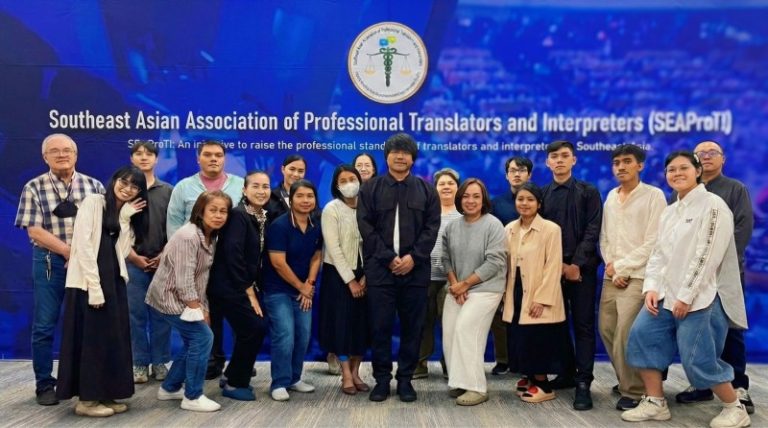
The Southeast Asian Association of Professional Translators and Interpreters (SEAProTI) has officially shared the qualifications and requirements for becoming Certified Translators, Translation Certification Providers, and Certified Interpreters in Sections 9 and 10 of the Royal Gazette, which was published by the Prime Minister’s Office in Thailand on July 25, 2024. Certified Translators, Translation Certification Providers, and Certified Interpreters
The Council of State has proposed the enactment of a Royal Decree, granting registered translators and recognised translation certifiers from professional associations or accredited language institutions the authority to provide legally valid translation certification (Letter to SEAProTI dated April 28, 2025)
SEAProTI is the first professional association in Thailand and Southeast Asia to implement a comprehensive certification system for translators, certifiers, and interpreters.
Head Office: Baan Ratchakru Building, No. 33, Room 402, Soi Phahonyothin 5, Phahonyothin Road, Phaya Thai District, Bangkok 10400, Thailand
Email: hello@seaproti.com | Tel.: (+66) 2-114-3128 (Office hours: Mon–Fri, 09:00–17:00)
แนวทางการรับรองและการแปลเอกสารภาษาจีนจากกระทรวงพาณิชย์จีนเพื่อนำมาใช้ในประเทศไทย
6 กุมภาพันธ์ 2569, กรุงเทพมหานคร – ในบริบทของการค้าระหว่างประเทศ การลงทุน และการดำเนินคดีทางเศรษฐกิจ เอกสารจากหน่วยงานรัฐของสาธารณรัฐประชาชนจีน โดยเฉพาะเอกสารที่ออกโดย Ministry of Commerce of the People’s Republic of China มักถูกนำมาใช้เป็นหลักฐานทางกฎหมายหรือเอกสารประกอบการพิจารณาของหน่วยงานรัฐไทย อย่างไรก็ตาม ความแตกต่างด้านภาษา ระบบการรับรองเอกสาร และแนวปฏิบัติของหน่วยงานปลายทางในประเทศไทย ทำให้การเลือกแนวทางการรับรองและการแปลเอกสารมีความสำคัญอย่างยิ่งต่อการยอมรับเอกสารนั้นในทางปฏิบัติ
บทความนี้มีวัตถุประสงค์เพื่ออธิบายแนวทางหลัก 2 รูปแบบในการรับรองและแปลเอกสารภาษาจีนจากกระทรวงพาณิชย์จีน เพื่อนำมาใช้ในประเทศไทย พร้อมวิเคราะห์ความเหมาะสมของแต่ละแนวทางตามลักษณะของหน่วยงานปลายทาง
แนวทางที่หนึ่ง: การจัดทำเอกสารเป็นภาษาอังกฤษตั้งแต่ประเทศต้นทาง
แนวทางแรกเป็นแนวทางที่นิยมใช้ในกรณีที่เอกสารจำเป็นต้องผ่านการรับรองจาก Department of Consular Affairs, Ministry of Foreign Affairs of Thailand ซึ่งมีขั้นตอนและหลักการทำงานที่ชัดเจนในการเปรียบเทียบเอกสาร
กระบวนการเริ่มต้นจากการขอคัดหรือออกเอกสารจากกระทรวงพาณิชย์จีนในรูปแบบภาษาอังกฤษ จากนั้นเอกสารดังกล่าวจะต้องได้รับการรับรองจากหน่วยงานที่มีอำนาจในประเทศจีน เช่น Notary Public หรือการรับรองในรูปแบบ Apostille (ตามกรอบกฎหมายที่ใช้ในขณะนั้น) ก่อนนำไปรับรองต่อโดย Royal Thai Consulate-General ประจำประเทศจีน
เมื่อเอกสารได้รับการรับรองครบถ้วนและนำเข้ามาในประเทศไทยแล้ว จึงดำเนินการแปลจากภาษาอังกฤษเป็นภาษาไทย และนำต้นฉบับภาษาอังกฤษพร้อมคำแปลภาษาไทยไปยื่นรับรองที่กรมการกงสุล กระทรวงการต่างประเทศ
ข้อได้เปรียบสำคัญของแนวทางนี้ คือ ความสอดคล้องกับกระบวนการทำงานของกรมการกงสุลไทย ซึ่งใช้การเปรียบเทียบระหว่างภาษาไทยและภาษาอังกฤษเป็นหลัก ส่งผลให้เอกสารมีความน่าเชื่อถือและสามารถนำไปใช้กับหน่วยงานราชการ ศาล และหน่วยงานกำกับดูแลต่าง ๆ ได้อย่างกว้างขวาง เช่น Thai Food and Drug Administration และ Intellectual Property and International Trade Court
แนวทางที่สอง: การใช้เอกสารภาษาจีนต้นฉบับและแปลในประเทศไทย
แนวทางที่สองเป็นการใช้เอกสารภาษาจีนต้นฉบับจากกระทรวงพาณิชย์จีน โดยนำเอกสารดังกล่าวไปรับรองความถูกต้องในประเทศจีนก่อน ไม่ว่าจะเป็นการรับรองโดย Notary Public หรือ Apostille จากนั้นจึงนำเอกสารไปผ่านการรับรองโดยสถานกงสุลไทยในประเทศจีน และนำเข้ามาแปลเป็นภาษาไทยในประเทศไทย
แนวทางนี้สามารถใช้งานได้จริงในทางปฏิบัติ โดยเฉพาะเมื่อต้องยื่นเอกสารต่อหน่วยงานราชการหรือศาลที่ให้ความสำคัญกับสาระของเอกสารมากกว่ารูปแบบภาษา เช่น องค์การอาหารและยา หรือศาลทรัพย์สินทางปัญญาและการค้าระหว่างประเทศ
อย่างไรก็ตาม แนวทางนี้ไม่เหมาะสำหรับการนำเอกสารไปยื่นรับรองที่กรมการกงสุล กระทรวงการต่างประเทศ เนื่องจากข้อจำกัดเชิงโครงสร้างของกระบวนการรับรอง ซึ่งไม่ดำเนินการเปรียบเทียบคำแปลจากภาษาจีนเป็นภาษาไทยโดยตรง การเลือกใช้แนวทางนี้จึงต้องพิจารณาอย่างรอบคอบถึงหน่วยงานปลายทางและวัตถุประสงค์ของการใช้งานเอกสาร
การเลือกแนวทางที่เหมาะสม
จากการวิเคราะห์ทั้งสองแนวทาง สามารถสรุปได้ว่า การเลือกวิธีการรับรองและแปลเอกสารไม่ใช่เพียงประเด็นทางภาษาเท่านั้น แต่เป็นประเด็นเชิงระบบและกระบวนการทางปกครอง หากเอกสารจำเป็นต้องผ่านการรับรองของกรมการกงสุลไทย แนวทางการจัดทำเอกสารเป็นภาษาอังกฤษตั้งแต่ประเทศต้นทางถือเป็นแนวทางที่ปลอดภัยและได้รับการยอมรับมากที่สุด ในทางกลับกัน หากเอกสารถูกนำไปใช้เฉพาะกับหน่วยงานหรือศาลที่รับคำแปลภาษาไทยจากต้นฉบับภาษาจีนได้โดยตรง แนวทางที่สองย่อมเป็นทางเลือกที่มีประสิทธิภาพและลดขั้นตอนบางประการได้
บทสรุป
เอกสารภาษาจีนจากกระทรวงพาณิชย์จีนสามารถนำมาใช้ในประเทศไทยได้อย่างถูกต้องตามกฎหมาย หากมีการเลือกแนวทางการรับรองและการแปลที่สอดคล้องกับระบบของหน่วยงานปลายทาง ความเข้าใจในขั้นตอนเหล่านี้ไม่เพียงช่วยลดความเสี่ยงในการถูกปฏิเสธเอกสาร แต่ยังสะท้อนถึงมาตรฐานความเป็นมืออาชีพในการจัดการเอกสารทางกฎหมายและเอกสารทางการค้าระหว่างประเทศ
เอกสารอ้างอิง
- Department of Consular Affairs, Ministry of Foreign Affairs of Thailand. (2023). Legalization of foreign documents for use in Thailand.
- Ministry of Commerce of the People’s Republic of China. (2022). Administrative regulations on the issuance and certification of official commercial documents.
- Thai Food and Drug Administration. (2023). Guidelines for submission of foreign documents and certified translations.
- International Hague Conference on Private International Law. (1961). Convention abolishing the requirement of legalization for foreign public documents (Apostille Convention).
สมาคมวิชาชีพนักแปลและล่ามแห่งเอเชียตะวันออกเฉียงใต้ (SEAProTI) ได้ประกาศหลักเกณฑ์และคุณสมบัติของผู้ที่ขึ้นทะเบียนเป็น “นักแปลรับรอง (Certified Translators) และผู้รับรองการแปล (Translation Certification Providers) และล่ามรับรอง (Certified Interpreters)” ของสมาคม หมวดที่ 9 และหมวดที่ 10 ในราชกิจจานุเบกษา ของสำนักเลขาธิการคณะรัฐมนตรี ในสำนักนายกรัฐมนตรี แห่งราชอาณาจักรไทย ลงวันที่ 25 ก.ค. 2567 เล่มที่ 141 ตอนที่ 66 ง หน้า 100 อ่านฉบับเต็มได้ที่: นักแปลรับรอง ผู้รับรองการแปล และล่ามรับรอง
สำนักคณะกรรมการกฤษฎีกาเสนอให้ตราเป็นพระราชกฤษฎีกา โดยกำหนดให้นักแปลที่ขึ้นทะเบียน รวมถึงผู้รับรองการแปลจากสมาคมวิชาชีพหรือสถาบันสอนภาษาที่มีการอบรมและขึ้นทะเบียน สามารถรับรองคำแปลได้ (จดหมายถึงสมาคม SEAProTI ลงวันที่ 28 เม.ย. 2568)
สมาคมวิชาชีพนักแปลและล่ามแห่งเอเชียตะวันออกเฉียงใต้ เป็นสมาคมวิชาชีพแห่งแรกและแห่งเดียวในประเทศไทยและภูมิภาคเอเชียตะวันออกเฉียงใต้ที่มีระบบรับรองนักแปลรับรอง ผู้รับรองการแปล และล่ามรับรอง
สำนักงานใหญ่: อาคารบ้านราชครู เลขที่ 33 ห้อง 402 ซอยพหลโยธิน 5 ถนนพหลโยธิน แขวงพญาไท เขตพญาไท กรุงเทพมหานคร 10400 ประเทศไทย
อีเมล: hello@seaproti.com โทรศัพท์: (+66) 2-114-3128 (เวลาทำการ: วันจันทร์–วันศุกร์ เวลา 09.00–17.00 น.