


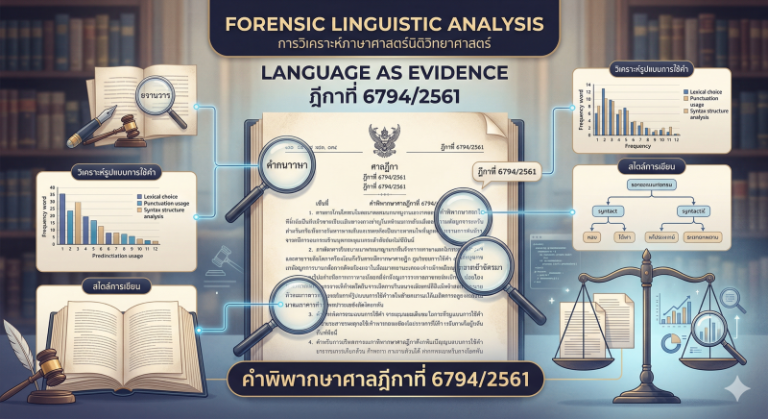
Language as Evidence:
A Forensic Linguistic Analysis of Thai Supreme Court Judgment No. 6794/2561
Author: Wanitcha Sumanat, President of the Southeast Asian Association of Professional Translators and Interpreters (SEAProTI), and Certified Forensic Linguist
Date: 22 March 2026—This article analyzes Thai Supreme Court Judgment No. 6794/2561 through the lens of forensic linguistics, focusing on the role of language as a constitutive element of criminal liability, the interpretation of allegedly defamatory expressions in digital contexts, and the impact of legal reform on the meaning of contested statements. The findings indicate that deficiencies in legal drafting, contextual interpretation of sarcastic discourse, and the application of more lenient statutory provisions collectively shaped the outcome of the case. The study argues that forensic linguistics provides a critical analytical framework for understanding the interplay between language and legal responsibility, particularly in the context of online communication.
Introduction
In defamation cases, language functions not merely as a medium of communication but as evidentiary material upon which courts rely to determine both factual and legal issues. Thai Supreme Court Judgment No. 6794/2561 presents a compelling case study illustrating this function, especially in the context of digital communication platforms such as LINE. In such cases, interpretation must extend beyond the linguistic form of the utterance to encompass its communicative context.
This article aims to examine the judgment through a forensic linguistic framework in order to explain how language was operationalized in judicial reasoning and to assess the implications for legal drafting standards and the adjudication of defamation in digital environments.
Language as a Constitutive Element of the Offence: The Problem of Incomplete Pleadings
A central issue in this case is the Supreme Court’s determination that the plaintiff’s complaint failed to satisfy the elements of defamation by publication under Section 328 of the Thai Penal Code because it did not explicitly allege “publication.”
From a forensic linguistic perspective, this reflects a failure of legal drafting precision. The term “publication” is not merely descriptive but constitutes a legal-semantic unit essential to establishing the offense. Its omission results in the absence of a legally operative meaning, regardless of whether the factual circumstances might otherwise support such an interpretation.
This phenomenon aligns with Tiersma’s (1999) observation that legal language requires a high degree of precision, as the meaning of specific terms directly determines legal consequences.
Interpreting the Utterance: Sarcasm Versus Defamatory Assertion
The Court further held that the defendant’s statements were comparative and sarcastic in nature, rather than constituting false assertions of fact capable of damaging the plaintiff’s reputation.
From a forensic linguistic standpoint, this distinction can be analyzed across three levels. At the semantic level, the statements did not clearly assert verifiable false facts. At the pragmatic level, they relied on implicature, requiring interpretation within context rather than conveying explicit accusations. At the discourse level, the statements functioned as criticism or commentary rather than factual allegations.
This approach is consistent with Coulthard and Johnson (2010), who emphasize that defamation analysis must consider both the linguistic content and the communicative context in which statements are made.
Digital Communication Context and the Scope of “Publication”
Although the statements were posted in a LINE group accessible to third parties, the Court did not automatically classify this as “publication” under the law. This reflects key forensic linguistic concepts such as audience design and scope of dissemination.
The platform itself does not determine the legal characterization of the act; rather, the analysis must consider the speaker’s communicative intent and the extent to which the message was directed toward a broader public audience. This distinction is increasingly significant in the digital age, where modes of communication vary widely in their reach and function.
Legal Reform and the Shifting Meaning of Text
Another critical issue concerns the amendment to the Computer Crime Act (No. 2) B.E. 2560 (2017), which excludes defamation from the scope of Section 14(1). As a result, the defendant’s conduct no longer constituted an offense under this provision.
From a forensic linguistic perspective, this illustrates that the legal meaning of a text is not fixed but contingent upon the interpretive legal framework in force at a given time. The same linguistic act may carry different legal implications before and after a statutory amendment. This is consistent with the principle of retroactive application of more lenient criminal law under Section 2, paragraph two, of the Thai Penal Code.
Shuy (2008) similarly argues that the interpretation of language in legal contexts must account for institutional and statutory frameworks that shape meaning.
Conclusion
Thai Supreme Court Judgment No. 6794/2561 demonstrates that language operates as a structural component of legal liability, influencing outcomes at every stage from the drafting of pleadings to judicial interpretation and statutory application. A forensic linguistic analysis reveals that courts do not merely assess what was said but also how it was said, in what context, and under which legal framework.
In an era of rapidly evolving digital communication, the development of forensic linguistic expertise is essential for legal practitioners, translators, and language professionals to effectively navigate the risks associated with language use in legal contexts.
References
- Coulthard, M., & Johnson, A. (2010). An introduction to forensic linguistics: Language in evidence (2nd ed.). Routledge.
- Shuy, R. W. (2008). Fighting over words: Language and civil law cases. Oxford University Press.
- Tiersma, P. M. (1999). Legal language. University of Chicago Press.
For professional services, please visit: https://www.seaproti.org/practitioners/
About certified translators, translation certifiers, and certified interpreters associated with SEAProTI.
The Southeast Asian Association of Professional Translators and Interpreters (SEAProTI) has officially shared the qualifications and requirements for becoming Certified Translators, Translation Certification Providers, and Certified Interpreters in Sections 9 and 10 of the Royal Gazette, which was published by the Prime Minister’s Office in Thailand on July 25, 2024. Certified Translators, Translation Certification Providers, and Certified Interpreters
The Council of State has proposed the enactment of a Royal Decree, granting registered translators and recognised translation certifiers from professional associations or accredited language institutions the authority to provide legally valid translation certification (Letter to SEAProTI dated April 28, 2025)
SEAProTI is the first professional association in Thailand and Southeast Asia to implement a comprehensive certification system for translators, certifiers, and interpreters.
Head Office: Baan Ratchakru Building, No. 33, Room 402, Soi Phahonyothin 5, Phahonyothin Road, Phaya Thai District, Bangkok 10400, Thailand
Email: hello@seaproti.com | Tel.: (+66) 2-114-3128 (Office hours: Mon–Fri, 09:00–17:00).
ภาษาในฐานะพยานหลักฐาน: การวิเคราะห์คำพิพากษาศาลฎีกาที่ 6794/2561 ในมิติของนิติภาษาศาสตร์
ผู้แต่ง วณิชชา สุมานัส นายกสมาคมวิชาชีพนักแปลและล่ามแห่งเอเชียตะวันออกเฉียงใต้ (SEAProTI) และนักนิติภาษาศาสตร์วิชาชีพ
22 มีนาคม 2569, กรุงเทพมหานคร – บทความนี้มุ่งวิเคราะห์คำพิพากษาศาลฎีกาที่ 6794/2561 ผ่านกรอบแนวคิดนิติภาษาศาสตร์ (forensic linguistics) โดยเน้นการพิจารณาบทบาทของภาษาในฐานะองค์ประกอบความผิด การตีความถ้อยคำในบริบทดิจิทัล และผลกระทบของการเปลี่ยนแปลงกฎหมายต่อความหมายของข้อความ ศึกษาพบว่า ความล้มเหลวในการบรรยายคำฟ้องอย่างครบถ้วน การตีความเชิงบริบทของถ้อยคำเสียดสี และการปรับใช้กฎหมายที่เป็นคุณ ล้วนเป็นปัจจัยที่นำไปสู่ผลแห่งคดี บทความเสนอว่า นิติภาษาศาสตร์เป็นเครื่องมือสำคัญในการทำความเข้าใจความสัมพันธ์ระหว่างภาษาและความรับผิดทางกฎหมาย โดยเฉพาะในยุคการสื่อสารออนไลน์
บทนำ
ในบริบทของคดีหมิ่นประมาท ภาษาไม่ได้ทำหน้าที่เพียงเป็นสื่อกลางของการสื่อสาร แต่เป็น “พยานหลักฐาน” ที่ศาลใช้ในการวินิจฉัยข้อเท็จจริงและข้อกฎหมายอย่างมีนัยสำคัญ คำพิพากษาศาลฎีกาที่ 6794/2561 เป็นกรณีศึกษาที่สะท้อนบทบาทดังกล่าวอย่างเด่นชัด โดยเฉพาะเมื่อข้อพิพาทเกิดขึ้นบนแพลตฟอร์มดิจิทัล เช่น โปรแกรม LINE ซึ่งทำให้การตีความถ้อยคำต้องพิจารณาทั้งในระดับโครงสร้างภาษา (linguistic structure) และบริบทการสื่อสาร (communicative context) ควบคู่กันไป
บทความนี้มีวัตถุประสงค์เพื่อวิเคราะห์คำพิพากษาดังกล่าวโดยใช้กรอบแนวคิดนิติภาษาศาสตร์ เพื่ออธิบายว่าศาลใช้ภาษาเป็นฐานในการวินิจฉัยอย่างไร และนัยของคำวินิจฉัยนี้มีผลต่อการพัฒนามาตรฐานการร่างคำฟ้องและการตีความคดีหมิ่นประมาทในสังคมดิจิทัลอย่างไร
ภาษาในฐานะองค์ประกอบความผิด: ความสำคัญของการบรรยายฟ้อง
ประเด็นสำคัญประการแรกในคำพิพากษานี้คือ การที่ศาลฎีกาวินิจฉัยว่าคำฟ้องของโจทก์ไม่ครบองค์ประกอบความผิดตามประมวลกฎหมายอาญา มาตรา 328 เนื่องจากไม่ได้บรรยายว่าการกระทำดังกล่าวเป็น “การโฆษณา” ซึ่งเป็นองค์ประกอบสำคัญของความผิดฐานหมิ่นประมาทโดยการโฆษณา
ในเชิงนิติภาษาศาสตร์ ประเด็นนี้สะท้อนแนวคิดเรื่องความแม่นยำทางภาษาในเอกสารทางกฎหมาย (legal drafting precision) โดยถ้อยคำที่ใช้ในคำฟ้องไม่ได้มีสถานะเป็นเพียงคำอธิบายทั่วไป แต่เป็นหน่วยความหมายเชิงกฎหมาย (legal semantic unit) ที่มีผลโดยตรงต่อการเข้าองค์ประกอบความผิด การละเลยถ้อยคำดังกล่าวจึงไม่ใช่เพียงข้อบกพร่องทางเทคนิค แต่เป็นความล้มเหลวในระดับโครงสร้างของความหมายทางกฎหมาย
ปรากฏการณ์นี้สอดคล้องกับแนวคิดของ Tiersma (1999) ที่เสนอว่าภาษาในกฎหมายมีลักษณะเฉพาะและต้องการความแม่นยำสูง เนื่องจากความหมายของคำสามารถกำหนดผลทางกฎหมายได้โดยตรง
การตีความถ้อยคำ: เสียดสีในฐานะวาทกรรมที่ไม่ถึงขั้นความผิด
อีกประเด็นหนึ่งที่มีนัยสำคัญคือ การที่ศาลวินิจฉัยว่าข้อความของจำเลยมีลักษณะเป็นการเปรียบเทียบและเสียดสี แต่ยังไม่ถึงระดับของการใส่ความให้เกิดความเสียหายแก่ชื่อเสียง
การวิเคราะห์ในมิติของนิติภาษาศาสตร์สามารถอธิบายได้ผ่านสามระดับ ได้แก่ ระดับความหมาย (semantics) ระดับปฏิบัติการทางภาษา (pragmatics) และระดับวาทกรรม (discourse) ในระดับความหมาย ข้อความดังกล่าวไม่ได้ระบุข้อเท็จจริงที่สามารถพิสูจน์ได้ว่าเป็นเท็จอย่างชัดเจน ในระดับปฏิบัติการทางภาษา ข้อความมีลักษณะของนัย (implicature) ซึ่งต้องอาศัยการตีความจากบริบทมากกว่าการสื่อสารโดยตรง ขณะที่ในระดับวาทกรรม ข้อความอยู่ในกรอบของการวิจารณ์หรือการแสดงความเห็นมากกว่าการกล่าวหาข้อเท็จจริง
แนวทางดังกล่าวสอดคล้องกับงานของ Coulthard และ Johnson (2010) ซึ่งชี้ให้เห็นว่าการวิเคราะห์ภาษาในคดีหมิ่นประมาทต้องพิจารณาทั้งเนื้อหาและบริบทของการสื่อสาร มิใช่เพียงถ้อยคำที่ปรากฏเท่านั้น
บริบทของการสื่อสารดิจิทัลและขอบเขตของ “การโฆษณา”
แม้ข้อความจะถูกเผยแพร่ในกลุ่ม LINE ซึ่งมีบุคคลที่สามสามารถเข้าถึงได้ แต่ศาลไม่ได้ตีความโดยอัตโนมัติว่าเป็น “การโฆษณา” ในความหมายของกฎหมาย การวินิจฉัยดังกล่าวสะท้อนแนวคิดสำคัญในนิติภาษาศาสตร์เกี่ยวกับการออกแบบผู้รับสาร (audience design) และขอบเขตของการเผยแพร่ (scope of dissemination)
ในบริบทนี้ แพลตฟอร์มดิจิทัลไม่ได้เป็นตัวกำหนดลักษณะของความผิดโดยตัวมันเอง แต่ต้องพิจารณาว่าผู้สื่อสารมีเจตนาเผยแพร่ข้อมูลไปยังสาธารณะในระดับใด การตีความเช่นนี้มีความสำคัญอย่างยิ่งในยุคที่การสื่อสารออนไลน์มีความหลากหลายและซับซ้อนมากขึ้น
การเปลี่ยนแปลงของกฎหมายและผลต่อความหมายของข้อความ
ประเด็นสุดท้ายที่สำคัญคือ การที่ศาลนำบทบัญญัติของพระราชบัญญัติว่าด้วยการกระทำความผิดเกี่ยวกับคอมพิวเตอร์ (ฉบับที่ 2) พ.ศ. 2560 มาปรับใช้ ซึ่งทำให้การนำเข้าข้อมูลอันเป็นเท็จไม่ครอบคลุมกรณีหมิ่นประมาทอีกต่อไป
ในเชิงนิติภาษาศาสตร์ การเปลี่ยนแปลงดังกล่าวสะท้อนว่าความหมายของข้อความไม่ได้เป็นสิ่งตายตัว แต่ขึ้นอยู่กับกรอบกฎหมาย (legal interpretive framework) ที่ใช้ในการตีความ ข้อความเดียวกันอาจมีสถานะทางกฎหมายที่แตกต่างกันในช่วงเวลาที่ต่างกัน ซึ่งสอดคล้องกับหลักกฎหมายอาญาที่เป็นคุณตามประมวลกฎหมายอาญา มาตรา 2 วรรคสอง
แนวคิดนี้เชื่อมโยงกับงานของ Shuy (2008) ที่ชี้ให้เห็นว่าการตีความภาษาในบริบทกฎหมายต้องพิจารณาทั้งตัวบทและบริบทเชิงสถาบันที่กำหนดความหมายของถ้อยคำ
บทสรุป
คำพิพากษาศาลฎีกาที่ 6794/2561 แสดงให้เห็นอย่างชัดเจนว่า ภาษาเป็นองค์ประกอบเชิงโครงสร้างของความรับผิดทางกฎหมาย ตั้งแต่ระดับการร่างคำฟ้อง การตีความถ้อยคำ ไปจนถึงการปรับใช้กฎหมายที่เปลี่ยนแปลงไป การวิเคราะห์ในกรอบนิติภาษาศาสตร์ช่วยให้เข้าใจว่าศาลไม่ได้พิจารณาเพียง “สิ่งที่ถูกกล่าว” แต่พิจารณาว่า “กล่าวอย่างไร ในบริบทใด และภายใต้กรอบกฎหมายใด”
ในยุคดิจิทัลที่การสื่อสารมีความรวดเร็วและกระจายตัวสูง การพัฒนาความรู้ด้านนิติภาษาศาสตร์จึงมีความสำคัญต่อทั้งนักกฎหมาย นักแปล และผู้ปฏิบัติงานด้านภาษา เพื่อให้สามารถจัดการกับความเสี่ยงทางกฎหมายที่เกิดจากการใช้ภาษาได้อย่างมีประสิทธิภาพ
เอกสารอ้างอิง
- Coulthard, M., & Johnson, A. (2010). An introduction to forensic linguistics: Language in evidence (2nd ed.). Routledge.
- Shuy, R. W. (2008). Fighting over words: Language and civil law cases. Oxford University Press.
- Tiersma, P. M. (1999). Legal language. University of Chicago Press.
ติดต่อขอใช้บริการนักวิชาชีพของสมาคมได้ที่: https://www.seaproti.org/practitioners/
- สมาคมวิชาชีพนักแปลและล่ามแห่งเอเชียตะวันออกเฉียงใต้ (SEAProTI) ได้ประกาศหลักเกณฑ์และคุณสมบัติของผู้ที่ขึ้นทะเบียนเป็น “นักแปลรับรอง (Certified Translators) และผู้รับรองการแปล (Translation Certification Providers) และล่ามรับรอง (Certified Interpreters)” ของสมาคม หมวดที่ 9 และหมวดที่ 10 ในราชกิจจานุเบกษา ของสำนักเลขาธิการคณะรัฐมนตรี ในสำนักนายกรัฐมนตรี แห่งราชอาณาจักรไทย ลงวันที่ 25 ก.ค. 2567 เล่มที่ 141 ตอนที่ 66 ง หน้า 100 อ่านฉบับเต็มได้ที่: นักแปลรับรอง ผู้รับรองการแปล และล่ามรับรอง
- สำนักคณะกรรมการกฤษฎีกาเสนอให้ตราเป็นพระราชกฤษฎีกา โดยกำหนดให้นักแปลที่ขึ้นทะเบียน รวมถึงผู้รับรองการแปลจากสมาคมวิชาชีพหรือสถาบันสอนภาษาที่มีการอบรมและขึ้นทะเบียน สามารถรับรองคำแปลได้ (จดหมายถึงสมาคม SEAProTI ลงวันที่ 28 เม.ย. 2568)
- สมาคมวิชาชีพนักแปลและล่ามแห่งเอเชียตะวันออกเฉียงใต้เป็นสมาคมวิชาชีพแห่งแรกและแห่งเดียวในประเทศไทยและภูมิภาคเอเชียตะวันออกเฉียงใต้ที่มีระบบรับรองนักแปลรับรอง ผู้รับรองการแปล และล่ามรับรอง
สำนักงานใหญ่: อาคารบ้านราชครู เลขที่ 33 ห้อง 402 ซอยพหลโยธิน 5 ถนนพหลโยธิน แขวงพญาไท เขตพญาไท กรุงเทพมหานคร 10400 ประเทศไทย
อีเมล: hello@seaproti.com โทรศัพท์: (+66) 2-114-3128 (เวลาทำการ: วันจันทร์–วันศุกร์ เวลา 09.00–17.00 น.