


Language Access as a Legal Obligation:
An APA-Style Analysis of U.S. Federal Standards on Translation, Interpreting, and Machine Translation
Author: Wanitcha Sumanat, President of the Southeast Asian Association of Professional Translators and Interpreters (SEAProTI)
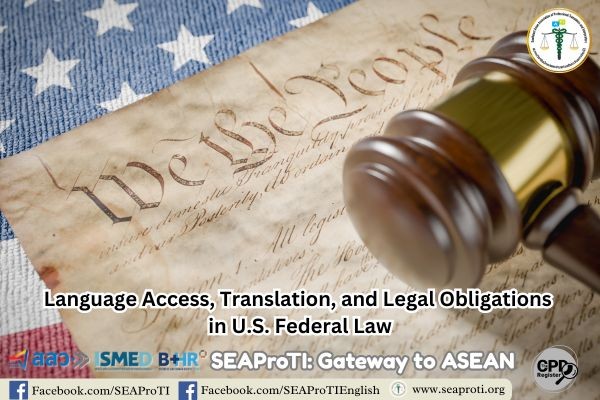
1 January 2026, Bangkok – This article examines language access as a legal and human rights obligation under United States federal law, drawing on the Translation and Interpretation Services Ordering Guide (December 2025) issued by the U.S. General Services Administration (GSA). The analysis situates language access within the jurisprudence of national origin discrimination established by Lau v. Nichols and subsequent statutory frameworks, including Title VI of the Civil Rights Act and Section 1557. Particular attention is given to federal standards governing accuracy, timeliness, and cost-free provision of language services, as well as the limitations and legal risks associated with the use of machine translation for vital documents. The article argues that translation and interpreting function as rights-enabling mechanisms rather than ancillary administrative services and that overreliance on unreviewed machine translation may constitute a breach of legal language access obligations.
Keywords: language access, limited English proficiency, translation, interpreting, machine translation, civil rights
In multilingual societies, equal access to public services depends fundamentally on effective communication. In the United States, language access has evolved from a matter of administrative accommodation into a legally enforceable civil rights obligation. This shift is particularly evident in federal guidance governing translation and interpreting services, which explicitly links language access to non-discrimination principles.
The Translation and Interpretation Services Ordering Guide (GSA, 2025) articulates how federal agencies must procure and deploy language services to comply with civil rights law. Rather than treating translation and interpreting as optional support services, the Guide frames them as essential mechanisms for ensuring meaningful access for individuals with limited English proficiency (LEP).
Legal Foundations of Language Access
The contemporary legal framework for language access in the United States originates in the landmark Supreme Court decision Lau v. Nichols, in which the Court held that the failure to provide meaningful access to public education for non-English-speaking students constituted national origin discrimination. The Court reasoned that identical treatment does not equate to equal treatment when language barriers effectively exclude individuals from participation.
Subsequent judicial interpretations and federal regulations have extended this reasoning beyond education to encompass healthcare, social services, and other government functions. Under Title VI of the Civil Rights Act and Section 1557, covered entities are required to take “reasonable steps” to ensure meaningful access for LEP individuals. Importantly, the obligation is not merely procedural but substantive: access must be real, effective, and functional.
Standards for Meaningful Access
The GSA (2025) Guide specifies that language services must meet three core standards: accuracy, timeliness, and cost-free provision to the service recipient. These criteria reflect an understanding that deficient language services can undermine the very rights they are intended to protect.
Inaccurate translation or interpretating may distort legal rights, medical information, or administrative obligations. Delayed language services may render access illusory, particularly in time-sensitive contexts such as healthcare or legal proceedings. Charging LEP individuals for language services may further constitute indirect discrimination by imposing barriers not faced by English-proficient users.
From this perspective, translation and interpreting are not neutral conduits of information but rights-enabling practices integral to the rule of law.
Machine Translation and Legal Risk
The GSA Guide adopts a cautious and legally informed stance on machine translation (MT). While acknowledging that MT can be a useful tool, the Guide emphasizes that machine-generated output is generally less accurate and reliable than translations produced by qualified human translators. This limitation arises from MT’s tendency toward word-for-word rendering and its inability to adequately process idiomatic language, cultural nuance, or technical and legal terminology.
Crucially, the Guide warns that using MT to translate vital documents without review and verification by a qualified translator is not recommended and may constitute a breach of an agency’s language access plan. This position reframes MT from a neutral technological choice into a potential source of legal liability. In effect, efficiency-driven reliance on MT cannot override statutory obligations to provide meaningful access.
Discussion
The federal approach reflected in the GSA Guide demonstrates a balanced but principled integration of technology into language access policy. Rather than rejecting MT outright, the framework delineates clear boundaries within which technology may be used without compromising legal rights.
For the translation and interpreting professions, this framework affirms the continuing centrality of human expertise, particularly in high-stakes contexts involving legal rights, health outcomes, and public services. More broadly, it underscores that language access policy is not a question of convenience or cost-saving, but one of legal compliance and ethical governance.
Conclusion
The analysis of the Translation and Interpretation Services Ordering Guide (GSA, 2025) reveals that language access in the United States is firmly grounded in civil rights law. Translation and interpreting are positioned as essential mechanisms for preventing national origin discrimination and ensuring substantive equality before the law. While machine translation may serve as a supplementary tool, its unreviewed use for vital documents risks undermining both legal compliance and individual rights. This federal model offers important insights for other multilingual jurisdictions seeking to reconcile technological innovation with human rights obligations.
References
- General Services Administration. (2025). Translation and interpretation services ordering guide (December 2025). U.S. Government Publishing Office.
- Lau v. Nichols, 414 U.S. 563 (1974).
- U.S. Department of Justice. (2002). Guidance to federal financial assistance recipients regarding the Title VI prohibition against national origin discrimination affecting limited English proficient persons. Federal Register, 67(117), 41455–41472.
- U.S. Department of Health and Human Services. (2016). Nondiscrimination in health programs and activities: final rule. Federal Register, 81(96), 31375–31473.
The Southeast Asian Association of Professional Translators and Interpreters (SEAProTI) has formally announced the qualifications and requirements for registration of Certified Translators, Translation Certification Providers, and Certified Interpreters in Sections 9 and 10 of the Royal Gazette, published by the Secretariat of the Cabinet, Office of the Prime Minister of Thailand, on 25 July 2024 (Vol. 141, Part 66 Ng, p. 100). Certified Translators, Translation Certification Providers, and Certified Interpreters
The Council of State has proposed the enactment of a Royal Decree, granting registered translators and recognised translation certifiers from professional associations or accredited language institutions the authority to provide legally valid translation certification (Letter to SEAProTI dated April 28, 2025)
SEAProTI is the first professional association in Thailand and Southeast Asia to implement a comprehensive certification system for translators, certifiers, and interpreters.
Head Office: Baan Ratchakru Building, No. 33, Room 402, Soi Phahonyothin 5, Phahonyothin Road, Phaya Thai District, Bangkok 10400, Thailand
Email: hello@seaproti.com | Tel.: (+66) 2-114-3128 (Office hours: Mon–Fri, 09:00–17:00)
การวิเคราะห์เชิงวิชาการตามรูปแบบ APA ว่าด้วยมาตรฐานของรัฐบาลสหรัฐอเมริกาเกี่ยวกับการแปล การล่าม และการแปลด้วยเครื่อง
ผู้แต่ง วณิชชา สุมานัส นายกสมาคมวิชาชีพนักแปลและล่ามแห่งเอเชียตะวันออกเฉียงใต้ (SEAProTI)
1 มกราคม 2569, กรุงเทพมหานคร – บทความนี้ศึกษาการเข้าถึงภาษาในฐานะพันธะทางกฎหมายและสิทธิมนุษยชนภายใต้กฎหมายของรัฐบาลกลางสหรัฐอเมริกา โดยอาศัยเอกสาร Translation and Interpretation Services Ordering Guide (ธันวาคม ค.ศ. 2025) ซึ่งจัดทำโดยหน่วยงานบริการทั่วไปของสหรัฐอเมริกา (U.S. General Services Administration: GSA) เป็นกรอบการวิเคราะห์ บทความวางการเข้าถึงภาษาไว้ภายใต้แนวคำวินิจฉัยทางกฎหมายว่าด้วยการเลือกปฏิบัติโดยอาศัยชาติกำเนิด ซึ่งเริ่มต้นจากคดี Lau v. Nichols และพัฒนาต่อมาในกฎหมายระดับพระราชบัญญัติ ได้แก่ Title VI of the Civil Rights Act และ Section 1557 โดยให้ความสำคัญเป็นพิเศษกับมาตรฐานของรัฐบาลกลางในเรื่องความถูกต้อง ความทันท่วงที และการไม่เรียกเก็บค่าใช้จ่ายของบริการด้านภาษา ตลอดจนข้อจำกัดและความเสี่ยงทางกฎหมายจากการใช้การแปลด้วยเครื่องในเอกสารสำคัญ บทความนี้เสนอว่า การแปลและการล่ามทำหน้าที่เป็นกลไกในการทำให้สิทธิสามารถบังคับใช้ได้จริง มิใช่เพียงบริการทางธุรการ และการพึ่งพาการแปลด้วยเครื่องโดยปราศจากการตรวจทานจากผู้เชี่ยวชาญอาจเข้าข่ายการละเมิดพันธะด้านการเข้าถึงภาษาตามกฎหมาย
คำสำคัญ: การเข้าถึงภาษา, ความสามารถทางภาษาอังกฤษจำกัด, การแปล, การล่าม, การแปลด้วยเครื่อง, สิทธิพลเมือง
ในสังคมพหุภาษา การเข้าถึงบริการสาธารณะอย่างเท่าเทียมย่อมขึ้นอยู่กับการสื่อสารที่มีประสิทธิภาพเป็นพื้นฐาน ในสหรัฐอเมริกา แนวคิดเรื่องการเข้าถึงภาษาได้พัฒนาจากการเป็นเพียงการอำนวยความสะดวกเชิงธุรการ ไปสู่การเป็นพันธะทางกฎหมายด้านสิทธิพลเมืองที่สามารถบังคับใช้ได้จริง การเปลี่ยนแปลงดังกล่าวปรากฏอย่างชัดเจนในแนวปฏิบัติของรัฐบาลกลางเกี่ยวกับการแปลและการล่าม ซึ่งเชื่อมโยงการเข้าถึงภาษาเข้ากับหลักการไม่เลือกปฏิบัติอย่างเป็นระบบ
เอกสาร Translation and Interpretation Services Ordering Guide (GSA, 2025) ได้อธิบายวิธีการที่หน่วยงานของรัฐบาลกลางต้องจัดหาและใช้บริการด้านภาษาเพื่อให้สอดคล้องกับกฎหมายสิทธิพลเมือง โดยมิได้มองการแปลและการล่ามเป็นเพียงบริการสนับสนุน แต่ยกระดับให้เป็นกลไกสำคัญในการสร้าง “การเข้าถึงอย่างมีความหมาย” สำหรับบุคคลที่มีความสามารถทางภาษาอังกฤษจำกัด (Limited English Proficiency: LEP)
รากฐานทางกฎหมายของการเข้าถึงภาษา
กรอบกฎหมายร่วมสมัยว่าด้วยการเข้าถึงภาษาในสหรัฐอเมริกาเริ่มต้นจากคำพิพากษาสำคัญของศาลสูงสหรัฐในคดี Lau v. Nichols ซึ่งศาลวินิจฉัยว่า การที่รัฐไม่จัดให้มีการเข้าถึงการศึกษาของรัฐอย่างมีความหมายแก่ผู้ที่ไม่สามารถใช้ภาษาอังกฤษได้ ถือเป็นการเลือกปฏิบัติโดยอาศัยชาติกำเนิด ศาลให้เหตุผลว่า การปฏิบัติต่อบุคคลอย่าง “เหมือนกัน” มิได้หมายความว่าจะเป็นการปฏิบัติอย่าง “เท่าเทียม” หากอุปสรรคด้านภาษายังคงกีดกันบุคคลออกจากการมีส่วนร่วมอย่างแท้จริง
แนวคำวินิจฉัยดังกล่าวได้ถูกขยายผลผ่านคำพิพากษาและกฎระเบียบของรัฐบาลกลางในเวลาต่อมา ครอบคลุมไปถึงบริบทอื่น ๆ นอกเหนือจากการศึกษา เช่น บริการสาธารณสุข บริการสังคม และการดำเนินงานของรัฐในรูปแบบต่าง ๆ ภายใต้ Title VI of the Civil Rights Act และ Section 1557 หน่วยงานที่อยู่ภายใต้กฎหมายต้องดำเนินการ “อย่างสมเหตุสมผล” เพื่อให้เกิดการเข้าถึงอย่างมีความหมายแก่บุคคล LEP โดยพันธะดังกล่าวมิได้เป็นเพียงเชิงกระบวนการ หากแต่เป็นพันธะเชิงเนื้อหาสาระ กล่าวคือ การเข้าถึงต้องเกิดขึ้นจริง มีประสิทธิผล และสามารถใช้งานได้
มาตรฐานของการเข้าถึงอย่างมีความหมาย
เอกสารของ GSA (2025) ระบุว่า บริการด้านภาษาต้องเป็นไปตามมาตรฐานหลักสามประการ ได้แก่ ความถูกต้อง (accuracy) ความทันท่วงที (timeliness) และการไม่เรียกเก็บค่าใช้จ่ายจากผู้รับบริการ มาตรฐานเหล่านี้สะท้อนความเข้าใจว่า บริการด้านภาษาที่บกพร่องอาจบ่อนทำลายสิทธิที่กฎหมายมุ่งคุ้มครองเสียเอง
การแปลหรือการล่ามที่ไม่ถูกต้องอาจทำให้สิทธิทางกฎหมาย ข้อมูลทางการแพทย์ หรือภาระหน้าที่ทางปกครองถูกบิดเบือนได้ การให้บริการที่ล่าช้าอาจทำให้การเข้าถึงกลายเป็นเพียงภาพลวง โดยเฉพาะในบริบทที่มีความเร่งด่วน เช่น กระบวนการยุติธรรมหรือการรักษาพยาบาล นอกจากนี้ การเรียกเก็บค่าใช้จ่ายจากบุคคล LEP ยังอาจเข้าข่ายการเลือกปฏิบัติโดยอ้อม เนื่องจากเป็นการสร้างอุปสรรคที่ผู้ใช้ภาษาอังกฤษไม่ได้เผชิญ
ในมุมมองนี้ การแปลและการล่ามจึงมิใช่เพียงการถ่ายทอดข้อมูลอย่างเป็นกลาง หากแต่เป็นแนวปฏิบัติที่ทำให้สิทธิสามารถเกิดผลในทางปฏิบัติ และเป็นองค์ประกอบสำคัญของหลักนิติธรรม
การแปลด้วยเครื่องกับความเสี่ยงทางกฎหมาย
เอกสารของ GSA แสดงจุดยืนที่ระมัดระวังและตั้งอยู่บนฐานกฎหมายต่อการใช้การแปลด้วยเครื่อง (Machine Translation: MT) แม้จะยอมรับว่า MT สามารถเป็นเครื่องมือที่มีประโยชน์ในบางกรณี แต่เอกสารเน้นย้ำว่า โดยทั่วไปแล้ว ผลลัพธ์จาก MT มีความแม่นยำและความน่าเชื่อถือน้อยกว่างานแปลที่จัดทำโดยนักแปลมนุษย์ที่มีคุณสมบัติเหมาะสม
ข้อจำกัดดังกล่าวเกิดจากลักษณะการแปลแบบคำต่อคำของ MT รวมถึงความไม่สามารถจัดการกับสำนวน นัยทางวัฒนธรรม และคำศัพท์เฉพาะทางด้านกฎหมายหรือวิชาชีพได้อย่างเพียงพอ ที่สำคัญ เอกสารเตือนอย่างชัดเจนว่า การใช้ MT เพื่อแปลเอกสารสำคัญโดยปราศจากการตรวจทานและยืนยันความถูกต้องโดยนักแปลที่มีคุณสมบัติ ไม่เป็นที่แนะนำ และอาจถือเป็นการละเมิดแผนการเข้าถึงภาษาของหน่วยงานนั้นเอง
จุดยืนดังกล่าวทำให้ MT มิใช่เพียงทางเลือกเชิงเทคโนโลยีที่เป็นกลาง แต่เป็นประเด็นที่อาจก่อให้เกิดความรับผิดทางกฎหมาย โดยเหตุผลด้านประสิทธิภาพหรือการลดต้นทุนไม่อาจอยู่เหนือพันธะตามกฎหมายในการจัดให้มีการเข้าถึงอย่างมีความหมายได้
การอภิปราย
แนวทางของรัฐบาลกลางที่ปรากฏในเอกสาร GSA สะท้อนการผสานเทคโนโลยีเข้ากับนโยบายการเข้าถึงภาษาอย่างมีหลักการ กล่าวคือ มิได้ปฏิเสธการใช้ MT โดยสิ้นเชิง แต่กำหนดขอบเขตการใช้อย่างชัดเจนเพื่อไม่ให้กระทบต่อสิทธิทางกฎหมาย
สำหรับวิชาชีพการแปลและการล่าม แนวคิดนี้ตอกย้ำบทบาทที่ยังคงมีความจำเป็นอย่างยิ่งของมนุษย์ โดยเฉพาะในบริบทที่มีเดิมพันสูง เช่น สิทธิทางกฎหมาย ผลลัพธ์ด้านสุขภาพ และบริการสาธารณะในภาพรวม นอกจากนี้ ยังชี้ให้เห็นว่า นโยบายการเข้าถึงภาษาไม่ใช่ประเด็นของความสะดวกหรือการประหยัดงบประมาณ หากแต่เป็นเรื่องของการปฏิบัติตามกฎหมายและจริยธรรมของรัฐ
บทสรุป
การวิเคราะห์เอกสาร Translation and Interpretation Services Ordering Guide (GSA, 2025) แสดงให้เห็นว่า การเข้าถึงภาษาในสหรัฐอเมริกามีรากฐานที่มั่นคงในกฎหมายสิทธิพลเมือง การแปลและการล่ามถูกวางตำแหน่งเป็นกลไกสำคัญในการป้องกันการเลือกปฏิบัติโดยอาศัยชาติกำเนิด และในการสร้างความเสมอภาคเชิงเนื้อหาสาระภายใต้กฎหมาย แม้ว่าการแปลด้วยเครื่องอาจทำหน้าที่เป็นเครื่องมือเสริมได้ แต่การใช้งานโดยปราศจากการตรวจทานในเอกสารสำคัญย่อมเสี่ยงต่อการบ่อนทำลายทั้งการปฏิบัติตามกฎหมายและสิทธิของบุคคล แนวทางของรัฐบาลสหรัฐฯ จึงเป็นกรณีศึกษาที่มีคุณค่า สำหรับรัฐพหุภาษาอื่น ๆ ที่พยายามสร้างสมดุลระหว่างนวัตกรรมทางเทคโนโลยีกับพันธะด้านสิทธิมนุษยชน
เอกสารอ้างอิง
- General Services Administration. (2025). Translation and interpretation services ordering guide (December 2025). U.S. Government Publishing Office.
- Lau v. Nichols, 414 U.S. 563 (1974).
- U.S. Department of Justice. (2002). Guidance to federal financial assistance recipients regarding the Title VI prohibition against national origin discrimination affecting limited English proficient persons. Federal Register, 67(117), 41455–41472.
- U.S. Department of Health and Human Services. (2016). Nondiscrimination in health programs and activities: Final rule. Federal Register, 81(96), 31375–31473.
เกี่ยวกับนักแปลรับรอง ผู้รับรองการแปล และล่ามรับรองของสมาคมวิชาชีพนักแปลและล่ามแห่งเอเชียตะวันออกเฉียงใต้
สมาคมวิชาชีพนักแปลและล่ามแห่งเอเชียตะวันออกเฉียงใต้ (SEAProTI) ได้ประกาศหลักเกณฑ์และคุณสมบัติผู้ที่ขึ้นทะเบียนเป็น “นักแปลรับรอง (Certified Translators) และผู้รับรองการแปล (Translation Certification Providers) และล่ามรับรอง (Certified Interpreters)” ของสมาคม หมวดที่ 9 และหมวดที่ 10 ในราชกิจจานุเบกษา ของสำนักเลขาธิการคณะรัฐมนตรี ในสำนักนายกรัฐมนตรี แห่งราชอาณาจักรไทย ลงวันที่ 25 ก.ค. 2567 เล่มที่ 141 ตอนที่ 66 ง หน้า 100 อ่านฉบับเต็มได้ที่: นักแปลรับรอง ผู้รับรองการแปล และล่ามรับรอง
สำนักคณะกรรมการกฤษฎีกา เสนอให้ตราเป็นพระราชกฤษฎีกา โดยกำหนดให้นักแปลที่ขึ้นทะเบียน รวมถึงผู้รับรองการแปลจากสมาคมวิชาชีพหรือสถาบันสอนภาษาที่มีการอบรมและขึ้นทะเบียน สามารถรับรองคำแปลได้ (จดหมายถึงสมาคม SEAProTI ลงวันที่ 28 เม.ย. 2568)
สมาคมวิชาชีพนักแปลและล่ามแห่งเอเชียตะวันออกเฉียงใต้ เป็นสมาคมวิชาชีพแห่งแรกและแห่งเดียวในประเทศไทยและภูมิภาคเอเชียตะวันออกเฉียงใต้ที่มีระบบรับรองนักแปลรับรอง ผู้รับรองการแปล และล่ามรับรอง
สำนักงานใหญ่: อาคารบ้านราชครู เลขที่ 33 ห้อง 402 ซอยพหลโยธิน 5 ถนนพหลโยธิน แขวงพญาไท เขตพญาไท กรุงเทพมหานคร 10400 ประเทศไทย
อีเมล: hello@seaproti.com โทรศัพท์: (+66) 2-114-3128 (เวลาทำการ: วันจันทร์–วันศุกร์ เวลา 09.00–17.00 น.