


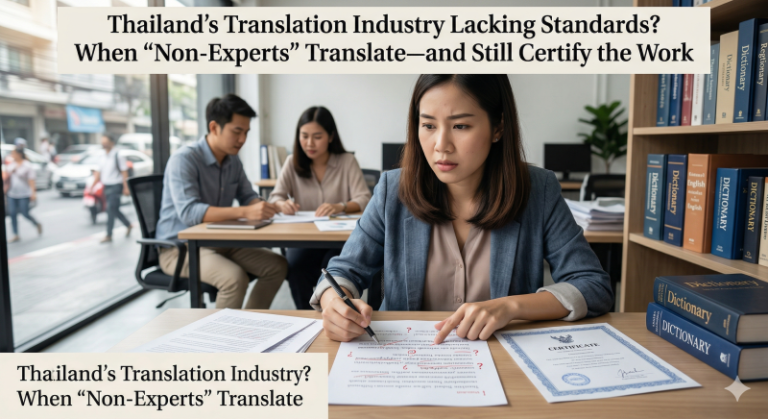
Is Thailand’s Translation Industry Lacking Standards?
When “Non-Experts” Translate—and Still Certify the Work
In Thailand, the document translation business continues to grow, driven by demands in education, employment, and international communication. However, beneath this growth lies a structural issue that is rarely discussed seriously: the lack of standards among translators and in the certification of translated work.
One undeniable fact is that the translation profession in Thailand is not regulated by licensing in the way that other professions are. Anyone can call themselves a “translator” without necessarily holding a degree in languages or passing any formal competency assessment. As a result, the quality of translation work varies widely—from highly professional to critically flawed.
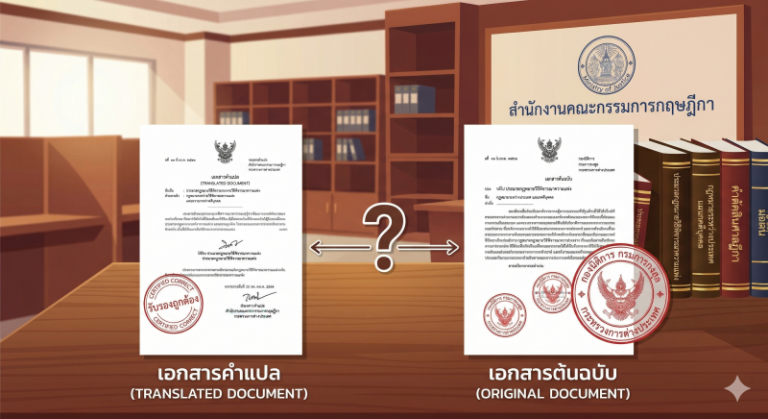
Moreover, many translation agencies operate primarily as intermediaries. They receive jobs from clients and outsource them to freelancers, while the business owners themselves may not actually understand the language being translated. Despite this, they still sign and certify the translated documents. This creates a major risk, as the person certifying the work may not be qualified to verify its accuracy.
At the same time, many institutions in Thailand accept a “certified translation” simply based on a translation shop’s stamp, without verifying the translator’s qualifications. This contrasts with some countries that use a system of “sworn translators,” who must pass exams and receive official authorization.
The consequences of this issue are significant. Inaccurate translations can lead to misunderstandings in critical documents such as legal papers, contracts, or official records. It also leaves clients unsure of whom to trust, while truly professional translators face price pressure and unfair competition in a market without clear standards.
That said, it is important to acknowledge that having a degree in languages does not automatically guarantee quality. Many translators without formal language degrees possess strong expertise gained through experience and specialization. Therefore, the core issue is not educational background, but rather the absence of a clear system for quality control and certification.
A potential solution does not lie solely in stricter regulation, but also in raising awareness among clients. Choosing translators based on portfolios, domain expertise, and credible reviews is essential. For critical documents, an additional layer of proofreading by another qualified professional is highly recommended.
As long as the translation industry remains “open” without a “central standard,” the key question is no longer just who can translate but who should be trusted to certify linguistic accuracy, and how reliable that system truly is.
For professional services, please visit: https://www.seaproti.org/practitioners/
About certified translators, translation certifiers, and certified interpreters associated with SEAProTI.
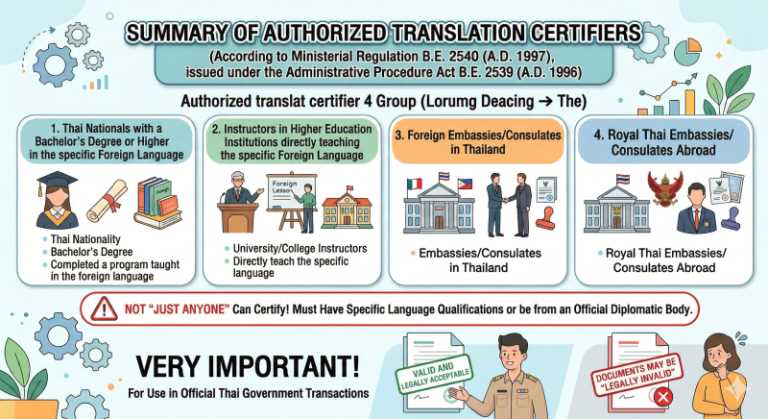
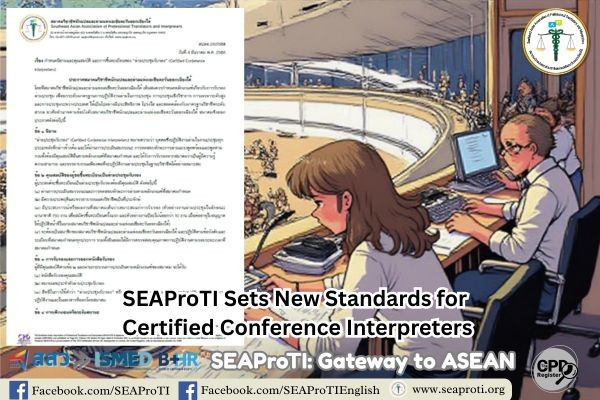
The Southeast Asian Association of Professional Translators and Interpreters (SEAProTI) has officially shared the qualifications and requirements for becoming Certified Translators, Translation Certification Providers, and Certified Interpreters in Sections 9 and 10 of the Royal Gazette, which was published by the Prime Minister’s Office in Thailand on July 25, 2024. Certified Translators, Translation Certification Providers, and Certified Interpreters
The Council of State has proposed the enactment of a Royal Decree, granting registered translators and recognised translation certifiers from professional associations or accredited language institutions the authority to provide legally valid translation certification (Letter to SEAProTI dated April 28, 2025)
SEAProTI is the first professional association in Thailand and Southeast Asia to implement a comprehensive certification system for translators, certifiers, and interpreters.
Head Office: Baan Ratchakru Building, No. 33, Room 402, Soi Phahonyothin 5, Phahonyothin Road, Phaya Thai District, Bangkok 10400, Thailand
Email: hello@seaproti.com | Tel.: (+66) 2-114-3128 (Office hours: Mon–Fri, 09:00–17:00).
วงการแปลไทยไร้มาตรฐาน? เมื่อ “คนแปลไม่รู้ภาษา” แต่ยังรับรองงานได้
7 เมษายน 2569, กรุงเทพมหานคร – ในประเทศไทย ธุรกิจรับแปลเอกสารเติบโตอย่างต่อเนื่อง ทั้งจากความต้องการด้านการศึกษา การทำงาน และการติดต่อกับหน่วยงานต่างประเทศ แต่ภายใต้ความเติบโตนี้ กลับมีปัญหาเชิงโครงสร้างที่แทบไม่มีใครพูดถึงอย่างจริงจัง นั่นคือ “มาตรฐานของนักแปลและการรับรองคำแปล”
หนึ่งในข้อเท็จจริงที่ปฏิเสธไม่ได้คือ อาชีพนักแปลในไทยไม่ได้ถูกควบคุมด้วยใบอนุญาตเหมือนวิชาชีพอื่น ใครก็สามารถเรียกตัวเองว่า “นักแปล” ได้ โดยไม่จำเป็นต้องมีวุฒิด้านภาษา หรือผ่านการทดสอบความสามารถอย่างเป็นระบบ สิ่งนี้ทำให้คุณภาพของงานแปลแตกต่างกันอย่างมาก ตั้งแต่มืออาชีพระดับสูง ไปจนถึงงานที่มีข้อผิดพลาดร้ายแรง
ยิ่งไปกว่านั้น ร้านแปลจำนวนไม่น้อยทำหน้าที่เพียง “ตัวกลาง” รับงานจากลูกค้าแล้วส่งต่อให้ฟรีแลนซ์ โดยที่เจ้าของร้านอาจไม่ได้มีความรู้ในภาษาที่แปลจริง แต่กลับเป็นผู้ลงนามรับรองเอกสารเอง ปัญหานี้ทำให้กระบวนการควบคุมคุณภาพแทบไม่เกิดขึ้นจริง เพราะผู้รับรองไม่ได้ตรวจสอบเนื้อหาอย่างมีความเชี่ยวชาญ
ในขณะที่หลายหน่วยงานในไทยยอมรับ “ตรารับรองจากร้านแปล” เป็นหลักฐานเพียงพอ กลับไม่มีระบบตรวจสอบว่าผู้แปลมีคุณสมบัติหรือความเชี่ยวชาญเพียงใด ต่างจากบางประเทศที่มีระบบ “นักแปลรับรอง (sworn translator)” ซึ่งต้องผ่านการสอบและได้รับอนุญาตอย่างเป็นทางการ
ผลกระทบของปัญหานี้ไม่ได้เล็กน้อย งานแปลที่ผิดพลาดอาจนำไปสู่ความเข้าใจคลาดเคลื่อนในเอกสารสำคัญ เช่น เอกสารกฎหมาย สัญญา หรือเอกสารราชการ นอกจากนี้ยังทำให้ผู้ใช้บริการไม่สามารถแยกแยะได้ว่าใครคือมืออาชีพตัวจริง ขณะที่นักแปลที่มีคุณภาพกลับถูกกดราคาและแข่งขันในตลาดที่ไม่เป็นธรรม
อย่างไรก็ตาม ต้องยอมรับว่าการจบสายภาษาไม่ใช่ตัวชี้วัดคุณภาพเสมอไป นักแปลจำนวนมากที่ไม่ได้จบด้านภาษาโดยตรง กลับมีความเชี่ยวชาญสูงจากประสบการณ์และการทำงานเฉพาะทาง ดังนั้นปัญหาหลักจึงไม่ใช่เรื่อง “วุฒิการศึกษา” แต่คือการขาดระบบมาตรฐานและการตรวจสอบคุณภาพที่ชัดเจน
ทางออกของปัญหานี้อาจไม่ได้เกิดจากการควบคุมที่เข้มงวดเพียงอย่างเดียว แต่เริ่มจากการสร้างความตระหนักให้ผู้ใช้บริการเลือกอย่างมีข้อมูล เช่น ตรวจสอบผลงานที่ผ่านมา เลือกนักแปลที่มีความเชี่ยวชาญเฉพาะด้าน และในกรณีเอกสารสำคัญ ควรมีการตรวจทานโดยผู้เชี่ยวชาญอีกชั้นหนึ่ง
เมื่อวงการแปลยังคง “เปิดกว้าง” แต่ขาด “มาตรฐานกลาง” คำถามสำคัญจึงไม่ใช่แค่ว่าใครแปลได้ แต่คือ “ใครควรเป็นผู้รับรองความถูกต้องของภาษา” และเราจะเชื่อถือระบบนี้ได้มากแค่ไหน
ติดต่อขอใช้บริการนักวิชาชีพของสมาคมได้ที่: https://www.seaproti.org/practitioners/
สมาคมวิชาชีพนักแปลและล่ามแห่งเอเชียตะวันออกเฉียงใต้ (SEAProTI) ได้ประกาศหลักเกณฑ์และคุณสมบัติของผู้ที่ขึ้นทะเบียนเป็น “นักแปลรับรอง (Certified Translators) และผู้รับรองการแปล (Translation Certification Providers) และล่ามรับรอง (Certified Interpreters)” ของสมาคม หมวดที่ 9 และหมวดที่ 10 ในราชกิจจานุเบกษา ของสำนักเลขาธิการคณะรัฐมนตรี ในสำนักนายกรัฐมนตรี แห่งราชอาณาจักรไทย ลงวันที่ 25 ก.ค. 2567 เล่มที่ 141 ตอนที่ 66 ง หน้า 100 อ่านฉบับเต็มได้ที่: นักแปลรับรอง ผู้รับรองการแปล และล่ามรับรอง
สำนักคณะกรรมการกฤษฎีกาเสนอให้ตราเป็นพระราชกฤษฎีกา โดยกำหนดให้นักแปลที่ขึ้นทะเบียน รวมถึงผู้รับรองการแปลจากสมาคมวิชาชีพหรือสถาบันสอนภาษาที่มีการอบรมและขึ้นทะเบียน สามารถรับรองคำแปลได้ (จดหมายถึงสมาคม SEAProTI ลงวันที่ 28 เม.ย. 2568)
สมาคมวิชาชีพนักแปลและล่ามแห่งเอเชียตะวันออกเฉียงใต้เป็นสมาคมวิชาชีพแห่งแรกและแห่งเดียวในประเทศไทยและภูมิภาคเอเชียตะวันออกเฉียงใต้ที่มีระบบรับรองนักแปลรับรอง ผู้รับรองการแปล และล่ามรับรอง
สำนักงานใหญ่: อาคารบ้านราชครู เลขที่ 33 ห้อง 402 ซอยพหลโยธิน 5 ถนนพหลโยธิน แขวงพญาไท เขตพญาไท กรุงเทพมหานคร 10400 ประเทศไทย
อีเมล: hello@seaproti.com โทรศัพท์: (+66) 2-114-3128 (เวลาทำการ: วันจันทร์–วันศุกร์ เวลา 09.00–17.00 น.