



The Interpreter in Court and Arbitration Proceedings: A Professional Role in Safeguarding Justice and Ethical Standards
Author: Wanitcha Sumanat, President of the Southeast Asian Association of Professional Translators and Interpreters (SEAProTI)
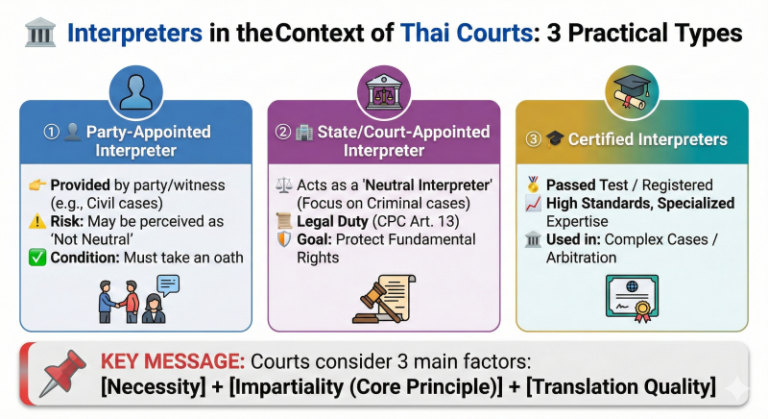
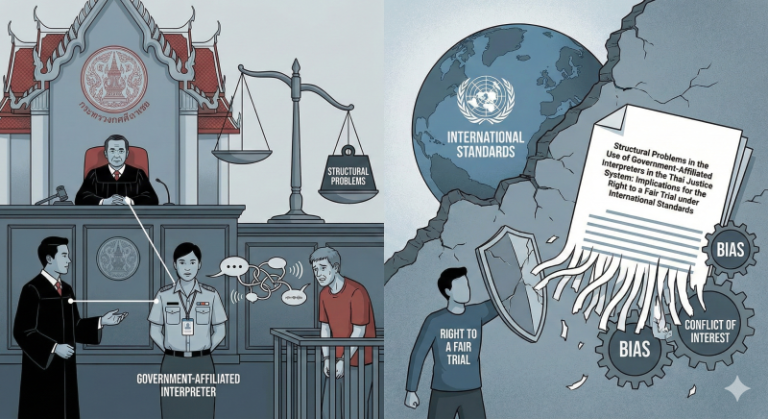
18 December 2025, Bangkok – Interpreters in court hearings and arbitration proceedings hold a vital role within legal systems, serving as linguistic and cultural bridges between parties who speak different languages. Interpretation in legal settings is not merely a linguistic exercise; it involves conveying meaning, intent, and legal context accurately and faithfully to prevent procedural disadvantages or violations of parties’ rights. Accurate and impartial interpretation is therefore recognized as an essential component of access to justice and a fundamental human right, and has a direct influence on the legitimacy and fairness of legal proceedings (Hale, 2011; Fair Trials, 2020).
The Role of the Interpreter in the Administration of Justice
Interpreters in courts and arbitration hearings operate in environments characterized by high stakes and significant legal sensitivity. The content they interpret may influence judicial decisions, party arguments, or the outcome of a dispute. Interpreters must therefore be capable of conveying meaning accurately in linguistic and legal terms, while maintaining strict neutrality and abstaining from personal opinions or influence over the content being interpreted. Errors in interpretation may cause misunderstandings of facts or legal issues, and potentially jeopardize a party’s rights or undermine the fairness of proceedings (Mikkelson, 1996). Prior research in legal linguistics emphasizes that interpreters are integral actors in ensuring access to justice, and that deficient interpretation may unintentionally create advantages or disadvantages within legal proceedings (Berk-Seligson, 2002).
Distinctions Between Courts and Arbitration
Although both courts and arbitration share the objective of resolving disputes fairly, their procedural frameworks differ considerably. Court proceedings are typically public and governed by strict procedural rules, such as civil or criminal procedure codes. Arbitration, in contrast, is more flexible and is often confidential to protect commercial or proprietary interests of the parties involved. In arbitration settings, interpreters are frequently required to sign non-disclosure agreements (NDAs), reflecting the heightened expectation of confidentiality within international commercial and private dispute resolution (Redfern & Hunter, 2015). These distinctions demonstrate that interpreters must possess an understanding of both public law in the courtroom and private commercial law in arbitration in order to perform their duties without infringing upon the rights or interests of the parties.
Ethics, Confidentiality, and Impartiality
Ethical conduct is central to legal interpretation, particularly in arbitration where confidential information may involve trade secrets, intellectual property, and commercial strategies. Interpreters must maintain strict impartiality and avoid influencing the content or outcome of proceedings. Confidentiality is therefore as critical as accuracy in legal interpretation, and breaches may lead to civil or criminal liability. In many jurisdictions, confidentiality obligations are codified within professional standards and regulations, underscoring their significance in safeguarding parties’ legal rights (Hale, 2011).
SEAProTI and Professional Standards in Legal Interpreting
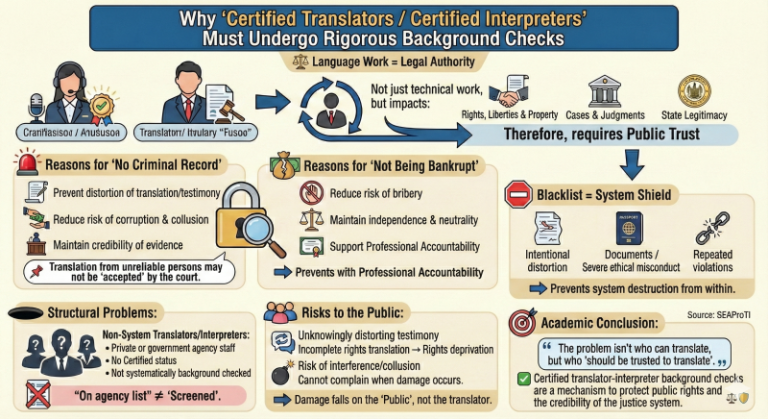
The Southeast Asian Professional Association of Translators and Interpreters (SEAProTI) plays an instrumental role in elevating professional standards for interpreters in courts and arbitration. The association emphasizes the registration and accreditation of interpreters with verifiable experience and legal competence. This includes specific screening criteria relating to qualifications, work history, and professional ethics, enabling courts, state agencies, law firms, and arbitration centers to rely on interpreters’ expertise. SEAProTI also supports professional development through specialized training in international law, procedural rules, ethics, and confidentiality frameworks, including NDAs. As a result, interpreters registered under SEAProTI are equipped to handle high-risk matters such as international commercial arbitration, cross-border disputes, and criminal cases with implications for personal liberties.
Conclusion
The work of interpreters in court and arbitration proceedings constitutes a fundamental component of the justice system. Interpreters act as essential mechanisms ensuring equitable access to legal rights. Accuracy in meaning, impartiality, and adherence to ethical standards are therefore indispensable for maintaining the legitimacy and fairness of adjudication. As such, the professional standards of interpreters must be strengthened and regulated in accordance with human rights principles and international legal norms. Within Southeast Asia, SEAProTI plays a significant role in shaping and reinforcing these standards, thereby enhancing recognition and credibility for interpreters in both domestic and international justice arenas.
References
Berk-Seligson, S. (2002). The bilingual court interpreter: Courtroom language and legal advocacy. University of Chicago Press.
Fair Trials. (2020). The right to a fair trial. https://www.fairtrials.org
Hale, S. (2011). The discourse of court interpreting: Discourse practices of the law, the witness and the interpreter. John Benjamins.
Mikkelson, H. (1996). The professionalization of community interpreting. Interpreting, 1(1), 125–140.
Redfern, A., & Hunter, M. (2015). Law and practice of international commercial arbitration. Sweet & Maxwell.
About Certified Translators, Translation Certifiers, and Certified Interpreters of SEAProTI
The Southeast Asian Association of Professional Translators and Interpreters (SEAProTI) has formally announced the qualifications and requirements for registration of Certified Translators, Translation Certification Providers, and Certified Interpreters in Sections 9 and 10 of the Royal Gazette, published by the Secretariat of the Cabinet, Office of the Prime Minister of Thailand, on 25 July 2024 (Vol. 141, Part 66 Ng, p. 100). Certified Translators, Translation Certification Providers, and Certified Interpreters
The Council of State has proposed the enactment of a Royal Decree, granting registered translators and recognized translation certifiers from professional associations or accredited language institutions the authority to provide legally valid translation certification (Letter to SEAProTI dated April 28, 2025)
SEAProTI is the first professional association in Thailand and Southeast Asia to implement a comprehensive certification system for translators, certifiers, and interpreters.
Head Office: Baan Ratchakru Building, No. 33, Room 402, Soi Phahonyothin 5, Phahonyothin Road, Phaya Thai District, Bangkok 10400, Thailand
Email: hello@seaproti.com | Tel.: (+66) 2-114-3128 (Office hours: Mon–Fri, 09:00–17:00)
ล่ามในการพิจารณาคดีของศาลและการอนุญาโตตุลาการ: บทบาทเชิงวิชาชีพเพื่อความยุติธรรมและมาตรฐานจริยธรรม
บทความโดย วณิชชา สุมานัส นายกสมาคมวิชาชีพนักแปลและล่ามแห่งเอเชียตะวันออกเฉียงใต้ (SEAProTI)
18 ธันวาคม 2568, กรุงเทพมหานคร – ล่ามในการพิจารณาคดีของศาลและกระบวนการอนุญาโตตุลาการมีสถานะสำคัญในระบบกฎหมาย เนื่องจากเป็นผู้ทำหน้าที่เชื่อมโยงภาษา กฎหมาย และวัฒนธรรมระหว่างคู่ความที่ใช้ภาษาแตกต่างกัน การตีความจึงไม่ใช่เพียงการแปลถ้อยคำ หากแต่เป็นการถ่ายทอดความหมายเจตนาและบริบททางกฎหมายอย่างถูกต้องและครบถ้วนเพื่อป้องกันไม่ให้เกิดความเหลื่อมล้ำทางกระบวนวิธีหรือการละเมิดสิทธิของคู่ความ การตีความในห้องพิจารณาถือเป็นส่วนหนึ่งของสิทธิในการเข้าถึงความยุติธรรม ซึ่งเป็นหลักพื้นฐานของสิทธิมนุษยชนสากล และได้รับการยอมรับว่าการตีความที่ถูกต้องและเป็นกลางมีผลต่อความชอบธรรมในกระบวนการพิจารณาคดีโดยตรง (Hale, 2011; Fair Trials, 2020)
บทบาทของล่ามในกระบวนการยุติธรรม
ล่ามในกระบวนการศาลและอนุญาโตตุลาการต้องทำงานในบริบทที่มีความละเอียดอ่อนและเสี่ยงสูง เนื่องจากถ้อยคำที่แปลอาจส่งผลต่อผลการพิจารณาคดี การตัดสินใจของผู้พิพากษา หรือข้อยุติของคู่ความ ตัวล่ามจึงต้องมีความสามารถในการถ่ายทอดความหมายอย่างถูกต้องทั้งเชิงภาษาและเชิงกฎหมาย พร้อมทั้งรักษาความเป็นกลางโดยไม่แสดงความเห็นหรืออิทธิพลต่อเนื้อหาที่ตีความ ความผิดพลาดที่เกิดขึ้นในกระบวนการตีความอาจนำไปสู่ความเข้าใจผิดในข้อเท็จจริงและข้อกฎหมาย ซึ่งอาจก่อให้เกิดความเสียหายร้ายแรงต่อสิทธิของคู่ความและความเป็นธรรมของกระบวนการ (Mikkelson, 1996) งานวิจัยด้านภาษาและกฎหมายระบุชัดเจนว่าล่ามมีบทบาทเป็นกลไกสำคัญในการเข้าถึงความยุติธรรม และการตีความที่บกพร่องอาจสร้างความได้เปรียบหรือเสียเปรียบในเชิงกฎหมายโดยไม่ตั้งใจ (Berk-Seligson, 2002)
ความแตกต่างระหว่างเวทีศาลและอนุญาโตตุลาการ
แม้ว่าทั้งศาลและอนุญาโตตุลาการมีเป้าหมายร่วมกันในการระงับข้อพิพาทอย่างเป็นธรรม แต่กรอบกฎหมาย วิธีพิจารณา และความคาดหวังของคู่ความแตกต่างกันอย่างมีนัยสำคัญ ในศาล กระบวนการพิจารณามักเปิดเผยต่อสาธารณะและอยู่ภายใต้ข้อบังคับที่เคร่งครัดตามวิธีพิจารณาความแพ่งหรืออาญา ขณะที่อนุญาโตตุลาการมีความยืดหยุ่นมากกว่าและมีลักษณะเป็นความลับเพื่อปกป้องผลประโยชน์ทางธุรกิจของคู่กรณี ในบริบทของอนุญาโตตุลาการ ล่ามจำเป็นต้องลงนามในข้อตกลงไม่เปิดเผยข้อมูล (NDA) เพื่อรับรองการเก็บรักษาความลับและป้องกันการใช้ข้อมูลในทางที่ผิด ซึ่งเป็นข้อกำหนดที่มีผลบังคับใช้ตามกรอบของกฎหมายเชิงพาณิชย์และอนุญาโตตุลาการระหว่างประเทศ (Redfern & Hunter, 2015) ความแตกต่างดังกล่าวสะท้อนให้เห็นว่าล่ามต้องมีความเข้าใจทั้งกฎหมายมหาชนในศาล และกฎหมายเอกชนในอนุญาโตตุลาการ เพื่อจะปฏิบัติหน้าที่ได้โดยไม่ละเมิดสิทธิและประโยชน์ของคู่ความ
จริยธรรม ความลับ และความเป็นกลาง
จริยธรรมเป็นหัวใจสำคัญของการตีความในกระบวนการยุติธรรม โดยเฉพาะอย่างยิ่งในการอนุญาโตตุลาการที่เกี่ยวข้องกับความลับทางธุรกิจ ทรัพย์สินทางปัญญา และกลยุทธ์ทางการค้า ล่ามต้องทำงานภายใต้หลักความเป็นกลางอย่างเคร่งครัด และต้องไม่เข้ามามีส่วนในการโน้มน้าวเนื้อหาหรือผลของกระบวนการพิจารณา ความสามารถในการรักษาความลับจึงเป็นเงื่อนไขสำคัญไม่ยิ่งหย่อนไปกว่าความแม่นยำทางการตีความ ความเสียหายที่เกิดจากการละเมิดความลับอาจส่งผลทั้งทางแพ่งและอาญา และในหลายประเทศถือเป็นความผิดตามข้อบังคับวิชาชีพ (Hale, 2011)
SEAProTI กับมาตรฐานล่ามในเวทีพิจารณาคดี
สมาคมวิชาชีพนักแปลและล่ามแห่งเอเชียตะวันออกเฉียงใต้ (SEAProTI) มีบทบาทสำคัญในการยกระดับความเป็นมืออาชีพของล่ามที่ปฏิบัติงานในศาลและอนุญาโตตุลาการ โดยเน้นระบบการขึ้นทะเบียนและรับรองนักแปลและล่ามที่มีประสบการณ์เชิงปฏิบัติจริง ผ่านเกณฑ์การคัดกรองที่ตรวจสอบได้ ทั้งด้านทักษะ ภูมิหลังการทำงาน และจรรยาบรรณ เพื่อให้ผู้ว่าจ้าง หน่วยงานรัฐ ศาล และสถาบันอนุญาโตตุลาการเชื่อมั่นในคุณภาพ นอกจากนี้ SEAProTI ยังส่งเสริมการพัฒนาวิชาชีพผ่านการอบรมเฉพาะทางด้านกฎหมายระหว่างประเทศ วิธีพิจารณาคดี จริยธรรมวิชาชีพ และข้อกำหนดสากลด้านความลับและ NDA ทำให้ล่ามในระบบของ SEAProTI สามารถทำงานในคดีเสี่ยงสูง เช่น คดีพาณิชย์ระหว่างประเทศ อนุญาโตตุลาการข้ามพรมแดน และคดีอาญาที่มีผลกระทบต่อสิทธิเสรีภาพของบุคคลได้อย่างมีประสิทธิภาพ
สรุป
งานของล่ามในการพิจารณาคดีทั้งในศาลและอนุญาโตตุลาการเป็นหัวใจหนึ่งของกระบวนการยุติธรรม โดยทำหน้าที่เป็นกลไกที่รับรองการเข้าถึงสิทธิทางกฎหมายอย่างเท่าเทียม ความสามารถในการตีความอย่างแม่นยำ การรักษาความเป็นกลาง และการปฏิบัติตามจรรยาบรรณจึงเป็นเกณฑ์สำคัญในการประกันความชอบธรรมของผลการพิจารณา มาตรฐานของวิชาชีพล่ามจึงต้องได้รับการสนับสนุนและกำกับเพื่อให้สอดคล้องกับหลักสิทธิมนุษยชนสากลและกฎหมายระหว่างประเทศ และในบริบทของภูมิภาคเอเชียตะวันออกเฉียงใต้ SEAProTI มีบทบาทสำคัญในการยกระดับมาตรฐานดังกล่าว เพื่อให้ล่ามที่ทำงานในกระบวนการยุติธรรมได้รับการยอมรับในระดับทั้งประเทศและระหว่างประเทศ
บรรณานุกรม
Berk-Seligson, S. (2002). The bilingual court interpreter: Courtroom language and legal advocacy. University of Chicago Press.
Fair Trials. (2020). The right to a fair trial. https://www.fairtrials.org
Hale, S. (2011). The discourse of court interpreting: Discourse practices of the law, the witness and the interpreter. John Benjamins.
Mikkelson, H. (1996). The professionalization of community interpreting. Interpreting, 1(1), 125–140.
Redfern, A., & Hunter, M. (2015). Law and practice of international commercial arbitration. Sweet & Maxwell.
เกี่ยวกับนักแปลรับรอง ผู้รับรองการแปล และล่ามรับรองของสมาคมวิชาชีพนักแปลและล่ามแห่งเอเชียตะวันออกเฉียงใต้
สมาคมวิชาชีพนักแปลและล่ามแห่งเอเชียตะวันออกเฉียงใต้ (SEAProTI) ได้ประกาศหลักเกณฑ์และคุณสมบัติผู้ที่ขึ้นทะเบียนเป็น “นักแปลรับรอง (Certified Translators) และผู้รับรองการแปล (Translation Certification Providers) และล่ามรับรอง (Certified Interpreters)” ของสมาคม หมวดที่ 9 และหมวดที่ 10 ในราชกิจจานุเบกษา ของสำนักเลขาธิการคณะรัฐมนตรี ในสำนักนายกรัฐมนตรี แห่งราชอาณาจักรไทย ลงวันที่ 25 ก.ค. 2567 เล่มที่ 141 ตอนที่ 66 ง หน้า 100 อ่านฉบับเต็มได้ที่: นักแปลรับรอง ผู้รับรองการแปล และล่ามรับรอง
สำนักคณะกรรมการกฤษฎีกา เสนอให้ตราเป็นพระราชกฤษฎีกา โดยกำหนดให้นักแปลที่ขึ้นทะเบียน รวมถึงผู้รับรองการแปลจากสมาคมวิชาชีพหรือสถาบันสอนภาษาที่มีการอบรมและขึ้นทะเบียน สามารถรับรองคำแปหฟลได้ (จดหมายถึงสมาคม SEAProTI ลงวันที่ 28 เม.ย. 2568)
สมาคมวิชาชีพนักแปลและล่ามแห่งเอเชียตะวันออกเฉียงใต้ เป็นสมาคมวิชาชีพแห่งแรกในประเทศไทยและภูมิภาคเอเชียตะวันออกเฉียงใต้ที่มีระบบรับรองนักแปลรับรอง ผู้รับรองการแปล และล่ามรับรอง
สำนักงานใหญ่: อาคารบ้านราชครู เลขที่ 33 ห้อง 402 ซอยพหลโยธิน 5 ถนนพหลโยธิน แขวงพญาไท เขตพญาไท กรุงเทพมหานคร 10400 ประเทศไทย
อีเมล: hello@seaproti.com โทรศัพท์: (+66) 2-114-3128 (เวลาทำการ: วันจันทร์–วันศุกร์ เวลา 09.00–17.00 น.