


Interpreters and Translators in the Justice System:
Critical Roles and Challenges Arising from Misunderstandings within the Court System
16 January 2025, Bangkok — Interpreters and translators are key professionals who work closely with the courts daily. Their primary role is to safeguard the right of access to justice for individuals with language barriers, including foreign nationals, speakers of local or minority languages, and persons with limited proficiency in Thai.
Section 13 of Thailand’s Criminal Procedure Code says that Thai is the official language for investigations and court cases. As a result, the presence of interpreters is essential to ensure that litigants, defendants, witnesses, and other participants are able to understand and meaningfully participate in proceedings on an equal footing (SEAProTI, 2025a).
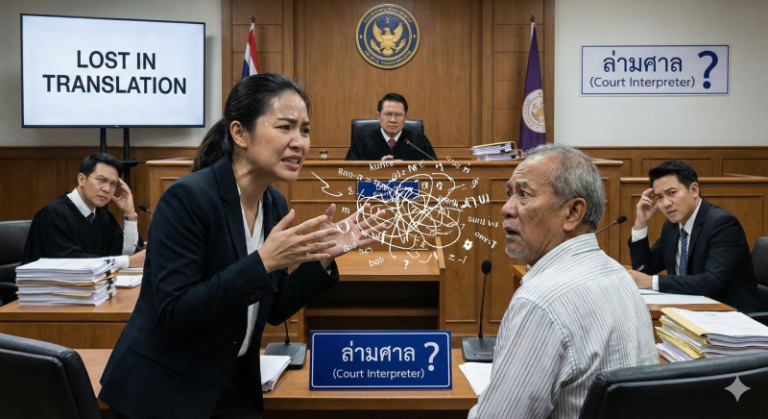
Despite their critical role, misunderstandings regarding the functions, duties, and professional boundaries of interpreters and translators persist in practice among justice-sector personnel, including judges, prosecutors, lawyers, and court officials. Such misunderstandings often lead to confusion, inefficiencies, and, in some cases, adverse impacts on the fairness of judicial proceedings.
The Core Role of Court Interpreters
The sole duty of a court interpreter is to accurately, completely, and impartially convey the meaning of every utterance spoken in court, without additions, omissions, or personal interpretation. This applies equally to lengthy statements, offensive language, or speech that may appear incoherent or erroneous (Beyond Interpreter, 2024).
Court interpreters must maintain strict impartiality. They are prohibited from expressing personal opinions, providing legal advice, or assuming the role of lawyers, court officials, or other parties. Where linguistic or cultural issues arise that could cause misunderstanding, interpreters may request the court’s permission to provide brief clarification; however, they must not intervene without authorization.
In the Thai context, court interpreters are required to undergo testing and training in accordance with the standards of the Courts of Justice or relevant professional bodies. This includes knowledge of judicial procedures, legal terminology, and professional ethics (Taksa Academy, 2020; SEAProTI, 2025b).
Common Misunderstandings
Frequently observed misconceptions include:
- There is a common misconception that interpreters are expected to summarize statements, edit speech for clarity, or “simplify” content, rather than providing a faithful rendition.
- There are expectations that interpreters should act as cultural experts, explain the law, or provide personal assistance to litigants.
Examples include speaking too rapidly, overlapping speech, or using local idioms or technical jargon without pausing to allow the interpreter to keep up. - A failure to recognize that interpreters are bound by confidentiality and impartiality and therefore cannot disclose private communications between lawyers and defendants.
These misunderstandings often stem from insufficient training on how to work effectively with interpreters, despite their essential role in ensuring fairness under human rights principles and Thailand’s international obligations, including the International Covenant on Civil and Political Rights (ICCPR) (SEAProTI, 2025a).
Best Practices for Working with Interpreters
To enhance effectiveness and mutual respect, court personnel are encouraged to observe the following best practices:
- Speak clearly and at a measured pace, pausing regularly to facilitate consecutive interpreting.
- Address the litigant directly (e.g., “Do you understand?”) rather than speaking through the interpreter (e.g., “Ask him if he understands”), in order to preserve accuracy in the record.
- Avoid unnecessary complex expressions or technical terminology, and be prepared to restate or clarify when required.
- Explain the interpreter’s role to all parties at the outset of proceedings to prevent confusion.
- If concerns arise regarding interpretation accuracy, raise them with the court rather than confronting the interpreter directly.
- Respect professional boundaries and refrain from seeking legal advice or personal assistance from interpreters.
- Implementing these practices not only facilitates smoother proceedings but also strengthens the credibility and fairness of Thailand’s justice system.
Conclusion
Interpreters and translators serve as vital bridges connecting speakers of all languages to the justice system. Enhancing understanding and fostering appropriate collaboration between court personnel and language professionals helps reduce barriers and advances the principle of equal justice under the law.
For further information, such as court-specific codes of ethics or professional training programs, interested parties may contact relevant professional organizations.
About Certified Translators, Translation Certifiers, and Certified Interpreters of SEAProTI
The Southeast Asian Association of Professional Translators and Interpreters (SEAProTI) has officially shared the qualifications and requirements for becoming Certified Translators, Translation Certification Providers, and Certified Interpreters in Sections 9 and 10 of the Royal Gazette, which was published by the Prime Minister’s Office in Thailand on July 25, 2024. Certified Translators, Translation Certification Providers, and Certified Interpreters
The Council of State has proposed the enactment of a Royal Decree, granting registered translators and recognised translation certifiers from professional associations or accredited language institutions the authority to provide legally valid translation certification (Letter to SEAProTI dated April 28, 2025)
SEAProTI is the first professional association in Thailand and Southeast Asia to implement a comprehensive certification system for translators, certifiers, and interpreters.
Head Office: Baan Ratchakru Building, No. 33, Room 402, Soi Phahonyothin 5, Phahonyothin Road, Phaya Thai District, Bangkok 10400, Thailand
Email: hello@seaproti.com | Tel.: (+66) 2-114-3128 (Office hours: Mon–Fri, 09:00–17:00)
ล่ามและนักแปลในกระบวนการยุติธรรม: บทบาทสำคัญและความท้าทายจากความเข้าใจผิดในระบบศาล
16 มกราคม 2568, กรุงเทพมหานคร – ล่ามและนักแปล (interpreters and translators) เป็นบุคคลสำคัญที่ทำงานอย่างใกล้ชิดกับศาลในชีวิตประจำวัน โดยมีบทบาทหลักในการรับประกัน สิทธิในการเข้าถึงกระบวนการยุติธรรม (access to justice) สำหรับบุคคลที่มีข้อจำกัดด้านภาษา ไม่ว่าจะเป็นชาวต่างชาติ ผู้ใช้ภาษาท้องถิ่น หรือบุคคลที่ไม่คล่องภาษาไทยอย่างเพียงพอ ในระบบศาลไทย ตามประมวลกฎหมายวิธีพิจารณาความอาญา มาตรา 13 กำหนดให้ภาษาไทยเป็นภาษาราชการในการสอบสวนและพิจารณาคดี ดังนั้น การมีล่ามจึงเป็นสิ่งจำเป็นเพื่อให้คู่ความ ผู้ต้องหา พยาน หรือผู้เกี่ยวข้องสามารถเข้าใจและมีส่วนร่วมในกระบวนการอย่างเท่าเทียม (SEAProTI, 2025a)
อย่างไรก็ตาม แม้จะมีบทบาทสำคัญ แต่ในทางปฏิบัติยังคงพบ ความเข้าใจผิด เกี่ยวกับบทบาท หน้าที่ และขอบเขตของล่ามและนักแปลในหมู่บุคลากรในกระบวนการยุติธรรม เช่น ผู้พิพากษา อัยการ ทนายความ และเจ้าหน้าที่ศาล ความเข้าใจผิดเหล่านี้มักนำไปสู่ความสับสน การทำงานที่ไม่มีประสิทธิภาพ และอาจส่งผลกระทบต่อความเป็นธรรมในการพิจารณาคดี
บทบาทหลักของล่ามในศาล
ล่ามศาล (court interpreter) มีหน้าที่เพียงอย่างเดียวคือ ถ่ายทอดความหมาย ของคำพูดทุกประโยคอย่าง ถูกต้อง ครบถ้วน และเป็นกลาง โดยไม่เพิ่มเติม ลดทอน หรือตีความเอง ไม่ว่าจะเป็นคำพูดที่ยาวเหยียด คำหยาบคาย หรือคำที่ดูเหมือนผิดพลาด (Beyond Interpreter, 2024) ล่ามต้องรักษาความเป็นกลาง (impartiality) อย่างเคร่งครัด ห้ามแสดงความคิดเห็นส่วนตัว ให้คำปรึกษาทางกฎหมาย หรือทำหน้าที่แทนทนายความ เจ้าหน้าที่ศาล หรือผู้เกี่ยวข้อง หากพบปัญหาด้านภาษาหรือวัฒนธรรมที่อาจทำให้เกิดความเข้าใจผิด ล่ามสามารถขอความอนุญาตจากศาลเพื่อชี้แจงสั้น ๆ เท่านั้น แต่ห้ามแทรกแซงโดยไม่ได้รับอนุญาต
ในบริบทของประเทศไทย ล่ามศาลต้องผ่านการทดสอบและอบรมตามเกณฑ์ของศาลยุติธรรมหรือองค์กรวิชาชีพ เช่น มีความรู้ด้านกระบวนการยุติธรรม คำศัพท์กฎหมาย และจรรยาบรรณวิชาชีพ (Taksa Academy, 2020; SEAProTI, 2025b)
ความเข้าใจผิดที่พบบ่อย
ความเข้าใจผิดที่เกิดขึ้นบ่อยครั้ง ได้แก่:
- คิดว่าล่ามสามารถสรุปใจความ แก้ไขคำพูดให้กระชับ หรือ “ทำให้เข้าใจง่าย” แทนที่จะแปลแบบตรงตามต้นฉบับ
- คาดหวังให้ล่ามทำหน้าที่เป็นผู้เชี่ยวชาญด้านวัฒนธรรม อธิบายกฎหมาย หรือช่วยเหลือคู่ความเป็นการส่วนตัว
- พูดเร็วเกินไป ทับซ้อนคำพูด หรือใช้สำนวนท้องถิ่น/ศัพท์เทคนิคโดยไม่หยุดให้ล่ามทำงานตามทัน
- ไม่ตระหนักว่าล่ามต้องรักษาความลับและเป็นกลาง ไม่สามารถเปิดเผยการสนทนาส่วนตัวระหว่างทนายกับจำเลยได้
ความเข้าใจผิดเหล่านี้เกิดขึ้นส่วนหนึ่งจากขาดการฝึกอบรมเกี่ยวกับการทำงานร่วมกับล่าม แม้ว่าจะเป็นส่วนสำคัญในการรักษาความเป็นธรรมตามหลักสิทธิมนุษยชนและพันธกรณีระหว่างประเทศของไทย (เช่น ICCPR) (SEAProTI, 2025a)
แนวปฏิบัติที่ดีในการทำงานร่วมกับล่าม
เพื่อให้การทำงานมีประสิทธิภาพและเคารพขอบเขตกันมากขึ้น บุคลากรในศาลควรปฏิบัติตามแนวทางดังนี้:
- พูดชัดเจน ช้า และหยุดเป็นระยะ ๆ เพื่อให้ล่ามใช้โหมด consecutive interpreting (แปลทีละประโยค) ได้สะดวก
- พูดตรงกับคู่ความ เช่น “คุณเข้าใจไหม” แทนที่จะพูด “ถามเขาว่าเข้าใจไหม” เพื่อรักษาความตรงไปตรงมาในบันทึกคำให้การ
- หลีกเลี่ยงสำนวนซับซ้อนหรือคำศัพท์เฉพาะทางโดยไม่จำเป็น และพร้อมอธิบายซ้ำหากจำเป็น
- อธิบายบทบาทของล่ามให้ทุกฝ่ายในห้องพิจารณาคดีทราบตั้งแต่เริ่ม เพื่อป้องกันความสับสน
- หากสงสัยว่าการแปลผิดพลาด ให้แจ้งศาลเพื่อสอบถาม ไม่ควรตำหนิล่ามโดยตรง
- เคารพขอบเขต ห้ามขอคำแนะนำทางกฎหมายหรือความช่วยเหลือส่วนตัวจากล่าม
การนำแนวปฏิบัติเหล่านี้ไปใช้ไม่เพียงช่วยให้การพิจารณาคดีราบรื่น แต่ยังเสริมสร้างความน่าเชื่อถือและความเป็นธรรมของระบบยุติธรรมไทย
สรุป
ล่ามและนักแปลเป็นสะพานสำคัญที่เชื่อมโยงบุคคลทุกภาษาเข้ากับกระบวนการยุติธรรม การเพิ่มความเข้าใจและการทำงานร่วมกันอย่างถูกต้องระหว่างบุคลากรในศาลกับล่าม จะช่วยลดอุปสรรคและส่งเสริมหลักการ “ยุติธรรมเท่าเทียม” อย่างแท้จริง หากต้องการข้อมูลเพิ่มเติม เช่น หลักจรรยาบรรณเฉพาะของศาลยุติธรรม หรือหลักสูตรอบรม สามารถติดต่อองค์กรวิชาชีพที่เกี่ยวข้องได้
เอกสารอ้างอิง
- SEAProTI. (2025a, September 14). Interpreting in criminal courts: Safeguarding defendants’ rights. https://www.seaproti.org/article/interpreting-in-criminal-courts-safeguarding-defendants-rights
- SEAProTI. (2025b, April 27). Qualifications and certification of Thai court interpreters. https://www.seaproti.org/article/qualifications-and-certification-of-thai-court-interpreters
เกี่ยวกับนักแปลรับรอง ผู้รับรองการแปล และล่ามรับรองของสมาคมวิชาชีพนักแปลและล่ามแห่งเอเชียตะวันออกเฉียงใต้
สมาคมวิชาชีพนักแปลและล่ามแห่งเอเชียตะวันออกเฉียงใต้ (SEAProTI) ได้ประกาศหลักเกณฑ์และคุณสมบัติผู้ที่ขึ้นทะเบียนเป็น “นักแปลรับรอง (Certified Translators) และผู้รับรองการแปล (Translation Certification Providers) และล่ามรับรอง (Certified Interpreters)” ของสมาคม หมวดที่ 9 และหมวดที่ 10 ในราชกิจจานุเบกษา ของสำนักเลขาธิการคณะรัฐมนตรี ในสำนักนายกรัฐมนตรี แห่งราชอาณาจักรไทย ลงวันที่ 25 ก.ค. 2567 เล่มที่ 141 ตอนที่ 66 ง หน้า 100 อ่านฉบับเต็มได้ที่: นักแปลรับรอง ผู้รับรองการแปล และล่ามรับรอง
สำนักคณะกรรมการกฤษฎีกา เสนอให้ตราเป็นพระราชกฤษฎีกา โดยกำหนดให้นักแปลที่ขึ้นทะเบียน รวมถึงผู้รับรองการแปลจากสมาคมวิชาชีพหรือสถาบันสอนภาษาที่มีการอบรมและขึ้นทะเบียน สามารถรับรองคำแปลได้ (จดหมายถึงสมาคม SEAProTI ลงวันที่ 28 เม.ย. 2568)
สมาคมวิชาชีพนักแปลและล่ามแห่งเอเชียตะวันออกเฉียงใต้ เป็นสมาคมวิชาชีพแห่งแรกและแห่งเดียวในประเทศไทยและภูมิภาคเอเชียตะวันออกเฉียงใต้ที่มีระบบรับรองนักแปลรับรอง ผู้รับรองการแปล และล่ามรับรอง
สำนักงานใหญ่: อาคารบ้านราชครู เลขที่ 33 ห้อง 402 ซอยพหลโยธิน 5 ถนนพหลโยธิน แขวงพญาไท เขตพญาไท กรุงเทพมหานคร 10400 ประเทศไทย
อีเมล: hello@seaproti.com โทรศัพท์: (+66) 2-114-3128 (เวลาทำการ: วันจันทร์–วันศุกร์ เวลา 09.00–17.00 น.