



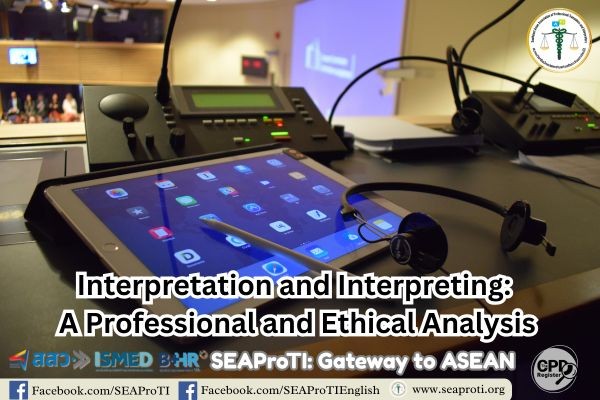
The Distinction between Interpretation and Interpreting: A Linguistic and Ethical Analysis of the Interpreting Profession
29 December 2025, Bangkok – This article aims to examine the conceptual distinction between the terms “interpretation” and “interpreting,” which are frequently and incorrectly used interchangeably in both general discourse and professional interpreting contexts. This confusion is not merely a linguistic issue; it has direct implications for professional ethics, neutrality, and the legitimacy of practices in the justice system, healthcare, and human rights protection. The article demonstrates that interpretation involves explanation and the exercise of judgment, whereas interpreting refers to linguistic transfer that must adhere strictly to principles of accuracy and impartiality as required by professional codes of ethics for interpreters.
Keywords: interpreting, interpretation, interpreter ethics, neutrality, forensic linguistics
Introduction
In cross-linguistic communication, the terms “interpretation” and “interpreting” are often used interchangeably without sufficient awareness of their conceptual differences. In professional interpreting, however, the distinction between these two terms is of critical importance, as it directly relates to the scope of authority, responsibilities, and accountability of interpreters. This article seeks to clarify this distinction through linguistic analysis and the ethical framework governing the interpreting profession.
Definitional Meaning of Interpretation
According to standard English dictionaries, interpretation is a noun referring to the act of explaining meaning or assigning significance to data, events, or texts (Oxford Learner’s Dictionaries, n.d.). This process inherently involves the exercise of judgment, prior knowledge, and cognitive frameworks, which may result in multiple possible explanations. Interpretation is therefore fundamentally subjective in nature and allows for variability in understanding.
Definitional Meaning of Interpreting
By contrast, interpreting is a verb that refers to the oral or signed transfer of speech from one language into another, with the objective of preserving the speaker’s content, intent, and tone as faithfully as possible (Pöchhacker, 2016). Interpreting is thus a linguistic process grounded in accuracy and completeness, rather than explanation or personal opinion.
Functional and Role-Based Distinctions
The distinction between interpretation and interpreting can be summarized as follows: interpretation focuses on explanation and meaning-making, whereas interpreting focuses on language transfer without addition, omission, or modification of substantive content. This distinction reflects the boundary between the role of the speaker—who owns and explains meaning—and that of the interpreter, whose function is to transmit language. Maintaining this boundary is essential to interpreter neutrality.
Interpreter Ethics and the Principle of Neutrality
International interpreter codes of ethics, such as those established by AIIC and NAJIT, explicitly state that interpreters must not explain, intervene, or guide meaning on behalf of speakers (AIIC, 2018; NAJIT, 2020). Interpreters are required to render speech faithfully and accurately. When ambiguity arises, it is the speaker’s responsibility to clarify; the interpreter’s role is limited to conveying the request for clarification. Violations of this principle risk distorting information and infringing upon the rights of the parties involved.
Systemic Implications in Legal and Human Rights Contexts
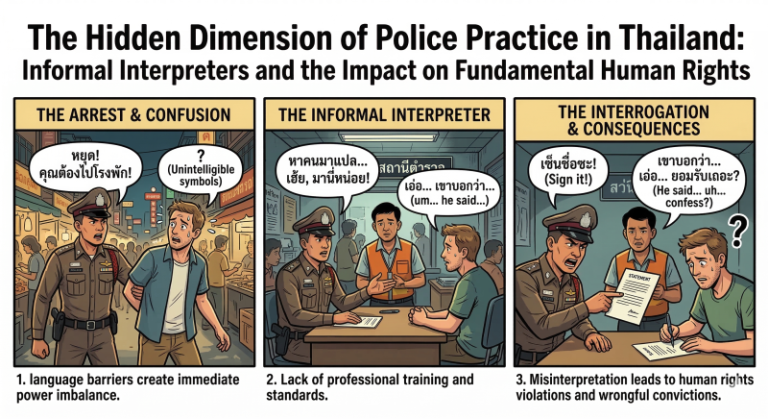
In legal, medical, and human rights settings, the distinction between interpretation and interpreting has direct consequences for individual rights and freedoms. When interpreters exercise discretionary judgment or interpret meaning on behalf of speakers, the integrity of testimony, diagnosis, or judicial decision-making may be compromised. Such practices pose a structural risk to justice, due process, and the rule of law.
Conclusion
This article demonstrates that “interpretation” and “interpreting” are not interchangeable terms in professional contexts. Understanding and maintaining this distinction is fundamental to upholding ethical standards, neutrality, and the credibility of the interpreting profession. Interpreters are not arbiters of meaning; they are responsible for the faithful transmission of language and are accountable to the integrity of the communicative process.
References
AIIC. (2018). Code of professional ethics. International Association of Conference Interpreters. https://aiic.org
NAJIT. (2020). Code of ethics and professional responsibilities. National Association of Judiciary Interpreters and Translators. https://najit.org
Oxford Learner’s Dictionaries. (n.d.). Interpretation. https://www.oxfordlearnersdictionaries.com
Pöchhacker, F. (2016). Introducing interpreting studies (2nd ed.). Routledge.
About Certified Translators, Translation Certifiers, and Certified Interpreters of SEAProTI
The Southeast Asian Association of Professional Translators and Interpreters (SEAProTI) has formally announced the qualifications and requirements for registration of Certified Translators, Translation Certification Providers, and Certified Interpreters in Sections 9 and 10 of the Royal Gazette, published by the Secretariat of the Cabinet, Office of the Prime Minister of Thailand, on 25 July 2024 (Vol. 141, Part 66 Ng, p. 100). Certified Translators, Translation Certification Providers, and Certified Interpreters
The Council of State has proposed the enactment of a Royal Decree, granting registered translators and recognised translation certifiers from professional associations or accredited language institutions the authority to provide legally valid translation certification (Letter to SEAProTI dated April 28, 2025)
SEAProTI is the first professional association in Thailand and Southeast Asia to implement a comprehensive certification system for translators, certifiers, and interpreters.
Head Office: Baan Ratchakru Building, No. 33, Room 402, Soi Phahonyothin 5, Phahonyothin Road, Phaya Thai District, Bangkok 10400, Thailand
Email: hello@seaproti.com | Tel.: (+66) 2-114-3128 (Office hours: Mon–Fri, 09:00–17:00)
ความแตกต่างระหว่าง Interpretation และ Interpreting: การวิเคราะห์เชิงภาษาศาสตร์และจริยธรรมวิชาชีพล่าม
29 ธันวาคม 2568, กรุงเทพมหานคร – บทความนี้มีวัตถุประสงค์เพื่อวิเคราะห์ความแตกต่างเชิงแนวคิดระหว่างคำว่า “interpretation” และ “interpreting” ซึ่งมักถูกใช้สลับกันอย่างคลาดเคลื่อนในบริบททั่วไปและแม้กระทั่งในบริบทวิชาชีพการล่าม ความสับสนดังกล่าวมิใช่เพียงปัญหาทางภาษาศาสตร์ หากแต่ส่งผลกระทบโดยตรงต่อจริยธรรม ความเป็นกลาง และความชอบธรรมของกระบวนการยุติธรรม การแพทย์ และการคุ้มครองสิทธิมนุษยชน บทความนี้ชี้ให้เห็นว่า interpretation เกี่ยวข้องกับการอธิบายและการใช้ดุลยพินิจ ขณะที่ interpreting เป็นการถ่ายทอดภาษาที่ต้องยึดหลักความถูกต้องและความเป็นกลางตามจรรยาบรรณวิชาชีพล่ามอย่างเคร่งครัด
คำสำคัญ: การล่าม, การตีความ, จริยธรรมล่าม, ความเป็นกลาง, นิติภาษาศาสตร์
บทนำ
ในงานด้านการสื่อสารข้ามภาษา คำว่า “interpretation” และ “interpreting” มักถูกใช้แทนกันโดยไม่ตระหนักถึงความแตกต่างเชิงแนวคิด อย่างไรก็ตาม ในทางวิชาชีพการล่าม ความแตกต่างระหว่างสองคำนี้มีความสำคัญอย่างยิ่ง เนื่องจากเกี่ยวข้องกับขอบเขตอำนาจ หน้าที่ และความรับผิดชอบของล่าม บทความนี้มุ่งอธิบายความแตกต่างดังกล่าวผ่านกรอบภาษาศาสตร์และจริยธรรมวิชาชีพ
ความหมายเชิงนิยามของ Interpretation
ตามพจนานุกรมภาษาอังกฤษมาตรฐาน “interpretation” เป็นคำนามที่หมายถึง “การอธิบายความหมาย” หรือ “การให้ความหมายต่อข้อมูล เหตุการณ์ หรือข้อความ” (Oxford Learner’s Dictionaries, n.d.) กระบวนการนี้เกี่ยวข้องกับการใช้ดุลยพินิจ ความรู้พื้นฐาน และกรอบความคิดของผู้ตีความ ซึ่งอาจนำไปสู่การอธิบายได้หลายแนวทาง ทั้งนี้ interpretation จึงมีลักษณะเป็นอัตวิสัย (subjective) และเปิดโอกาสให้เกิดความแตกต่างทางความเข้าใจ
ความหมายเชิงนิยามของ Interpreting
ในทางตรงกันข้าม interpreting เป็นกริยาที่หมายถึงการถ่ายทอดถ้อยคำจากภาษาหนึ่งไปสู่อีกภาษาหนึ่งด้วยวาจาหรือภาษามือ โดยมีเป้าหมายเพื่อรักษาเนื้อหา เจตนา และน้ำเสียงของผู้พูดให้ใกล้เคียงต้นฉบับมากที่สุด (Pöchhacker, 2016) การล่ามจึงเป็นกระบวนการทางภาษาศาสตร์ที่เน้นความถูกต้อง (accuracy) และความครบถ้วน (completeness) มิใช่การอธิบายหรือการให้ความเห็น
ความแตกต่างเชิงหน้าที่และบทบาท
ความแตกต่างระหว่าง “interpretation” และ “interpreting” สามารถสรุปได้ดังนี้
interpretation มุ่งเน้นการอธิบายและการสร้างความหมาย ขณะที่ interpreting มุ่งเน้นการถ่ายทอดภาษาโดยไม่เพิ่ม ลด หรือปรับเปลี่ยนสาระสำคัญ ความแตกต่างนี้สะท้อนถึงเส้นแบ่งระหว่าง “ผู้ใช้ภาษา” กับ “ผู้ถ่ายทอดภาษา” ซึ่งมีนัยสำคัญต่อความเป็นกลางของล่าม
จริยธรรมวิชาชีพล่ามและหลักความเป็นกลาง
จรรยาบรรณวิชาชีพล่ามในระดับสากล เช่น ของ AIIC และ NAJIT ระบุชัดเจนว่าล่ามต้องไม่อธิบาย แทรกแซง หรือชี้นำความหมายแทนผู้พูด (AIIC, 2018; NAJIT, 2020) ล่ามมีหน้าที่ถ่ายทอดคำพูดอย่างซื่อสัตย์ หากเกิดความคลุมเครือ ผู้พูดต้องเป็นผู้ชี้แจงเอง ล่ามเพียงทำหน้าที่ถ่ายทอดคำขอคำชี้แจงนั้นเท่านั้น การฝ่าฝืนหลักการนี้อาจนำไปสู่การบิดเบือนข้อมูลและการละเมิดสิทธิของคู่ความ
ผลกระทบเชิงระบบในบริบทกฎหมายและสิทธิมนุษยชน
ในกระบวนการยุติธรรมและการแพทย์ ความแตกต่างระหว่าง interpretation และ interpreting มีผลโดยตรงต่อสิทธิและเสรีภาพของบุคคล หากล่ามใช้ดุลยพินิจตีความแทนผู้พูด อาจส่งผลต่อคำให้การ การวินิจฉัย หรือคำตัดสินของศาล ซึ่งถือเป็นความเสี่ยงเชิงโครงสร้างต่อความยุติธรรมและหลักนิติธรรม
บทสรุป
บทความนี้ชี้ให้เห็นว่า “interpretation” และ “interpreting” มิใช่คำที่ใช้แทนกันได้ในเชิงวิชาชีพ การเข้าใจความแตกต่างดังกล่าวเป็นรากฐานสำคัญของการธำรงไว้ซึ่งจริยธรรม ความเป็นกลาง และความน่าเชื่อถือของวิชาชีพล่าม ล่ามมิใช่ผู้ตีความความหมาย แต่เป็นผู้ถ่ายทอดภาษาอย่างซื่อสัตย์และรับผิดชอบต่อกระบวนการสื่อสาร
เอกสารอ้างอิง (References)
- AIIC. (2018). Code of professional ethics. International Association of Conference Interpreters. https://aiic.org
- NAJIT. (2020). Code of ethics and professional responsibilities. National Association of Judiciary Interpreters and Translators. https://najit.org
- Oxford Learner’s Dictionaries. (n.d.). Interpretation. https://www.oxfordlearnersdictionaries.com
- Pöchhacker, F. (2016). Introducing interpreting studies (2nd ed.). Routledge.
เกี่ยวกับนักแปลรับรอง ผู้รับรองการแปล และล่ามรับรองของสมาคมวิชาชีพนักแปลและล่ามแห่งเอเชียตะวันออกเฉียงใต้
สมาคมวิชาชีพนักแปลและล่ามแห่งเอเชียตะวันออกเฉียงใต้ (SEAProTI) ได้ประกาศหลักเกณฑ์และคุณสมบัติผู้ที่ขึ้นทะเบียนเป็น “นักแปลรับรอง (Certified Translators) และผู้รับรองการแปล (Translation Certification Providers) และล่ามรับรอง (Certified Interpreters)” ของสมาคม หมวดที่ 9 และหมวดที่ 10 ในราชกิจจานุเบกษา ของสำนักเลขาธิการคณะรัฐมนตรี ในสำนักนายกรัฐมนตรี แห่งราชอาณาจักรไทย ลงวันที่ 25 ก.ค. 2567 เล่มที่ 141 ตอนที่ 66 ง หน้า 100 อ่านฉบับเต็มได้ที่: นักแปลรับรอง ผู้รับรองการแปล และล่ามรับรอง
สำนักคณะกรรมการกฤษฎีกา เสนอให้ตราเป็นพระราชกฤษฎีกา โดยกำหนดให้นักแปลที่ขึ้นทะเบียน รวมถึงผู้รับรองการแปลจากสมาคมวิชาชีพหรือสถาบันสอนภาษาที่มีการอบรมและขึ้นทะเบียน สามารถรับรองคำแปลได้ (จดหมายถึงสมาคม SEAProTI ลงวันที่ 28 เม.ย. 2568)
สมาคมวิชาชีพนักแปลและล่ามแห่งเอเชียตะวันออกเฉียงใต้ เป็นสมาคมวิชาชีพแห่งแรกและแห่งเดียวในประเทศไทยและภูมิภาคเอเชียตะวันออกเฉียงใต้ที่มีระบบรับรองนักแปลรับรอง ผู้รับรองการแปล และล่ามรับรอง
สำนักงานใหญ่: อาคารบ้านราชครู เลขที่ 33 ห้อง 402 ซอยพหลโยธิน 5 ถนนพหลโยธิน แขวงพญาไท เขตพญาไท กรุงเทพมหานคร 10400 ประเทศไทย
อีเมล: hello@seaproti.com โทรศัพท์: (+66) 2-114-3128 (เวลาทำการ: วันจันทร์–วันศุกร์ เวลา 09.00–17.00 น.