



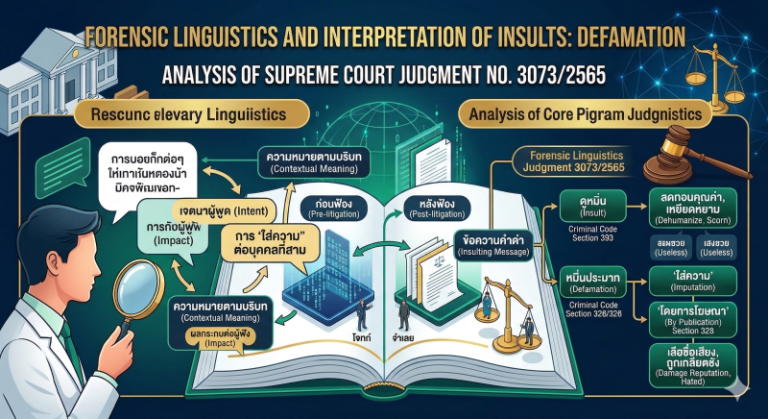
Forensic Linguistics and the Interpretation of Insulting Language in Defamation Law:
An Analysis of Supreme Court Judgment No. 3073/2565
Author: Wanitcha Sumanat, president, Southeast Asian Association of Professional Translators and Interpreters (SEAProTI) and Professional Forensic Linguist
9 March 2026, Bankok – Supreme Court Judgment No. 3073/2565 presents a particularly instructive case study at the intersection of criminal law and forensic linguistics. The case required the Court to determine whether an insulting expression could constitute criminal defamation under Section 326 of the Thai Criminal Code. The judgment demonstrates that determining liability for defamation cannot rely solely on the literal wording of an utterance. Instead, it requires an interpretive analysis that considers communicative context, linguistic meaning, and the perception of an ordinary member of the public. These interpretive dimensions correspond closely with the analytical framework employed in forensic linguistics.
The factual background of the case indicates that the defendant uttered the phrase “Do not enter my father’s house again. You go around verbally abusing people everywhere, you dog-natured person,” during a mediation session at a police station and in the presence of third parties. The complainant argued that the expression constituted defamation and initiated criminal proceedings under Section 326 of the Thai Criminal Code. The trial court initially found the defendant guilty and imposed a monetary fine. However, the Court of Appeal Region 1 later held that the conduct did not constitute a criminal offense and dismissed the criminal charge. The matter subsequently reached the Supreme Court for final determination.
The central legal question before the Supreme Court was whether the phrase “dog-natured person” (Thai: ai sandan ma) amounted to an imputation within the meaning of criminal defamation. Under Thai criminal law, defamation arises when a person imputes something to another before a third party in a manner likely to impair the person’s reputation, expose the individual to hatred, or subject them to public contempt (Thai Criminal Code, Section 326). In this legal framework, the notion of “imputation” generally implies the allegation of a specific fact or characteristic about an individual that an ordinary person might believe to be true, thereby affecting that individual’s reputation.
In its reasoning, the Supreme Court analyzed the semantic meaning of the word sandan, which refers to a person’s inherent disposition or innate character. Linguistically, the term does not inherently convey negativity, as it may refer to either positive or negative traits depending on context. Although the expression is often used colloquially in a disparaging manner, the Court determined that the phrase did not constitute a specific allegation concerning the complainant’s conduct or personal attributes. When combined with the word “dog,” the phrase functions primarily as a metaphorical insult rather than a factual claim capable of verification.
From a forensic linguistic perspective, the interpretation of such an utterance requires examination of both semantic meaning and pragmatic meaning. Semantic analysis reveals that the expression lacks a propositional content that could be empirically verified or falsified. Pragmatic analysis, however, focuses on how language operates within its communicative context. In this case, the utterance occurred in a highly emotional setting during a mediation session involving a family dispute. The defendant’s statement appeared to be a spontaneous expression of anger and frustration rather than an intentional assertion about the complainant’s character or behavior.
The Supreme Court also applied what may be described as a “reasonable person” standard in evaluating the potential reputational impact of the statement. The Court reasoned that an ordinary person would not reasonably believe that the complainant possessed the literal characteristics implied by the insult. Because the statement is inherently figurative and exaggerated, it is unlikely to cause reputational harm within the meaning of criminal defamation law. Accordingly, the Court concluded that the expression was merely an emotional insult rather than a defamatory imputation.
Contextual factors further reinforced this interpretation. The Court observed that the statement arose from the defendant’s dissatisfaction with the complainant’s decision to initiate criminal proceedings against the defendant’s nephew. When the parties were summoned to the police station for mediation, the defendant expressed anger toward the complainant for refusing to withdraw the complaint. Consequently, the utterance was understood as an emotional outburst rather than a deliberate attempt to attribute a negative factual characteristic to the complainant.
An additional procedural aspect of the case concerned the defendant’s subsequent confession during the proceedings. The Supreme Court relied on Section 185 of the Criminal Procedure Code, which establishes that even if a defendant confesses, the court may not convict if the alleged conduct does not constitute a criminal offense. This principle reflects a fundamental safeguard within criminal justice systems: courts must independently verify that the legal elements of an offense are satisfied before imposing criminal liability.
The significance of this judgment extends beyond the specific facts of the case. It illustrates how the adjudication of defamation claims frequently requires nuanced linguistic interpretation. Courts must distinguish between statements that assert verifiable facts and those that merely express emotional hostility or rhetorical exaggeration. This analytical distinction is a central concern in forensic linguistics, which examines how language functions as evidence within legal contexts (Coulthard & Johnson, 2010; Shuy, 2010).
In conclusion, the Supreme Court held that the phrase “dog-natured person” constituted an expression of anger rather than an imputation of fact. Because the statement did not convey a verifiable allegation capable of damaging the complainant’s reputation in the legal sense, it did not satisfy the elements of criminal defamation under Section 326 of the Thai Criminal Code. Furthermore, since the alleged conduct did not constitute a criminal offense, the defendant’s confession could not serve as a basis for conviction under Section 185 of the Criminal Procedure Code. The Supreme Court therefore affirmed the judgment of the Court of Appeal Region 1 dismissing the criminal charge.
References
- Coulthard, M., & Johnson, A. (2010). An introduction to forensic linguistics: Language in evidence (2nd ed.). Routledge.
- Shuy, R. W. (2010). The language of defamation cases. Oxford University Press.
- Thai Criminal Code. (2023). Section 326.
- Thai Criminal Procedure Code. (2023). Section 185.
- Supreme Court of Thailand. (2022). Supreme Court Judgment No. 3073/2565. Office of the Supreme Court Judicial Assistants.
This section provides information about certified translators, translation certifiers, and certified interpreters associated with SEAProTI.
The Southeast Asian Association of Professional Translators and Interpreters (SEAProTI) has officially shared the qualifications and requirements for becoming Certified Translators, Translation Certification Providers, and Certified Interpreters in Sections 9 and 10 of the Royal Gazette, which was published by the Prime Minister’s Office in Thailand on July 25, 2024. Certified Translators, Translation Certification Providers, and Certified Interpreters
The Council of State has proposed the enactment of a Royal Decree, granting registered translators and recognised translation certifiers from professional associations or accredited language institutions the authority to provide legally valid translation certification (Letter to SEAProTI dated April 28, 2025)
SEAProTI is the first professional association in Thailand and Southeast Asia to implement a comprehensive certification system for translators, certifiers, and interpreters.
Head Office: Baan Ratchakru Building, No. 33, Room 402, Soi Phahonyothin 5, Phahonyothin Road, Phaya Thai District, Bangkok 10400, Thailand
Email: hello@seaproti.com | Tel.: (+66) 2-114-3128 (Office hours: Mon–Fri, 09:00–17:00)
นิติภาษาศาสตร์กับการตีความคำด่ากับความผิดฐานหมิ่นประมาท: วิเคราะห์คำพิพากษาศาลฎีกาที่ 3073/2565
ผู้แต่ง วณิชชา สุมานัส นายกสมาคมวิชาชีพนักแปลและล่ามแห่งเอเชียตะวันออกเฉียงใต้ (SEAProTI) และนักนิติภาษาศาสตร์วิชาชีพ
คำพิพากษาศาลฎีกาที่ 3073/2565 เป็นกรณีศึกษาที่น่าสนใจอย่างยิ่งในทางกฎหมายอาญาและนิติภาษาศาสตร์ (forensic linguistics) เนื่องจากศาลต้องวินิจฉัยว่าถ้อยคำที่มีลักษณะเป็นคำด่าหยาบคายสามารถเข้าข่ายความผิดฐานหมิ่นประมาทตามประมวลกฎหมายอาญา มาตรา 326 หรือไม่ คดีนี้สะท้อนให้เห็นว่าการพิจารณาความผิดฐานหมิ่นประมาทมิได้พิจารณาเพียงถ้อยคำตามตัวอักษรเท่านั้น แต่ยังต้องตีความผ่านบริบทการสื่อสาร ความหมายทางภาษา และการรับรู้ของบุคคลทั่วไป ซึ่งเป็นแนวคิดสำคัญในศาสตร์นิติภาษาศาสตร์
ข้อเท็จจริงในคดีปรากฏว่า จำเลยได้กล่าวถ้อยคำต่อผู้ร้องต่อหน้าบุคคลอื่นในสถานีตำรวจระหว่างกระบวนการไกล่เกลี่ยว่า “อย่าเข้าไปในบ้านพ่อกูอีกนะ มันไล่ด่าชาวบ้านเขาไปทั่ว ไอ้สันดานหมา” ผู้ร้องเห็นว่าถ้อยคำดังกล่าวเป็นการหมิ่นประมาทและยื่นฟ้องให้ลงโทษจำเลยตามประมวลกฎหมายอาญา มาตรา 326 ศาลชั้นต้นพิพากษาว่าจำเลยมีความผิดฐานหมิ่นประมาทและลงโทษปรับ อย่างไรก็ตาม ศาลอุทธรณ์ภาค 1 เห็นว่าการกระทำของจำเลยไม่เป็นความผิดและพิพากษายกฟ้องในคดีอาญา ก่อนที่คดีจะขึ้นสู่การพิจารณาของศาลฎีกา
ประเด็นสำคัญที่ศาลฎีกาต้องวินิจฉัยคือ ถ้อยคำว่า “ไอ้สันดานหมา” เป็นการใส่ความตามความหมายของความผิดฐานหมิ่นประมาทหรือไม่ ตามหลักกฎหมายอาญา ความผิดฐานหมิ่นประมาทจะเกิดขึ้นได้เมื่อมีการ “ใส่ความ” ต่อบุคคลที่สาม โดยเป็นการกล่าวหาเรื่องร้ายที่น่าจะทำให้ผู้ถูกกล่าวหานั้นเสียชื่อเสียง ถูกดูหมิ่น หรือถูกเกลียดชัง (ประมวลกฎหมายอาญา, มาตรา 326) คำว่า “ใส่ความ” ในบริบทนี้จึงมีลักษณะเป็นการกล่าวหาข้อเท็จจริงเกี่ยวกับบุคคล ซึ่งบุคคลทั่วไปอาจเชื่อถือว่าเป็นจริงและส่งผลกระทบต่อชื่อเสียงของบุคคลนั้น
ศาลฎีกาได้วิเคราะห์ความหมายของคำว่า “สันดาน” ในเชิงภาษา โดยเห็นว่าคำดังกล่าวหมายถึงอุปนิสัยที่มีมาแต่กำเนิด ซึ่งอาจเป็นสันดานดีหรือสันดานเลวก็ได้ แม้โดยการใช้ทั่วไปมักปรากฏในบริบทเชิงลบ แต่ก็ไม่ได้มีลักษณะเป็นการกล่าวหาข้อเท็จจริงเฉพาะเจาะจงเกี่ยวกับการกระทำหรือพฤติกรรมของบุคคล เมื่อพิจารณาประกอบกับคำว่า “หมา” จึงเป็นเพียงคำด่าที่มีลักษณะเป็นการเปรียบเปรยทางอารมณ์มากกว่าการกล่าวหาข้อเท็จจริงที่ตรวจสอบได้
ในเชิงนิติภาษาศาสตร์ การตีความถ้อยคำดังกล่าวต้องพิจารณาทั้งระดับความหมายของคำ (semantic meaning) และระดับการใช้ภาษาในบริบท (pragmatic meaning) การวิเคราะห์ระดับความหมายชี้ให้เห็นว่าถ้อยคำดังกล่าวไม่ได้มีเนื้อหาที่เป็นข้อกล่าวหาที่สามารถพิสูจน์ได้ ในขณะที่การวิเคราะห์เชิงปฏิบัติศาสตร์ของภาษาแสดงให้เห็นว่าคำพูดดังกล่าวเกิดขึ้นในบริบทของความขัดแย้งทางอารมณ์ระหว่างคู่กรณีในสถานการณ์ไกล่เกลี่ย ซึ่งเป็นสถานการณ์ที่ผู้พูดอาจใช้ถ้อยคำหยาบคายเพื่อระบายความไม่พอใจ มากกว่าที่จะมีเจตนากล่าวหาพฤติกรรมหรือคุณลักษณะของผู้ฟังอย่างแท้จริง
ศาลฎีกายังได้พิจารณาจากมุมมองของบุคคลทั่วไป หรือที่เรียกว่า “reasonable person standard” โดยเห็นว่าบุคคลธรรมดาไม่น่าจะเชื่อว่าผู้ร้องมีลักษณะเป็น “สันดานหมา” อย่างแท้จริง เนื่องจากเป็นถ้อยคำที่เป็นไปไม่ได้ในทางข้อเท็จจริง และเป็นเพียงคำด่าที่ใช้ในเชิงเปรียบเปรยเท่านั้น ดังนั้น ถ้อยคำดังกล่าวจึงไม่น่าจะทำให้ผู้ร้องเสียชื่อเสียง ถูกดูหมิ่น หรือถูกเกลียดชังในความหมายของกฎหมายหมิ่นประมาท
ศาลฎีกายังให้ความสำคัญกับบริบทของเหตุการณ์ โดยพิจารณาว่าการใช้ถ้อยคำดังกล่าวเกิดจากความไม่พอใจของจำเลยที่ผู้ร้องไปแจ้งความดำเนินคดีกับหลานของจำเลยมาก่อน เมื่อมีการเรียกคู่กรณีมาไกล่เกลี่ย จำเลยจึงกล่าวถ้อยคำดังกล่าวออกมาด้วยอารมณ์โกรธและความไม่พอใจ มิใช่เพื่อมุ่งหมายกล่าวหาพฤติกรรมหรือคุณลักษณะของผู้ร้องอย่างจริงจัง ด้วยเหตุนี้ ศาลฎีกาจึงเห็นว่าการกระทำของจำเลยไม่เป็นความผิดฐานหมิ่นประมาท
อีกประเด็นที่สำคัญในคดีนี้คือ แม้จำเลยจะให้การรับสารภาพในภายหลัง แต่ศาลฎีกาได้อ้างหลักตามประมวลกฎหมายวิธีพิจารณาความอาญา มาตรา 185 วรรคหนึ่ง ซึ่งกำหนดว่า หากข้อเท็จจริงตามฟ้องไม่เป็นความผิด แม้จำเลยจะรับสารภาพ ศาลก็ไม่อาจพิพากษาลงโทษได้ หลักการดังกล่าวสะท้อนหลักพื้นฐานของกระบวนการยุติธรรมทางอาญาที่ศาลต้องตรวจสอบองค์ประกอบความผิดโดยเคร่งครัดก่อนจะลงโทษบุคคล
คำพิพากษาศาลฎีกาคดีนี้จึงมีนัยสำคัญในทางวิชาการ โดยแสดงให้เห็นว่าการพิจารณาความผิดฐานหมิ่นประมาทต้องอาศัยการวิเคราะห์ภาษาในเชิงลึก ไม่เพียงแต่พิจารณาความหมายของถ้อยคำตามตัวอักษร แต่ยังต้องพิจารณาบริบทของการสื่อสาร เจตนาของผู้พูด และการรับรู้ของบุคคลทั่วไป ซึ่งสอดคล้องกับแนวคิดของนิติภาษาศาสตร์ที่มองว่าภาษาที่ใช้ในกระบวนการยุติธรรมต้องได้รับการตีความภายใต้บริบททางสังคมและการสื่อสาร (Coulthard & Johnson, 2010; Shuy, 2010)
โดยสรุป ศาลฎีกาได้วินิจฉัยว่าถ้อยคำว่า “ไอ้สันดานหมา” เป็นเพียงคำด่าที่เกิดจากอารมณ์โกรธในสถานการณ์ความขัดแย้ง มิใช่การใส่ความในลักษณะที่กฎหมายกำหนด จึงไม่เป็นความผิดฐานหมิ่นประมาทตามประมวลกฎหมายอาญา มาตรา 326 และเมื่อข้อเท็จจริงตามฟ้องไม่เป็นความผิด แม้จำเลยจะรับสารภาพ ศาลก็ไม่อาจลงโทษได้ตามประมวลกฎหมายวิธีพิจารณาความอาญา มาตรา 185 ผลคือศาลฎีกาพิพากษายืนตามคำพิพากษาศาลอุทธรณ์ภาค 1 ให้ยกฟ้องโจทก์ในคดีอาญา
เอกสารอ้างอิง
- Coulthard, M., & Johnson, A. (2010). An introduction to forensic linguistics: Language in evidence (2nd ed.). Routledge.
- ประมวลกฎหมายอาญา. (2566). มาตรา 326.
- ประมวลกฎหมายวิธีพิจารณาความอาญา. (2566). มาตรา 185.
- ศาลฎีกา. (2565). คำพิพากษาศาลฎีกาที่ 3073/2565. กองผู้ช่วยผู้พิพากษาศาลฎีกา.
- Shuy, R. W. (2010). The language of defamation cases. Oxford University Press.
สมาคมวิชาชีพนักแปลและล่ามแห่งเอเชียตะวันออกเฉียงใต้ (SEAProTI) ได้ประกาศหลักเกณฑ์และคุณสมบัติของผู้ที่ขึ้นทะเบียนเป็น “นักแปลรับรอง (Certified Translators) และผู้รับรองการแปล (Translation Certification Providers) และล่ามรับรอง (Certified Interpreters)” ของสมาคม หมวดที่ 9 และหมวดที่ 10 ในราชกิจจานุเบกษา ของสำนักเลขาธิการคณะรัฐมนตรี ในสำนักนายกรัฐมนตรี แห่งราชอาณาจักรไทย ลงวันที่ 25 ก.ค. 2567 เล่มที่ 141 ตอนที่ 66 ง หน้า 100 อ่านฉบับเต็มได้ที่: นักแปลรับรอง ผู้รับรองการแปล และล่ามรับรอง
สำนักคณะกรรมการกฤษฎีกาเสนอให้ตราเป็นพระราชกฤษฎีกา โดยกำหนดให้นักแปลที่ขึ้นทะเบียน รวมถึงผู้รับรองการแปลจากสมาคมวิชาชีพหรือสถาบันสอนภาษาที่มีการอบรมและขึ้นทะเบียน สามารถรับรองคำแปลได้ (จดหมายถึงสมาคม SEAProTI ลงวันที่ 28 เม.ย. 2568)
สมาคมวิชาชีพนักแปลและล่ามแห่งเอเชียตะวันออกเฉียงใต้เป็นสมาคมวิชาชีพแห่งแรกและแห่งเดียวในประเทศไทยและภูมิภาคเอเชียตะวันออกเฉียงใต้ที่มีระบบรับรองนักแปลรับรอง ผู้รับรองการแปล และล่ามรับรอง
สำนักงานใหญ่: อาคารบ้านราชครู เลขที่ 33 ห้อง 402 ซอยพหลโยธิน 5 ถนนพหลโยธิน แขวงพญาไท เขตพญาไท กรุงเทพมหานคร 10400 ประเทศไทย
อีเมล: hello@seaproti.com โทรศัพท์: (+66) 2-114-3128 (เวลาทำการ: วันจันทร์–วันศุกร์ เวลา 09.00–17.00 น.