


The Hidden Dimension of Police Practice in Thailand: Informal Interpreters and the Impact on Fundamental Human Rights
11 March 2026, Bangkok – Accurate communication is a cornerstone of criminal justice. When suspects, witnesses, or victims do not understand the language used by authorities, interpretation becomes essential to ensure that individuals can understand the accusations against them, exercise their legal rights, and participate meaningfully in legal proceedings.
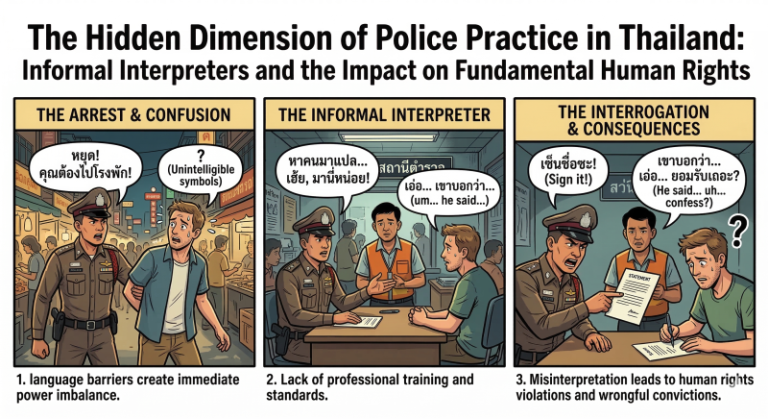
In practice, however, observations from legal professionals, interpreters, and practitioners in Thailand suggest that police investigators frequently rely on informal interpreters—friends, acquaintances, or individuals known to the officers—rather than professionally trained interpreters when dealing with foreign suspects or witnesses.
This practice often arises from practical constraints such as limited resources, the absence of readily available interpreter rosters, or the urgency of investigative procedures. Nevertheless, from an institutional perspective, this situation reveals a structural weakness within the investigative process, sometimes described as a “hidden dimension” or darker side of procedural practice. The use of unqualified interpreters can undermine evidentiary accuracy, compromise procedural fairness, and potentially affect the protection of fundamental human rights.
Accuracy and the Risk of Distorted Communication
Court and investigative interpreting requires far more than simple word substitution between languages. Interpreters must convey legal meaning, nuance, and procedural context accurately and completely. Individuals who have not received professional training in interpreting often lack the skills necessary to handle complex legal terminology, structured questioning, and detailed statements.
Errors or omissions in interpretation may unintentionally distort the meaning of a suspect’s statement or a witness’s testimony. Such distortions can affect the official record of an interrogation and ultimately influence judicial assessments of the facts of a case (Hale, 2004). In criminal proceedings, even minor linguistic inaccuracies may have significant consequences for the evaluation of evidence.
Neutrality and the Integrity of the Investigative Process
Professional interpreters working within judicial settings are expected to maintain strict neutrality and impartiality. Their role is to facilitate communication rather than to assist either party.
When police officers rely on friends or acquaintances to interpret, the neutrality of the communication process may be questioned. From the perspective of suspects or witnesses, the interpreter may appear aligned with law enforcement authorities. In some circumstances, informal interpreters may feel pressured, directly or indirectly, to interpret statements in a manner that favors investigative objectives.
Research on courtroom interpreting has shown that interpreters can influence discourse dynamics within legal proceedings, particularly when they are not professionally trained (Berk-Seligson, 2002). In investigative settings, such influence can affect the reliability of statements recorded during police interviews.
Risks of Conflicts of Interest and Hidden Incentives
Another concern relates to potential conflicts of interest. Informal interpreters are not subject to professional accreditation systems, ethical codes, or institutional oversight mechanisms. When interpreters are recruited from the personal networks of police officers, this may create opportunities for hidden incentives, favoritism, or informal compensation arrangements.
While it cannot be assumed that such issues occur in every case, the absence of transparent procedures for interpreter selection increases the structural risk of conflicts of interest. From a governance perspective, such practices may weaken public trust in the integrity and transparency of investigative processes.
Implications for Fundamental Human Rights
Perhaps the most significant concern involves the potential impact on fundamental human rights, particularly the right to a fair trial and the right to understand and participate in legal proceedings.
International human rights standards recognize that individuals who do not understand the language used in criminal proceedings must be provided with competent interpretation. Article 14 of the International Covenant on Civil and Political Rights (ICCPR) guarantees that anyone charged with a criminal offence has the right to the free assistance of an interpreter if they cannot understand or speak the language used in court (United Nations, 1966).
If interpretation is carried out by individuals lacking the necessary competence, suspects may fail to understand the accusations against them, misunderstand their legal rights, or be unable to communicate critical information in their defense. In such circumstances, the ability to exercise the right of defense is effectively diminished.
Consequently, inadequate interpretation may undermine not only procedural fairness but also the broader human rights framework that underpins modern criminal justice systems.
Conclusion
The use of friends or acquaintances as interpreters during police investigations may appear to be a practical solution in situations where professional interpreters are not immediately available. However, from a systemic perspective, this practice exposes significant vulnerabilities within the criminal justice process.
These concerns extend beyond linguistic accuracy. They involve questions of neutrality, transparency, evidentiary reliability, and the protection of fundamental human rights. Without clear institutional mechanisms for providing qualified interpreters, the investigative process risks compromising both procedural fairness and public confidence in the justice system.
For this reason, many jurisdictions have established certified judicial interpreter systems that ensure interpreters are trained, impartial, and accountable. Developing similar institutional frameworks is increasingly recognized as an essential component of ensuring fair and rights-compliant criminal justice procedures.
References
- Berk-Seligson, S. (2002). The bilingual courtroom: Court interpreters in the judicial process. University of Chicago Press.
- Hale, S. (2004). The discourse of court interpreting: Discourse practices of the law, the witness and the interpreter. John Benjamins.
- Mikkelson, H. (2016). Introduction to court interpreting (2nd ed.). Routledge.
- United Nations. (1966). International Covenant on Civil and Political Rights (ICCPR). United Nations.
This section provides information about certified translators, translation certifiers, and certified interpreters associated with SEAProTI.
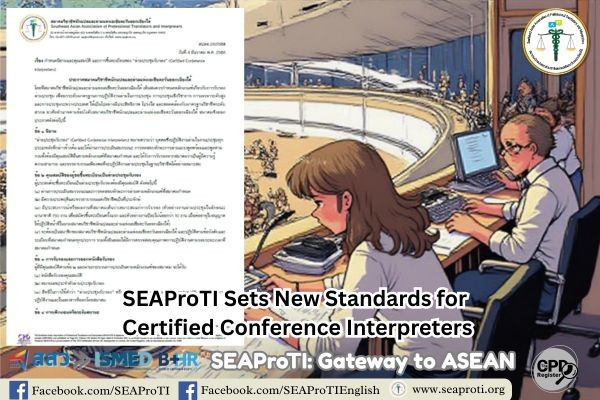
The Southeast Asian Association of Professional Translators and Interpreters (SEAProTI) has officially shared the qualifications and requirements for becoming Certified Translators, Translation Certification Providers, and Certified Interpreters in Sections 9 and 10 of the Royal Gazette, which was published by the Prime Minister’s Office in Thailand on July 25, 2024. Certified Translators, Translation Certification Providers, and Certified Interpreters
The Council of State has proposed the enactment of a Royal Decree, granting registered translators and recognised translation certifiers from professional associations or accredited language institutions the authority to provide legally valid translation certification (Letter to SEAProTI dated April 28, 2025)
SEAProTI is the first professional association in Thailand and Southeast Asia to implement a comprehensive certification system for translators, certifiers, and interpreters.
Head Office: Baan Ratchakru Building, No. 33, Room 402, Soi Phahonyothin 5, Phahonyothin Road, Phaya Thai District, Bangkok 10400, Thailand
Email: hello@seaproti.com | Tel.: (+66) 2-114-3128 (Office hours: Mon–Fri, 09:00–17:00).
มุมมืดของกระบวนการสอบสวน: การใช้ “ล่ามที่ไม่เป็นทางการ” ของตำรวจไทยกับผลกระทบต่อสิทธิขั้นพื้นฐานด้านสิทธิมนุษยชน
ในกระบวนการยุติธรรมทางอาญา การสื่อสารที่ถูกต้องระหว่างเจ้าหน้าที่รัฐกับผู้ต้องหา พยาน หรือผู้เสียหายที่ไม่เข้าใจภาษาไทยถือเป็นองค์ประกอบสำคัญของ การพิจารณาคดีอย่างเป็นธรรม (fair trial) อย่างไรก็ตาม ในทางปฏิบัติของการสอบสวนในประเทศไทย มีข้อสังเกตจากนักกฎหมาย นักแปล และผู้ปฏิบัติงานในกระบวนการยุติธรรมว่า เจ้าหน้าที่ตำรวจบางแห่งมักใช้ เพื่อน คนรู้จัก หรือบุคคลที่ไม่ได้เป็นล่ามวิชาชีพ มาทำหน้าที่ล่ามในการสอบสวนผู้ต้องหาหรือพยานชาวต่างชาติ
แนวปฏิบัตินี้เกิดขึ้นค่อนข้างบ่อยในทางปฏิบัติ เนื่องจากข้อจำกัดด้านทรัพยากร เวลา หรือระบบการจัดหาล่ามของรัฐที่ยังไม่เป็นระบบ อย่างไรก็ตาม หากพิจารณาในเชิงโครงสร้างของกระบวนการยุติธรรม แนวทางดังกล่าวสะท้อนถึง “มุมมืด” ของกระบวนการสอบสวน ซึ่งอาจส่งผลกระทบทั้งต่อความถูกต้องของพยานหลักฐาน ความเป็นธรรมของคดี และสิทธิขั้นพื้นฐานด้านสิทธิมนุษยชนของบุคคลที่เกี่ยวข้อง
ปัญหาความถูกต้องของการสื่อสารในกระบวนการสอบสวน
ล่ามในกระบวนการยุติธรรมไม่ได้ทำหน้าที่เพียงแค่ถ่ายทอดคำพูดจากภาษาหนึ่งไปสู่อีกภาษาหนึ่งเท่านั้น แต่ยังต้องถ่ายทอด ความหมายทางกฎหมาย (legal meaning) และบริบทของคำถามหรือคำให้การอย่างครบถ้วน บุคคลทั่วไปที่ไม่ได้ผ่านการฝึกอบรมด้านการล่ามมักขาดทักษะดังกล่าว โดยเฉพาะเมื่อเกี่ยวข้องกับคำศัพท์ทางกฎหมาย โครงสร้างคำถามของพนักงานสอบสวน หรือรายละเอียดของคำให้การ
ความผิดพลาดในการล่ามอาจทำให้เนื้อหาของคำให้การถูกบิดเบือนโดยไม่ตั้งใจ ซึ่งอาจนำไปสู่การบันทึกคำให้การที่ไม่ตรงกับความหมายเดิมของผู้ให้การ และส่งผลต่อการประเมินข้อเท็จจริงของคดีในชั้นศาล (Hale, 2004)
ปัญหาความเป็นกลางและความน่าเชื่อถือของกระบวนการสอบสวน
หลักวิชาชีพของล่ามในกระบวนการยุติธรรมกำหนดให้ล่ามต้องรักษา ความเป็นกลาง (neutrality) และไม่เข้าข้างฝ่ายใดฝ่ายหนึ่ง แต่เมื่อเจ้าหน้าที่ตำรวจเลือกใช้เพื่อนหรือบุคคลที่ตนรู้จักเป็นล่าม ความเป็นกลางของกระบวนการสื่อสารอาจถูกตั้งคำถามได้
ผู้ต้องหาหรือพยานอาจรู้สึกว่าการสื่อสารไม่ได้เกิดขึ้นในสภาพแวดล้อมที่เป็นอิสระและเป็นธรรม ในบางกรณี ล่ามที่ไม่มีสถานะเป็นมืออาชีพอาจถูกกดดันโดยเจ้าหน้าที่หรืออาจตีความข้อความในลักษณะที่เอื้อประโยชน์ต่อกระบวนการสอบสวนของรัฐ (Berk-Seligson, 2002)
ความเสี่ยงของผลประโยชน์แอบแฝงและโครงสร้างที่ขาดการกำกับดูแล
การใช้บุคคลที่เป็นเพื่อนหรือคนรู้จักของเจ้าหน้าที่ตำรวจมาทำหน้าที่ล่ามยังเปิดช่องให้เกิด ผลประโยชน์ทับซ้อน (conflict of interest) หรือผลประโยชน์แอบแฝงได้ในบางกรณี เนื่องจากบุคคลดังกล่าวไม่ได้อยู่ภายใต้ระบบการรับรองมาตรฐานหรือจรรยาบรรณทางวิชาชีพ
แม้จะไม่สามารถสรุปได้ว่าเกิดการแสวงหาประโยชน์ในทุกกรณี แต่การไม่มีระบบกำกับดูแลที่ชัดเจนย่อมเพิ่มความเสี่ยงต่อการใช้บุคคลที่มีความสัมพันธ์ใกล้ชิดกับเจ้าหน้าที่ ซึ่งอาจกระทบต่อความโปร่งใสและความน่าเชื่อถือของกระบวนการสอบสวน
ผลกระทบต่อสิทธิขั้นพื้นฐานด้านสิทธิมนุษยชน
ประเด็นที่สำคัญที่สุดคือผลกระทบต่อ สิทธิขั้นพื้นฐานด้านสิทธิมนุษยชน โดยเฉพาะสิทธิในการได้รับการพิจารณาคดีอย่างเป็นธรรม และสิทธิในการเข้าใจข้อกล่าวหาและกระบวนการทางกฎหมาย
ตามมาตรฐานสากล บุคคลที่ไม่เข้าใจภาษาที่ใช้ในกระบวนการยุติธรรมต้องได้รับความช่วยเหลือจากล่ามที่มีความสามารถอย่างเหมาะสม หลักการนี้ได้รับการรับรองในกติการะหว่างประเทศว่าด้วยสิทธิพลเมืองและสิทธิทางการเมือง (ICCPR) ซึ่งระบุว่าผู้ต้องหามีสิทธิได้รับความช่วยเหลือจากล่ามโดยไม่เสียค่าใช้จ่ายหากไม่เข้าใจภาษาที่ใช้ในศาล (United Nations, 1966)
หากการล่ามดำเนินการโดยบุคคลที่ไม่มีความเชี่ยวชาญเพียงพอ ผู้ต้องหาอาจไม่เข้าใจข้อกล่าวหา ไม่เข้าใจสิทธิของตน หรือไม่สามารถสื่อสารข้อเท็จจริงที่สำคัญต่อการป้องกันตนเองได้อย่างครบถ้วน ซึ่งอาจถือเป็นการจำกัดสิทธิในการป้องกันตนเองโดยปริยาย
บทสรุป
การใช้เพื่อนหรือคนรู้จักของเจ้าหน้าที่ตำรวจเป็นล่ามในกระบวนการสอบสวน แม้จะดูเป็นวิธีแก้ปัญหาเฉพาะหน้าในทางปฏิบัติ แต่ในเชิงโครงสร้างของกระบวนการยุติธรรม แนวปฏิบัตินี้สะท้อนถึงช่องว่างเชิงสถาบันที่สำคัญ
ปัญหาดังกล่าวไม่เพียงเกี่ยวข้องกับความถูกต้องของการสื่อสารเท่านั้น แต่ยังเกี่ยวข้องกับความเป็นกลางของกระบวนการสอบสวน ความโปร่งใสของระบบยุติธรรม และการคุ้มครองสิทธิขั้นพื้นฐานของบุคคลตามมาตรฐานสิทธิมนุษยชนสากล
ด้วยเหตุนี้ หลายประเทศจึงพยายามพัฒนาระบบ ล่ามในกระบวนการยุติธรรมที่ได้รับการรับรองอย่างเป็นทางการ เพื่อให้การสื่อสารในกระบวนการยุติธรรมมีความถูกต้อง โปร่งใส และสอดคล้องกับหลักนิติรัฐและหลักสิทธิมนุษยชน
เอกสารอ้างอิง
- Berk-Seligson, S. (2002). The bilingual courtroom: Court interpreters in the judicial process. University of Chicago Press.
- Hale, S. (2004). The discourse of court interpreting: Discourse practices of the law, the witness and the interpreter. John Benjamins.
- United Nations. (1966). International Covenant on Civil and Political Rights (ICCPR). United Nations.
- Mikkelson, H. (2016). Introduction to court interpreting (2nd ed.). Routledge.
สมาคมวิชาชีพนักแปลและล่ามแห่งเอเชียตะวันออกเฉียงใต้ (SEAProTI) ได้ประกาศหลักเกณฑ์และคุณสมบัติของผู้ที่ขึ้นทะเบียนเป็น “นักแปลรับรอง (Certified Translators) และผู้รับรองการแปล (Translation Certification Providers) และล่ามรับรอง (Certified Interpreters)” ของสมาคม หมวดที่ 9 และหมวดที่ 10 ในราชกิจจานุเบกษา ของสำนักเลขาธิการคณะรัฐมนตรี ในสำนักนายกรัฐมนตรี แห่งราชอาณาจักรไทย ลงวันที่ 25 ก.ค. 2567 เล่มที่ 141 ตอนที่ 66 ง หน้า 100 อ่านฉบับเต็มได้ที่: นักแปลรับรอง ผู้รับรองการแปล และล่ามรับรอง
สำนักคณะกรรมการกฤษฎีกาเสนอให้ตราเป็นพระราชกฤษฎีกา โดยกำหนดให้นักแปลที่ขึ้นทะเบียน รวมถึงผู้รับรองการแปลจากสมาคมวิชาชีพหรือสถาบันสอนภาษาที่มีการอบรมและขึ้นทะเบียน สามารถรับรองคำแปลได้ (จดหมายถึงสมาคม SEAProTI ลงวันที่ 28 เม.ย. 2568)
สมาคมวิชาชีพนักแปลและล่ามแห่งเอเชียตะวันออกเฉียงใต้เป็นสมาคมวิชาชีพแห่งแรกและแห่งเดียวในประเทศไทยและภูมิภาคเอเชียตะวันออกเฉียงใต้ที่มีระบบรับรองนักแปลรับรอง ผู้รับรองการแปล และล่ามรับรอง
สำนักงานใหญ่: อาคารบ้านราชครู เลขที่ 33 ห้อง 402 ซอยพหลโยธิน 5 ถนนพหลโยธิน แขวงพญาไท เขตพญาไท กรุงเทพมหานคร 10400 ประเทศไทย
อีเมล: hello@seaproti.com โทรศัพท์: (+66) 2-114-3128 (เวลาทำการ: วันจันทร์–วันศุกร์ เวลา 09.00–17.00 น.