



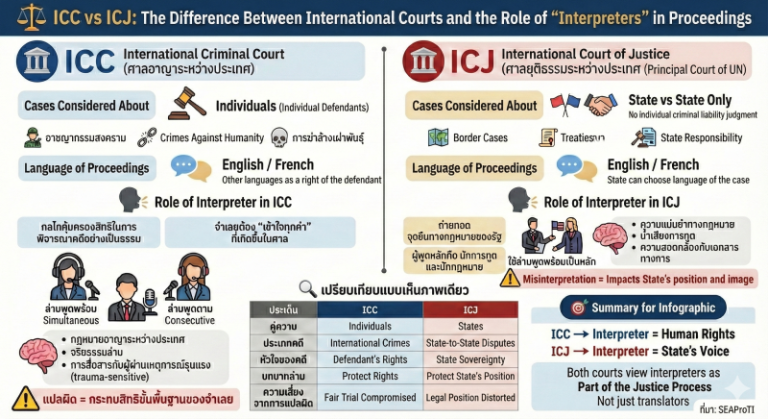
The Differences Between the International Criminal Court (ICC) and the International Court of Justice (ICJ)
and the Role of Interpreters in International Judicial Proceedings
20 January 2026, Bangkok – This article aims to explain the structural differences, jurisdictional mandates, and legal philosophies of the International Criminal Court (ICC) and the International Court of Justice (ICJ), with particular emphasis on the role of interpreters in the proceedings of both courts as a key mechanism of international justice. It argues that interpreters at the ICC function primarily as instruments for the protection of the human rights of defendants and witnesses, whereas interpreters at the ICJ serve as conduits for conveying the legal and diplomatic positions of states. This distinction illustrates that translation and interpreting in international legal contexts are not merely linguistic activities but integral components of institutional power and justice.
Within the international legal system, international courts serve as principal mechanisms for dispute settlement and the enforcement of international norms. Although the ICC and the ICJ are both located in The Hague, the Netherlands, and are grounded in international law, their mandates and underlying legal rationales differ in fundamental ways. These differences directly shape the role of interpreters in judicial proceedings—an issue that remains relatively underexplored in the study of international law and institutional interpreting.
The International Criminal Court (ICC): Jurisdiction and Case Characteristics
The International Criminal Court was established under the Rome Statute of 1998 to exercise jurisdiction over the criminal responsibility of individuals for crimes of concern to the international community as a whole. These crimes include genocide, crimes against humanity, war crimes, and the crime of aggression. A defining feature of the ICC is its strong emphasis on human rights and on the right of the accused to a fair trial.
In this context, language is not merely a tool of communication but a fundamental precondition for access to justice. Many defendants and witnesses before the ICC do not speak English or French, the Court’s working languages. Consequently, the provision of interpretation is not optional but constitutes a legal obligation derived from international human rights law.
The Role of Interpreters in ICC Proceedings
Interpreters at the ICC function as a core element in the protection of the fundamental rights of defendants and witnesses. Their task goes beyond the mechanical transfer of words from one language to another. It encompasses ensuring that the accused fully understands the charges, the evidence presented, and the entirety of the judicial process.
Interpreting in international criminal proceedings therefore requires highly specialized expertise, including familiarity with international criminal law terminology, trauma-informed communication, and strict adherence to professional ethics. Errors in interpretation in this context may result in violations of the right to a fair trial and may undermine the legitimacy of judgments at the international level.
The International Court of Justice (ICJ): Jurisdiction and Case Characteristics
The International Court of Justice is the principal judicial organ of the United Nations. Its jurisdiction is limited to disputes between states, and it has no authority to adjudicate the criminal liability of individuals. Cases before the ICJ typically concern boundary disputes, the interpretation of treaties, and questions of state responsibility under international law. Accordingly, proceedings before the ICJ are predominantly structural and diplomatic in nature rather than focused on the protection of individual rights.
The Role of Interpreters in ICJ Proceedings
At the ICJ, interpreters are responsible for conveying the oral pleadings and statements of state representatives, who are usually senior diplomats or legal counsel. The role of the interpreter thus centers on legal precision, control of diplomatic register, and consistency with the written submissions filed with the court.
Simultaneous interpreting is the dominant mode used in ICJ hearings in order to preserve procedural continuity. While interpretive errors at the ICJ may not directly affect individual rights, they can significantly influence the interpretation of a state’s legal position, its diplomatic credibility, and the long-term political consequences of the proceedings.
Comparative Analysis
Taken together, the ICC and the ICJ reflect two distinct conceptions of international justice. The ICC prioritizes individual criminal responsibility and the protection of human rights, whereas the ICJ focuses on interstate relations and the maintenance of the international legal order. As a result, the role of interpreters in the two courts differs substantially in terms of ethical orientation, risk exposure, and the potential consequences of linguistic inaccuracies.
Conclusion
This article argues that interpreters in international courts should not be viewed merely as “language mediators,” but rather as integral components of the structures of international justice and legal authority. At the ICC, interpreters operate as mechanisms for safeguarding the human rights of individuals. At the ICJ, they function as the voices through which states articulate and defend their legal and diplomatic positions. Recognizing this distinction is essential for the development of interpreter training, professional standards, and policy frameworks aimed at ensuring meaningful access to justice at the international level.
References
- International Criminal Court. (2011). Court interpretation and translation. The Hague: ICC.
- International Criminal Court. (2013). The Rome Statute of the International Criminal Court. The Hague: ICC.
- International Court of Justice. (2019). Practice directions. The Hague: ICJ.
- Mikkelson, H. (2016). Introduction to court interpreting (2nd ed.). New York, NY: Routledge.
- Pöchhacker, F. (2016). Introducing interpreting studies (2nd ed.). London, UK: Routledge.
- United Nations. (1945). Statute of the International Court of Justice. New York, NY: United Nations.
About Certified Translators, Translation Certifiers, and Certified Interpreters of SEAProTI
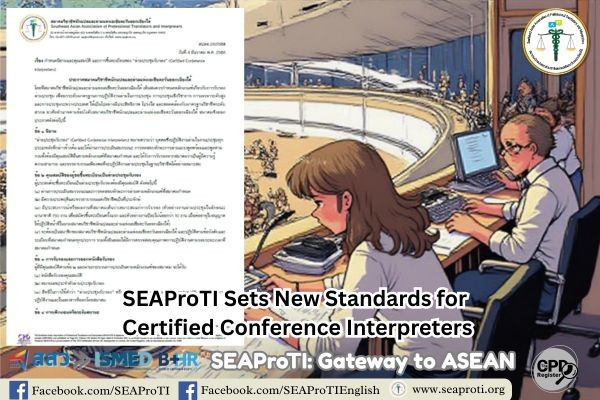
The Southeast Asian Association of Professional Translators and Interpreters (SEAProTI) has officially shared the qualifications and requirements for becoming Certified Translators, Translation Certification Providers, and Certified Interpreters in Sections 9 and 10 of the Royal Gazette, which was published by the Prime Minister’s Office in Thailand on July 25, 2024. Certified Translators, Translation Certification Providers, and Certified Interpreters
The Council of State has proposed the enactment of a Royal Decree, granting registered translators and recognised translation certifiers from professional associations or accredited language institutions the authority to provide legally valid translation certification (Letter to SEAProTI dated April 28, 2025)
SEAProTI is the first professional association in Thailand and Southeast Asia to implement a comprehensive certification system for translators, certifiers, and interpreters.
Head Office: Baan Ratchakru Building, No. 33, Room 402, Soi Phahonyothin 5, Phahonyothin Road, Phaya Thai District, Bangkok 10400, Thailand
Email: hello@seaproti.com | Tel.: (+66) 2-114-3128 (Office hours: Mon–Fri, 09:00–17:00)
ความแตกกต่างระหว่างศาลอาญาระหว่างประเทศ (ICC) และศาลยุติธรรมระหว่างประเทศ (ICJ)
กับบทบาทของล่ามในกระบวนการพิจารณาคดีระหว่างประเทศ
20 มกราคม 2569, กรุงเทพมหานคร – บทความนี้มีวัตถุประสงค์เพื่ออธิบายความแตกต่างเชิงโครงสร้าง อำนาจศาล และปรัชญาทางกฎหมายของศาลอาญาระหว่างประเทศ (International Criminal Court: ICC) และศาลยุติธรรมระหว่างประเทศ (International Court of Justice: ICJ) โดยมุ่งเน้นการวิเคราะห์บทบาทของล่ามในกระบวนการพิจารณาคดีของทั้งสองศาลในฐานะกลไกสำคัญของความยุติธรรมระหว่างประเทศ บทความเสนอว่าล่ามใน ICC ทำหน้าที่เป็นเครื่องมือคุ้มครองสิทธิมนุษยชนของจำเลยและพยาน ในขณะที่ล่ามใน ICJ ทำหน้าที่เป็นผู้ถ่ายทอดจุดยืนทางกฎหมายและการทูตของรัฐ ความแตกต่างดังกล่าวสะท้อนให้เห็นว่าการแปลและการล่ามในบริบทระหว่างประเทศมิใช่กิจกรรมทางภาษาเพียงอย่างเดียว แต่เป็นส่วนหนึ่งของโครงสร้างอำนาจและความยุติธรรมเชิงสถาบัน
ในระบบกฎหมายระหว่างประเทศ ศาลระหว่างประเทศทำหน้าที่เป็นกลไกหลักในการระงับข้อพิพาทและการบังคับใช้บรรทัดฐานสากล แม้ศาลอาญาระหว่างประเทศและศาลยุติธรรมระหว่างประเทศจะตั้งอยู่ ณ กรุงเฮก ประเทศเนเธอร์แลนด์ และใช้กฎหมายระหว่างประเทศเป็นฐานร่วมกัน แต่ทั้งสองศาลมีอำนาจหน้าที่และตรรกะทางกฎหมายที่แตกต่างกันอย่างมีนัยสำคัญ ความแตกต่างดังกล่าวส่งผลโดยตรงต่อบทบาทของล่ามในกระบวนการพิจารณาคดี ซึ่งเป็นประเด็นที่มักถูกมองข้ามในการศึกษากฎหมายระหว่างประเทศและการล่ามเชิงสถาบัน
ศาลอาญาระหว่างประเทศ (ICC): อำนาจศาลและลักษณะคดี
International Criminal Court จัดตั้งขึ้นตามธรรมนูญกรุงโรม ค.ศ. 1998 เพื่อพิจารณาความรับผิดทางอาญาของ “บุคคล” ในกรณีอาชญากรรมร้ายแรงที่กระทบต่อประชาคมระหว่างประเทศโดยรวม ได้แก่ การฆ่าล้างเผ่าพันธุ์ อาชญากรรมต่อมนุษยชาติ อาชญากรรมสงคราม และอาชญากรรมรุกราน ลักษณะสำคัญของ ICC คือการยึดหลักสิทธิมนุษยชนและสิทธิในการได้รับการพิจารณาคดีอย่างเป็นธรรม (fair trial) เป็นศูนย์กลาง
ในบริบทดังกล่าว ภาษาไม่ใช่เพียงเครื่องมือสื่อสาร แต่เป็นเงื่อนไขพื้นฐานของการเข้าถึงความยุติธรรม จำเลยและพยานจำนวนมากไม่ได้ใช้ภาษาอังกฤษหรือฝรั่งเศสซึ่งเป็นภาษาทำงานของศาล การจัดให้มีล่ามจึงเป็นพันธกรณีของศาลตามกฎหมายสิทธิมนุษยชนระหว่างประเทศ
บทบาทของล่ามในกระบวนการพิจารณาของ ICC
ล่ามใน ICC ทำหน้าที่เป็นองค์ประกอบของการคุ้มครองสิทธิขั้นพื้นฐานของจำเลยและพยาน การล่ามไม่ได้จำกัดอยู่เพียงการถ่ายทอดถ้อยคำ แต่ครอบคลุมถึงการทำให้ผู้ถูกดำเนินคดีเข้าใจข้อกล่าวหา พยานหลักฐาน และกระบวนการพิจารณาคดีทั้งหมดอย่างแท้จริง งานล่ามในศาลอาญาระหว่างประเทศจึงต้องอาศัยความเชี่ยวชาญเฉพาะด้าน เช่น ศัพท์กฎหมายอาญาระหว่างประเทศ การสื่อสารกับผู้ผ่านเหตุการณ์รุนแรง (trauma-informed communication) และจริยธรรมวิชาชีพล่ามระดับสูง
ความผิดพลาดในการล่ามในบริบทนี้อาจนำไปสู่การละเมิดสิทธิในการต่อสู้คดีอย่างเป็นธรรม และอาจกระทบต่อความชอบธรรมของคำพิพากษาในระดับสากล
ศาลยุติธรรมระหว่างประเทศ (ICJ): อำนาจศาลและลักษณะคดี
International Court of Justice เป็นศาลหลักขององค์การสหประชาชาติ มีอำนาจพิจารณาข้อพิพาทระหว่างรัฐเท่านั้น และไม่มีเขตอำนาจในการพิจารณาคดีอาญาบุคคล คดีที่เข้าสู่ ICJ มักเกี่ยวข้องกับข้อพิพาทพรมแดน การตีความสนธิสัญญา และความรับผิดระหว่างประเทศของรัฐ ลักษณะคดีจึงเป็นเชิงโครงสร้างและการทูต มากกว่าการคุ้มครองสิทธิส่วนบุคคล
บทบาทของล่ามในกระบวนการพิจารณาของ ICJ
ใน ICJ ล่ามทำหน้าที่ถ่ายทอดถ้อยแถลงของตัวแทนรัฐ ซึ่งส่วนใหญ่เป็นนักการทูตและนักกฎหมายระดับสูง บทบาทของล่ามจึงมุ่งเน้นความแม่นยำทางกฎหมาย การควบคุม register ทางการทูต และความสอดคล้องกับเอกสารลายลักษณ์อักษรที่ยื่นต่อศาล การล่ามใน ICJ ส่วนใหญ่ใช้รูปแบบล่ามพูดพร้อม (simultaneous interpretation) เพื่อรักษาความต่อเนื่องของกระบวนการพิจารณา
แม้การแปลผิดใน ICJ จะไม่กระทบสิทธิของบุคคลโดยตรง แต่สามารถส่งผลต่อการตีความจุดยืนของรัฐ ความน่าเชื่อถือทางการทูต และผลทางการเมืองระหว่างประเทศในระยะยาว
การเปรียบเทียบเชิงวิเคราะห์
เมื่อพิจารณาในภาพรวม ICC และ ICJ สะท้อนแนวคิดความยุติธรรมที่แตกต่างกันอย่างชัดเจน ICC มุ่งเน้นความรับผิดของปัจเจกบุคคลและการคุ้มครองสิทธิมนุษยชน ขณะที่ ICJ มุ่งเน้นความสัมพันธ์ระหว่างรัฐและการรักษาระเบียบกฎหมายระหว่างประเทศ บทบาทของล่ามในทั้งสองศาลจึงไม่เหมือนกัน ทั้งในเชิงจริยธรรม ความเสี่ยง และผลกระทบของความคลาดเคลื่อนทางภาษา
บทสรุป
บทความนี้เสนอว่าล่ามในศาลระหว่างประเทศไม่ควรถูกมองว่าเป็นเพียง “ผู้แปลภาษา” แต่เป็นส่วนหนึ่งของโครงสร้างความยุติธรรมและอำนาจทางกฎหมายระหว่างประเทศ ใน ICC ล่ามทำหน้าที่เป็นกลไกคุ้มครองสิทธิมนุษยชนของบุคคล ส่วนใน ICJ ล่ามทำหน้าที่เป็นผู้ถ่ายทอดเสียงและจุดยืนของรัฐ ความเข้าใจในความแตกต่างนี้มีความสำคัญต่อการพัฒนามาตรฐานวิชาชีพล่าม การฝึกอบรม และการกำหนดนโยบายด้านการเข้าถึงความยุติธรรมในระดับสากล
เอกสารอ้างอิง
- International Criminal Court. (2011). Court interpretation and translation. The Hague: ICC.
- International Criminal Court. (2013). The Rome Statute of the International Criminal Court. The Hague: ICC.
- International Court of Justice. (2019). Practice directions. The Hague: ICJ.
- Mikkelson, H. (2016). Introduction to court interpreting (2nd ed.). New York, NY: Routledge.
- Pöchhacker, F. (2016). Introducing interpreting studies (2nd ed.). London, UK: Routledge.
- United Nations. (1945). Statute of the International Court of Justice. New York, NY: United Nations.
เกี่ยวกับนักแปลรับรอง ผู้รับรองการแปล และล่ามรับรองของสมาคมวิชาชีพนักแปลและล่ามแห่งเอเชียตะวันออกเฉียงใต้
สมาคมวิชาชีพนักแปลและล่ามแห่งเอเชียตะวันออกเฉียงใต้ (SEAProTI) ได้ประกาศหลักเกณฑ์และคุณสมบัติของผู้ที่ขึ้นทะเบียนเป็น “นักแปลรับรอง (Certified Translators) และผู้รับรองการแปล (Translation Certification Providers) และล่ามรับรอง (Certified Interpreters)” ของสมาคม หมวดที่ 9 และหมวดที่ 10 ในราชกิจจานุเบกษา ของสำนักเลขาธิการคณะรัฐมนตรี ในสำนักนายกรัฐมนตรี แห่งราชอาณาจักรไทย ลงวันที่ 25 ก.ค. 2567 เล่มที่ 141 ตอนที่ 66 ง หน้า 100 อ่านฉบับเต็มได้ที่: นักแปลรับรอง ผู้รับรองการแปล และล่ามรับรอง
สำนักคณะกรรมการกฤษฎีกาเสนอให้ตราเป็นพระราชกฤษฎีกา โดยกำหนดให้นักแปลที่ขึ้นทะเบียน รวมถึงผู้รับรองการแปลจากสมาคมวิชาชีพหรือสถาบันสอนภาษาที่มีการอบรมและขึ้นทะเบียน สามารถรับรองคำแปลได้ (จดหมายถึงสมาคม SEAProTI ลงวันที่ 28 เม.ย. 2568)
สมาคมวิชาชีพนักแปลและล่ามแห่งเอเชียตะวันออกเฉียงใต้ เป็นสมาคมวิชาชีพแห่งแรกและแห่งเดียวในประเทศไทยและภูมิภาคเอเชียตะวันออกเฉียงใต้ที่มีระบบรับรองนักแปลรับรอง ผู้รับรองการแปล และล่ามรับรอง
สำนักงานใหญ่: อาคารบ้านราชครู เลขที่ 33 ห้อง 402 ซอยพหลโยธิน 5 ถนนพหลโยธิน แขวงพญาไท เขตพญาไท กรุงเทพมหานคร 10400 ประเทศไทย
อีเมล: hello@seaproti.com โทรศัพท์: (+66) 2-114-3128 (เวลาทำการ: วันจันทร์–วันศุกร์ เวลา 09.00–17.00 น.