



Problems and Challenges in the Performance of Court Interpreters in Thailand:
A Case Study of Interpreters Provided by Government Agencies in B.E. 2568 (2025)
29 December 2025, Bangkok — This academic article aims to analyze the problems and challenges faced by court interpreters in Thailand, with a specific focus on interpreters provided by government agencies in B.E. 2568 (2025). Court interpreters play a crucial role in the justice system in cases where partiesparticularly foreign suspects or defendants are unable to use the Thai language effectively. The study finds that the main problems include: (1) the absence of a centralized standard for assessing the competence and qualifications of court interpreters; (2) remuneration that is disproportionate to the level of responsibility and occupational risk, which in practice has led to unethical conduct such as soliciting money from foreign suspects or making promises to “interpret in a way that ensures victory”; and (3) a lack of understanding of the interpreter’s role and scope of duties among judges, court officials, and other users of interpreting services. These problems directly affect the quality of interpretation, the accuracy of judicial proceedings, and the overall credibility of the justice system. Moreover, they constitute violations of the rights of foreign defendants and are inconsistent with Thailand’s obligations under the International Covenant on Civil and Political Rights (ICCPR). Although Thai law recognizes the right to an interpreter in criminal proceedings under the Criminal Procedure Code, significant legal gaps remain in civil proceedings.
Keywords: court interpreting, justice system, human rights, ICCPR, professional standards for interpreters
Court interpreting is a fundamental mechanism for ensuring access to justice for individuals who are unable to use the language of the court effectively. The role of the court interpreter is not merely linguistic mediation; rather, it constitutes a structural component of the right to a fair trial and the principle of the rule of law. In Thailand, most court interpreters are provided by government agencies under the supervision of the courts. However, this system lacks a comprehensive framework for professional regulation and standard-setting. As a result, structural limitations persist that adversely affect the rights of litigants, particularly foreign suspects and defendants.
Lack of Centralized Standards for Assessing Court Interpreter Competence
The study reveals that Thailand lacks a clear and unified standard for assessing the competence and qualifications of court interpreters. There is no systematic evaluation of linguistic proficiency, legal knowledge, professional ethics, or understanding of judicial procedures. The selection and appointment of interpreters often rely solely on basic language ability or personal familiarity with the relevant authorities. This practice results in significant inconsistencies in interpreting quality. Even minor linguistic inaccuracies may lead to misinterpretation of facts and can substantially influence judicial discretion and case outcomes.
Low Remuneration and Ethical Consequences
Another major challenge concerns the remuneration of court interpreters, which is disproportionate to their responsibilities, legal exposure, and ethical pressure. In practice, low and irregular compensation has been identified as a key factor contributing to unethical behavior, such as demanding additional payments from foreign suspects, negotiating unofficial fees, or even promising to “interpret in a way that ensures a favorable verdict.” Such conduct not only undermines the principle of interpreter neutrality but also erodes the legitimacy and integrity of the justice system as a whole.
Misunderstanding of the Interpreter’s Role and Scope of Duties
The study also identifies widespread misunderstandings regarding the role of court interpreters among judges, court personnel, and other users of interpreting services. Interpreters are frequently expected to perform tasks beyond their proper role, such as explaining legal concepts, summarizing testimony, or advising litigants. These expectations conflict with the principles of neutrality and accuracy in interpretation. Such role confusion increases the risk of rights violations and places interpreters in a professionally and legally vulnerable position.
Impact on Human Rights and International Obligations
These structural problems have a direct impact on the rights of foreign suspects and defendants and are inconsistent with Thailand’s international obligations, particularly under Article 14 of the ICCPR, which guarantees the right to a fair trial and the right to the assistance of an interpreter. Although Thailand has incorporated the right to an interpreter in criminal proceedings under Section 13, paragraph six, of the Criminal Procedure Code (as amended in 2008), this legal protection is limited to criminal cases. No explicit legal provisions guarantee the right to an interpreter in civil proceedings, highlighting a significant and unresolved legal gap in Thailand’s justice system.
Conclusion and Policy Recommendations
This article concludes that the problems faced by court interpreters in Thailand—particularly those provided by government agencies—are structural in nature and systematically affect both the quality of judicial proceedings and the protection of human rights. The author recommends the establishment of centralized standards for the recruitment and assessment of court interpreters, the reform of remuneration structures to reflect the true scope of responsibility and risk, and the promotion of accurate understanding of the interpreter’s role among all stakeholders. These measures are essential to enhancing fairness, safeguarding rights, and strengthening the credibility of the Thai justice system in the long term.
Read the full version: Announcement of the Office of the Judiciary on the Application for Registration of Court Interpreters for Fiscal Year B.E. 2565 (2022)
References
- Berk-Seligson, S. (2002). The bilingual courtroom: Court interpreters in the judicial process. University of Chicago Press.
- Hale, S. (2004). The discourse of court interpreting. John Benjamins.
- International Covenant on Civil and Political Rights. (1966). United Nations Treaty Series, 999, 171.
- Office of the United Nations High Commissioner for Human Rights. (2007). Human rights in the administration of justice: A manual on human rights for judges, prosecutors and lawyers. United Nations.
- Criminal Procedure Code (Amendment No. 28) B.E. 2551 (2008). Royal Thai Government Gazette.
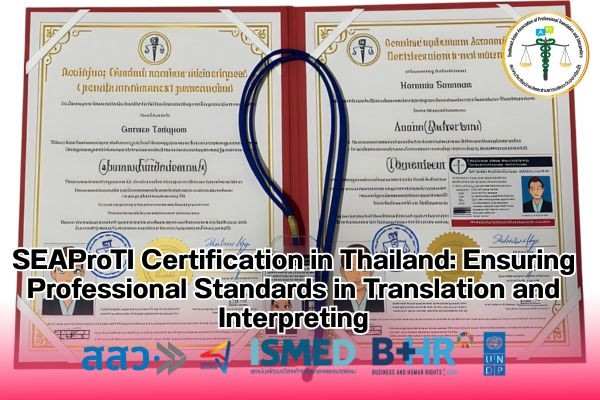
About Certified Translators, Translation Certifiers, and Certified Interpreters of SEAProTI
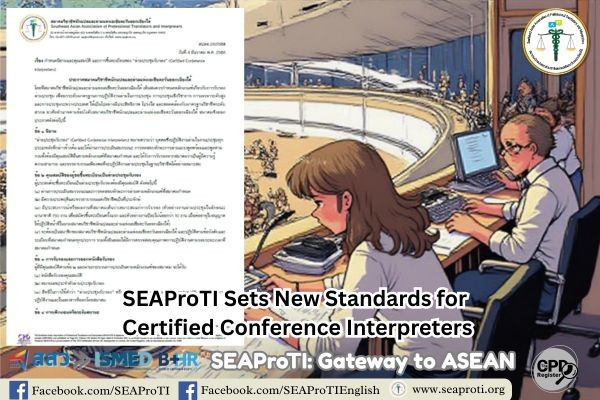
The Southeast Asian Association of Professional Translators and Interpreters (SEAProTI) has formally announced the qualifications and requirements for registration of Certified Translators, Translation Certification Providers, and Certified Interpreters in Sections 9 and 10 of the Royal Gazette, published by the Secretariat of the Cabinet, Office of the Prime Minister of Thailand, on 25 July 2024 (Vol. 141, Part 66 Ng, p. 100). Certified Translators, Translation Certification Providers, and Certified Interpreters
The Council of State has proposed the enactment of a Royal Decree, granting registered translators and recognised translation certifiers from professional associations or accredited language institutions the authority to provide legally valid translation certification (Letter to SEAProTI dated April 28, 2025)
SEAProTI is the first professional association in Thailand and Southeast Asia to implement a comprehensive certification system for translators, certifiers, and interpreters.
Head Office: Baan Ratchakru Building, No. 33, Room 402, Soi Phahonyothin 5, Phahonyothin Road, Phaya Thai District, Bangkok 10400, Thailand
Email: hello@seaproti.com | Tel.: (+66) 2-114-3128 (Office hours: Mon–Fri, 09:00–17:00)
ปัญหาและอุปสรรคในการปฏิบัติหน้าที่ของล่ามแปลในศาลไทย: กรณีศึกษาล่ามที่จัดหาโดยหน่วยงานราชการในปี พ.ศ. 2568
29 ธันวาคม 2568, กรุงเทพมหานคร – บทความวิชาการนี้มีวัตถุประสงค์เพื่อวิเคราะห์ปัญหาและอุปสรรคในการปฏิบัติหน้าที่ของล่ามแปลในศาลไทย โดยมุ่งเน้นเฉพาะล่ามที่จัดหาโดยหน่วยงานราชการในปี พ.ศ. 2568 ซึ่งมีบทบาทสำคัญในกระบวนการยุติธรรมสำหรับคดีที่คู่ความ โดยเฉพาะผู้ต้องหาหรือจำเลยชาวต่างชาติ ไม่สามารถใช้ภาษาไทยได้อย่างมีประสิทธิภาพ ผลการศึกษาพบว่าปัญหาหลักประกอบด้วย (1) การขาดมาตรฐานกลางในการประเมินความสามารถและคุณสมบัติของล่ามในศาล (2) ค่าตอบแทนที่ไม่สอดคล้องกับความรับผิดชอบและความเสี่ยงในการทำงาน จนก่อให้เกิดพฤติกรรมที่ขัดต่อจริยธรรม เช่น การเรียกรับเงินจากผู้ต้องหาชาวต่างชาติหรือการให้คำมั่นว่าจะ “แปลให้ชนะคดี” และ (3) ความไม่เข้าใจบทบาทและขอบเขตหน้าที่ของล่ามจากผู้พิพากษา เจ้าหน้าที่ศาล หรือผู้ใช้ล่ามรายอื่น ปัญหาเหล่านี้ส่งผลกระทบโดยตรงต่อคุณภาพการล่าม ความถูกต้องของกระบวนการพิจารณาคดี และความน่าเชื่อถือของกระบวนการยุติธรรมโดยรวม อีกทั้งยังเป็นการละเมิดสิทธิของผู้ต้องหาชาวต่างชาติและไม่สอดคล้องกับพันธกรณีของประเทศไทยภายใต้กติการะหว่างประเทศว่าด้วยสิทธิพลเมืองและสิทธิทางการเมือง (ICCPR) แม้กฎหมายไทยจะรับรองสิทธิในการใช้ล่ามในคดีอาญาตามประมวลกฎหมายวิธีพิจารณาความอาญาแล้วก็ตาม แต่ยังคงมีช่องว่างทางกฎหมายอย่างมีนัยสำคัญในคดีแพ่ง
คำสำคัญ: ล่ามศาล, กระบวนการยุติธรรม, สิทธิมนุษยชน, ICCPR, มาตรฐานวิชาชีพล่าม
ล่ามแปลในศาลเป็นกลไกพื้นฐานในการประกันสิทธิในการเข้าถึงกระบวนการยุติธรรมของบุคคลที่ไม่สามารถใช้ภาษาของศาลได้อย่างมีประสิทธิภาพ บทบาทของล่ามมิได้เป็นเพียงผู้ถ่ายทอดภาษา หากแต่เป็นองค์ประกอบเชิงโครงสร้างของหลักการพิจารณาคดีอย่างเป็นธรรม (fair trial) และหลักนิติธรรม (rule of law) ในบริบทของประเทศไทย ล่ามในศาลส่วนใหญ่ถูกจัดหาโดยหน่วยงานราชการภายใต้การกำกับดูแลของศาล อย่างไรก็ตาม ระบบดังกล่าวยังขาดกลไกการกำกับมาตรฐานทางวิชาชีพอย่างเป็นระบบ ส่งผลให้เกิดข้อจำกัดเชิงโครงสร้างที่กระทบต่อสิทธิของคู่ความ โดยเฉพาะผู้ต้องหาชาวต่างชาติ
การขาดมาตรฐานกลางในการประเมินความสามารถของล่ามศาล
ผลการศึกษาพบว่า ประเทศไทยยังไม่มีมาตรฐานกลางที่ชัดเจนในการประเมินความสามารถและคุณสมบัติของล่ามศาล ไม่ว่าจะเป็นด้านทักษะภาษา ความรู้ทางกฎหมาย จริยธรรมวิชาชีพ หรือความเข้าใจในกระบวนพิจารณาคดี การคัดเลือกและแต่งตั้งล่ามจำนวนมากอาศัยเพียงความสามารถทางภาษาในระดับพื้นฐานหรือความคุ้นเคยส่วนบุคคลกับหน่วยงาน ซึ่งก่อให้เกิดความไม่สม่ำเสมอของคุณภาพการล่าม ความคลาดเคลื่อนทางภาษาเพียงเล็กน้อยอาจนำไปสู่การตีความข้อเท็จจริงผิดพลาด และส่งผลต่อดุลพินิจของศาลอย่างมีนัยสำคัญ
ค่าตอบแทนต่ำและผลกระทบเชิงจริยธรรม
อีกหนึ่งปัญหาสำคัญคือค่าตอบแทนของล่ามศาลที่ไม่สอดคล้องกับความรับผิดชอบ ความเสี่ยงทางกฎหมาย และแรงกดดันทางจริยธรรมของการทำงาน ในทางปฏิบัติพบว่า ค่าตอบแทนที่ต่ำและไม่แน่นอนเป็นปัจจัยสำคัญที่ก่อให้เกิดพฤติกรรมที่ขัดต่อจริยธรรมวิชาชีพ เช่น การเรียกรับเงินเพิ่มเติมจากผู้ต้องหาชาวต่างชาติ การตกลงค่าตอบแทนนอกระบบ หรือแม้แต่การให้คำมั่นว่าจะ “แปลให้ชนะคดี” พฤติกรรมดังกล่าวไม่เพียงบ่อนทำลายหลักความเป็นกลางของล่าม แต่ยังส่งผลกระทบต่อความชอบธรรมของกระบวนการยุติธรรมโดยรวม
ความไม่เข้าใจบทบาทและขอบเขตหน้าที่ของล่าม
การศึกษายังพบความเข้าใจคลาดเคลื่อนเกี่ยวกับบทบาทของล่ามในหมู่ผู้พิพากษา เจ้าหน้าที่ศาล และผู้ใช้ล่ามรายอื่น ล่ามมักถูกคาดหวังให้ทำหน้าที่เกินขอบเขตของการถ่ายทอดภาษา เช่น การอธิบายข้อกฎหมาย การสรุปสาระสำคัญ หรือการให้คำแนะนำแก่คู่ความ ซึ่งขัดต่อหลักความเป็นกลาง (neutrality) และหลักความถูกต้องซื่อตรงในการถ่ายทอดภาษา (accuracy and fidelity) ความคลาดเคลื่อนดังกล่าวเพิ่มความเสี่ยงต่อการละเมิดสิทธิของคู่ความ และทำให้ล่ามตกอยู่ในสถานะที่เปราะบางทั้งทางวิชาชีพและทางกฎหมาย
ผลกระทบต่อสิทธิมนุษยชนและพันธกรณีระหว่างประเทศ
ปัญหาเชิงโครงสร้างดังกล่าวส่งผลกระทบโดยตรงต่อสิทธิของผู้ต้องหาชาวต่างชาติ และไม่สอดคล้องกับพันธกรณีของประเทศไทยภายใต้ กติการะหว่างประเทศว่าด้วยสิทธิพลเมืองและสิทธิทางการเมือง (ICCPR) โดยเฉพาะมาตรา 14 ที่รับรองสิทธิในการได้รับการพิจารณาคดีอย่างเป็นธรรมและสิทธิในการใช้ล่าม แม้ประเทศไทยจะรับรองสิทธิดังกล่าวไว้ในมาตรา 13 วรรคหก แห่งประมวลกฎหมายวิธีพิจารณาความอาญา (แก้ไขเพิ่มเติม พ.ศ. 2551) แต่บทบัญญัตินี้จำกัดอยู่เฉพาะคดีอาญา และยังไม่มีบทบัญญัติใดที่รับรองสิทธิในการใช้ล่ามในคดีแพ่งอย่างชัดเจน อันสะท้อนถึงช่องว่างทางกฎหมายที่ยังไม่ได้รับการแก้ไข
บทความนี้สรุปว่า ปัญหาในการปฏิบัติหน้าที่ของล่ามแปลในศาลไทย โดยเฉพาะล่ามที่จัดหาโดยหน่วยงานราชการ เป็นปัญหาเชิงโครงสร้างที่ส่งผลกระทบต่อคุณภาพกระบวนการยุติธรรมและการคุ้มครองสิทธิมนุษยชนอย่างเป็นระบบ ผู้เขียนเสนอให้มีการจัดทำมาตรฐานกลางด้านการคัดเลือกและประเมินล่ามศาล การปรับปรุงโครงสร้างค่าตอบแทนให้เหมาะสมกับภาระหน้าที่ และการพัฒนาความเข้าใจที่ถูกต้องเกี่ยวกับบทบาทของล่ามในหมู่ผู้มีส่วนเกี่ยวข้อง เพื่อยกระดับความเป็นธรรมและความน่าเชื่อถือของกระบวนการยุติธรรมไทยในระยะยาว
เอกสารอ้างอิง
- International Covenant on Civil and Political Rights. (1966). United Nations Treaty Series, 999, 171.
- Office of the United Nations High Commissioner for Human Rights. (2007). Human rights in the administration of justice: A manual on human rights for judges, prosecutors and lawyers. United Nations.
- ประมวลกฎหมายวิธีพิจารณาความอาญา (ฉบับที่ 28) พ.ศ. 2551. (2008). ราชกิจจานุเบกษา.
- Hale, S. (2004). The discourse of court interpreting. John Benjamins.
- Berk-Seligson, S. (2002). The bilingual courtroom: Court interpreters in the judicial process. University of Chicago Press.
สมาคมวิชาชีพนักแปลและล่ามแห่งเอเชียตะวันออกเฉียงใต้ (SEAProTI) ได้ประกาศหลักเกณฑ์และคุณสมบัติผู้ที่ขึ้นทะเบียนเป็น “นักแปลรับรอง (Certified Translators) และผู้รับรองการแปล (Translation Certification Providers) และล่ามรับรอง (Certified Interpreters)” ของสมาคม หมวดที่ 9 และหมวดที่ 10 ในราชกิจจานุเบกษา ของสำนักเลขาธิการคณะรัฐมนตรี ในสำนักนายกรัฐมนตรี แห่งราชอาณาจักรไทย ลงวันที่ 25 ก.ค. 2567 เล่มที่ 141 ตอนที่ 66 ง หน้า 100 อ่านฉบับเต็มได้ที่: นักแปลรับรอง ผู้รับรองการแปล และล่ามรับรอง
สำนักคณะกรรมการกฤษฎีกา เสนอให้ตราเป็นพระราชกฤษฎีกา โดยกำหนดให้นักแปลที่ขึ้นทะเบียน รวมถึงผู้รับรองการแปลจากสมาคมวิชาชีพหรือสถาบันสอนภาษาที่มีการอบรมและขึ้นทะเบียน สามารถรับรองคำแปลได้ (จดหมายถึงสมาคม SEAProTI ลงวันที่ 28 เม.ย. 2568)
สมาคมวิชาชีพนักแปลและล่ามแห่งเอเชียตะวันออกเฉียงใต้ เป็นสมาคมวิชาชีพแห่งแรกและแห่งเดียวในประเทศไทยและภูมิภาคเอเชียตะวันออกเฉียงใต้ที่มีระบบรับรองนักแปลรับรอง ผู้รับรองการแปล และล่ามรับรอง
สำนักงานใหญ่: อาคารบ้านราชครู เลขที่ 33 ห้อง 402 ซอยพหลโยธิน 5 ถนนพหลโยธิน แขวงพญาไท เขตพญาไท กรุงเทพมหานคร 10400 ประเทศไทย
อีเมล: hello@seaproti.com โทรศัพท์: (+66) 2-114-3128 (เวลาทำการ: วันจันทร์–วันศุกร์ เวลา 09.00–17.00 น.