


“Fuck You” in Court: Why Interpreters Should Not Translate It as “Yed Maeng”
Interpreting Ethics, Linguistic Fidelity, and Fairness in Judicial Proceedings
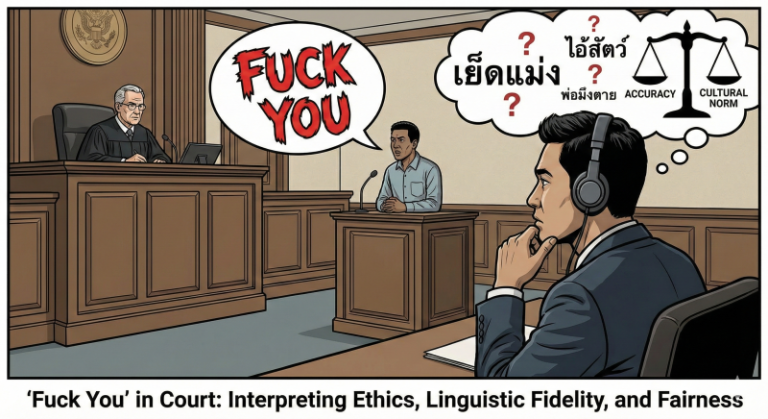
26 January 2026, Bangkok – Witnesses or parties in judicial proceedings occasionally use offensive or abusive language, particularly in criminal or confrontational cases. One frequently encountered example is the English expression “fuck you.” A key professional question arises: How should court interpreters render such expressions without violating ethical principles or distorting the evidentiary weight of testimony?
This article argues that “fuck you” should not be translated into the Thai expression “เย็ดแม่ง (yed maeng)” but should instead be phonemically rendered and reported to the court as an offensive utterance. The analysis draws on linguistics, legal reasoning, and interpreter ethics.
1. The Linguistic Status of “Fuck You”
From a pragmatic and discourse-analytic perspective, “fuck you” functions primarily as a speech act of verbal aggression, expressing hostility, contempt, or defiance. Although the term “fuck” has a sexual etymology, in contemporary usage the expression has largely undergone desemanticization, meaning that its literal sexual sense is no longer activated in most contexts (Allan & Burridge, 2006).
In translation and interpreting, offensive language must be assessed based on its communicative function, not its lexical origin. Rendering the expression with a sexually explicit equivalent in the target language risks introducing meanings that are absent from the source utterance.
2. Problems with Translating “Fuck You” as “Yed Maeng”
The Thai expression “เย็ดแม่ง (yed maeng)” differs significantly from “fuck you” in several crucial respects:
- It carries an explicit sexual meaning in Thai.
- It is culturally perceived as more severe and graphic.
- It creates a bodily and sexualized mental image not present in the English utterance.
Using such an equivalent constitutes intensification, whereby the interpreter increases the offensiveness beyond that of the original speech. This may amount to the interpreter effectively putting words into the witness’s mouth, a practice that directly contradicts professional standards (Hale, 2004).
3. Court Interpreting Ethics: No Additions, Omissions, or Alterations
Internationally recognized codes of court interpreting ethics emphasize that interpreters must render speech accurately, completely, and impartially, without adding, omitting, or modifying content (Bancroft et al., 2013).
When an interpreter selects a culturally loaded insult in the target language, the interpreter:
- Interprets cultural severity on behalf of the court,
- Chooses the degree of offensiveness for the speaker, and
- This process involves the introduction of personal judgment into the judicial process.
Such actions may influence how a witness’s demeanor or credibility is perceived, thereby undermining procedural fairness.
4. Best Practice: Phonemic Rendering and Explicit Reporting
The most professionally sound approach is for the interpreter to:
- Phonetically render “fuck you” (e.g., as “ฟัก ยู” in Thai) and explicitly inform the court that the utterance constitutes an offensive or abusive expression.
This method ensures that:
- The court is informed of the existence and nature of the insult.
- The interpreter does not invent or escalate abusive language in the target language, and
- The court retains full authority to assess the legal and evidentiary implications.
In this role, the interpreter remains a linguistic conduit, not a cultural editor or moral arbiter.
Conclusion
In courtroom discourse, “fuck you” functions as an insult rather than a sexual statement. Translating it as “เย็ดแม่ง (yed maeng)” introduces sexual explicitness and cultural severity that do not exist in the original utterance, thereby violating interpreter neutrality and ethical standards.
Phonemic rendering combined with a clear explanation to the court that the phrase is an offensive utterance preserves linguistic accuracy, interpreter impartiality, and judicial fairness.
Court interpreters are not tasked with amplifying offensiveness or producing emotionally charged equivalents; their duty is to preserve the integrity of the original speech and allow the court to judge its consequences
References
- Allan, K., & Burridge, K. (2006). Forbidden words: Taboo and the censoring of language. Cambridge University Press.
- Bancroft, M., Bendana, L., Bruggeman, J., & Feuerle, L. (2013). The interpreter’s world tour: An environmental scan of standards of practice for interpreters. The California Endowment.
- Hale, S. B. (2004). The discourse of court interpreting. John Benjamins Publishing.
- Mikkelson, H. (2016). Introduction to court interpreting (2nd ed.). Routledge.
About Certified Translators, Translation Certifiers, and Certified Interpreters of SEAProTI
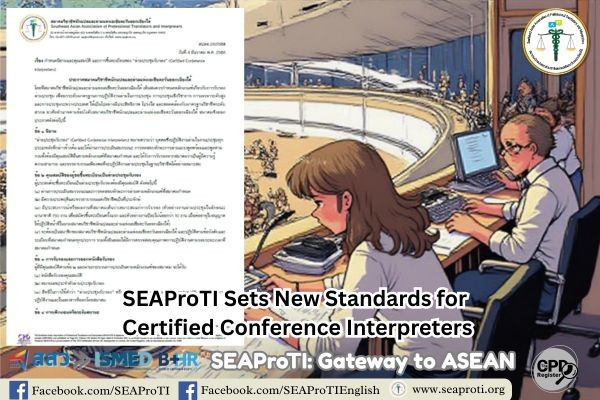
The Southeast Asian Association of Professional Translators and Interpreters (SEAProTI) has officially shared the qualifications and requirements for becoming Certified Translators, Translation Certification Providers, and Certified Interpreters in Sections 9 and 10 of the Royal Gazette, which was published by the Prime Minister’s Office in Thailand on July 25, 2024. Certified Translators, Translation Certification Providers, and Certified Interpreters
The Council of State has proposed the enactment of a Royal Decree, granting registered translators and recognised translation certifiers from professional associations or accredited language institutions the authority to provide legally valid translation certification (Letter to SEAProTI dated April 28, 2025)
SEAProTI is the first professional association in Thailand and Southeast Asia to implement a comprehensive certification system for translators, certifiers, and interpreters.
Head Office: Baan Ratchakru Building, No. 33, Room 402, Soi Phahonyothin 5, Phahonyothin Road, Phaya Thai District, Bangkok 10400, Thailand
Email: hello@seaproti.com | Tel.: (+66) 2-114-3128 (Office hours: Mon–Fri, 09:00–17:00)
“Fuck you” ในศาล: เหตุใดล่ามไม่ควรแปลเป็น “เย็ดแม่ง” หลักจริยธรรมล่าม การถ่ายทอดถ้อยคำ และความเป็นธรรมในกระบวนการยุติธรรม
26 มกราคม 2569, กรุงเทพมหานคร – ในกระบวนการพิจารณาคดี การใช้ภาษาที่หยาบคายของพยานหรือคู่ความไม่ใช่เรื่องแปลก โดยเฉพาะในคดีอาญาหรือคดีที่มีความขัดแย้งรุนแรง หนึ่งในตัวอย่างที่พบบ่อยคือคำว่า “fuck you” ซึ่งเป็นคำสบถในภาษาอังกฤษ คำถามสำคัญทางวิชาชีพคือ ล่ามศาลควรแปลคำดังกล่าวอย่างไร เพื่อไม่ให้ละเมิดหลักจริยธรรม และไม่บิดเบือนน้ำหนักคำเบิกความ
บทความนี้เสนอว่า คำว่า “fuck you” ไม่ควรถูกแปลเป็น “เย็ดแม่ง” แต่ควรถอดเสียงเป็นภาษาไทยและแจ้งศาลว่าเป็นคำด่าหยาบคาย พร้อมอธิบายเหตุผลเชิงภาษาศาสตร์ กฎหมาย และจริยธรรมล่าม
ในทางภาษาศาสตร์เชิงวัจนปฏิบัติ (pragmatics) คำว่า “fuck you” ทำหน้าที่เป็น speech act ประเภทการดูหมิ่นหรือแสดงความเป็นปฏิปักษ์ (verbal aggression) มิใช่การสื่อสารเชิงเพศ (sexual proposition) แม้รากศัพท์จะเกี่ยวข้องกับเพศ แต่ในบริบทการใช้จริง คำดังกล่าวถูก desemanticized จนไม่สื่อความหมายตามตัวอักษรอีกต่อไป (Allan & Burridge, 2006)
การแปลคำสบถจำเป็นต้องพิจารณา function มากกว่า form หากล่ามเลือกคำแปลที่มีนัยทางเพศชัดเจนในภาษาเป้าหมาย ย่อมเป็นการสร้างความหมายใหม่ที่ไม่ได้อยู่ในต้นฉบับ
2. ปัญหาของการแปล “fuck you” เป็น “เย็ดแม่ง”
คำว่า “เย็ดแม่ง” ในภาษาไทยมีลักษณะเฉพาะที่แตกต่างจาก “fuck you” อย่างมีนัยสำคัญ ได้แก่ เป็นคำหยาบที่มีภาพทางเพศชัดเจน มีระดับความรุนแรงทางวัฒนธรรมสูงกว่า สร้างภาพเชิงกายภาพที่ต้นฉบับไม่ได้มี
3. หลักจริยธรรมล่ามศาล: ห้ามเพิ่ม ลด หรือดัดแปลง
จริยธรรมล่ามศาลในระดับสากลยึดหลักว่า ล่ามต้องถ่ายทอดถ้อยคำอย่างครบถ้วนและซื่อสัตย์ โดย ไม่เพิ่ม ไม่ลด และไม่ปรับเปลี่ยนน้ำหนักถ้อยคำ (Bancroft et al., 2013)
หากล่ามเลือกคำด่าในภาษาไทยแทนพยาน เท่ากับล่ามกำลังตีความเชิงวัฒนธรรมแทนศาล เลือกระดับความหยาบแทนผู้พูด แทรกอัตวิสัยของตนเองลงในกระบวนการพิจารณาคดี ซึ่งอาจส่งผลต่อการประเมินพฤติกรรมของพยาน และกระทบต่อความเป็นธรรมในการพิจารณาคดี
แนวทางที่สอดคล้องกับหลักวิชาชีพมากที่สุดคือ ล่ามถอดเสียงคำว่า “fuck you” เป็น “ฟัก ยู” และแจ้งศาลว่าเป็นคำด่าหยาบคายหรือคำไม่สุภาพ
วิธีนี้มีข้อดีสำคัญคือ
- ศาลรับรู้ ข้อเท็จจริงทางภาษา ว่ามีการด่าเกิดขึ้น
- ล่ามไม่สร้างคำด่าใหม่ในภาษาเป้าหมาย
- ศาลเป็นผู้ประเมินน้ำหนักและผลทางกฎหมายเอง
- บทบาทของล่ามจึงยังคงเป็น linguistic conduit มิใช่ cultural editor หรือ moral arbiter
คำว่า “fuck you” ในบริบทศาลเป็นคำสบถ ไม่ใช่ถ้อยคำเชิงเพศ การแปลเป็น “เย็ดแม่ง” จึงเป็นการบิดเบือนหน้าที่ของคำ และละเมิดหลักจริยธรรมล่าม การถอดเสียงพร้อมแจ้งศาลว่ามีการใช้คำด่าหยาบคาย เป็นแนวทางที่เคารพทั้งความถูกต้องทางภาษา ความเป็นกลางของล่าม และความเป็นธรรมในกระบวนการยุติธรรม
ล่ามศาลไม่ได้มีหน้าที่ “ทำให้สะใจ” หรือ “แปลให้แรง” แต่มีหน้าที่ รักษาความซื่อสัตย์ของถ้อยคำ และปล่อยให้ศาลเป็นผู้ตัดสิน
เอกสารอ้างอิง (References)
- Allan, K., & Burridge, K. (2006). Forbidden words: Taboo and the censoring of language. Cambridge University Press.
- Bancroft, M., Bendana, L., Bruggeman, J., & Feuerle, L. (2013). The interpreter’s world tour: An environmental scan of standards of practice for interpreters. The California Endowment.
- Hale, S. B. (2004). The discourse of court interpreting. John Benjamins Publishing.
- Mikkelson, H. (2016). Introduction to court interpreting (2nd ed.). Routledge.
เกี่ยวกับนักแปลรับรอง ผู้รับรองการแปล และล่ามรับรองของสมาคมวิชาชีพนักแปลและล่ามแห่งเอเชียตะวันออกเฉียงใต้
สมาคมวิชาชีพนักแปลและล่ามแห่งเอเชียตะวันออกเฉียงใต้ (SEAProTI) ได้ประกาศหลักเกณฑ์และคุณสมบัติของผู้ที่ขึ้นทะเบียนเป็น “นักแปลรับรอง (Certified Translators) และผู้รับรองการแปล (Translation Certification Providers) และล่ามรับรอง (Certified Interpreters)” ของสมาคม หมวดที่ 9 และหมวดที่ 10 ในราชกิจจานุเบกษา ของสำนักเลขาธิการคณะรัฐมนตรี ในสำนักนายกรัฐมนตรี แห่งราชอาณาจักรไทย ลงวันที่ 25 ก.ค. 2567 เล่มที่ 141 ตอนที่ 66 ง หน้า 100 อ่านฉบับเต็มได้ที่: นักแปลรับรอง ผู้รับรองการแปล และล่ามรับรอง
สำนักคณะกรรมการกฤษฎีกาเสนอให้ตราเป็นพระราชกฤษฎีกา โดยกำหนดให้นักแปลที่ขึ้นทะเบียน รวมถึงผู้รับรองการแปลจากสมาคมวิชาชีพหรือสถาบันสอนภาษาที่มีการอบรมและขึ้นทะเบียน สามารถรับรองคำแปลได้ (จดหมายถึงสมาคม SEAProTI ลงวันที่ 28 เม.ย. 2568)
สมาคมวิชาชีพนักแปลและล่ามแห่งเอเชียตะวันออกเฉียงใต้ เป็นสมาคมวิชาชีพแห่งแรกและแห่งเดียวในประเทศไทยและภูมิภาคเอเชียตะวันออกเฉียงใต้ที่มีระบบรับรองนักแปลรับรอง ผู้รับรองการแปล และล่ามรับรอง
สำนักงานใหญ่: อาคารบ้านราชครู เลขที่ 33 ห้อง 402 ซอยพหลโยธิน 5 ถนนพหลโยธิน แขวงพญาไท เขตพญาไท กรุงเทพมหานคร 10400 ประเทศไทย
อีเมล: hello@seaproti.com โทรศัพท์: (+66) 2-114-3128 (เวลาทำการ: วันจันทร์–วันศุกร์ เวลา 09.00–17.00 น.