


Forensic Linguistics as a Professional Service:
A Comparative Analysis of Service Models and Strategic Implications for Thailand
Author: Wanitcha Sumanat, President of the Southeast Asian Association of Professional Translators and Interpreters (SEAProTI), arbitrator, mediator, and certified forensic linguist.
Abstract
This article aims to examine forensic linguistics as a professional service that is rapidly expanding on a global scale. It analyzes the service models of leading organizations and classifies them into three primary categories: (1) investigative support, (2) expert witness and evidentiary services, and (3) consulting and compliance. The findings indicate that forensic linguistics has evolved from an academic discipline into a strategic tool used in investigations, litigation, and organizational risk management. However, in the Thai context, there remains a lack of supporting structures in terms of legal recognition, professional standards, and stakeholder awareness. The article proposes elevating the role of translators and interpreters into that of language analysts and developing institutional frameworks to support the systematic application of forensic linguistics.
1. Introduction
Language is a fundamental component of the justice system, encompassing witness testimonies, interrogation records, legal contracts, and judicial decisions. Historically, however, language within legal systems has been treated primarily as a medium of communication rather than as evidence.
Forensic linguistics challenges this perspective by demonstrating that language can be systematically analyzed to reveal underlying meaning, intention, ambiguity, and behavioral patterns of language users (Coulthard & Johnson, 2010). Today, forensic linguistics has moved beyond academia and developed into a professional service applied in criminal and civil cases, corporate investigations, and risk management.
This article aims to (1) analyze global service models of forensic linguistics, (2) compare their structures and functions, and (3) propose strategic directions for development in Thailand.
2. Conceptual Framework
This study is grounded in three key theoretical perspectives.
First, the concept of “language as evidence” views language as evidentiary data that can be analyzed to uncover truth in legal cases (Shuy, 2008). For example, confession analysis may reveal leading questions or coercion.
Second, forensic discourse analysis focuses on examining linguistic structures within legal contexts, such as police questioning, contractual language, and judicial reasoning (Gibbons, 2003).
Third, the concept of professionalization of language services explains the transition of translators and interpreters from a conduit model (mere transmitters of language) to an expert model, where they act as analytical professionals providing informed opinions.
3. Global Service Models in Forensic Linguistics
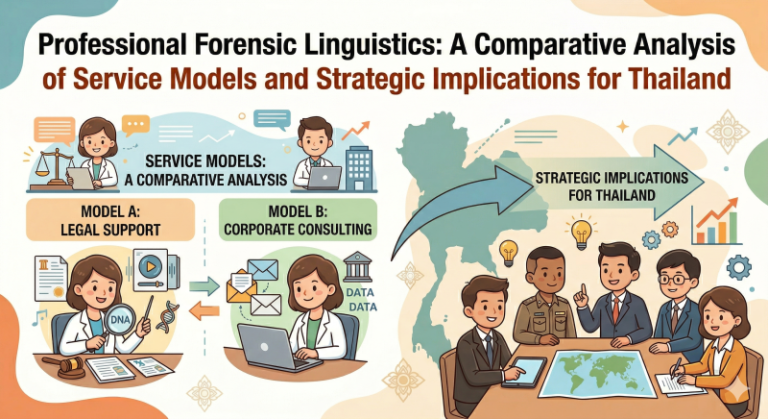
3.1 Investigative Support Model
This model applies linguistic analysis to support criminal investigations and internal organizational inquiries. It includes threat assessment, statement analysis, and confession analysis.
A defining characteristic of this model is its operational nature, often integrated with intelligence work. Language is analyzed in both textual and discourse forms to assess intent, credibility, and behavioral patterns of individuals involved.
3.2 Expert Witness and Evidentiary Services Model
This model emphasizes the role of forensic linguists as expert witnesses who provide academic and analytical opinions to the court. Services include expert reports and courtroom testimony.
Analyses may involve interpreting contractual language, identifying ambiguity, examining interrogation discourse, or determining authorship of documents.
This model is particularly significant in legal systems that formally recognize expert testimony, enhancing the accuracy and reliability of evidentiary evaluation.
3.3 Consulting and Compliance Model
This model reflects the application of forensic linguistics in the corporate sector, focusing on risk prevention rather than dispute resolution.
It includes analyzing contractual ambiguity, detecting fraudulent or misleading language in documents, and ensuring linguistic compliance with relevant laws, such as data protection regulations.
This approach demonstrates the integration of language, law, and corporate governance, positioning forensic linguistics as a tool for proactive risk management.
4. Comparative Analysis
Across these three models, forensic linguistics operates within three key dimensions:
Truth-finding in investigative contexts
Evidence construction in judicial proceedings
Risk management in corporate environments
This diversity highlights forensic linguistics as an interdisciplinary field capable of generating both legal and economic value across sectors.
5. Strategic Implications for Thailand
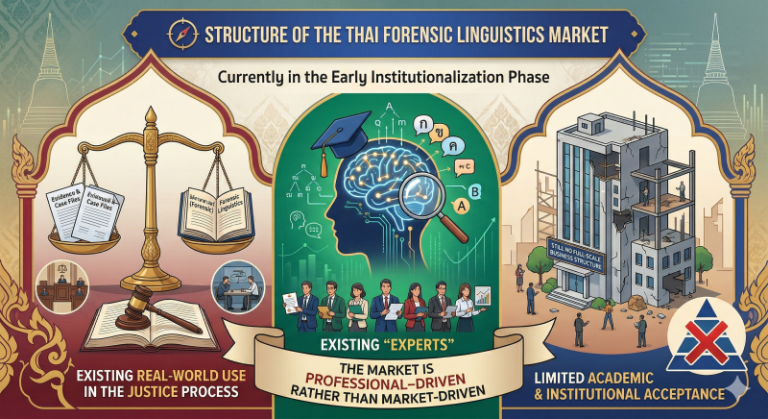
Despite the extensive use of language in Thailand’s legal system, forensic linguistics remains an underdeveloped institution. Several key limitations can be identified.
First, there is a lack of practical recognition of linguistic expert witnesses, despite legal provisions allowing expert testimony.
Second, translators and interpreters are still predominantly viewed as language transmitters, rather than analytical professionals, limiting their contribution to justice processes.
Third, there is an absence of standardized professional certification systems linked to real-world applications in courts and business environments.
Therefore, strategic development in Thailand should focus on:
Establishing specialized training programs in forensic linguistics
Developing standardized professional certification systems
Raising awareness among legal professionals, judges, and corporate stakeholders
Integrating forensic linguistics into legal and regulatory frameworks
6. Conclusion
Forensic linguistics has evolved from a theoretical discipline into a professional service with significant roles in investigation, litigation, and risk management.
This study demonstrates that its development represents not merely the introduction of new tools into the legal system, but a fundamental shift in how language is perceived—from a communication tool to analytical evidence.
For Thailand, elevating translators and interpreters into forensic linguistic experts will be a critical step toward improving the quality of justice and enhancing international competitiveness.
References
Coulthard, M., & Johnson, A. (2010). An introduction to forensic linguistics: Language in evidence. Routledge.
Gibbons, J. (2003). Forensic linguistics: An introduction to language in the justice system. Blackwell.
McMenamin, G. R. (2002). Forensic linguistics: Advances in forensic stylistics. CRC Press.
Shuy, R. W. (2008). Fighting over words: Language and civil law cases. Oxford University Press.
For professional services, please visit: https://www.seaproti.org/practitioners/
About certified translators, translation certifiers, and certified interpreters associated with SEAProTI.
The Southeast Asian Association of Professional Translators and Interpreters (SEAProTI) has officially shared the qualifications and requirements for becoming Certified Translators, Translation Certification Providers, and Certified Interpreters in Sections 9 and 10 of the Royal Gazette, which was published by the Prime Minister’s Office in Thailand on July 25, 2024. Certified Translators, Translation Certification Providers, and Certified Interpreters
The Council of State has proposed the enactment of a Royal Decree, granting registered translators and recognised translation certifiers from professional associations or accredited language institutions the authority to provide legally valid translation certification (Letter to SEAProTI dated April 28, 2025)
SEAProTI is the first professional association in Thailand and Southeast Asia to implement a comprehensive certification system for translators, certifiers, and interpreters.
Head Office: Baan Ratchakru Building, No. 33, Room 402, Soi Phahonyothin 5, Phahonyothin Road, Phaya Thai District, Bangkok 10400, Thailand
Email: hello@seaproti.com | Tel.: (+66) 2-114-3128 (Office hours: Mon–Fri, 09:00–17:00).
นิติภาษาศาสตร์ในฐานะบริการวิชาชีพ:
การวิเคราะห์เชิงเปรียบเทียบของรูปแบบการให้บริการและนัยเชิงกลยุทธ์สำหรับประเทศไทย
ผู้เขียน: วนิชชา สุมานัส
นายกสมาคมวิชาชีพนักแปลและล่ามแห่งเอเชียตะวันออกเฉียงใต้ (SEAProTI), อนุญาโตตุลาการ, ผู้ไกล่เกลี่ย และผู้เชี่ยวชาญนิติภาษาศาสตร์ที่ได้รับการรับรอง
บทคัดย่อ (Abstract)
บทความนี้มุ่งวิเคราะห์ “นิติภาษาศาสตร์” (forensic linguistics) ในฐานะบริการวิชาชีพที่กำลังขยายบทบาทในระดับสากล โดยศึกษารูปแบบการให้บริการขององค์กรชั้นนำและจำแนกออกเป็นสามโมเดลหลัก ได้แก่ (1) การสนับสนุนการสืบสวน (investigative support), (2) การให้ความเห็นผู้เชี่ยวชาญในกระบวนการยุติธรรม (expert witness and evidentiary services), และ (3) การให้คำปรึกษาด้านความเสี่ยงและการกำกับดูแล (consulting and compliance). ผลการศึกษาพบว่า นิติภาษาศาสตร์ได้เปลี่ยนสถานะจากศาสตร์เชิงวิชาการไปสู่ “เครื่องมือเชิงกลยุทธ์” ที่ใช้ในการสืบสวน การดำเนินคดี และการบริหารความเสี่ยงขององค์กร ขณะเดียวกัน บริบทประเทศไทยยังขาดโครงสร้างรองรับทั้งในด้านกฎหมาย มาตรฐานวิชาชีพ และการรับรู้ของผู้มีส่วนเกี่ยวข้อง บทความเสนอแนวทางยกระดับบทบาทนักแปลและล่ามไปสู่ “ผู้เชี่ยวชาญด้านการวิเคราะห์ภาษา” (language analyst) และพัฒนาโครงสร้างเชิงสถาบันเพื่อรองรับการใช้งาน forensic linguistics อย่างเป็นระบบ
1. บทนำ
ภาษาเป็นองค์ประกอบพื้นฐานของกระบวนการยุติธรรม ไม่ว่าจะเป็นคำให้การของพยาน บันทึกการสอบสวน สัญญาทางกฎหมาย หรือคำพิพากษา อย่างไรก็ตาม ในอดีต ภาษาในระบบกฎหมายมักถูกมองเพียงในฐานะ “สื่อกลาง” (medium of communication) มากกว่าจะเป็น “หลักฐาน” (evidence)
นิติภาษาศาสตร์ (forensic linguistics) ได้เข้ามาเปลี่ยนมุมมองดังกล่าว โดยเสนอว่าภาษาสามารถถูกวิเคราะห์อย่างเป็นระบบเพื่อเปิดเผยความหมายเชิงลึก เจตนา ความคลุมเครือ และรูปแบบพฤติกรรมของผู้ใช้ภาษา (Coulthard & Johnson, 2010) ปัจจุบัน นิติภาษาศาสตร์ไม่ได้จำกัดอยู่ในแวดวงวิชาการ แต่ได้พัฒนาไปสู่การเป็น “บริการวิชาชีพ” ที่ถูกนำไปใช้จริงในคดีอาญา คดีแพ่ง การสอบสวนองค์กร และการบริหารความเสี่ยง
บทความนี้มีวัตถุประสงค์เพื่อ (1) วิเคราะห์รูปแบบการให้บริการ forensic linguistics ในระดับสากล (2) เปรียบเทียบลักษณะและบทบาทของแต่ละโมเดล และ (3) เสนอแนวทางเชิงกลยุทธ์สำหรับการพัฒนาในบริบทประเทศไทย
2. กรอบแนวคิดและทฤษฎีที่เกี่ยวข้อง
การวิเคราะห์ในบทความนี้อาศัยกรอบแนวคิดหลักสามประการ
- ประการแรก แนวคิด “language as evidence” ซึ่งมองว่าภาษาเป็นข้อมูลเชิงพยานที่สามารถนำมาวิเคราะห์เพื่อค้นหาความจริงในคดี (Shuy, 2008) ตัวอย่างเช่น การวิเคราะห์คำรับสารภาพเพื่อพิจารณาว่ามีการชี้นำ (leading) หรือการบีบบังคับ (coercion) หรือไม่
- ประการที่สอง แนวคิด “forensic discourse analysis” ซึ่งเน้นการวิเคราะห์โครงสร้างของวาทกรรมในบริบททางกฎหมาย เช่น การตั้งคำถามของพนักงานสอบสวน การใช้ถ้อยคำในสัญญา หรือการใช้ภาษาในคำพิพากษา (Gibbons, 2003)
- ประการที่สาม แนวคิดเรื่อง “professionalization of language services” ซึ่งอธิบายการเปลี่ยนผ่านของนักแปลและล่ามจากผู้ถ่ายทอดภาษา (conduit model) ไปสู่ผู้เชี่ยวชาญเชิงวิเคราะห์ (expert model) ที่มีบทบาทในการตีความและให้ความเห็นเชิงวิชาการ
3. รูปแบบการให้บริการนิติภาษาศาสตร์ในระดับสากล
3.1 โมเดลที่ 1: การสนับสนุนการสืบสวน (Investigative Support)
โมเดลนี้มุ่งใช้การวิเคราะห์ภาษาเพื่อสนับสนุนการสืบสวนทั้งในคดีอาญาและการสอบสวนภายในองค์กร โดยครอบคลุมการวิเคราะห์ข้อความข่มขู่ (threat assessment), คำให้การ (statement analysis), และคำรับสารภาพ (confession analysis)
ลักษณะสำคัญของโมเดลนี้คือการทำงานเชิงปฏิบัติการ (operational) และการผสานกับงานด้าน intelligence โดยใช้ภาษาทั้งในรูปแบบข้อความและวาทกรรมเพื่อประเมินเจตนา ความน่าเชื่อถือ และรูปแบบพฤติกรรมของผู้เกี่ยวข้อง
3.2 โมเดลที่ 2: การให้ความเห็นผู้เชี่ยวชาญในศาล (Expert Witness and Evidentiary Services)
โมเดลนี้เน้นบทบาทของนักนิติภาษาศาสตร์ในฐานะ “พยานผู้เชี่ยวชาญ” (expert witness) ที่ให้ความเห็นทางวิชาการต่อศาล โดยจัดทำรายงานเชิงหลักฐาน (expert reports) และให้การในชั้นพิจารณา
การวิเคราะห์ในโมเดลนี้อาจครอบคลุมการตีความความหมายของถ้อยคำในสัญญา การตรวจสอบความคลุมเครือของภาษา การวิเคราะห์บทสนทนาในการสอบสวน หรือการระบุผู้เขียนเอกสาร
บทบาทดังกล่าวมีความสำคัญอย่างยิ่งในระบบกฎหมายที่ยอมรับพยานผู้เชี่ยวชาญ และช่วยเพิ่มความแม่นยำในการประเมินพยานหลักฐาน
3.3 โมเดลที่ 3: การให้คำปรึกษาด้านความเสี่ยงและการกำกับดูแล (Consulting and Compliance)
โมเดลนี้สะท้อนการนำ forensic linguistics ไปใช้ในภาคธุรกิจ โดยเน้นการวิเคราะห์ภาษาในเอกสารเพื่อป้องกันข้อพิพาทและลดความเสี่ยงทางกฎหมาย
ตัวอย่างเช่น การตรวจสอบสัญญาเพื่อหาความคลุมเครือ (ambiguity), การวิเคราะห์ข้อความโฆษณาเพื่อป้องกันการหลอกลวง (fraud), และการประเมินความสอดคล้องของภาษาในเอกสารกับกฎหมายที่เกี่ยวข้อง เช่น กฎหมายคุ้มครองข้อมูลส่วนบุคคล
โมเดลนี้เน้น “การป้องกัน” มากกว่าการ “แก้ไข” และสะท้อนการบูรณาการระหว่างภาษา กฎหมาย และการกำกับดูแลองค์กร
4. การวิเคราะห์เชิงเปรียบเทียบ
เมื่อพิจารณาทั้งสามโมเดลร่วมกัน จะพบว่านิติภาษาศาสตร์มีบทบาทในสามมิติสำคัญ ได้แก่
- มิติของการค้นหาความจริง (truth-finding) ในการสืบสวน
- มิติของการสร้างหลักฐาน (evidence construction) ในกระบวนการยุติธรรม
- และมิติของการบริหารความเสี่ยง (risk management) ในภาคธุรกิจ
ความหลากหลายนี้แสดงให้เห็นว่า forensic linguistics เป็นศาสตร์แบบสหวิทยาการ (interdisciplinary) ที่สามารถประยุกต์ใช้ได้ในหลายบริบท และมีศักยภาพในการสร้างมูลค่าทางเศรษฐกิจและสังคม
5. นัยเชิงกลยุทธ์สำหรับประเทศไทย
แม้ว่าประเทศไทยจะมีการใช้ภาษาในกระบวนการยุติธรรมอย่างเข้มข้น แต่บทบาทของนิติภาษาศาสตร์ยังไม่ถูกพัฒนาอย่างเป็นระบบ โดยมีข้อจำกัดสำคัญหลายประการ
- ประการแรก การขาดการยอมรับบทบาทของผู้เชี่ยวชาญด้านภาษาในศาล แม้ว่ากฎหมายจะเปิดช่องให้มีพยานผู้เชี่ยวชาญ แต่ในทางปฏิบัติยังไม่มีการใช้ forensic linguistics อย่างแพร่หลาย
- ประการที่สอง นักแปลและล่ามยังถูกมองในกรอบของ “ผู้ถ่ายทอดภาษา” มากกว่าผู้วิเคราะห์ ส่งผลให้ศักยภาพในการสนับสนุนกระบวนการยุติธรรมยังไม่ถูกใช้เต็มที่
- ประการที่สาม การขาดมาตรฐานวิชาชีพและระบบรับรองที่เชื่อมโยงกับการใช้งานจริงในศาลและภาคธุรกิจ
ดังนั้น แนวทางเชิงกลยุทธ์สำหรับประเทศไทยควรประกอบด้วย
- การพัฒนาหลักสูตรและการฝึกอบรมด้าน forensic linguistics
- การสร้างระบบรับรองวิชาชีพที่มีมาตรฐาน
- การส่งเสริมความเข้าใจในหมู่นักกฎหมาย ผู้พิพากษา และองค์กรธุรกิจ
- และการบูรณาการ forensic linguistics เข้ากับระบบกฎหมายและการกำกับดูแล
6. บทสรุป
นิติภาษาศาสตร์ในปัจจุบันได้ก้าวข้ามจากการเป็นศาสตร์เชิงทฤษฎีไปสู่การเป็น “บริการวิชาชีพ” ที่มีบทบาทสำคัญในหลายภาคส่วน ทั้งการสืบสวน การดำเนินคดี และการบริหารความเสี่ยง
การศึกษานี้แสดงให้เห็นว่า การพัฒนา forensic linguistics ไม่ได้เป็นเพียงการเพิ่มเครื่องมือใหม่ให้กับระบบกฎหมาย แต่เป็นการเปลี่ยนมุมมองต่อ “ภาษา” จากเครื่องมือสื่อสารไปสู่ “หลักฐานเชิงวิเคราะห์”
สำหรับประเทศไทย การยกระดับบทบาทของนักแปลและล่ามไปสู่ผู้เชี่ยวชาญด้านนิติภาษาศาสตร์ จะเป็นก้าวสำคัญในการพัฒนาคุณภาพของกระบวนการยุติธรรม และเพิ่มขีดความสามารถในการแข่งขันในระดับสากล
เอกสารอ้างอิง
- Coulthard, M., & Johnson, A. (2010). An introduction to forensic linguistics: Language in evidence. Routledge.
- Gibbons, J. (2003). Forensic linguistics: An introduction to language in the justice system. Blackwell.
- McMenamin, G. R. (2002). Forensic linguistics: Advances in forensic stylistics. CRC Press.
- Shuy, R. W. (2008). Fighting over words: Language and civil law cases. Oxford University Press.
ติดต่อขอใช้บริการนักวิชาชีพของสมาคมได้ที่: https://www.seaproti.org/practitioners/
- สมาคมวิชาชีพนักแปลและล่ามแห่งเอเชียตะวันออกเฉียงใต้ (SEAProTI) ได้ประกาศหลักเกณฑ์และคุณสมบัติของผู้ที่ขึ้นทะเบียนเป็น “นักแปลรับรอง (Certified Translators) และผู้รับรองการแปล (Translation Certification Providers) และล่ามรับรอง (Certified Interpreters)” ของสมาคม หมวดที่ 9 และหมวดที่ 10 ในราชกิจจานุเบกษา ของสำนักเลขาธิการคณะรัฐมนตรี ในสำนักนายกรัฐมนตรี แห่งราชอาณาจักรไทย ลงวันที่ 25 ก.ค. 2567 เล่มที่ 141 ตอนที่ 66 ง หน้า 100 อ่านฉบับเต็มได้ที่: นักแปลรับรอง ผู้รับรองการแปล และล่ามรับรอง
- สำนักคณะกรรมการกฤษฎีกาเสนอให้ตราเป็นพระราชกฤษฎีกา โดยกำหนดให้นักแปลที่ขึ้นทะเบียน รวมถึงผู้รับรองการแปลจากสมาคมวิชาชีพหรือสถาบันสอนภาษาที่มีการอบรมและขึ้นทะเบียน สามารถรับรองคำแปลได้ (จดหมายถึงสมาคม SEAProTI ลงวันที่ 28 เม.ย. 2568)
- สมาคมวิชาชีพนักแปลและล่ามแห่งเอเชียตะวันออกเฉียงใต้เป็นสมาคมวิชาชีพแห่งแรกและแห่งเดียวในประเทศไทยและภูมิภาคเอเชียตะวันออกเฉียงใต้ที่มีระบบรับรองนักแปลรับรอง ผู้รับรองการแปล และล่ามรับรอง
สำนักงานใหญ่: อาคารบ้านราชครู เลขที่ 33 ห้อง 402 ซอยพหลโยธิน 5 ถนนพหลโยธิน แขวงพญาไท เขตพญาไท กรุงเทพมหานคร 10400 ประเทศไทย
อีเมล: hello@seaproti.com โทรศัพท์: (+66) 2-114-3128 (เวลาทำการ: วันจันทร์–วันศุกร์ เวลา 09.00–17.00 น.