


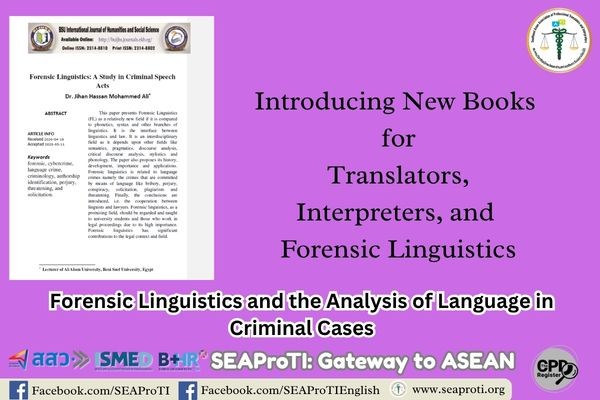
Article: Forensic Linguistics and the Analysis of Language in Criminal Cases
4 April 2026, Bangkok – Forensic Linguistics (FL) is an interdisciplinary field that bridges language, crime, and law, playing an increasingly significant role in modern judicial processes. Although it is relatively new compared to other branches of linguistics such as phonetics or syntax, forensic linguistics has proven to be essential in interpreting language as legal evidence.
Fundamentally, forensic linguistics draws upon various linguistic disciplines, including semantics, which studies meaning; pragmatics, which focuses on language use in context; discourse analysis, which examines language beyond the sentence level; as well as stylistics and phonology, which help analyze distinctive linguistic patterns. This interdisciplinary nature allows forensic linguists to uncover subtle linguistic features that may not be apparent to non-specialists.
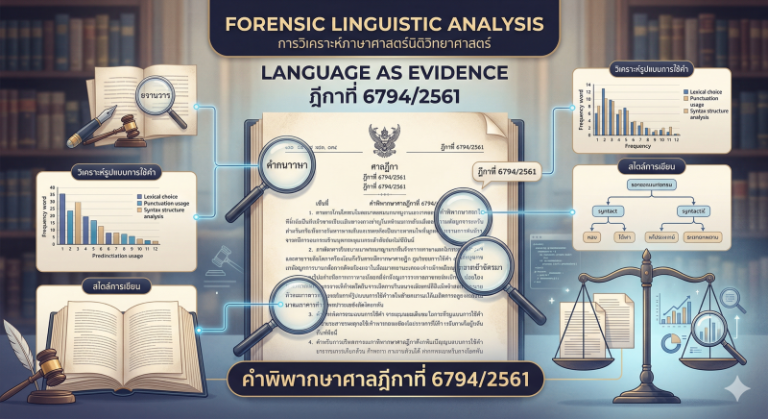
The scope of forensic linguistics can be viewed from two perspectives. In a broad sense, it encompasses the study of legal language in written texts, spoken interactions within legal settings, and language as evidence. In a narrower sense, it focuses specifically on the use of language as evidence, where forensic linguists often serve as expert witnesses in court.
Forensic linguists perform a variety of roles, with two primary objectives: identifying linguistic clues and providing expert opinions to prevent miscarriages of justice. One key area of application is the analysis of written legal language. Legal texts are often complex and difficult for the general public to understand, and forensic linguists can help simplify such language. Additionally, they are involved in authorship attribution, where unknown texts are compared with known samples to determine whether they were written by the same individual. This process relies on identifying a person’s unique “linguistic fingerprint,” or idiolect. They also assist in detecting plagiarism using computational tools that identify similarities in word patterns and structures.
In terms of spoken language, forensic linguistics includes the analysis of interactions such as police interrogations and courtroom questioning. A related subfield, forensic phonetics, focuses on speaker identification through voice characteristics such as accent, pronunciation, and acoustic patterns, often using tools like spectrographic analysis (voice prints).
Beyond criminal law, forensic linguistics is also applied in civil disputes, particularly in cases involving trademarks and copyright. For example, in disputes like McDonald’s legal actions against businesses using the “Mc” prefix, linguistic analysis is used to determine whether such usage may cause confusion or infringement.
Another crucial concept within forensic linguistics is “language crimes,” which refer to offenses committed primarily through language rather than physical force. These are often analyzed through Speech Act Theory, which views language as a form of action. Major types of language crimes include solicitation (encouraging someone to commit a crime), conspiracy (agreement between two or more individuals to commit a crime), bribery (offering something of value to influence actions), threatening (expressing intent to cause harm), and perjury (lying under oath in court).
A notable case that illustrates the application of forensic linguistics is the 2008 murder of Lebanese singer Suzan Tamim. The case involved Egyptian businessman Hesham Talaat Mustafa and former police officer Mohsen AlSokary. Crucial evidence consisted of five recorded conversations, which were analyzed to reveal intention and speech acts. The analysis demonstrated solicitation through financial offers, conspiracy through agreement and planning, and threats directed at the victim. These linguistic findings contributed significantly to the court’s decision, sentencing Mustafa to 15 years in prison and AlSokary to life imprisonment.
In conclusion, forensic linguistics serves as a powerful tool for uncovering hidden meanings and intentions within language. By analyzing linguistic evidence with scientific rigor, it enhances the accuracy of legal interpretations and supports fairer judicial outcomes. As language continues to play a central role in human interaction, the importance of forensic linguistics in the pursuit of justice will only continue to grow.
For professional services, please visit: https://www.seaproti.org/practitioners/
About certified translators, translation certifiers, and certified interpreters associated with SEAProTI.
The Southeast Asian Association of Professional Translators and Interpreters (SEAProTI) has officially shared the qualifications and requirements for becoming Certified Translators, Translation Certification Providers, and Certified Interpreters in Sections 9 and 10 of the Royal Gazette, which was published by the Prime Minister’s Office in Thailand on July 25, 2024. Certified Translators, Translation Certification Providers, and Certified Interpreters
The Council of State has proposed the enactment of a Royal Decree, granting registered translators and recognised translation certifiers from professional associations or accredited language institutions the authority to provide legally valid translation certification (Letter to SEAProTI dated April 28, 2025)
SEAProTI is the first professional association in Thailand and Southeast Asia to implement a comprehensive certification system for translators, certifiers, and interpreters.
Head Office: Baan Ratchakru Building, No. 33, Room 402, Soi Phahonyothin 5, Phahonyothin Road, Phaya Thai District, Bangkok 10400, Thailand
Email: hello@seaproti.com | Tel.: (+66) 2-114-3128 (Office hours: Mon–Fri, 09:00–17:00).
บทความ: นิติภาษาศาสตร์กับการวิเคราะห์ภาษาในคดีอาชญากรรม
นิติภาษาศาสตร์ (Forensic Linguistics: FL) เป็นศาสตร์ที่ผสานความรู้ระหว่างภาษา อาชญากรรม และกฎหมาย โดยมีบทบาทสำคัญเพิ่มขึ้นอย่างต่อเนื่องในกระบวนการยุติธรรมสมัยใหม่ แม้ว่าจะเป็นสาขาที่ค่อนข้างใหม่เมื่อเทียบกับแขนงภาษาศาสตร์อื่น เช่น สัทศาสตร์หรือวากยสัมพันธ์ แต่นิติภาษาศาสตร์กลับมีความสำคัญอย่างยิ่งในการตีความ “ภาษา” ในฐานะหลักฐานทางกฎหมาย
โดยพื้นฐานแล้ว นิติภาษาศาสตร์เป็นสหวิทยาการที่อาศัยองค์ความรู้จากหลายสาขา เช่น อรรถศาสตร์ (Semantics) ที่ศึกษาเรื่องความหมายของคำ วัจนปฏิบัติศาสตร์ (Pragmatics) ที่เน้นการใช้ภาษาในบริบท การวิเคราะห์วาทกรรม (Discourse Analysis) ที่ศึกษาภาษาในระดับข้อความ รวมถึงสไตล์ลิสติกส์ (Stylistics) และสัทวิทยา (Phonology) ซึ่งช่วยในการวิเคราะห์ลักษณะเฉพาะของภาษา
ในเชิงขอบเขต นิติภาษาศาสตร์สามารถแบ่งได้เป็นสองระดับ ได้แก่ ขอบเขตในวงกว้างที่ครอบคลุมภาษากฎหมายทั้งในรูปแบบลายลักษณ์อักษรและการสื่อสารในกระบวนการยุติธรรม และขอบเขตในวงแคบที่มุ่งเน้นเฉพาะการใช้ภาษาเป็น “หลักฐาน” โดยนักนิติภาษาศาสตร์มักทำหน้าที่เป็นพยานผู้เชี่ยวชาญ (Expert Witness) ในศาล
บทบาทของนักนิติภาษาศาสตร์มีความหลากหลาย โดยมีภารกิจหลักคือการค้นหา “เบาะแส” และการให้ “ความเห็นเชิงวิชาการ” เพื่อช่วยลดความผิดพลาดในการตัดสินคดี หนึ่งในงานสำคัญคือการวิเคราะห์ภาษาเขียน โดยเฉพาะภาษากฎหมายที่มักซับซ้อน (Legalese) ซึ่งนักวิชาการสามารถช่วยปรับให้ง่ายต่อความเข้าใจของประชาชน นอกจากนี้ยังมีการระบุตัวตนผู้เขียน (Authorship Attribution) ผ่านการวิเคราะห์ “ลายนิ้วมือทางภาษา” หรือ idiolect ซึ่งเป็นลักษณะการใช้ภาษาที่เป็นเอกลักษณ์เฉพาะบุคคล รวมถึงการตรวจจับการคัดลอกผลงาน (Plagiarism)
ในส่วนของภาษาพูด นิติภาษาศาสตร์ยังครอบคลุมการวิเคราะห์บทสนทนาในกระบวนการสอบสวน เช่น การซักถามของตำรวจและทนายความ อีกทั้งยังมีแขนงย่อยที่เรียกว่า นิติสัทศาสตร์ (Forensic Phonetics) ซึ่งใช้วิเคราะห์เสียงพูดเพื่อระบุตัวบุคคลผ่านสำเนียง การออกเสียง และเทคโนโลยี เช่น การวิเคราะห์เสียงด้วยสเปกโตรกราฟ (Spectrograph)
นอกจากนี้ นิติภาษาศาสตร์ยังมีบทบาทในข้อพิพาททางแพ่ง เช่น คดีเครื่องหมายการค้าและลิขสิทธิ์ ตัวอย่างที่ชัดเจนคือคดีของ McDonald’s ที่ฟ้องร้องการใช้คำนำหน้า “Mc” ในชื่อธุรกิจอื่น ซึ่งต้องอาศัยการตีความเชิงภาษาศาสตร์ว่าก่อให้เกิดความสับสนหรือไม่
อีกประเด็นสำคัญคือ “อาชญากรรมทางภาษา” (Language Crimes) ซึ่งหมายถึงการกระทำผิดที่ใช้ภาษาเป็นเครื่องมือหลักโดยไม่ต้องใช้ความรุนแรงทางกายภาพ การวิเคราะห์อาชญากรรมประเภทนี้มักอาศัยทฤษฎีวัจนกรรม (Speech Act Theory) ซึ่งพิจารณาว่าคำพูดสามารถเป็น “การกระทำ” ได้ เช่น การจ้างวาน (Solicitation) การสมคบคิด (Conspiracy) การติดสินบน (Bribery) การข่มขู่ (Threatening) และการเบิกความเท็จ (Perjury)
ตัวอย่างที่สะท้อนบทบาทของนิติภาษาศาสตร์อย่างชัดเจนคือคดีฆาตกรรม Suzan Tamim ในปี 2008 ซึ่งเกี่ยวข้องกับมหาเศรษฐี Hesham Talaat Mustafa และอดีตนายตำรวจ Mohsen AlSokary ในคดีนี้ มีการใช้บทสนทนาที่ถูกบันทึกไว้เป็นหลักฐานสำคัญ นักนิติภาษาศาสตร์ได้วิเคราะห์ถ้อยคำเพื่อแสดงให้เห็นถึง “เจตนา” และ “การกระทำทางภาษา” เช่น การจ้างวานผ่านการเสนอเงินจำนวนมาก การสมคบคิดผ่านการตอบตกลงและวางแผน รวมถึงการข่มขู่เหยื่อก่อนเกิดเหตุ ผลจากการวิเคราะห์ดังกล่าวมีส่วนช่วยให้ศาลตัดสินลงโทษจำคุก Mustafa เป็นเวลา 15 ปี และ AlSokary จำคุกตลอดชีวิต
กล่าวโดยสรุป นิติภาษาศาสตร์เป็นเครื่องมือสำคัญที่ช่วยเปิดเผยความจริงที่ซ่อนอยู่ในภาษา ซึ่งอาจมองไม่เห็นด้วยการพิจารณาทั่วไป ศาสตร์นี้ไม่เพียงช่วยสนับสนุนกระบวนการยุติธรรมให้มีความแม่นยำมากขึ้น แต่ยังช่วยลดความคลาดเคลื่อนในการตีความและการตัดสินคดี อันนำไปสู่ความยุติธรรมที่แท้จริงในสังคม
ติดต่อขอใช้บริการนักวิชาชีพของสมาคมได้ที่: https://www.seaproti.org/practitioners/
สมาคมวิชาชีพนักแปลและล่ามแห่งเอเชียตะวันออกเฉียงใต้ (SEAProTI) ได้ประกาศหลักเกณฑ์และคุณสมบัติของผู้ที่ขึ้นทะเบียนเป็น “นักแปลรับรอง (Certified Translators) และผู้รับรองการแปล (Translation Certification Providers) และล่ามรับรอง (Certified Interpreters)” ของสมาคม หมวดที่ 9 และหมวดที่ 10 ในราชกิจจานุเบกษา ของสำนักเลขาธิการคณะรัฐมนตรี ในสำนักนายกรัฐมนตรี แห่งราชอาณาจักรไทย ลงวันที่ 25 ก.ค. 2567 เล่มที่ 141 ตอนที่ 66 ง หน้า 100 อ่านฉบับเต็มได้ที่: นักแปลรับรอง ผู้รับรองการแปล และล่ามรับรอง
สำนักคณะกรรมการกฤษฎีกาเสนอให้ตราเป็นพระราชกฤษฎีกา โดยกำหนดให้นักแปลที่ขึ้นทะเบียน รวมถึงผู้รับรองการแปลจากสมาคมวิชาชีพหรือสถาบันสอนภาษาที่มีการอบรมและขึ้นทะเบียน สามารถรับรองคำแปลได้ (จดหมายถึงสมาคม SEAProTI ลงวันที่ 28 เม.ย. 2568)
สมาคมวิชาชีพนักแปลและล่ามแห่งเอเชียตะวันออกเฉียงใต้เป็นสมาคมวิชาชีพแห่งแรกและแห่งเดียวในประเทศไทยและภูมิภาคเอเชียตะวันออกเฉียงใต้ที่มีระบบรับรองนักแปลรับรอง ผู้รับรองการแปล และล่ามรับรอง
สำนักงานใหญ่: อาคารบ้านราชครู เลขที่ 33 ห้อง 402 ซอยพหลโยธิน 5 ถนนพหลโยธิน แขวงพญาไท เขตพญาไท กรุงเทพมหานคร 10400 ประเทศไทย
อีเมล: hello@seaproti.com โทรศัพท์: (+66) 2-114-3128 (เวลาทำการ: วันจันทร์–วันศุกร์ เวลา 09.00–17.00 น.