



Certificates, Seals, and Logos: Impacts on Citizens’ Rights, Document Credibility, and the Relevant Legal Framework
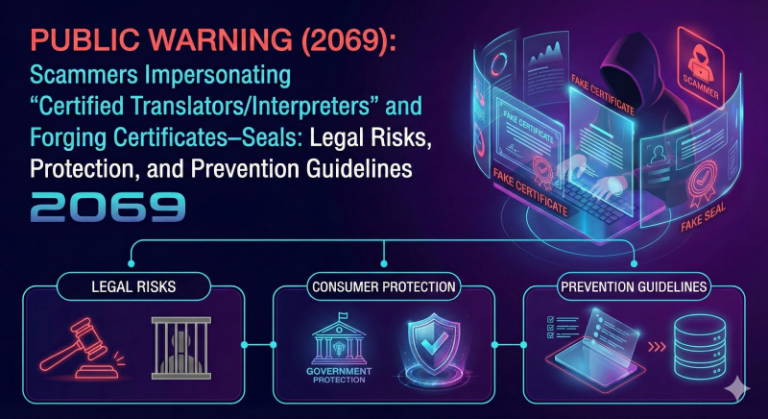
22 February 2026, Bangkok — In 2026, fraud schemes involving translation and interpreting services have become increasingly sophisticated. Offenders frequently impersonate professional status and manufacture credibility by using counterfeit certificates, seals, or organizational logos. They may also claim, in ways that are not verifiable, that they are “registered with a government agency,” in order to persuade the public to hire them for documents intended for courts, government offices, and embassies. The harm typically extends beyond financial loss and can escalate into rights-based consequences, including missed statutory or procedural deadlines, rejection of applications or filings, and reputational risk to the submitting party within administrative and judicial processes. This article analyzes these schemes through the lens of information asymmetry in the language-services market, institutional impersonation that produces “manufactured credibility,” and the evidentiary role of translated documents. It further situates the discussion within relevant Thai legal frameworks, including consumer protection law, personal data protection law, and offenses concerning documents and falsification, in order to propose protective principles grounded in verifiability and minimization of personal-data exposure.
Introduction: When Language Services Become a Risk Point in Legal and Administrative Processes
Translation and interpreting function as social infrastructure that connects individuals with the state and with foreign institutions. A wide range of translated documents are used as inputs for decisions by public authorities or receiving organizations, including court submissions, visa applications, civil registration transactions, determinations of personal status, and applications for education or employment abroad. In such contexts, a “translation” is not merely linguistic transfer; it becomes part of the documentary record that can directly shape rights, opportunities, and legal outcomes. Consequently, fraud embedded in the language-services market constitutes a public-interest problem that affects both household economics and the stability of citizens’ rights.
A core vulnerability lies in the fact that most service users cannot reliably assess the quality or legal adequacy of a translation before it is actually scrutinized by the receiving authority. People often learn of deficiencies only after a document has been rejected. Delays and rejections at the end of the process generate cascading costs and, in deadline-driven procedures, can lead to the forfeiture of rights or opportunities that are difficult—or impossible—to restore.
Conceptual Framework: Information Asymmetry and “Manufactured Credibility”
The translation and interpreting market exemplifies information asymmetry: providers generally know more about the quality and reliability of their work than consumers do, while consumers must infer trustworthiness from external “signals” such as credentials, work history, the stylistic appearance of documents, the use of seals, or references to endorsement by an organization. This structural condition creates a fertile environment for “manufactured credibility,” whereby fraudsters imitate the markers of formality that the public associates with official legitimacy. The risk is amplified when consumers face time pressure, such as court deadlines, embassy appointment slots, or fixed submission dates imposed by government agencies.
A related mechanism is institutional impersonation. By invoking purported ties to the state or to official bodies, fraudsters shift the consumer’s burden of verification onto a generalized assumption that formal-looking status claims are government-backed. Unverifiable claims of being “registered with a government agency,” coupled with counterfeit seals or certificates, can therefore induce rapid hiring decisions on the basis of misunderstanding rather than demonstrable legitimacy.
Common Fraud Patterns in 2026 and Rights-Based Consequences
The first prevalent pattern involves deceiving the public by fabricating the status of “certified translator/interpreter” through fake seals, certificates, or logos, accompanied by statements implying recognition by the state, the courts, or embassies. When such documents are used and later rejected, the resulting harm often occurs in an interconnected sequence: the need to re-translate, repeated fees and incidental expenses, and procedural delays that can disrupt hearings, filings, or applications.
The second pattern targets practitioners themselves, using “free trial translations” as a vehicle for extracting unpaid labor or harvesting personal data. Fraudsters may demand unusually large trial tasks or impose implausibly urgent turnaround requirements, then exploit the delivered work without paying. In other variations, they invite practitioners into “job groups” and request copies of national ID cards or other sensitive documents under the pretext of identity verification. Once obtained, these materials may be used for identity theft or unauthorized transactions. This risk is directly aligned with the principles of Thai personal data protection law, which requires that the collection, use, or disclosure of personal data be grounded in a lawful basis and be consistent with legitimate purposes (Personal Data Protection Act, B.E. 2562, 2019/2562).
The third pattern is identity hijacking of legitimate professionals. Fraudsters copy public-facing profiles—such as LinkedIn pages or résumés—to create impersonation accounts that solicit clients, take deposits, and disappear. This produces dual harm: clients suffer direct fraud losses, and the real professional whose identity was copied may face reputational damage and confusion in the marketplace. In a digital environment, even good-faith public disclosure of professional credentials can be repurposed as an instrument of deception.
Relevant Legal Framework: Consumer Protection, Personal Data, and Document-Related Offenses
From a consumer protection perspective, Thai consumer protection law recognizes the consumer’s right to accurate and sufficient information about services and aims to prevent unfair exploitation in service markets (Consumer Protection Act, B.E. 2522, 1979). When a fraudster advertises or represents a counterfeit certification status such that consumers are misled, the conduct is fundamentally inconsistent with the policy objectives of consumer protection.
From a personal data perspective, the Personal Data Protection Act B.E. 2562 establishes that personal data processing must rest on a lawful basis and must not exceed necessity in relation to the stated purpose (Personal Data Protection Act, B.E. 2562, 2019/2562). Deceptive attempts to obtain ID copies or sensitive details without genuine necessity should therefore be understood as an operational red flag. Legal commentary has also noted that full enforcement has been in effect since 1 June 2022, elevating the practical significance of compliance and accountability in personal data handling (Norton Rose Fulbright, 2022).
From the standpoint of document integrity, falsifying documents or using falsified documents is central to the harm profile, because seals, certificates, and attestations function as trust mechanisms in official submission processes. Thai criminal law provisions on document-related offenses address falsification and the use of forged documents, reflecting the legal system’s treatment of documents as protected objects under criminal law (Thailand Law Library, n.d.).
In the context of online-enabled fraud, contact through digital channels, deceptive representation in online systems, and unauthorized access to or misuse of information may also intersect with Thailand’s computer crime legislation, which is frequently referenced in policy and academic discussion through available English translations (Computer Crimes Act, B.E. 2550, 2007). A critical analytical point is that contemporary fraud rarely separates “document forgery” from “online deception”; instead, it operates as an integrated pipeline, moving from identity fabrication and persuasive offers to payment extraction and personal data harvesting for repeated misuse.
Prevention Principles that Translate into Practical Conduct
The most effective risk-reduction principle is to treat verifiability as the threshold criterion before engagement. A service provider should have a traceable identity, consistent contact channels, a clearly identifiable responsible person, and transparent explanations of scope, process, and deliverables. This is especially important for court, government, and embassy documents, where destination requirements are specific and cannot be truthfully “guaranteed for all authorities.” Claims such as “guaranteed approval” or “accepted by every embassy” should be treated as indicators of heightened risk rather than as proof of competence.
In parallel, the public should adopt personal-data minimization as a second protective layer by applying necessity and proportionality to any requested information. If a provider requests identity documents or sensitive details at the outset without clear justification and without credible contractual or organizational safeguards, the situation plausibly signals identity-theft risk. This approach aligns with the PDPA’s policy logic: reduce exposure by limiting processing to what is necessary and lawful (Personal Data Protection Act, B.E. 2562, 2019/2562).
Conclusion
In 2026, impersonation of “certified translators/interpreters” and the use of counterfeit certificates, seals, and logos represent a compound threat driven by information asymmetry in language-services markets, institutional impersonation that produces manufactured credibility, and digitally accelerated decision-making. The consequences extend beyond monetary losses to rights-based harms and procedural disruption in deadline-bound processes. Public resilience therefore depends on verifiability, minimization of personal-data exposure, and a clear understanding that genuine credibility in translation and interpreting must be demonstrable through transparent identity and accountable practice—not through seals and formal-looking claims that cannot be verified.
References
- Computer Crimes Act, B.E. 2550 (2007) (English translation). (2007). King Mongkut’s University of Technology Thonburi.
- Consumer Protection Act, B.E. 2522 (1979). (1979). ASEAN Consumer.
- Norton Rose Fulbright. (2022). Overview of Thailand Personal Data Protection Act B.E. 2562 (2019).
- Personal Data Protection Act, B.E. 2562 (2019). (2019). King Mongkut’s University of Technology Thonburi.
This section provides information about certified translators, translation certifiers, and certified interpreters associated with SEAProTI.
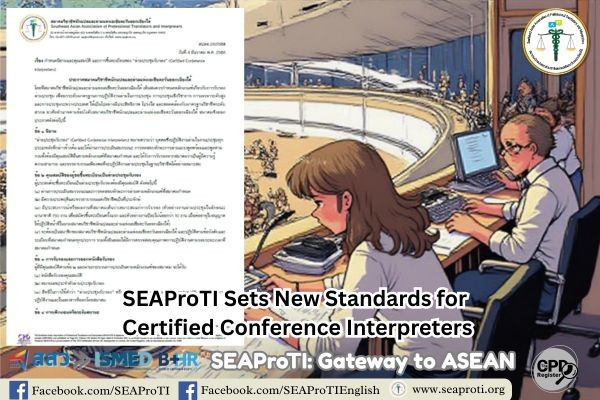
The Southeast Asian Association of Professional Translators and Interpreters (SEAProTI) has officially shared the qualifications and requirements for becoming Certified Translators, Translation Certification Providers, and Certified Interpreters in Sections 9 and 10 of the Royal Gazette, which was published by the Prime Minister’s Office in Thailand on July 25, 2024. Certified Translators, Translation Certification Providers, and Certified Interpreters
The Council of State has proposed the enactment of a Royal Decree, granting registered translators and recognised translation certifiers from professional associations or accredited language institutions the authority to provide legally valid translation certification (Letter to SEAProTI dated April 28, 2025)
SEAProTI is the first professional association in Thailand and Southeast Asia to implement a comprehensive certification system for translators, certifiers, and interpreters.
Head Office: Baan Ratchakru Building, No. 33, Room 402, Soi Phahonyothin 5, Phahonyothin Road, Phaya Thai District, Bangkok 10400, Thailand
Email: hello@seaproti.com | Tel.: (+66) 2-114-3128 (Office hours: Mon–Fri, 09:00–17:00)
มิจฉาชีพแอบอ้างสถานะ “นักแปล/ล่ามรับรอง” และการปลอมใบรับรอง–ตรา–โลโก้:
ผลกระทบต่อสิทธิประชาชน ความน่าเชื่อถือของเอกสาร และกรอบกฎหมายที่เกี่ยวข้อง
22 กุมภาพันธ์ 2569, กรุงเทพมหานคร – ในปี พ.ศ. 2569 รูปแบบการฉ้อโกงที่เกี่ยวข้องกับบริการแปลเอกสารและบริการล่ามมีแนวโน้มซับซ้อนขึ้น โดยมิจฉาชีพใช้กลยุทธ์การแอบอ้างสถานะวิชาชีพและการอุปโลกน์ความน่าเชื่อถือผ่านใบรับรอง ตรา หรือโลโก้ปลอม รวมทั้งการกล่าวอ้างว่า “ขึ้นทะเบียนกับหน่วยงานรัฐ” ในลักษณะที่ตรวจสอบไม่ได้ เพื่อหลอกให้ประชาชนว่าจ้างจัดทำเอกสารสำหรับศาล หน่วยงานราชการ และสถานทูต ผลลัพธ์ที่เกิดขึ้นมักไม่หยุดอยู่ที่ความเสียหายทางการเงิน แต่ขยายไปสู่ความเสียหายเชิงสิทธิ เช่น การพลาดกำหนดเวลา การถูกปฏิเสธคำร้อง และความเสี่ยงต่อความน่าเชื่อถือของผู้ยื่นเอกสารในกระบวนการทางปกครองและกระบวนการยุติธรรม บทความนี้วิเคราะห์กลไกการหลอกลวงผ่านกรอบแนวคิดความไม่สมมาตรของข้อมูลในตลาดบริการภาษา การแอบอ้างเชิงสถาบันเพื่อสร้าง “ความน่าเชื่อถือจำลอง” และบทบาทของเอกสารแปลในฐานะหลักฐาน พร้อมเชื่อมโยงกับกรอบกฎหมายไทยที่เกี่ยวข้อง ได้แก่ กฎหมายคุ้มครองผู้บริโภค กฎหมายคุ้มครองข้อมูลส่วนบุคคล และความผิดเกี่ยวกับเอกสาร/การปลอมแปลง เพื่อเสนอแนวทางป้องกันที่ประชาชนสามารถนำไปใช้ได้โดยเน้นหลัก “ตรวจสอบย้อนกลับได้” และ “ลดความเสี่ยงข้อมูลส่วนบุคคล”
บทนำ: เมื่อ “บริการภาษา” กลายเป็นจุดเสี่ยงของสิทธิและกระบวนการทางกฎหมาย
บริการแปลเอกสารและบริการล่ามเป็นโครงสร้างพื้นฐานเชิงสังคมที่เชื่อมโยงประชาชนกับรัฐและองค์กรต่างประเทศ เอกสารแปลจำนวนมากถูกใช้เป็นส่วนประกอบของการตัดสินใจเชิงอำนาจรัฐหรือองค์กรปลายทาง เช่น การยื่นคำร้องต่อศาล การยื่นคำขอวีซ่า การทำธุรกรรมด้านทะเบียน การรับรองสถานะบุคคล และการศึกษาหรือทำงานต่างประเทศ ในบริบทเช่นนี้ “คำแปล” มิใช่เพียงการถ่ายทอดภาษา หากเป็นส่วนหนึ่งของหลักฐานที่มีผลต่อสิทธิและโอกาสของบุคคลโดยตรง การฉ้อโกงที่แฝงตัวในตลาดบริการภาษาจึงเป็นปัญหาสาธารณะที่กระทบทั้งเศรษฐกิจครัวเรือนและความมั่นคงในสิทธิ
ความเสี่ยงสำคัญเกิดจากข้อเท็จจริงที่ว่าผู้ใช้บริการจำนวนมากไม่สามารถประเมินคุณภาพและความถูกต้องของงานแปลได้ล่วงหน้า และมักทราบผลเมื่อเอกสารถูกตรวจและถูกปฏิเสธแล้ว ความล่าช้าหรือการตีกลับเอกสารในขั้นตอนปลายทางจึงก่อให้เกิดต้นทุนซ้ำซ้อนและอาจทำให้เสียสิทธิภายใต้กรอบเวลาที่กำหนดไว้ในกระบวนการต่าง ๆ
กรอบแนวคิด: ความไม่สมมาตรของข้อมูลและ “ความน่าเชื่อถือจำลอง”
ตลาดบริการแปลและล่ามเป็นตัวอย่างคลาสสิกของตลาดที่มีความไม่สมมาตรของข้อมูล กล่าวคือ ผู้ให้บริการรู้คุณภาพงานของตนมากกว่าผู้บริโภค ขณะที่ผู้บริโภคต้องใช้ “สัญญาณ” ภายนอกเพื่ออนุมานความน่าเชื่อถือ เช่น ประวัติผลงาน ถ้อยคำโฆษณา รูปแบบเอกสาร การใช้ตรา หรือการอ้างการรับรองโดยองค์กรใดองค์กรหนึ่ง ภาวะดังกล่าวเปิดช่องให้เกิดการสร้าง “ความน่าเชื่อถือจำลอง” ผ่านการเลียนแบบเครื่องหมายแห่งความเป็นทางการ โดยเฉพาะเมื่อผู้บริโภคอยู่ภายใต้แรงกดดันของเวลา เช่น เดดไลน์ศาล การนัดหมายสถานทูต หรือกำหนดส่งเอกสารของหน่วยงาน
อีกมิติหนึ่งคือ “การแอบอ้างเชิงสถาบัน” ซึ่งหมายถึงการอ้างความสัมพันธ์กับรัฐหรือองค์กรทางการเพื่อทำให้ผู้บริโภคยกภาระการตรวจสอบไปไว้กับความเชื่อว่าระบบราชการย่อมมีการรับรองอย่างเป็นทางการ การอ้างว่า “ขึ้นทะเบียนกับหน่วยงานรัฐ” ทั้งที่ตรวจสอบไม่ได้จึงเป็นกลวิธีสำคัญในการทำให้เหยื่อเชื่ออย่างรวดเร็ว และเมื่อประกอบกับการใช้ตราหรือใบรับรองปลอม ผลลัพธ์คือการตัดสินใจว่าจ้างบนฐานความเข้าใจคลาดเคลื่อน
รูปแบบการหลอกลวงที่พบบ่อยในปี 2569 และผลกระทบเชิงสิทธิ
รูปแบบแรกคือการหลอกประชาชนด้วยการปลอมสถานะ “นักแปล/ล่ามรับรอง” ผ่านตรา ใบรับรอง หรือโลโก้ปลอม พร้อมคำกล่าวอ้างที่ทำให้เข้าใจว่าบริการดังกล่าวได้รับการยอมรับจากรัฐ ศาล หรือสถานทูต เมื่อเอกสารถูกนำไปใช้จริงและถูกปฏิเสธ ความเสียหายมักเกิดเป็นชุดต่อเนื่อง ได้แก่ การต้องแปลใหม่ การเสียค่าธรรมเนียมและค่าเดินทางซ้ำซ้อน และความล่าช้าที่ทำให้พลาดกำหนดเวลาหรือกระทบกระบวนการพิจารณา
รูปแบบที่สองคือการหลอกผู้ประกอบวิชาชีพ โดยใช้ “งานแปลฟรีทดลอง” เป็นเครื่องมือเก็บงานหรือเก็บข้อมูลส่วนบุคคล ผู้หลอกลวงอาจกำหนดงานทดลองในปริมาณมากหรือเร่งรัดผิดปกติ แล้วนำงานไปใช้จริงโดยไม่จ่ายค่าตอบแทน หรือชักชวนเข้ากลุ่มรับงานและร้องขอสำเนาบัตรประชาชน/เอกสารสำคัญโดยอ้างการยืนยันตัวตน เมื่อได้ข้อมูลแล้วจึงนำไปขโมยตัวตนหรือทำธุรกรรมโดยมิชอบ ประเด็นนี้สัมพันธ์โดยตรงกับหลักการคุ้มครองข้อมูลส่วนบุคคลตามกฎหมายคุ้มครองข้อมูลส่วนบุคคลของไทย ซึ่งกำหนดให้การเก็บ ใช้ หรือเปิดเผยข้อมูลส่วนบุคคลต้องมีฐานทางกฎหมายและต้องสอดคล้องกับวัตถุประสงค์ที่ชอบด้วยกฎหมาย (Personal Data Protection Act, B.E. 2562, 2019/2562).
รูปแบบที่สามคือการแอบอ้างชื่อผู้ประกอบวิชาชีพจริง โดยดึงโปรไฟล์จากแพลตฟอร์มอาชีพหรือเรซูเม่มาสร้างตัวตนปลอมเพื่อหลอกลูกค้า เมื่อรับเงินแล้วหายไป ความเสียหายจึงเกิดทั้งกับผู้บริโภคที่ถูกฉ้อโกงและกับเจ้าของชื่อจริงที่ถูกทำให้เสียชื่อเสียง ลักษณะนี้ยิ่งทวีความซับซ้อนในสังคมดิจิทัล เพราะการเผยแพร่ข้อมูลสาธารณะโดยสุจริตอาจถูกนำไปใช้เป็นเครื่องมือทางอาชญากรรมได้
กรอบกฎหมายที่เกี่ยวข้อง: ผู้บริโภค ข้อมูลส่วนบุคคล และความผิดเกี่ยวกับเอกสาร
ในมิติการคุ้มครองผู้บริโภค กฎหมายคุ้มครองผู้บริโภคของไทยรับรองสิทธิของผู้บริโภคในการได้รับข้อมูลที่ถูกต้องและเพียงพอเกี่ยวกับบริการ และยึดหลักการป้องกันการเอาเปรียบผู้บริโภคในตลาดบริการ (Consumer Protection Act, B.E. 2522, 1979). เมื่อมิจฉาชีพโฆษณาหรืออ้างสถานะรับรองปลอมจนทำให้ผู้บริโภคเข้าใจผิด จึงเป็นพฤติการณ์ที่ขัดกับหลักการคุ้มครองผู้บริโภคโดยตรงในเชิงนโยบาย
ในมิติข้อมูลส่วนบุคคล พระราชบัญญัติคุ้มครองข้อมูลส่วนบุคคล พ.ศ. 2562 วางกรอบให้การประมวลผลข้อมูลส่วนบุคคลต้องอยู่บนฐานที่ชอบด้วยกฎหมายและต้องไม่เกินความจำเป็นตามวัตถุประสงค์ (Personal Data Protection Act, B.E. 2562, 2019/2562). การหลอกให้ส่งสำเนาบัตรประชาชนหรือข้อมูลอ่อนไหวโดยไม่มีเหตุอันจำเป็นจึงเป็น “สัญญาณความเสี่ยง” ที่ประชาชนควรตระหนัก และเป็นจุดที่การรู้เท่าทันเชิงกฎหมายสามารถลดโอกาสตกเป็นเหยื่อได้อย่างเป็นรูปธรรม ทั้งนี้ มีแหล่งวิเคราะห์เชิงกฎหมายที่ชี้ว่ากฎหมายดังกล่าวมีผลใช้บังคับเต็มรูปแบบตั้งแต่วันที่ 1 มิถุนายน 2565 ซึ่งทำให้ประเด็นความรับผิดเกี่ยวกับข้อมูลส่วนบุคคลมีน้ำหนักมากขึ้นในทางปฏิบัติ (Norton Rose Fulbright, 2022).
ในมิติความผิดเกี่ยวกับเอกสาร การปลอมแปลงเอกสารหรือการทำให้ผู้อื่นเชื่อว่าเอกสารปลอมเป็นของแท้เป็นหัวใจของความเสียหาย เพราะตรา ใบรับรอง และเอกสารรับรองความถูกต้องถูกใช้เป็น “กลไกสร้างความน่าเชื่อถือ” ในกระบวนการยื่นเอกสาร ความผิดเกี่ยวกับเอกสารในประมวลกฎหมายอาญาหมวดความผิดเกี่ยวกับเอกสารครอบคลุมพฤติการณ์การปลอมเอกสารและการใช้เอกสารปลอม ซึ่งสะท้อนว่า “เอกสาร” ในระบบกฎหมายมีสถานะเป็นวัตถุคุ้มครองทางอาญา (Thailand Law Library, n.d.).
ในมิติอาชญากรรมออนไลน์ การติดต่อหลอกลวงผ่านระบบคอมพิวเตอร์หรือการเข้าถึงข้อมูลโดยมิชอบอาจสัมพันธ์กับกฎหมายว่าด้วยความผิดเกี่ยวกับคอมพิวเตอร์ ซึ่งมีฉบับแปลภาษาอังกฤษเผยแพร่ในเชิงเอกสารอ้างอิงและถูกใช้อธิบายในทางวิชาการ/นโยบาย (Computer Crimes Act, B.E. 2550, 2007). กรอบคิดสำคัญที่ประชาชนควรเข้าใจคือ การหลอกลวงยุคดิจิทัลมักไม่แยกขาดระหว่าง “การปลอมเอกสาร” กับ “การหลอกผ่านช่องทางออนไลน์” แต่ทำงานร่วมกันเป็นระบบ ตั้งแต่การสร้างตัวตนปลอม การเสนอราคา การให้โอนเงิน ไปจนถึงการเก็บข้อมูลส่วนบุคคลเพื่อใช้ซ้ำในอาชญากรรมรูปแบบอื่น
หลักการป้องกันเชิงวิชาการที่แปลงเป็นพฤติกรรมปฏิบัติได้
แนวทางที่มีประสิทธิภาพที่สุดในการลดความเสี่ยงคือการยึดหลัก “ตรวจสอบย้อนกลับได้” เป็นเกณฑ์ตัดสินก่อนว่าจ้าง กล่าวคือ ผู้ให้บริการต้องมีตัวตนที่ตรวจสอบได้ในทางปฏิบัติ มีช่องทางติดต่อที่สอดคล้องกัน มีข้อมูลผู้รับผิดชอบที่สามารถยืนยันได้ และสามารถอธิบายขอบเขตบริการอย่างโปร่งใส โดยเฉพาะเมื่อเกี่ยวข้องกับเอกสารศาล หน่วยงานรัฐ หรือสถานทูต ซึ่งมีข้อกำหนดปลายทางที่เฉพาะเจาะจงและไม่สามารถ “การันตีใช้ได้ทุกที่” ได้อย่างซื่อสัตย์ทางวิชาชีพ การตัดสินใจจากถ้อยคำประเภท “ผ่านแน่นอน” หรือ “ใช้ได้ทุกประเทศ” จึงควรถูกมองเป็นตัวชี้วัดความเสี่ยงมากกว่าความน่าเชื่อถือ
ในขณะเดียวกัน ประชาชนควรใช้หลัก “ลดการเปิดเผยข้อมูลส่วนบุคคล” เป็นเสมือนแนวป้องกันชั้นที่สอง โดยยึดหลักความจำเป็นและความได้สัดส่วนของข้อมูลที่ส่งมอบ หากผู้ให้บริการร้องขอเอกสารประจำตัวหรือข้อมูลละเอียดอ่อนตั้งแต่ต้นโดยยังไม่มีเหตุผลชัดเจนหรือไม่มีกรอบสัญญา/เอกสารยืนยันที่น่าเชื่อถือ ย่อมสะท้อนความเสี่ยงต่อการถูกขโมยตัวตน ซึ่งเป็นความเสียหายที่อาจลากยาวกว่าการเสียเงินค่าบริการครั้งเดียว ทั้งยังสอดคล้องกับเจตนารมณ์ของกฎหมายคุ้มครองข้อมูลส่วนบุคคลที่มุ่งลดการประมวลผลเกินความจำเป็น (Personal Data Protection Act, B.E. 2562, 2019/2562).
บทสรุป
การแอบอ้างเป็นนักแปล/ล่ามรับรองและการปลอมใบรับรอง–ตรา–โลโก้ในปี พ.ศ. 2569 เป็นภัยที่เกิดจากการผสานกันของความไม่สมมาตรของข้อมูลในตลาดบริการภาษา การแอบอ้างเชิงสถาบันเพื่อสร้างความน่าเชื่อถือจำลอง และการใช้ออนไลน์เป็นเครื่องมือเร่งการตัดสินใจของเหยื่อ ผลกระทบไม่ได้จำกัดที่ความเสียหายทางการเงิน แต่ขยายไปสู่ความเสียหายเชิงสิทธิและความต่อเนื่องของกระบวนการที่มีเดดไลน์และข้อกำหนดเฉพาะทาง ดังนั้น การสร้างภูมิคุ้มกันของประชาชนควรตั้งอยู่บนหลักตรวจสอบย้อนกลับได้ ลดการเปิดเผยข้อมูลส่วนบุคคล และทำความเข้าใจว่าความน่าเชื่อถือของบริการแปล/ล่ามต้องพิสูจน์ได้ด้วยข้อมูลและความโปร่งใส ไม่ใช่ด้วยตราและถ้อยคำที่เลียนแบบความเป็นทางการ
เอกสารอ้างอิง
- Computer Crimes Act, B.E. 2550 (2007) (English translation). (2007). King Mongkut’s University of Technology Thonburi.
- Consumer Protection Act, B.E. 2522 (1979). (1979). ASEAN Consumer.
- Norton Rose Fulbright. (2022). Overview of Thailand Personal Data Protection Act B.E. 2562 (2019).
- Personal Data Protection Act, B.E. 2562 (2019). (2019). King Mongkut’s University of Technology Thonburi.
สมาคมวิชาชีพนักแปลและล่ามแห่งเอเชียตะวันออกเฉียงใต้ (SEAProTI) ได้ประกาศหลักเกณฑ์และคุณสมบัติของผู้ที่ขึ้นทะเบียนเป็น “นักแปลรับรอง (Certified Translators) และผู้รับรองการแปล (Translation Certification Providers) และล่ามรับรอง (Certified Interpreters)” ของสมาคม หมวดที่ 9 และหมวดที่ 10 ในราชกิจจานุเบกษา ของสำนักเลขาธิการคณะรัฐมนตรี ในสำนักนายกรัฐมนตรี แห่งราชอาณาจักรไทย ลงวันที่ 25 ก.ค. 2567 เล่มที่ 141 ตอนที่ 66 ง หน้า 100 อ่านฉบับเต็มได้ที่: นักแปลรับรอง ผู้รับรองการแปล และล่ามรับรอง
สำนักคณะกรรมการกฤษฎีกาเสนอให้ตราเป็นพระราชกฤษฎีกา โดยกำหนดให้นักแปลที่ขึ้นทะเบียน รวมถึงผู้รับรองการแปลจากสมาคมวิชาชีพหรือสถาบันสอนภาษาที่มีการอบรมและขึ้นทะเบียน สามารถรับรองคำแปลได้ (จดหมายถึงสมาคม SEAProTI ลงวันที่ 28 เม.ย. 2568)
สมาคมวิชาชีพนักแปลและล่ามแห่งเอเชียตะวันออกเฉียงใต้เป็นสมาคมวิชาชีพแห่งแรกและแห่งเดียวในประเทศไทยและภูมิภาคเอเชียตะวันออกเฉียงใต้ที่มีระบบรับรองนักแปลรับรอง ผู้รับรองการแปล และล่ามรับรอง
สำนักงานใหญ่: อาคารบ้านราชครู เลขที่ 33 ห้อง 402 ซอยพหลโยธิน 5 ถนนพหลโยธิน แขวงพญาไท เขตพญาไท กรุงเทพมหานคร 10400 ประเทศไทย
อีเมล: hello@seaproti.com โทรศัพท์: (+66) 2-114-3128 (เวลาทำการ: วันจันทร์–วันศุกร์ เวลา 09.00–17.00 น.