


Gross Defamation as Grounds for Revocation of a Gift:
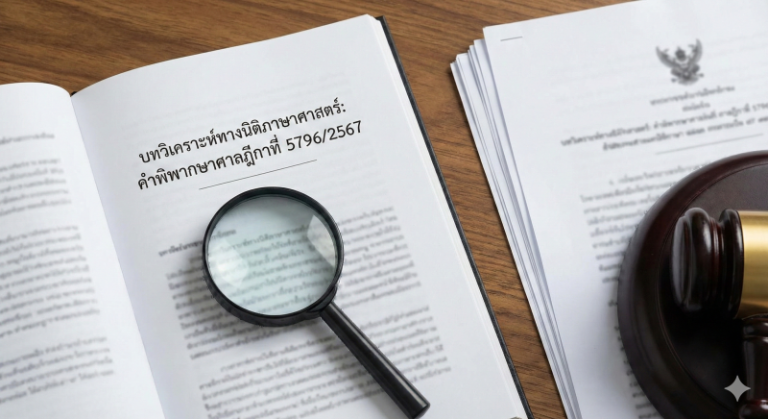
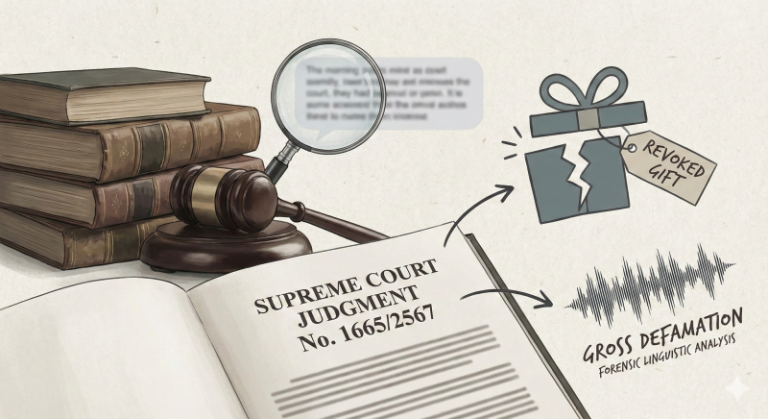
A Forensic Linguistic Analysis of Supreme Court Judgment No. 1665/2567
Author: Wanitcha Sumanat, President, Southeast Asian Association of Professional Translators and Interpreters (SEAProTI) and Professional Forensic Linguist
19 February 2026, Bangkok – This article examines Supreme Court Judgment No. 1665/2567, in which the Court ruled that statements made by an adopted son toward his adoptive mother constituted gross defamation, thereby entitling the donor to revoke the gift pursuant to Section 531(2) of the Thai Civil and Commercial Code. The study applies a forensic linguistic framework to analyze the relationship between semantic structure, pragmatic force, and the socio-legal context of the parties’ relationship. It argues that the gravity of defamation cannot be assessed solely on isolated lexical items, but must instead be evaluated through contextual meaning and the moral obligations embedded within the legal relationship.
Introduction
Revocation of a gift on grounds of ingratitude represents a legal mechanism that reflects moral principles and filial duty within Thai private law. Section 531(2) of the Civil and Commercial Code permits a donor to revoke a gift if the donee commits gross defamation against the donor. Supreme Court Judgment No. 1665/2567 provides a significant case study demonstrating that the interpretation of “gross defamation” requires both linguistic and contextual assessment.
In brief, the plaintiff registered the defendant as her adopted son and subsequently transferred land to him by way of gratuitous disposition. After a dispute arose, the defendant allegedly addressed the plaintiff with the following statements: “You have no morality, you are unjust, you do not love your child. You even demand this small amount of money. Go die wherever you want. Why are you shamelessly staying here?” The Supreme Court held that these statements constituted gross defamation and therefore justified revocation of the gift.
The Forensic Linguistic Framework
Forensic linguistics examines the intersection between language and law, recognizing that language within judicial proceedings functions both as evidence and as performative legal action. The analysis of allegedly defamatory language requires attention to both semantic content and pragmatic force. Austin’s (1962) theory of speech acts establishes that utterances do not merely describe reality but can perform actions with social and legal consequences. Coulthard, Johnson, and Wright (2017) further emphasize that courtroom interpretation of language must account for communicative context rather than isolated wording.
In the present case, the expressions “no morality” and “unjust” constitute negative character attributions directed at the plaintiff. These statements go beyond ordinary insults; they allege deficiencies in ethical character. At the semantic level, such attributions directly undermine reputation and moral standing.
At the pragmatic level, phrases such as “Go die wherever you want” and “Why are you shamelessly staying here?” convey contempt, humiliation, and moral rejection. These utterances carry strong illocutionary force, signaling not merely emotional frustration but a deliberate degradation of the plaintiff’s dignity. When directed toward an adoptive mother, these statements acquire heightened significance due to the moral expectations embedded in the parent–child relationship.
Contextual Interpretation and Assessment of Seriousness
The Supreme Court did not assess the statements in isolation. Rather, it evaluated them in conjunction with the broader legal and factual context, including the gratuitous transfer of property, the caregiving relationship, and prior financial misconduct involving the plaintiff’s funds. This contextualized evaluation aligns with forensic linguistic principles, recognizing that meaning arises from the interaction between text and circumstance.
In Thai socio-cultural norms, filial gratitude carries profound moral weight. Even in adoptive relationships, the expectation of respect toward a mother figure is deeply entrenched. Accusing one’s adoptive mother of lacking morality thus represents not merely verbal hostility but a symbolic degradation of her social and ethical status. The Court’s determination of “gross” defamation reflects not simply the vulgarity of the language, but the severity of its moral and relational implications.
The Convergence of Civil Law and Forensic Linguistics
Although the Court did not explicitly invoke forensic linguistic theory, its reasoning demonstrates an implicit application of semantic analysis, illocutionary force assessment, and socio-legal contextualization. Language is treated not as an expression of transient emotion but as conduct capable of generating legal consequences.
From a theoretical perspective, this case reinforces Shuy’s (1993) argument that language in legal settings can serve both as evidence of intent and as a mechanism of harm. It also reflects Tiersma’s (1999) insight that legal language is inseparable from cultural norms and social values. The judicial assessment of seriousness, therefore, integrates linguistic meaning with culturally embedded expectations of filial conduct.
Conclusion
Supreme Court Judgment No. 1665/2567 represents a significant example of how defamatory language may constitute ingratitude sufficient to justify revocation of a gift under Section 531(2) of the Civil and Commercial Code. The Court concluded that the defendant’s statements, which attacked the moral character and dignity of his adoptive mother, amounted to gross defamation. Forensic linguistic analysis clarifies that the seriousness of the offense derived not solely from lexical content, but from the convergence of semantic meaning, pragmatic force, relational obligations, and socio-cultural context. The case underscores the power of language as performative legal conduct and highlights the importance of contextual interpretation in judicial reasoning.
References
- Austin, J. L. (1962). How to do things with words. Oxford University Press.
- Coulthard, M., Johnson, A., & Wright, D. (2017). An introduction to forensic linguistics: Language in evidence (2nd ed.). Routledge.
- Shuy, R. W. (1993). Language crimes: The use and abuse of language evidence in the courtroom. Blackwell.
- Tiersma, P. M. (1999). Legal language. University of Chicago Press.
- Civil and Commercial Code, Section 531(2) (Thailand).
- Supreme Court Judgment No. 1665/2567 (Thailand).
This section provides information about certified translators, translation certifiers, and certified interpreters associated with SEAProTI.
The Southeast Asian Association of Professional Translators and Interpreters (SEAProTI) has officially shared the qualifications and requirements for becoming Certified Translators, Translation Certification Providers, and Certified Interpreters in Sections 9 and 10 of the Royal Gazette, which was published by the Prime Minister’s Office in Thailand on July 25, 2024. Certified Translators, Translation Certification Providers, and Certified Interpreters
The Council of State has proposed the enactment of a Royal Decree, granting registered translators and recognised translation certifiers from professional associations or accredited language institutions the authority to provide legally valid translation certification (Letter to SEAProTI dated April 28, 2025)
SEAProTI is the first professional association in Thailand and Southeast Asia to implement a comprehensive certification system for translators, certifiers, and interpreters.
Head Office: Baan Ratchakru Building, No. 33, Room 402, Soi Phahonyothin 5, Phahonyothin Road, Phaya Thai District, Bangkok 10400, Thailand
Email: hello@seaproti.com | Tel.: (+66) 2-114-3128 (Office hours: Mon–Fri, 09:00–17:00)
การหมิ่นประมาทอย่างร้ายแรงในฐานะเหตุถอนคืนการให้: การวิเคราะห์เชิงนิติภาษาศาสตร์จากคำพิพากษาศาลฎีกาที่ 1665/2567
ผู้แต่ง วณิชชา สุมานัส นายกสมาคมวิชาชีพนักแปลและล่ามแห่งเอเชียตะวันออกเฉียงใต้ และนักนิติภาษาศาสตร์วิชาชีพ
19 กุมภาพันธุ์ 2569, กรุงเทพมหานคร – บทความนี้มุ่งวิเคราะห์คำพิพากษาศาลฎีกาที่ 1665/2567 ซึ่งวินิจฉัยว่าถ้อยคำของบุตรบุญธรรมที่กล่าวต่อมารดาบุญธรรมเข้าข่ายเป็นการหมิ่นประมาทอย่างร้ายแรง อันเป็นเหตุให้ผู้ให้สามารถถอนคืนการให้ได้ตามประมวลกฎหมายแพ่งและพาณิชย์ มาตรา 531 (2) การศึกษานี้ใช้กรอบนิติภาษาศาสตร์เพื่ออธิบายความสัมพันธ์ระหว่างโครงสร้างความหมายของถ้อยคำ แรงกระทำทางภาษา และบริบทความสัมพันธ์ทางกฎหมาย โดยเสนอว่าความร้ายแรงของการหมิ่นประมาทมิได้วัดเพียงจากถ้อยคำโดดเดี่ยว หากแต่ต้องพิจารณาความหมายเชิงบริบทและภาระหน้าที่ทางศีลธรรมที่คู่ความมีต่อกัน
บทนำ
การถอนคืนการให้เพราะเหตุผู้รับประพฤติเนรคุณเป็นกลไกทางกฎหมายที่สะท้อนหลักคุณธรรมและความกตัญญูในระบบกฎหมายแพ่งไทย มาตรา 531 (2) แห่งประมวลกฎหมายแพ่งและพาณิชย์บัญญัติให้ผู้ให้สามารถเรียกถอนคืนการให้ได้ หากผู้รับกระทำการหมิ่นประมาทผู้ให้อย่างร้ายแรง คำพิพากษาศาลฎีกาที่ 1665/2567 เป็นกรณีศึกษาสำคัญที่แสดงให้เห็นว่าการตีความ “หมิ่นประมาทอย่างร้ายแรง” ต้องอาศัยการประเมินเชิงภาษาและบริบทควบคู่กัน
ข้อเท็จจริงโดยย่อคือ โจทก์ได้จดทะเบียนรับจำเลยเป็นบุตรบุญธรรม และต่อมาได้โอนที่ดินให้โดยเสน่หา ภายหลังเกิดความขัดแย้ง จำเลยได้กล่าวถ้อยคำต่อโจทก์ว่า “ไม่มีศีลธรรม ไม่ยุติธรรม ไม่รักลูก เงินแค่นี้ก็ทวง จะไปตายที่ไหนก็ไป หน้าด้านหน้ามึนอยู่ทำไม” ศาลฎีกาวินิจฉัยว่าถ้อยคำดังกล่าวเป็นการหมิ่นประมาทอย่างร้ายแรง อันเป็นเหตุให้ถอนคืนการให้ได้
กรอบแนวคิดทางนิติภาษาศาสตร์
นิติภาษาศาสตร์เป็นสาขาวิชาที่ศึกษาความสัมพันธ์ระหว่างภาษาและกฎหมาย โดยพิจารณาว่าภาษาในกระบวนการยุติธรรมทำหน้าที่เป็นพยานหลักฐานและเป็นการกระทำทางกฎหมายในตัวเอง การวิเคราะห์ถ้อยคำในคดีหมิ่นประมาทจำเป็นต้องพิจารณาทั้งระดับความหมายเชิงถ้อยคำและระดับวัจนปฏิบัติศาสตร์ แนวคิดของ Austin (1962) เกี่ยวกับ speech act theory อธิบายว่าคำพูดมิได้เป็นเพียงการบรรยายข้อเท็จจริง แต่สามารถก่อให้เกิดผลทางสังคมและกฎหมายได้ ขณะที่ Coulthard, Johnson และ Wright (2017) ชี้ให้เห็นว่าการประเมินความหมายของถ้อยคำในศาลต้องพิจารณาบริบทการสื่อสารโดยรวม
ในคดีนี้ ถ้อยคำ “ไม่มีศีลธรรม” และ “ไม่ยุติธรรม” เป็นการกล่าวหาเชิงคุณลักษณะทางศีลธรรม ซึ่งมีลักษณะเป็นการกำหนดภาพลักษณ์เชิงลบต่อบุคคล มิใช่เพียงคำสบถทั่วไป แต่เป็นการพาดพิงถึงคุณค่าทางจริยธรรมของผู้ถูกกล่าวหา เมื่อพิจารณาในเชิง semantic content ถ้อยคำดังกล่าวมีความหมายที่กระทบต่อชื่อเสียงโดยตรง
ในระดับ pragmatic force ถ้อยคำ “จะไปตายที่ไหนก็ไป” และ “หน้าด้านหน้ามึนอยู่ทำไม” แสดงเจตนาดูหมิ่น เหยียดหยาม และตัดความสัมพันธ์เชิงคุณธรรมระหว่างคู่กรณี การใช้คำเหล่านี้ในบริบทที่ผู้ถูกกล่าวเป็นมารดาบุญธรรม ทำให้แรงกระทำทางภาษามีน้ำหนักมากกว่าการทะเลาะทั่วไป เพราะความสัมพันธ์ดังกล่าวก่อให้เกิดหน้าที่ทางศีลธรรมและความกตัญญูโดยปริยาย
บริบทความสัมพันธ์และการประเมินความร้ายแรง
ศาลฎีกามิได้พิจารณาถ้อยคำอย่างแยกส่วน หากแต่ประเมินร่วมกับบริบทความสัมพันธ์ทางกฎหมายและข้อเท็จจริงอื่น เช่น การโอนทรัพย์สินโดยเสน่หา การดูแลระหว่างกัน และพฤติการณ์เกี่ยวกับการลักทรัพย์เงินฝาก การวิเคราะห์เชิงบริบทนี้สอดคล้องกับหลัก contextual interpretation ในทางนิติภาษาศาสตร์ ซึ่งเห็นว่าความหมายเกิดจากปฏิสัมพันธ์ระหว่างข้อความและสถานการณ์แวดล้อม
ในสังคมไทย ความสัมพันธ์ระหว่างมารดากับบุตร หรือแม้แต่ ในสถานะบุตรบุญธรรม มีนัยทางวัฒนธรรมที่เน้นความกตัญญู การกล่าวหามารดาว่าไม่มีศีลธรรมจึงเป็นการลดทอนศักดิ์ศรีในระดับลึก การประเมินว่าเป็น “อย่างร้ายแรง” จึงมิใช่เพียงเรื่องของถ้อยคำหยาบ แต่เป็นเรื่องของการทำลายฐานะทางศีลธรรมของผู้ให้
การบรรจบกันระหว่างกฎหมายแพ่งและนิติภาษาศาสตร์
คำพิพากษานี้สะท้อนให้เห็นว่าศาลใช้วิธีประเมินความหมายเชิงโครงสร้างและเชิงบริบทควบคู่กัน แม้มิได้อ้างถึงทฤษฎีนิติภาษาศาสตร์โดยตรง แต่การให้เหตุผลของศาลแสดงถึงการพิจารณาทั้ง semantic meaning, illocutionary force และ socio-legal context อย่างชัดเจน ภาษาจึงถูกมองในฐานะการกระทำที่มีผลทางกฎหมาย ไม่ใช่เพียงการแสดงอารมณ์ส่วนตัว
ในเชิงทฤษฎี คดีนี้ตอกย้ำแนวคิดของ Shuy (1993) ที่ว่าภาษาในศาลสามารถเป็นเครื่องมือก่อความเสียหายและเป็นหลักฐานของเจตนาได้ ขณะเดียวกันยังสะท้อนมุมมองของ Tiersma (1999) ว่าภาษากฎหมายมิได้แยกขาดจากวัฒนธรรม หากแต่ได้รับอิทธิพลจากค่านิยมทางสังคม
บทสรุป
คำพิพากษาศาลฎีกาที่ 1665/2567 เป็นตัวอย่างสำคัญของการตีความถ้อยคำหมิ่นประมาทในบริบทความสัมพันธ์เชิงศีลธรรม ศาลเห็นว่าการกล่าวหามารดาบุญธรรมด้วยถ้อยคำที่ลดทอนคุณค่าทางจริยธรรมและแสดงความดูหมิ่นอย่างชัดแจ้ง เข้าข่ายหมิ่นประมาทอย่างร้ายแรง อันเป็นเหตุให้ถอนคืนการให้ได้ตามมาตรา 531 (2) การวิเคราะห์เชิงนิติภาษาศาสตร์ช่วยอธิบายว่าความร้ายแรงมิได้อยู่ที่คำเพียงลำพัง แต่เกิดจากการผสานกันของความหมาย เนื้อหา เจตนา และบริบททางสังคมและกฎหมาย คดีนี้จึงมีคุณค่าเชิงวิชาการในการทำความเข้าใจพลังของภาษาในฐานะการกระทำที่ก่อให้เกิดผลทางกฎหมายโดยตรง
เอกสารอ้างอิง
- Austin, J. L. (1962). How to do things with words. Oxford University Press.
- Coulthard, M., Johnson, A., & Wright, D. (2017). An introduction to forensic linguistics: Language in evidence (2nd ed.). Routledge.
- Shuy, R. W. (1993). Language crimes: The use and abuse of language evidence in the courtroom. Blackwell.
- Tiersma, P. M. (1999). Legal language. University of Chicago Press.
- ประมวลกฎหมายแพ่งและพาณิชย์ มาตรา 531 (2).
- คำพิพากษาศาลฎีกาที่ 1665/2567.
สมาคมวิชาชีพนักแปลและล่ามแห่งเอเชียตะวันออกเฉียงใต้ (SEAProTI) ได้ประกาศหลักเกณฑ์และคุณสมบัติของผู้ที่ขึ้นทะเบียนเป็น “นักแปลรับรอง (Certified Translators) และผู้รับรองการแปล (Translation Certification Providers) และล่ามรับรอง (Certified Interpreters)” ของสมาคม หมวดที่ 9 และหมวดที่ 10 ในราชกิจจานุเบกษา ของสำนักเลขาธิการคณะรัฐมนตรี ในสำนักนายกรัฐมนตรี แห่งราชอาณาจักรไทย ลงวันที่ 25 ก.ค. 2567 เล่มที่ 141 ตอนที่ 66 ง หน้า 100 อ่านฉบับเต็มได้ที่: นักแปลรับรอง ผู้รับรองการแปล และล่ามรับรอง
สำนักคณะกรรมการกฤษฎีกาเสนอให้ตราเป็นพระราชกฤษฎีกา โดยกำหนดให้นักแปลที่ขึ้นทะเบียน รวมถึงผู้รับรองการแปลจากสมาคมวิชาชีพหรือสถาบันสอนภาษาที่มีการอบรมและขึ้นทะเบียน สามารถรับรองคำแปลได้ (จดหมายถึงสมาคม SEAProTI ลงวันที่ 28 เม.ย. 2568)
สมาคมวิชาชีพนักแปลและล่ามแห่งเอเชียตะวันออกเฉียงใต้เป็นสมาคมวิชาชีพแห่งแรกและแห่งเดียวในประเทศไทยและภูมิภาคเอเชียตะวันออกเฉียงใต้ที่มีระบบรับรองนักแปลรับรอง ผู้รับรองการแปล และล่ามรับรอง
สำนักงานใหญ่: อาคารบ้านราชครู เลขที่ 33 ห้อง 402 ซอยพหลโยธิน 5 ถนนพหลโยธิน แขวงพญาไท เขตพญาไท กรุงเทพมหานคร 10400 ประเทศไทย
อีเมล: hello@seaproti.com โทรศัพท์: (+66) 2-114-3128 (เวลาทำการ: วันจันทร์–วันศุกร์ เวลา 09.00–17.00 น.