


“Dark Techniques” in Arbitration: When Interpreting Becomes a Strategy that Distorts Due Process
Author: Wanitcha Sumanat, president of the Southeast Asian Association of Professional Translators and Interpreters (SEAProTI)
20 January 2026, Bangkok – International arbitration is a dispute resolution mechanism that relies heavily on oral testimony, witness credibility, and close assessment of party conduct. In multilingual proceedings, the interpreter’s role is therefore structurally central to due process and equality of arms.
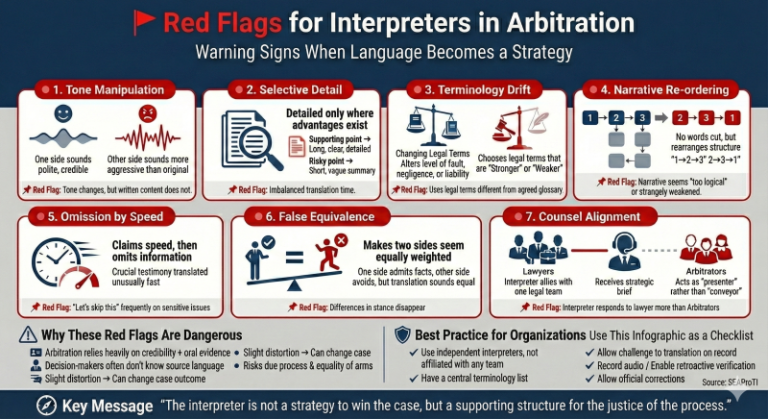
In practice, however, certain “dark techniques” have emerged—practices that violate professional and ethical standards of interpreting. Although these techniques often leave no written trace, they can subtly distort how arbitral tribunals perceive facts, credibility, and intent, ultimately influencing the outcome of a case.
This article aims to (1) explain the main forms of such techniques, (2) analyze their procedural dangers, and (3) propose practical preventive measures.
Forms of “Dark Techniques” in Arbitration Interpreting
Strategic Softening / Hardening
The interpreter deliberately adjusts tone, intensity, or attitude—softening the perceived aggressiveness of one party while amplifying that of the other. The result is a shift in perceived credibility before the arbitral tribunal, without any textual evidence. This practice directly violates the principles of neutrality and completeness.
Selective Precision
The interpreter renders supportive points with high precision and detail while summarizing, compressing, or blurring risky or unfavorable elements. Although it may appear as “time-saving,” the real effect is a strategic distortion of the dispute’s focal points.
Terminology Drift
The interpreter selects legal or commercial terms with biased connotations—suggesting serious breach, gross negligence, or heightened fault—when the source-language wording is neutral. This subtly shifts the standard of liability through language alone.
Narrative Re-ordering
Without omitting content, the interpreter rearranges the sequence of causes and effects in testimony. This reordering can make a narrative appear more coherent—or less credible—without altering the actual words spoken.
Omission by Speed
The interpreter speaks rapidly during sensitive moments, causing partial omissions and later citing time or speed constraints. Minor but repeated omissions can systematically weaken oral evidence.
False Equivalence
The interpreter renders statements from both sides as if they carry equal weight, even when one party admits facts while the other evades or denies them. Substantive differences in stance and responsibility are thus neutralized.
Interpreter–Counsel Alignment
The interpreter becomes aligned with one legal team, receives strategic briefings, and is used as a presentation tool rather than a neutral conduit. This crosses the red line of independence and constitutes a direct breach of professional ethics.
Why These Techniques Are Especially Dangerous in Arbitration
- First, arbitral proceedings place heavy weight on oral testimony and witness credibility.
- Second, arbitrators often do not understand the source language and therefore cannot directly detect interpretive manipulation.
- Third, small distortions accumulated over time can materially alter fact-finding and case outcomes.
Such practices undermine due process and equality of arms, the very foundations of international justice.
Practical Preventive Measures (Best Practices)
For the Parties
Parties should request independent interpreters not affiliated with either legal team, assert the right to object to interpretations on the record, and prepare a shared terminology list prior to hearings to reduce semantic drift.
For Arbitral Tribunals
Tribunals should appoint interpreters through reputable institutions such as the International Chamber of Commerce, the Singapore International Arbitration Centre, and the Hong Kong International Arbitration Centre.
They should also allow spot-check back-translation and audio recording for post-hearing review in the event of interpretive disputes.
For Professional Interpreters
Interpreters must always remain neutral, provide complete and accurate information, avoid biased or manipulative briefings, and openly fix any mistakes in front of the tribunal, making sure those corrections are noted in the official record.
Conclusion
In arbitration, the interpreter is not a weapon for either party but a structural pillar supporting procedural justice.
When language becomes a strategic tool rather than a neutral medium, the harm extends beyond the losing party—it erodes the credibility of the entire arbitral system.
References
- International Federation of Translators. (2014). Translator’s Charter. FIT.
- International Association of Conference Interpreters. (2016). Code of Professional Ethics. AIIC.
- Mikkelson, H., & Jourdenais, R. (2015). The Routledge Handbook of Interpreting. Routledge.
- Pöchhacker, F. (2016). Introducing interpreting studies (2nd ed.). Routledge.
- United Nations Commission on International Trade Law. (2013). UNCITRAL Arbitration Rules. United Nations.
- Gile, D. (2009). Basic concepts and models for interpreter and translator training (Rev. ed.). John Benjamins.
About Certified Translators, Translation Certifiers, and Certified Interpreters of SEAProTI
The Southeast Asian Association of Professional Translators and Interpreters (SEAProTI) has officially shared the qualifications and requirements for becoming Certified Translators, Translation Certification Providers, and Certified Interpreters in Sections 9 and 10 of the Royal Gazette, which was published by the Prime Minister’s Office in Thailand on July 25, 2024. Certified Translators, Translation Certification Providers, and Certified Interpreters
The Council of State has proposed the enactment of a Royal Decree, granting registered translators and recognised translation certifiers from professional associations or accredited language institutions the authority to provide legally valid translation certification (Letter to SEAProTI dated April 28, 2025)
SEAProTI is the first professional association in Thailand and Southeast Asia to implement a comprehensive certification system for translators, certifiers, and interpreters.
Head Office: Baan Ratchakru Building, No. 33, Room 402, Soi Phahonyothin 5, Phahonyothin Road, Phaya Thai District, Bangkok 10400, Thailand
Email: hello@seaproti.com | Tel.: (+66) 2-114-3128 (Office hours: Mon–Fri, 09:00–17:00)
“เทคนิคด้านมืด” ในงานอนุญาโตตุลาการ: เมื่อการล่ามกลายเป็นกลยุทธ์ที่บิดเบือนกระบวนการยุติธรรม
ผู้เขียน: วณิชชา สุมานัส ตำแหน่ง: นายกสมาคมวิชาชีพนักแปลและล่ามแห่งเอเชียตะวันออกเฉียงใต้ (SEAProTI)
20 มกราคม 2569, กรุงเทพมหานคร – งานอนุญาโตตุลาการระหว่างประเทศเป็นกระบวนการยุติธรรมที่พึ่งพาคำให้การปากเปล่า ความน่าเชื่อถือของพยาน และการประเมินพฤติการณ์ของคู่ความอย่างเข้มข้น ภายใต้บริบทพหุภาษา บทบาทของล่ามจึงมีความสำคัญเชิงโครงสร้างต่อหลัก due process และ equality of arms อย่างยิ่ง อย่างไรก็ตาม ในทางปฏิบัติกลับพบ “เทคนิคด้านมืด” บางประการที่ขัดต่อมาตรฐานวิชาชีพและจริยธรรมการล่าม ซึ่งแม้จะไม่ทิ้งร่องรอยเป็นลายลักษณ์อักษร แต่สามารถบิดทิศทางการรับรู้ของคณะอนุญาโตตุลาการและส่งผลต่อผลคดีได้จริง บทความนี้มีวัตถุประสงค์เพื่อ (1) อธิบายรูปแบบของเทคนิคดังกล่าว (2) วิเคราะห์อันตรายเชิงกระบวนการ และ (3) เสนอแนวปฏิบัติที่ใช้ได้จริงเพื่อการป้องกัน
รูปแบบของ “เทคนิคด้านมืด” ในการล่ามอนุญาโตตุลาการ
Strategic Softening / Hardening
ล่ามปรับน้ำเสียง ระดับความแรง และท่าทีโดยเจตนา เพื่อลดความแข็งกร้าวของฝ่ายตนเอง หรือเพิ่มความก้าวร้าวของอีกฝ่าย ผลคือภาพลักษณ์ (credibility) ของคู่ความต่อคณะอนุญาโตตุลาการเปลี่ยนไป โดยไม่มีหลักฐานข้อความรองรับ การกระทำเช่นนี้ขัดต่อหลักความเป็นกลาง (neutrality) และความครบถ้วน (completeness) อย่างชัดเจน
Selective Precision
ล่ามเลือกถ่ายทอดอย่างละเอียดเฉพาะจุดที่เอื้อประโยชน์ ขยายความยาวและความชัดในประเด็นสนับสนุนฝ่ายตน แต่สรุป ย่อ หรือทำให้คลุมเครือในจุดเสี่ยง แม้ภายนอกจะดูเหมือน “ประหยัดเวลา” หากแท้จริงคือการบิดโฟกัสของข้อพิพาท
Terminology Drift
การเลือกใช้คำกฎหมายหรือคำเชิงพาณิชย์ที่มีนัยเอนเอียง เช่น คำที่สื่อถึงความผิดสัญญาอย่างร้ายแรงหรือความประมาทในระดับสูง ทั้งที่ถ้อยคำต้นทางเป็นกลาง ส่งผลให้มาตรฐานความรับผิด (standard of liability) ถูกขยับโดยภาษา
Narrative Re-ordering
ล่ามสลับลำดับเหตุและผลในการถ่ายทอดคำให้การ แม้ไม่ตัดเนื้อคำ แต่การจัดลำดับใหม่สามารถทำให้เรื่องเล่าดูสมเหตุสมผลขึ้นหรือไม่น่าเชื่อถือ โดยไม่แตะต้องถ้อยคำโดยตรง
Omission by Speed
การพูดเร็วในช่วงอ่อนไหวจนเกิดการตกหล่น โดยอ้างข้อจำกัดด้านความเร็ว การตกหล่นเล็กน้อยแต่ต่อเนื่องสามารถทำให้พยานหลักฐานปากเปล่าอ่อนแรงอย่างเป็นระบบ
False Equivalence
การแปลให้ถ้อยคำของสองฝ่าย “ดูหนักเบาเท่ากัน” ทั้งที่ฝ่ายหนึ่งยอมรับข้อเท็จจริง ขณะที่อีกฝ่ายหลีกเลี่ยงหรือปฏิเสธ ส่งผลให้ความแตกต่างเชิงท่าทีและสาระถูกลบเลือน
Interpreter–Counsel Alignment
ล่ามผูกตัวกับทีมกฎหมายฝ่ายเดียว รับ brief เชิงกลยุทธ์ และถูกใช้เป็นเครื่องมือการนำเสนอมากกว่าสื่อกลาง นี่คือเส้นแดงของความเป็นอิสระ (independence) และขัดต่อจริยธรรมวิชาชีพโดยตรง
เหตุใดเทคนิคเหล่านี้จึงอันตรายเป็นพิเศษในอนุญาโตตุลาการ
ประการแรก คดีอนุญาโตตุลาการพึ่งพาความน่าเชื่อถือของคำให้การปากเปล่าสูง ประการที่สอง ผู้ตัดสินมักไม่เข้าใจภาษาต้นทาง ทำให้ไม่สามารถตรวจจับการบิดเบือนได้โดยตรง และประการที่สาม การบิดเล็กน้อยที่สะสมต่อเนื่องสามารถเปลี่ยนการประเมินข้อเท็จจริงและผลคดีได้จริง ปรากฏการณ์ดังกล่าวจึงกระทบต่อหลัก due process และ equality of arms ซึ่งเป็นรากฐานของกระบวนการยุติธรรมสากล
มาตรการป้องกันที่ใช้ได้จริง (Best Practice)
สำหรับคู่ความ
คู่ความควรขอใช้ล่ามอิสระที่แยกจากทีมกฎหมายของตน ขอสิทธิในการคัดค้านการแปลและบันทึกไว้ใน record และจัดทำบัญชีคำศัพท์ร่วม (terminology list) ก่อนเริ่มพิจารณา เพื่อลดความคลาดเคลื่อนเชิงนัย
สำหรับคณะอนุญาโตตุลาการ
คณะอนุญาโตตุลาการควรแต่งตั้งล่ามผ่านสถาบันกลางที่มีมาตรฐาน เช่น International Chamber of Commerce, Singapore International Arbitration Centre และ Hong Kong International Arbitration Centre รวมถึงอนุญาตการตรวจสอบแบบ back-translation spot check และการบันทึกเสียงเพื่อการทบทวนภายหลังหากมีข้อโต้แย้ง
สำหรับล่ามมืออาชีพ
ล่ามต้องยึดหลักความเป็นกลาง ความครบถ้วน และความถูกต้องอย่างเคร่งครัด ปฏิเสธ brief ที่มีลักษณะชี้นำผลคดี และแก้ไขข้อผิดพลาดต่อหน้าศาลหรือคณะอนุญาโตตุลาการโดยบันทึกไว้ใน record ทันที
บทสรุป
ในกระบวนการอนุญาโตตุลาการ ล่ามไม่ใช่อาวุธของฝ่ายใด แต่เป็นโครงสร้างค้ำจุนความยุติธรรมของกระบวนการ เมื่อภาษาเริ่มถูกใช้เป็นกลยุทธ์ ผู้เสียหายไม่ใช่เพียงฝ่ายที่แพ้คดี หากแต่เป็นความน่าเชื่อถือของกระบวนการยุติธรรมทั้งระบบ
เอกสารอ้างอิง
- International Federation of Translators. (2014). Translator’s Charter. FIT.
- International Association of Conference Interpreters. (2016). Code of Professional Ethics. AIIC.
- Mikkelson, H., & Jourdenais, R. (2015). The Routledge handbook of interpreting. Routledge.
- Pöchhacker, F. (2016). Introducing interpreting studies (2nd ed.). Routledge.
- United Nations Commission on International Trade Law. (2013). UNCITRAL arbitration rules. United Nations.
- Gile, D. (2009). Basic concepts and models for interpreter and translator training (Rev. ed.). John Benjamins.
เกี่ยวกับนักแปลรับรอง ผู้รับรองการแปล และล่ามรับรองของสมาคมวิชาชีพนักแปลและล่ามแห่งเอเชียตะวันออกเฉียงใต้
สมาคมวิชาชีพนักแปลและล่ามแห่งเอเชียตะวันออกเฉียงใต้ (SEAProTI) ได้ประกาศหลักเกณฑ์และคุณสมบัติของผู้ที่ขึ้นทะเบียนเป็น “นักแปลรับรอง (Certified Translators) และผู้รับรองการแปล (Translation Certification Providers) และล่ามรับรอง (Certified Interpreters)” ของสมาคม หมวดที่ 9 และหมวดที่ 10 ในราชกิจจานุเบกษา ของสำนักเลขาธิการคณะรัฐมนตรี ในสำนักนายกรัฐมนตรี แห่งราชอาณาจักรไทย ลงวันที่ 25 ก.ค. 2567 เล่มที่ 141 ตอนที่ 66 ง หน้า 100 อ่านฉบับเต็มได้ที่: นักแปลรับรอง ผู้รับรองการแปล และล่ามรับรอง
สำนักคณะกรรมการกฤษฎีกาเสนอให้ตราเป็นพระราชกฤษฎีกา โดยกำหนดให้นักแปลที่ขึ้นทะเบียน รวมถึงผู้รับรองการแปลจากสมาคมวิชาชีพหรือสถาบันสอนภาษาที่มีการอบรมและขึ้นทะเบียน สามารถรับรองคำแปลได้ (จดหมายถึงสมาคม SEAProTI ลงวันที่ 28 เม.ย. 2568)
สมาคมวิชาชีพนักแปลและล่ามแห่งเอเชียตะวันออกเฉียงใต้ เป็นสมาคมวิชาชีพแห่งแรกและแห่งเดียวในประเทศไทยและภูมิภาคเอเชียตะวันออกเฉียงใต้ที่มีระบบรับรองนักแปลรับรอง ผู้รับรองการแปล และล่ามรับรอง
สำนักงานใหญ่: อาคารบ้านราชครู เลขที่ 33 ห้อง 402 ซอยพหลโยธิน 5 ถนนพหลโยธิน แขวงพญาไท เขตพญาไท กรุงเทพมหานคร 10400 ประเทศไทย
อีเมล: hello@seaproti.com โทรศัพท์: (+66) 2-114-3128 (เวลาทำการ: วันจันทร์–วันศุกร์ เวลา 09.00–17.00 น.