



Court-Registered Interpreters and Professionally Certified Interpreters:
A Structural Role Differentiation in Thai Criminal and Civil Proceedings under the ICCPR Framework
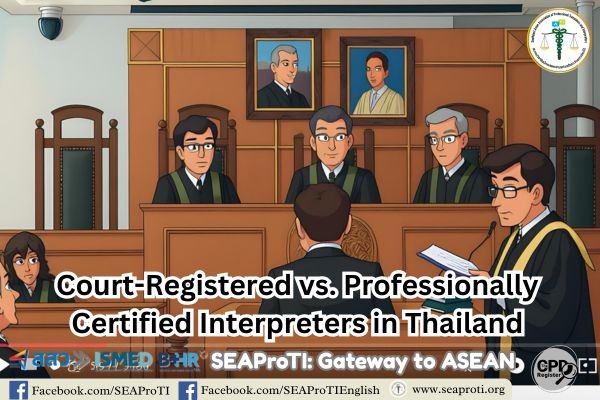
29 December 2025, Bangkok – This article aims to explain the structural distinction between court-registered interpreters under the Office of the Judiciary and professionally certified interpreters accredited by the Southeast Asian Association of Professional Translators and Interpreters (SEAProTI) within the Thai justice system. Focusing on criminal and civil cases of differing levels of complexity, the article argues that Thailand’s interpreter system is not a unitary or centralized model, but rather a risk-based allocation system. This structure is consistent with Thailand’s obligations under the International Covenant on Civil and Political Rights (ICCPR) and the principle of due process of law, allowing the state to balance procedural efficiency with substantive justice.
Keywords: court interpreters, professional interpreters, ICCPR, justice system, forensic linguistics
Introduction
Language constitutes a fundamental structural component of the justice system. In cases where defendants, suspects, or litigants are unable to use the language of the court effectively, the provision of interpreting services is not merely a matter of communication facilitation but a mechanism for safeguarding rights, freedoms, and human dignity.
In the Thai context, however, the legal status of “court interpreters” is frequently misunderstood. In particular, the term “Certified Court Interpreter” is often used colloquially, despite the fact that no such legally defined status exists under Thai law. This conceptual confusion obscures the actual functional structure of interpreter deployment within Thailand’s judicial system.
Court-Registered Interpreters under the Office of the Judiciary: A Procedural Role
Court-registered interpreters under the Office of the Judiciary are individuals whose names are formally listed by the judiciary for use in judicial proceedings as required. In practice, these interpreters are primarily deployed in:
- Minor criminal cases
- Red-handed or caught-in-the-act offences
- Early procedural stages, such as police investigations, statement-taking, initial hearings, and bail proceedings
The principal function of court-registered interpreters is to ensure that Thailand meets its minimum human rights obligations under the International Covenant on Civil and Political Rights (ICCPR), particularly Article 14(3)(f), which guarantees the right of an accused person to the free assistance of an interpreter if they cannot understand or speak the language used in court.
In such cases, factual disputes are typically limited, the evidentiary structure is relatively straightforward, and systemic legal consequences are minimal. Accordingly, the judicial system prioritizes speed, procedural sufficiency, and compliance with minimum rights standards, rather than deep linguistic, legal, or discursive analysis.
SEAProTI-Certified Interpreters: Substantive and Risk-Sensitive Functions
By contrast, interpreters certified by the Southeast Asian Association of Professional Translators and Interpreters (SEAProTI) are assessed and developed under a professional certification framework that encompasses:
- Advanced linguistic competence
- In-depth understanding of legal systems and judicial processes
- Professional ethics and neutrality
- Risk management related to interpretive errors and legal consequences
As a result, SEAProTI-certified interpreters are predominantly engaged in:
- Serious or large-scale criminal cases
- High-value civil litigation
- Arbitration proceedings
Cases involving foreign parties, international treaties, or external scrutiny by diplomatic missions or international bodies
In these contexts, even minor interpretive inaccuracies may cause irreversible harm to the justice process. Consequently, the use of professionally certified interpreters serves not merely procedural compliance, but the protection of substantive justice, evidentiary integrity, and due process.
Structural Role Differentiation, Not Status Inequality
The absence of a legally defined “Certified Court Interpreter” status in Thailand does not indicate institutional deficiency. Rather, it reflects a risk-based allocation of interpretive resources, whereby:
- Low-risk cases → court-registered interpreters
- High-risk cases → professionally certified interpreters
This structural differentiation allows the Thai state to comply effectively with ICCPR obligations while simultaneously enabling professional bodies to safeguard justice in complex and high-stakes proceedings.
Conclusion
Court-registered interpreters under the Office of the Judiciary and SEAProTI-certified interpreters do not exist in a competitive or hierarchical relationship. Instead, they function at different structural levels within a single justice system. Their respective roles reflect the principle that justice must be designed in accordance with the risk profile of each case, and that language serves as a critical mechanism for balancing state efficiency with individual rights.
Read more: Office of the Judiciary. (2022). Announcement of the Office of the Judiciary on the registration of court interpreters for the Fiscal Year B.E. 2565 (2022).
References
- International Covenant on Civil and Political Rights. (1966). United Nations Treaty Series, 999, 171.
- Mikkelson, H. (2016). Introduction to court interpreting (2nd ed.). Routledge.
- Pöchhacker, F. (2014). Introducing interpreting studies (2nd ed.). Routledge.
- Southeast Asian Association of Professional Translators and Interpreters. (2023). Professional standards and certification framework. SEAProTI.
- United Nations Office on Drugs and Crime. (2018). Handbook on ensuring quality of interpretation in criminal justice proceedings. UNODC.
About Certified Translators, Translation Certifiers, and Certified Interpreters of SEAProTI
The Southeast Asian Association of Professional Translators and Interpreters (SEAProTI) has formally announced the qualifications and requirements for registration of Certified Translators, Translation Certification Providers, and Certified Interpreters in Sections 9 and 10 of the Royal Gazette, published by the Secretariat of the Cabinet, Office of the Prime Minister of Thailand, on 25 July 2024 (Vol. 141, Part 66 Ng, p. 100). Certified Translators, Translation Certification Providers, and Certified Interpreters
The Council of State has proposed the enactment of a Royal Decree, granting registered translators and recognised translation certifiers from professional associations or accredited language institutions the authority to provide legally valid translation certification (Letter to SEAProTI dated April 28, 2025)
SEAProTI is the first professional association in Thailand and Southeast Asia to implement a comprehensive certification system for translators, certifiers, and interpreters.
Head Office: Baan Ratchakru Building, No. 33, Room 402, Soi Phahonyothin 5, Phahonyothin Road, Phaya Thai District, Bangkok 10400, Thailand
Email: hello@seaproti.com | Tel.: (+66) 2-114-3128 (Office hours: Mon–Fri, 09:00–17:00)
ล่ามศาลที่ “ขึ้นทะเบียน” กับล่ามวิชาชีพที่ “ผ่านการรับรอง”:
การแบ่งบทบาทเชิงโครงสร้างในคดีอาญาและคดีแพ่งของประเทศไทยภายใต้กรอบ ICCPR
29 ธันวาคม 2568, กรุงเทพมหานคร – บทความนี้มีวัตถุประสงค์เพื่ออธิบายความแตกต่างเชิงโครงสร้างระหว่าง ล่ามศาลที่ขึ้นทะเบียน กับสำนักงานศาลยุติธรรม และ ล่ามวิชาชีพที่ผ่านการรับรองโดยสมาคมวิชาชีพนักแปลและล่ามแห่งเอเชียตะวันออกเฉียงใต้ (SEAProTI) ในบริบทของกระบวนการยุติธรรมไทย โดยเฉพาะในคดีอาญาและคดีแพ่งที่มีระดับความซับซ้อนแตกต่างกัน บทความชี้ให้เห็นว่า ระบบล่ามของไทยมิได้เป็นระบบเดียวแบบรวมศูนย์ (unitary system) หากแต่เป็นระบบแบ่งบทบาทตามความเสี่ยง (risk-based allocation) ซึ่งสอดคล้องกับพันธกรณีของรัฐไทยภายใต้อนุสัญญาระหว่างประเทศว่าด้วยสิทธิพลเมืองและสิทธิทางการเมือง (ICCPR) ตลอดจนหลักการพิจารณาคดีอย่างเป็นธรรม (due process of law)
คำสำคัญ: ล่ามศาล, ล่ามวิชาชีพ, ICCPR, กระบวนการยุติธรรม, นิติภาษาศาสตร์
ภาษาเป็นองค์ประกอบเชิงโครงสร้างของกระบวนการยุติธรรม โดยเฉพาะในคดีที่คู่ความหรือผู้ต้องหาไม่สามารถใช้ภาษาของศาลได้อย่างมีประสิทธิภาพ การจัดให้มีล่ามจึงมิใช่เพียงการอำนวยความสะดวกทางการสื่อสาร แต่เป็นกลไกในการคุ้มครองสิทธิ เสรีภาพ และศักดิ์ศรีความเป็นมนุษย์ อย่างไรก็ตาม ในบริบทของประเทศไทย ความเข้าใจเกี่ยวกับสถานะของ “ล่ามศาล” มักถูกทำให้คลาดเคลื่อน โดยเฉพาะการใช้คำว่า “Certified Court Interpreter” ซึ่งไม่มีฐานะทางกฎหมายในระบบกฎหมายไทย
ล่ามศาลที่ขึ้นทะเบียนกับสำนักงานศาลยุติธรรม: บทบาทเชิงกระบวนการ
ล่ามศาลที่ขึ้นทะเบียนกับ สำนักงานศาลยุติธรรม เป็นล่ามที่ได้รับการบรรจุรายชื่อไว้ในบัญชีของฝ่ายตุลาการ เพื่อใช้ในกระบวนการพิจารณาคดีตามความจำเป็น ล่ามกลุ่มนี้มักถูกใช้ใน คดีอาญาขนาดเล็ก คดีที่ผู้กระทำผิดถูกจับกุมได้ซึ่งหน้า ขั้นตอนต้นของกระบวนการ เช่น การสอบสวน การรับคำให้การ การพิจารณาประกันตัว
บทบาทหลักของล่ามศาลที่ขึ้นทะเบียนคือ การทำให้รัฐไทยปฏิบัติตามพันธกรณีขั้นต่ำด้านสิทธิมนุษยชน ภายใต้ International Covenant on Civil and Political Rights (ICCPR) โดยเฉพาะข้อ 14 วรรค 3 (f) ซึ่งรับรองสิทธิของผู้ถูกกล่าวหาที่จะได้รับความช่วยเหลือจากล่ามโดยไม่เสียค่าใช้จ่าย หากไม่เข้าใจภาษาที่ใช้ในศาล
ในคดีลักษณะดังกล่าว ประเด็นข้อพิพาทมักไม่ซับซ้อน ข้อเท็จจริงชัดเจน และผลกระทบเชิงระบบมีจำกัด ดังนั้น ระบบตุลาการจึงเน้น ความรวดเร็ว ความเพียงพอเชิงกระบวนการ และการปฏิบัติตามหลักสิทธิขั้นต่ำ มากกว่าการวิเคราะห์เชิงลึกทางภาษาและกฎหมาย
ล่ามที่ผ่านการรับรองโดย SEAProTI: บทบาทเชิงเนื้อหาสาระและความเสี่ยง
ในทางตรงกันข้าม ล่ามที่ผ่านการรับรองโดย สมาคมวิชาชีพนักแปลและล่ามแห่งเอเชียตะวันออกเฉียงใต้ (SEAProTI) ได้รับการพัฒนาและประเมินตามกรอบวิชาชีพ ซึ่งครอบคลุมทั้ง ความสามารถทางภาษาเชิงลึก ความเข้าใจระบบกฎหมายและกระบวนพิจารณา จริยธรรมวิชาชีพและความเป็นกลาง การจัดการความเสี่ยงจากการตีความคลาดเคลื่อน
ล่ามกลุ่มนี้จึงมักถูกใช้ใน คดีอาญาร้ายแรงหรือคดีอาญาขนาดใหญ่ คดีแพ่งมูลค่าสูง คดีอนุญาโตตุลาการ คดีที่เกี่ยวข้องกับต่างประเทศ สนธิสัญญา หรือการตรวจสอบจากหน่วยงานระหว่างประเทศ
ในคดีลักษณะนี้ การแปลหรือการล่ามที่ผิดพลาดเพียงเล็กน้อยอาจส่งผลให้กระบวนการยุติธรรมเสียหายอย่างไม่อาจเยียวยาได้ (irreversible harm) ดังนั้น การใช้ล่ามที่มี การรับรองเชิงวิชาชีพ จึงเป็นกลไกในการคุ้มครอง ความยุติธรรมเชิงสาระ (substantive justice) มากกว่าการปฏิบัติตามขั้นตอนขั้นต่ำเท่านั้น
การแบ่งบทบาทเชิงโครงสร้าง ไม่ใช่ความเหลื่อมล้ำเชิงสถานะ
การที่ประเทศไทยไม่มี “Certified Court Interpreter” ตามความหมายของการรับรองโดยกฎหมาย มิได้สะท้อนถึงความล้าหลัง หากแต่สะท้อนถึง โครงสร้างการจัดสรรทรัพยากรตามระดับความเสี่ยงของคดี กล่าวคือ
- คดีความเสี่ยงต่ำ → ใช้ล่ามศาลที่ขึ้นทะเบียน
- คดีความเสี่ยงสูง → ใช้ล่ามวิชาชีพที่ผ่านการรับรอง
การแบ่งบทบาทดังกล่าวช่วยให้รัฐสามารถปฏิบัติตาม ICCPR ได้อย่างมีประสิทธิภาพ ขณะเดียวกันก็เปิดพื้นที่ให้กลไกวิชาชีพเข้ามาคุ้มครองกระบวนการยุติธรรมในคดีที่มีความซับซ้อนสูง
บทสรุป
ล่ามศาลที่ขึ้นทะเบียนกับสำนักงานศาลยุติธรรมและล่ามที่ผ่านการรับรองโดย SEAProTI มิได้อยู่ในความสัมพันธ์เชิงแข่งขัน หากแต่เป็นองค์ประกอบคนละระดับของระบบเดียวกัน บทบาทของทั้งสองกลุ่มสะท้อนแนวคิดที่ว่า ความยุติธรรมต้องถูกออกแบบให้สอดคล้องกับระดับความเสี่ยงของคดี และภาษาเป็นกลไกสำคัญในการรักษาสมดุลระหว่างประสิทธิภาพของรัฐกับสิทธิของปัจเจกบุคคล
อ่านเพิ่มเติม: ประกาศสำนักงานศาลยุติธรรม เรื่อง การขอขึ้นทะเบียนล่ามของสำนักงานศาลยุติธรรม ประจำปีงบประมาณ พ.ศ. ๒๕๖๕
เอกสารอ้างอิง
- International Covenant on Civil and Political Rights. (1966). United Nations Treaty Series, 999, 171.
- Mikkelson, H. (2016). Introduction to court interpreting (2nd ed.). Routledge.
- Pöchhacker, F. (2014). Introducing interpreting studies (2nd ed.). Routledge.
- Southeast Asian Association of Professional Translators and Interpreters. (2023). Professional standards and certification framework. SEAProTI.
- United Nations Office on Drugs and Crime. (2018). Handbook on ensuring quality of interpretation in criminal justice proceedings. UNODC.
เกี่ยวกับนักแปลรับรอง ผู้รับรองการแปล และล่ามรับรองของสมาคมวิชาชีพนักแปลและล่ามแห่งเอเชียตะวันออกเฉียงใต้
สมาคมวิชาชีพนักแปลและล่ามแห่งเอเชียตะวันออกเฉียงใต้ (SEAProTI) ได้ประกาศหลักเกณฑ์และคุณสมบัติผู้ที่ขึ้นทะเบียนเป็น “นักแปลรับรอง (Certified Translators) และผู้รับรองการแปล (Translation Certification Providers) และล่ามรับรอง (Certified Interpreters)” ของสมาคม หมวดที่ 9 และหมวดที่ 10 ในราชกิจจานุเบกษา ของสำนักเลขาธิการคณะรัฐมนตรี ในสำนักนายกรัฐมนตรี แห่งราชอาณาจักรไทย ลงวันที่ 25 ก.ค. 2567 เล่มที่ 141 ตอนที่ 66 ง หน้า 100 อ่านฉบับเต็มได้ที่: นักแปลรับรอง ผู้รับรองการแปล และล่ามรับรอง
สำนักคณะกรรมการกฤษฎีกา เสนอให้ตราเป็นพระราชกฤษฎีกา โดยกำหนดให้นักแปลที่ขึ้นทะเบียน รวมถึงผู้รับรองการแปลจากสมาคมวิชาชีพหรือสถาบันสอนภาษาที่มีการอบรมและขึ้นทะเบียน สามารถรับรองคำแปลได้ (จดหมายถึงสมาคม SEAProTI ลงวันที่ 28 เม.ย. 2568)
สมาคมวิชาชีพนักแปลและล่ามแห่งเอเชียตะวันออกเฉียงใต้ เป็นสมาคมวิชาชีพแห่งแรกและแห่งเดียวในประเทศไทยและภูมิภาคเอเชียตะวันออกเฉียงใต้ที่มีระบบรับรองนักแปลรับรอง ผู้รับรองการแปล และล่ามรับรอง
สำนักงานใหญ่: อาคารบ้านราชครู เลขที่ 33 ห้อง 402 ซอยพหลโยธิน 5 ถนนพหลโยธิน แขวงพญาไท เขตพญาไท กรุงเทพมหานคร 10400 ประเทศไทย
อีเมล: hello@seaproti.com โทรศัพท์: (+66) 2-114-3128 (เวลาทำการ: วันจันทร์–วันศุกร์ เวลา 09.00–17.00 น.