



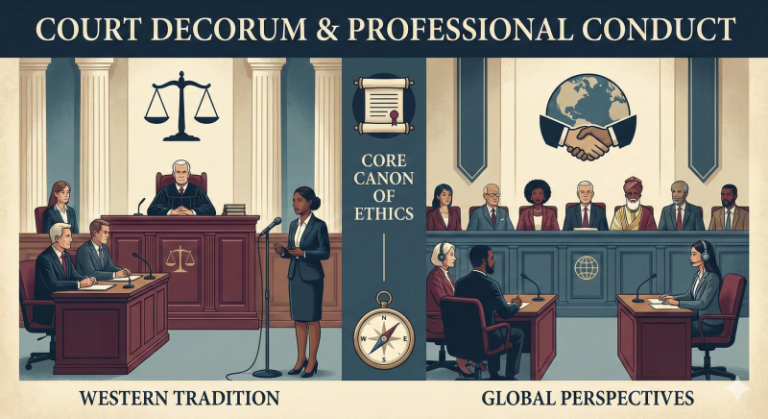
Court Decorum and Professional Conduct as a Core Canon of Court Interpreting Ethics: A Comparative Academic Analysis
20 February 2026, Bangkok — In modern justice systems, court interpreters do not merely transmit language; they function as a crucial mechanism linking the right to a fair hearing with the principle of equality before the law. For this reason, codes of ethics for court interpreters in many jurisdictions designate “Court Decorum and Professional Conduct” as one of the core canons, aimed at safeguarding neutrality, institutional credibility, and the integrity of judicial proceedings. This article offers a comparative academic analysis of this principle, drawing on regulatory frameworks in jurisdictions with well-established standards for court interpreting, including the United States, United Kingdom, Australia, and Canada.
Court Decorum as a Mechanism for Protecting Fairness
Court Decorum refers to the interpreter’s obligation to conduct themselves in a manner that is polite, composed, neutral, and non-disruptive to judicial proceedings. This principle is clearly articulated in the United States’ Model Code of Professional Responsibility for Interpreters in the Judiciary, which requires interpreters to perform their duties professionally, avoid conduct that may create an appearance of bias, and refrain from drawing attention to themselves (National Center for State Courts [NCSC], 2007). Similar standards are reflected in professional guidelines in the United Kingdom and Australia, which emphasize neutrality and appropriate courtroom behavior to preserve the credibility of the court (Australian Institute of Interpreters and Translators [AUSIT], 2012).
From a theoretical perspective, Court Decorum aligns with the concept of institutional neutrality, which views interpreters as integral components of the judicial structure rather than substantive participants in the dispute. Displays of personal emotion or expressions of support for one party may be interpreted as interference with the proceedings and may influence how stakeholders perceive the fairness of the trial.
Unobtrusiveness and the Boundaries of the Interpreter’s Role
A central element of Court Decorum is the principle of unobtrusiveness. This requires interpreters to perform their duties without becoming the focal point of attention or disrupting the rhythm of courtroom proceedings. The principle does not diminish the importance of interpreters; rather, it reinforces that the core of the judicial process lies with the parties and the court—not with the language mediator.
Scholarly research in interpreting ethics has noted that while the “interpreter as conduit” model has been critiqued as an unattainable ideal in practice, it retains normative value within courtroom settings as a boundary-setting framework to prevent role expansion beyond professional limits (Hale, 2004). Maintaining unobtrusiveness therefore operates as a symbolic constraint on the interpreter’s authority and reduces the risk of allegations of partiality.
Attire as a Symbol of Respect for the Court
Beyond demeanor and emotional restraint, many jurisdictions also impose expectations regarding appropriate courtroom attire. Dress requirements are not merely matters of appearance; they form part of the ritual formality that sustains the solemnity and authority of judicial institutions. Symbolically, proper attire reflects recognition of the court’s authority and of the judicial process as a formal legal institution.
In several jurisdictions, failure to comply with expected standards of dress may be regarded as a sign of disrespect toward the court and may undermine the interpreter’s credibility as a professional operating within the justice system.
Implications for Party Rights and the Legitimacy of Judgments
Violations of court decorum may carry indirect legal consequences. If a party perceives that an interpreter has behaved in a manner suggesting bias or lack of neutrality, such concerns may give rise to objections, procedural challenges, or even appeals based on claims of unfair proceedings. Court Decorum, therefore, is not merely a matter of social etiquette; it forms part of the broader framework of due process protections.
In conclusion, court decorum and professional conduct constitute a core ethical canon for court interpreters across multiple jurisdictions. The principle seeks to preserve neutrality, professionalism, unobtrusiveness, and appropriate conduct within judicial proceedings. It reflects the recognition that linguistic accuracy alone is insufficient. Without conduct aligned with institutional standards of justice, the legitimacy of judicial proceedings may be called into question.
References
- Australian Institute of Interpreters and Translators. (2012). Code of ethics and code of conduct. AUSIT.
- Hale, S. B. (2004). The discourse of court interpreting: Discourse practices of the law, the witness and the interpreter. John Benjamins.
- National Center for State Courts. (2007). Model code of professional responsibility for interpreters in the judiciary. NCSC.
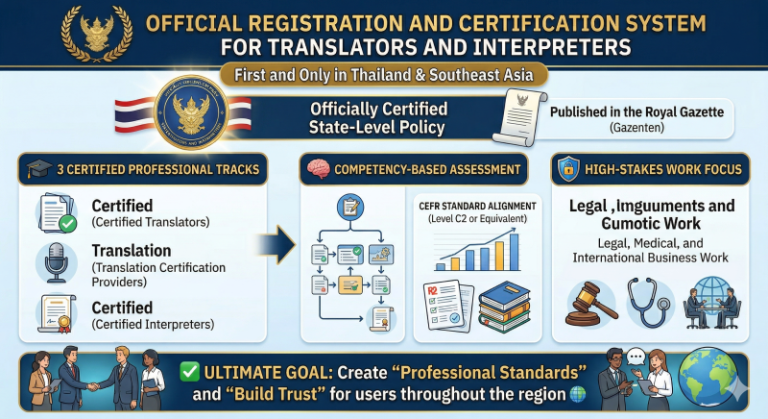
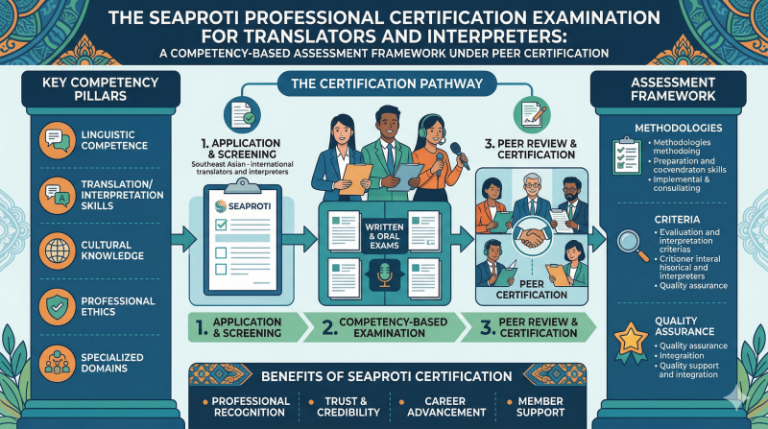
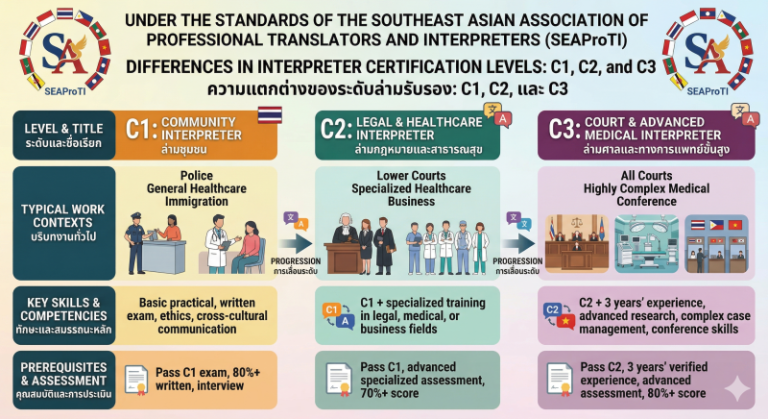
This section provides information about certified translators, translation certifiers, and certified interpreters associated with SEAProTI.
The Southeast Asian Association of Professional Translators and Interpreters (SEAProTI) has officially shared the qualifications and requirements for becoming Certified Translators, Translation Certification Providers, and Certified Interpreters in Sections 9 and 10 of the Royal Gazette, which was published by the Prime Minister’s Office in Thailand on July 25, 2024. Certified Translators, Translation Certification Providers, and Certified Interpreters
The Council of State has proposed the enactment of a Royal Decree, granting registered translators and recognised translation certifiers from professional associations or accredited language institutions the authority to provide legally valid translation certification (Letter to SEAProTI dated April 28, 2025)
SEAProTI is the first professional association in Thailand and Southeast Asia to implement a comprehensive certification system for translators, certifiers, and interpreters.
Head Office: Baan Ratchakru Building, No. 33, Room 402, Soi Phahonyothin 5, Phahonyothin Road, Phaya Thai District, Bangkok 10400, Thailand
Email: hello@seaproti.com | Tel.: (+66) 2-114-3128 (Office hours: Mon–Fri, 09:00–17:00)
มารยาทในศาลและความประพฤติทางวิชาชีพในฐานะหลักจรรยาบรรณแกนกลางของล่ามศาล: การวิเคราะห์เชิงวิชาการเชิงเปรียบเทียบ
20 กุมภาพันธ์ 2569, กรุงเทพมหานคร – ในกระบวนการยุติธรรมสมัยใหม่ ล่ามศาลมิได้ทำหน้าที่เพียงถ่ายทอดภาษา หากแต่เป็นกลไกสำคัญที่เชื่อมโยงสิทธิในการรับฟังอย่างเป็นธรรม (fair hearing) เข้ากับหลักความเสมอภาคต่อหน้ากฎหมาย หลักจรรยาบรรณล่ามศาลในหลายประเทศจึงกำหนด “Court Decorum and Professional Conduct” ไว้เป็นหนึ่งในหลักการแกนกลาง (core canons) เพื่อรักษาความเป็นกลาง ความน่าเชื่อถือ และความศักดิ์สิทธิ์ของกระบวนการพิจารณาคดี บทความนี้มุ่งวิเคราะห์หลักดังกล่าวในเชิงเปรียบเทียบ โดยอ้างอิงแนวปฏิบัติในประเทศที่มีระบบกำกับมาตรฐานวิชาชีพล่ามศาลอย่างชัดเจน ได้แก่ United States United Kingdom Australia และ Canada
แนวคิด Court Decorum ในฐานะกลไกคุ้มครองความเป็นธรรม
Court Decorum หมายถึงการวางตนของล่ามในลักษณะที่สุภาพ สุขุม เป็นกลาง และไม่รบกวนกระบวนการยุติธรรม หลักการนี้ปรากฏชัดในจรรยาบรรณล่ามศาลของสหรัฐอเมริกา ซึ่งกำหนดให้ล่ามต้องปฏิบัติหน้าที่อย่างเป็นมืออาชีพ หลีกเลี่ยงพฤติกรรมที่อาจทำให้เกิดข้อสงสัยเรื่องอคติ และต้องไม่ดึงความสนใจมาที่ตนเอง (National Center for State Courts [NCSC], 2007) หลักการในลักษณะเดียวกันยังปรากฏในแนวปฏิบัติของสหราชอาณาจักรและออสเตรเลีย ซึ่งเน้นการรักษาความเป็นกลางและการควบคุมพฤติกรรมในห้องพิจารณาเพื่อไม่ให้กระทบต่อความน่าเชื่อถือของศาล (Australian Institute of Interpreters and Translators [AUSIT], 2012)
ในเชิงทฤษฎี Court Decorum สอดคล้องกับแนวคิดเรื่อง institutional neutrality ซึ่งมองว่าล่ามเป็นองค์ประกอบหนึ่งของโครงสร้างสถาบันยุติธรรม มิใช่ผู้มีบทบาทเชิงเนื้อหาในข้อพิพาท การแสดงอารมณ์ส่วนตัวหรือท่าทีสนับสนุนฝ่ายใดฝ่ายหนึ่งอาจถูกตีความว่าเป็นการแทรกแซงกระบวนการ และส่งผลต่อการรับรู้ของผู้มีส่วนได้เสียในคดี
ความ “ไม่เด่น” (Unobtrusiveness) กับขอบเขตบทบาทของล่าม
หนึ่งในองค์ประกอบสำคัญของ Court Decorum คือหลักความ “ไม่เด่น” หรือ unobtrusiveness ซึ่งกำหนดให้ล่ามปฏิบัติหน้าที่โดยไม่สร้างจุดสนใจหรือรบกวนจังหวะของการพิจารณาคดี หลักการนี้มิได้หมายถึงการลดทอนความสำคัญของล่าม แต่เป็นการยืนยันว่าศูนย์กลางของกระบวนการคือคู่ความและศาล มิใช่ผู้ถ่ายทอดภาษา
งานศึกษาด้านจริยธรรมล่ามชี้ให้เห็นว่า แม้แนวคิด “ล่ามคือ conduit” จะถูกวิพากษ์ในเชิงทฤษฎีว่าเป็นอุดมคติที่ไม่อาจเกิดขึ้นได้โดยสมบูรณ์ แต่ในบริบทศาล แนวคิดดังกล่าวยังคงมีคุณค่าในฐานะมาตรฐานเชิงบรรทัดฐาน (normative standard) เพื่อป้องกันการขยายบทบาทเกินขอบเขต (Hale, 2004) การรักษาความไม่เด่นจึงเป็นกลไกจำกัดอำนาจเชิงสัญลักษณ์ของล่าม และลดความเสี่ยงต่อข้อโต้แย้งเรื่องความลำเอียง
การแต่งกายในฐานะสัญลักษณ์แห่งความเคารพต่อศาล
นอกจากพฤติกรรมและการควบคุมอารมณ์แล้ว หลายประเทศยังกำหนดให้ล่ามแต่งกายสุภาพและเหมาะสมตามระเบียบศาล การแต่งกายมิใช่เพียงประเด็นด้านภาพลักษณ์ แต่เป็นส่วนหนึ่งของพิธีการ (ritual formality) ที่หล่อหลอมความศักดิ์สิทธิ์ของกระบวนการยุติธรรม ในเชิงสัญลักษณ์ การแต่งกายที่เหมาะสมสะท้อนการยอมรับอำนาจของศาลและสถานะของกระบวนการพิจารณาคดีในฐานะสถาบันทางกฎหมาย
ในหลายเขตอำนาจศาล การไม่ปฏิบัติตามมาตรฐานการแต่งกายอาจถูกมองว่าเป็นการขาดความเคารพต่อศาล และกระทบต่อความน่าเชื่อถือของล่ามในฐานะผู้ปฏิบัติหน้าที่ในระบบยุติธรรม
ผลกระทบต่อสิทธิของคู่ความและความชอบธรรมของคำพิพากษา
การละเมิดหลัก Court Decorum อาจก่อให้เกิดผลทางกฎหมายในทางอ้อม หากคู่ความเห็นว่าล่ามมีพฤติกรรมที่สะท้อนอคติหรือไม่เป็นกลาง อาจนำไปสู่การคัดค้านการดำเนินกระบวนพิจารณา หรือแม้แต่การอุทธรณ์ในประเด็นความเป็นธรรมของการพิจารณาคดี ดังนั้น Court Decorum จึงมิใช่เพียงมารยาททางสังคม หากแต่เป็นองค์ประกอบของหลัก due process
กล่าวโดยสรุป Court Decorum and Professional Conduct เป็นหลักจรรยาบรรณแกนกลางของล่ามศาลในหลายประเทศ โดยมีเป้าหมายเพื่อรักษาความเป็นกลาง ความสุภาพ ความไม่เด่น และความเหมาะสมในการปฏิบัติหน้าที่ หลักการดังกล่าวสะท้อนการตระหนักว่า “ความแม่นยำทางภาษา” เพียงอย่างเดียวไม่เพียงพอ หากปราศจากการวางตนที่สอดคล้องกับมาตรฐานของสถาบันยุติธรรม ความชอบธรรมของกระบวนการพิจารณาคดีอาจถูกตั้งคำถามได้
References
- Australian Institute of Interpreters and Translators. (2012). Code of ethics and code of conduct. AUSIT.
- Hale, S. B. (2004). The discourse of court interpreting: Discourse practices of the law, the witness and the interpreter. John Benjamins.
- National Center for State Courts. (2007). Model code of professional responsibility for interpreters in the judiciary. NCSC.
สมาคมวิชาชีพนักแปลและล่ามแห่งเอเชียตะวันออกเฉียงใต้ (SEAProTI) ได้ประกาศหลักเกณฑ์และคุณสมบัติของผู้ที่ขึ้นทะเบียนเป็น “นักแปลรับรอง (Certified Translators) และผู้รับรองการแปล (Translation Certification Providers) และล่ามรับรอง (Certified Interpreters)” ของสมาคม หมวดที่ 9 และหมวดที่ 10 ในราชกิจจานุเบกษา ของสำนักเลขาธิการคณะรัฐมนตรี ในสำนักนายกรัฐมนตรี แห่งราชอาณาจักรไทย ลงวันที่ 25 ก.ค. 2567 เล่มที่ 141 ตอนที่ 66 ง หน้า 100 อ่านฉบับเต็มได้ที่: นักแปลรับรอง ผู้รับรองการแปล และล่ามรับรอง
สำนักคณะกรรมการกฤษฎีกาเสนอให้ตราเป็นพระราชกฤษฎีกา โดยกำหนดให้นักแปลที่ขึ้นทะเบียน รวมถึงผู้รับรองการแปลจากสมาคมวิชาชีพหรือสถาบันสอนภาษาที่มีการอบรมและขึ้นทะเบียน สามารถรับรองคำแปลได้ (จดหมายถึงสมาคม SEAProTI ลงวันที่ 28 เม.ย. 2568)
สมาคมวิชาชีพนักแปลและล่ามแห่งเอเชียตะวันออกเฉียงใต้เป็นสมาคมวิชาชีพแห่งแรกและแห่งเดียวในประเทศไทยและภูมิภาคเอเชียตะวันออกเฉียงใต้ที่มีระบบรับรองนักแปลรับรอง ผู้รับรองการแปล และล่ามรับรอง
สำนักงานใหญ่: อาคารบ้านราชครู เลขที่ 33 ห้อง 402 ซอยพหลโยธิน 5 ถนนพหลโยธิน แขวงพญาไท เขตพญาไท กรุงเทพมหานคร 10400 ประเทศไทย
อีเมล: hello@seaproti.com โทรศัพท์: (+66) 2-114-3128 (เวลาทำการ: วันจันทร์–วันศุกร์ เวลา 09.00–17.00 น.