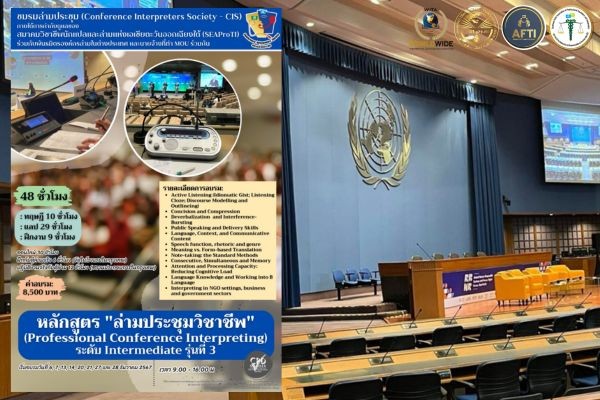





Cheap Interpreting Fees May Lead to Costly Injustice”:
An Academic Analysis of the Role, Risks, and Liability of Court Interpreters
Abstract
This article analyzes the role of interpreters within the justice system, highlighting that setting interpreter remuneration below professional standards not only affects the quality of legal communication but also creates structural risks to justice as a whole. The discussion is framed through the lenses of cognitive load, legal liability, and professional ethics, while emphasizing our role as interpreters as a critical mechanism within the justice process. The article further incorporates empirical observations on the fee structures of legal interpreting in Thailand, revealing a significant imbalance between professional value and compensation.
Introduction
In multilingual legal systems, interpreters serve as intermediaries, conveying meaning between parties who cannot communicate directly in the same language. This role extends far beyond the technical transfer of language; it involves the transmission of legal rights and the facilitation of equitable access to justice.
However, in the Thai context, interpreter remuneration in courts remains disproportionately low relative to the responsibilities and risks involved. This raises a fundamental policy and ethical question: Does the undervaluation of interpreters undermine the overall quality of justice? More importantly, does the system adequately recognize us, interpreters, as structural actors within the justice process?
Conceptual Framework: Interpreters as Co-Constructors of Justice
Within the fields of legal linguistics and socio-legal studies, interpreters are no longer viewed as neutral conduits of language. Rather, they are active agents who participate in the co-construction of legal meaning through continuous linguistic decision-making.
We, interpreters, must constantly select appropriate terminology, structure discourse in legally meaningful ways, and convey tone and intent accurately. These decisions directly influence how judges, lawyers, and litigants perceive and interpret information. Every utterance delivered by an interpreter, therefore, constitutes not merely language, but evidence with legal consequences.
Cognitive Load and Temporal Constraints
Court interpreting operates under intense time constraints and cognitive pressure. We, interpreters, must listen, process, reformulate, and deliver meaning simultaneously, often without the possibility of correction.
From a cognitive load perspective, interpreting is among the most demanding intellectual activities, requiring the management of working memory, rapid decision-making, and sustained accuracy under pressure. Even minor errors can distort facts or intentions, thereby affecting the fairness of judicial outcomes.
Legal Risk and Professional Liability
Court interpreters face significant legal risks. If an interpreting error results in harm, such as the loss of a party’s legal rights or the misinterpretation of testimony, we, interpreters, may be exposed to civil liability, disciplinary action, or permanent reputational damage.
This risk is compounded by the nature of judicial proceedings, where interpreted statements become part of the official court record. Consequently, errors often carry irreversible consequences, as they cannot be fully corrected after the fact.
Interpreter Fee Structures in Thailand: A Distorted Indicator of Value
The structure of legal interpreting fees in Thailand reveals a clear mismatch between professional value and the compensation system. Within the court system, interpreters are often paid as allowances rather than professional fees, typically ranging from approximately 500–800 THB per hour or not exceeding 2,400 THB per day. Such rates fail to reflect the level of responsibility, expertise, and risk inherent in the role.
In contrast, private-sector legal interpreting commands significantly higher rates, ranging from approximately 3,500–6,000 THB per half-day to 6,000–10,000 THB or more per full-day. Interpreters working directly with legal teams in court may receive between 5,500 and 8,000 THB per day, with higher rates for experienced professionals.
At the international level, such as arbitration proceedings, interpreting fees can reach 20,000–30,000 THB per day, reflecting the high stakes, precision, and accountability required.
This disparity highlights a critical insight: interpreter remuneration indicates how much value a system assigns to interpreters. When compensation is low, it signals systemic undervaluation of us, interpreters, and our role in justice.
Low-Cost Interpreting and Its Impact on Justice
Hiring interpreters at low rates is not merely an economic issue; it directly affects quality. In practice, low compensation often leads to the engagement of underqualified or insufficiently trained individuals.
It must be stated unequivocally that low-cost interpreting cannot yield professional-quality interpreting. Highly skilled interpreters cannot sustain work under conditions that fail to reflect the risks and responsibilities involved.
As a result, the quality of interpretation declines, leading to inaccuracies in the information presented before the court. Ultimately, this undermines the integrity and fairness of judicial outcomes.
Discussion and Policy Implications
Interpreter remuneration should be aligned with the level of risk, responsibility, and specialized expertise required. Increasing compensation is not merely a labor issue but a strategic investment in safeguarding the quality of justice.
Furthermore, there is a need for clear qualification standards, certification systems, and regulatory frameworks to ensure that we, interpreters, can perform effectively while maintaining professional and ethical standards.
From a public policy perspective, interpreter fees can be seen as a measurable indicator of the extent to which a justice system prioritizes language, comprehension, and fairness.
Conclusion
Court interpreters stand at the intersection of language and law, transmitting words that directly affect liberty, rights, and human lives. We, interpreters, are not merely language facilitators but active participants in the construction of justice.
Setting interpreter fees at low levels does not reduce costs; it increases systemic risk. When errors occur, the true cost far exceeds any initial savings.
Ultimately, interpreter remuneration reflects the value users place on interpreters. In the legal world, words are not merely sounds—they determine the fate of cases. Therefore, saving on interpreter costs today may result in far greater costs of injustice in the future.
About certified translators, translation certifiers, and certified interpreters associated with SEAProTI.
The Southeast Asian Association of Professional Translators and Interpreters (SEAProTI) has officially shared the qualifications and requirements for becoming Certified Translators, Translation Certification Providers, and Certified Interpreters in Sections 9 and 10 of the Royal Gazette, which was published by the Prime Minister’s Office in Thailand on July 25, 2024. Certified Translators, Translation Certification Providers, and Certified Interpreters
The Council of State has proposed the enactment of a Royal Decree, granting registered translators and recognised translation certifiers from professional associations or accredited language institutions the authority to provide legally valid translation certification (Letter to SEAProTI dated April 28, 2025)
SEAProTI is the first professional association in Thailand and Southeast Asia to implement a comprehensive certification system for translators, certifiers, and interpreters.
Head Office: Baan Ratchakru Building, No. 33, Room 402, Soi Phahonyothin 5, Phahonyothin Road, Phaya Thai District, Bangkok 10400, Thailand
Email: hello@seaproti.com | Tel.: (+66) 2-114-3128 (Office hours: Mon–Fri, 09:00–17:00).
“ค่าล่ามราคาถูก อาจแลกมาด้วยความอยุติธรรมราคาแพง”: บทวิเคราะห์เชิงวิชาการว่าด้วยบทบาท ความเสี่ยง และความรับผิดของล่ามศาล
บทคัดย่อ
บทความนี้มีวัตถุประสงค์เพื่อวิเคราะห์บทบาทของล่ามในกระบวนการยุติธรรม โดยชี้ให้เห็นว่าการกำหนดค่าจ้างล่ามในระดับต่ำกว่ามาตรฐาน ไม่เพียงส่งผลกระทบต่อคุณภาพการสื่อสารทางกฎหมาย แต่ยังสร้างความเสี่ยงเชิงโครงสร้างต่อความยุติธรรมในภาพรวม บทความนำเสนอผ่านกรอบแนวคิดด้านภาระทางปัญญา (cognitive load), ความรับผิดทางกฎหมาย (legal liability) และจริยธรรมวิชาชีพ (professional ethics) พร้อมทั้งเน้นย้ำบทบาทของ “เราล่าม” ในฐานะกลไกสำคัญของกระบวนการยุติธรรม ควบคู่กับการวิเคราะห์เชิงประจักษ์เกี่ยวกับโครงสร้างอัตราค่าตอบแทนล่ามกฎหมายในประเทศไทย ซึ่งสะท้อนความไม่สมดุลระหว่างคุณค่าและค่าตอบแทนของวิชาชีพ
บทนำ
ในระบบกฎหมายที่มีความหลากหลายทางภาษา ล่ามทำหน้าที่เป็นตัวกลางในการถ่ายทอดความหมายระหว่างคู่ความที่ไม่สามารถสื่อสารด้วยภาษาเดียวกันได้โดยตรง บทบาทดังกล่าวไม่ได้เป็นเพียงการแปลภาษาในเชิงเทคนิค แต่เป็นการถ่ายทอด “สิทธิทางกฎหมาย” และ “โอกาสในการเข้าถึงความยุติธรรม” อย่างเท่าเทียม
อย่างไรก็ตาม ในบริบทของประเทศไทย การกำหนดค่าตอบแทนล่ามศาลยังคงอยู่ในระดับต่ำเมื่อเทียบกับภาระหน้าที่และความเสี่ยงที่แท้จริง ปรากฏการณ์นี้นำไปสู่คำถามสำคัญว่า ระบบยุติธรรมให้คุณค่ากับ “เราล่าม” ในฐานะผู้มีบทบาทเชิงโครงสร้างเพียงพอแล้วหรือไม่ และการกดค่าตอบแทนดังกล่าวกำลังบั่นทอนคุณภาพของกระบวนการยุติธรรมหรือไม่
กรอบแนวคิด: ล่ามในฐานะ “ผู้ร่วมสร้างความยุติธรรม”
ในทางทฤษฎีภาษาศาสตร์กฎหมายและสังคมวิทยากฎหมาย ล่ามมิใช่เพียงผู้ถ่ายทอดถ้อยคำแบบเป็นกลาง หากแต่เป็นผู้มีบทบาทเชิงปฏิบัติการในการ “ร่วมสร้างความหมายทางกฎหมาย” ผ่านการตัดสินใจเชิงภาษาอย่างต่อเนื่อง เราล่ามต้องเลือกคำที่เหมาะสมกับบริบทกฎหมาย จัดโครงสร้างประโยคให้สอดคล้องกับเจตนาของผู้พูด และถ่ายทอดน้ำเสียงที่สะท้อนความหมายโดยนัย
ดังนั้น ทุกถ้อยคำที่ล่ามถ่ายทอดจึงไม่ใช่เพียง “ภาษา” แต่คือ “หลักฐาน” ที่มีผลโดยตรงต่อการวินิจฉัยคดี
ภาระทางปัญญาและข้อจำกัดเชิงเวลา
การล่ามในศาลเป็นกระบวนการที่ต้องดำเนินการภายใต้ข้อจำกัดของเวลาและแรงกดดันสูง เราล่ามต้องฟัง วิเคราะห์ แปลงความหมาย และถ่ายทอดในเวลาเดียวกัน โดยไม่มีโอกาสย้อนกลับไปแก้ไขความผิดพลาดได้อย่างแท้จริง
ตามกรอบแนวคิดด้าน cognitive load งานล่ามถือเป็นหนึ่งในกิจกรรมที่ใช้ทรัพยากรทางปัญญาสูงที่สุด ความผิดพลาดแม้เพียงเล็กน้อยอาจนำไปสู่การบิดเบือนข้อเท็จจริงหรือเจตนาของผู้พูด ซึ่งส่งผลโดยตรงต่อความยุติธรรมของกระบวนการพิจารณาคดี
ความเสี่ยงทางกฎหมายและความรับผิด
ล่ามในศาลต้องเผชิญกับความเสี่ยงทางกฎหมายในระดับสูง หากการแปลผิดพลาดก่อให้เกิดความเสียหายแก่คู่ความ เช่น การสูญเสียสิทธิในการต่อสู้คดี หรือการตีความพยานหลักฐานผิดพลาด เราล่ามอาจถูกฟ้องร้องทางแพ่ง ถูกตรวจสอบทางวินัย หรือสูญเสียสถานะทางวิชาชีพ
ความเสี่ยงดังกล่าวยิ่งทวีความรุนแรงขึ้นจากลักษณะของกระบวนการพิจารณาคดีที่ไม่สามารถแก้ไขย้อนหลังได้อย่างสมบูรณ์ เนื่องจากคำแปลของล่ามถูกบันทึกเป็นส่วนหนึ่งของสำนวนคดี ซึ่งมีผลผูกพันทางกฎหมาย
โครงสร้างอัตราค่าตอบแทนล่ามกฎหมายในประเทศไทย: ตัวชี้วัดคุณค่าที่บิดเบือน
การพิจารณาอัตราค่าตอบแทนล่ามกฎหมายในประเทศไทยสะท้อนความไม่สอดคล้องระหว่าง “คุณค่าเชิงวิชาชีพ” กับ “ค่าตอบแทนเชิงระบบ” อย่างชัดเจน ในระบบศาล ล่ามมักได้รับค่าตอบแทนในลักษณะค่าป่วยการ ซึ่งโดยทั่วไปอยู่ในช่วงประมาณ 500–800 บาทต่อชั่วโมง หรือไม่เกินประมาณ 2,400 บาทต่อวัน อัตราดังกล่าวไม่สะท้อนภาระความรับผิด ความเสี่ยง และความเชี่ยวชาญที่จำเป็นต่อการปฏิบัติงาน
ในทางกลับกัน เมื่อเข้าสู่ตลาดเอกชน อัตราค่าตอบแทนล่ามกฎหมายเพิ่มขึ้นอย่างมีนัยสำคัญ โดยอยู่ในช่วงประมาณ 3,500–6,000 บาทสำหรับครึ่งวัน และ 6,000–10,000 บาทหรือมากกว่าสำหรับเต็มวัน สำหรับล่ามที่ทำงานขึ้นศาลโดยตรงกับทีมทนาย ค่าตอบแทนอาจอยู่ที่ 5,500–8,000 บาทต่อวัน และสูงกว่านั้นสำหรับผู้เชี่ยวชาญ
ในระดับนานาชาติ เช่น การล่ามในกระบวนการอนุญาโตตุลาการ อัตราค่าตอบแทนอาจสูงถึง 20,000–30,000 บาทต่อวัน ซึ่งสะท้อนให้เห็นอย่างชัดเจนว่า เมื่อบริบทของงานมีความเสี่ยงและความรับผิดสูงขึ้น ระบบตลาดจะตอบสนองด้วยการประเมินค่าทักษะอย่างเหมาะสม
ความแตกต่างดังกล่าวนำไปสู่ข้อสังเกตสำคัญว่า “อัตราค่าตอบแทนคือดัชนีสะท้อนคุณค่าที่ระบบให้กับล่าม” และเมื่ออัตราค่าตอบแทนอยู่ในระดับต่ำ ย่อมสะท้อนว่าระบบยังไม่ได้ให้คุณค่ากับบทบาทของเราล่ามอย่างแท้จริง
การจ้างล่ามราคาถูกกับคุณภาพของกระบวนการยุติธรรม
การจ้างล่ามในอัตราต่ำไม่เพียงเป็นปัญหาเชิงเศรษฐกิจ แต่ยังเป็นปัญหาเชิงคุณภาพโดยตรง ในทางปฏิบัติ การกำหนดค่าจ้างต่ำมักนำไปสู่การคัดเลือกบุคลากรที่ขาดประสบการณ์หรือไม่ได้รับการฝึกอบรมอย่างเหมาะสม
กล่าวได้อย่างตรงไปตรงมาว่า การจ้างล่ามราคาถูกย่อมไม่สามารถคาดหวังล่ามที่มีคุณภาพในระดับวิชาชีพได้ เนื่องจากผู้มีความเชี่ยวชาญย่อมไม่สามารถปฏิบัติงานภายใต้เงื่อนไขค่าตอบแทนที่ไม่สอดคล้องกับความเสี่ยงและความรับผิด
ผลลัพธ์ที่ตามมาคือการลดลงของคุณภาพการล่าม ซึ่งส่งผลโดยตรงต่อความถูกต้องของข้อมูลที่เข้าสู่กระบวนการพิจารณาคดี และท้ายที่สุดย่อมกระทบต่อความยุติธรรมของผลคำพิพากษา
อภิปรายและข้อเสนอเชิงนโยบาย
จากการวิเคราะห์ข้างต้น ค่าตอบแทนล่ามควรถูกกำหนดให้สอดคล้องกับความเสี่ยง ความรับผิด และความเชี่ยวชาญเฉพาะทางของวิชาชีพ การยกระดับค่าตอบแทนไม่ใช่เพียงการแก้ไขปัญหาเชิงแรงงาน แต่เป็นการลงทุนเพื่อรักษาคุณภาพของกระบวนการยุติธรรม
นอกจากนี้ ควรมีการกำหนดมาตรฐานคุณสมบัติ ระบบการรับรอง และกลไกกำกับดูแลที่ชัดเจน เพื่อให้เราล่ามสามารถปฏิบัติหน้าที่ได้อย่างมีประสิทธิภาพ และเพื่อป้องกันการเข้าสู่ระบบของบุคลากรที่ขาดคุณภาพ
ในมิติของนโยบายสาธารณะ อาจกล่าวได้ว่า ระดับค่าตอบแทนล่ามคือ “ตัวชี้วัดว่าระบบยุติธรรมให้ความสำคัญกับภาษาและความเข้าใจมากเพียงใด”
บทสรุป
ล่ามในศาลคือผู้ที่ยืนอยู่ ณ จุดตัดระหว่างภาษาและกฎหมาย เป็นผู้ที่ถ่ายทอดถ้อยคำซึ่งมีผลโดยตรงต่อเสรีภาพ สิทธิ และชีวิตของผู้คน เราล่ามไม่ได้เป็นเพียงผู้แปล แต่เป็นผู้มีส่วนร่วมในการสร้างความยุติธรรมในทุกถ้อยคำที่ถูกกล่าวออกไป
การกำหนดค่าจ้างในระดับต่ำจึงไม่ใช่เพียงการลดต้นทุน แต่เป็นการเพิ่มความเสี่ยงของความผิดพลาดในระบบ และเมื่อความผิดพลาดนั้นเกิดขึ้น ต้นทุนที่แท้จริงย่อมสูงกว่าตัวเลขค่าจ้างหลายเท่า
ท้ายที่สุดแล้ว อัตราค่าตอบแทนล่ามสะท้อนให้เห็นอย่างชัดเจนว่า ผู้ใช้บริการให้คุณค่ากับ “เราล่าม” มากเพียงใด และในโลกของกฎหมาย คำพูดไม่ใช่เพียงเสียง หากแต่เป็นชะตาของคดี ดังนั้น การประหยัดค่าล่ามในวันนี้ อาจกลายเป็นต้นทุนของความอยุติธรรมที่สังคมต้องจ่ายในวันข้างหน้า
สมาคมวิชาชีพนักแปลและล่ามแห่งเอเชียตะวันออกเฉียงใต้ (SEAProTI) ได้ประกาศหลักเกณฑ์และคุณสมบัติของผู้ที่ขึ้นทะเบียนเป็น “นักแปลรับรอง (Certified Translators) และผู้รับรองการแปล (Translation Certification Providers) และล่ามรับรอง (Certified Interpreters)” ของสมาคม หมวดที่ 9 และหมวดที่ 10 ในราชกิจจานุเบกษา ของสำนักเลขาธิการคณะรัฐมนตรี ในสำนักนายกรัฐมนตรี แห่งราชอาณาจักรไทย ลงวันที่ 25 ก.ค. 2567 เล่มที่ 141 ตอนที่ 66 ง หน้า 100 อ่านฉบับเต็มได้ที่: นักแปลรับรอง ผู้รับรองการแปล และล่ามรับรอง
สำนักคณะกรรมการกฤษฎีกาเสนอให้ตราเป็นพระราชกฤษฎีกา โดยกำหนดให้นักแปลที่ขึ้นทะเบียน รวมถึงผู้รับรองการแปลจากสมาคมวิชาชีพหรือสถาบันสอนภาษาที่มีการอบรมและขึ้นทะเบียน สามารถรับรองคำแปลได้ (จดหมายถึงสมาคม SEAProTI ลงวันที่ 28 เม.ย. 2568)
สมาคมวิชาชีพนักแปลและล่ามแห่งเอเชียตะวันออกเฉียงใต้เป็นสมาคมวิชาชีพแห่งแรกและแห่งเดียวในประเทศไทยและภูมิภาคเอเชียตะวันออกเฉียงใต้ที่มีระบบรับรองนักแปลรับรอง ผู้รับรองการแปล และล่ามรับรอง
สำนักงานใหญ่: อาคารบ้านราชครู เลขที่ 33 ห้อง 402 ซอยพหลโยธิน 5 ถนนพหลโยธิน แขวงพญาไท เขตพญาไท กรุงเทพมหานคร 10400 ประเทศไทย
อีเมล: hello@seaproti.com โทรศัพท์: (+66) 2-114-3128 (เวลาทำการ: วันจันทร์–วันศุกร์ เวลา 09.00–17.00 น.