



Interpretation of Bilingual Documents in Labour Litigation:
Drafting Responsibility and the Role of Certified Translators
14 February 2026, Bangkok – This article analyses Supreme Court Judgment No. 1663–1664/1986, in which the Labour Court addressed the interpretation of workplace regulations drafted in English with an attached Thai translation. The Court relied on the Thai translated version prepared by the employer and refused to allow the employer to subsequently argue that the translation deviated from the original English text.
The article argues that the ruling reflects the principle of drafting responsibility and the protective nature of Thai labour law. It further proposes, as a policy recommendation, that the use of certified translators and translation certifiers with professional standards can significantly reduce legal risks and prevent similar disputes.
1. Introduction
In an era where multinational organisations use English as their business language but apply Thai as the legally operative language for employees in Thailand, the interpretation of bilingual documents has become a significant legal issue, particularly in labour disputes.
In the present case, the employer drafted workplace regulations in English and attached a Thai translation for implementation. When a dispute arose, the employer claimed that certain parts of the Thai translation did not reflect the true intention of the English original and requested the Court to rely on the English version as authoritative.
The Court rejected this argument and based its decision on the Thai translated version.
2. Relevant Legal Issues
2.1 Responsibility of the Party Preparing the Translation
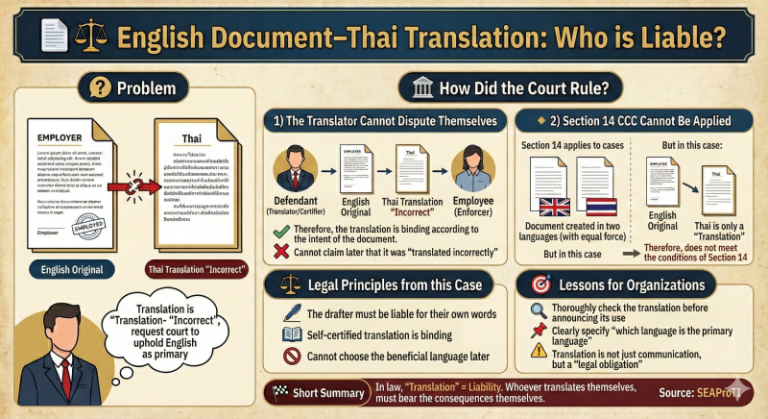
The Court reasoned that since the defendant employer had prepared and certified the Thai translation itself, the translated text was binding according to the intention of the document. The employer could not subsequently argue that the translation was inaccurate.
This reasoning aligns with the general principle of contractual interpretation that the drafter bears the consequences of the wording it chooses (the contra proferentem principle), particularly where the document is imposed upon a potentially weaker party, such as an employee (McKendrick, 2020).
2.2 Invocation of Section 14 of the Civil and Commercial Code
Section 14 of the Thai Civil and Commercial Code applies where a document is made in two languages with equal authoritative effect.
However, the Court held that this provision was inapplicable because there was only one original English version. The Thai text was merely a translation and not a jointly executed original version with equal legal force.
The distinction between “dual-language originals with equal authority” and an “original plus translation” is legally significant in determining interpretative methodology in cross-linguistic contexts.
2.3 The Protective Nature of Labour Law
The Court further emphasised that an employer cannot impose workplace regulations that diminish minimum statutory labour protections.
This approach reflects the concept of labour law as protective legislation designed to rebalance the inequality of bargaining power between employers and employees (Deakin & Morris, 2012).
3. A Forensic Linguistic Perspective
From a forensic linguistic perspective, translation is not merely the transfer of meaning but the creation of legally operative language (Coulthard & Johnson, 2010).
Once a translation is used in practice, particularly in labour relations, it becomes a normative text that defines rights and obligations. If prepared without adequate linguistic and legal expertise, translation inaccuracies may generate substantive legal disputes.
4. The Role of Certified Translators and Translation Certifiers
This case highlights the importance of engaging:
Certified Translators, and Translation Certifiers, who possess recognised professional standards, linguistic competence, legal knowledge, and clear professional accountability.
Professional translation services contribute to:
- Systematic verification of consistency between the original and translated texts;
- Clear identification of the authoritative language version;
- Professional responsibility mechanisms in the event of error.
Accordingly, entrusting legally binding documents, especially workplace regulations and employment contracts, to certified translators and qualified translation certifiers can prevent disputes arising from allegations that a translation does not reflect the original intent. It also significantly mitigates legal risk.
5. Policy Recommendations
Organisations should:
Establish internal policies requiring legally binding documents to be translated by certified professionals;
Clearly designate in each document which language version prevails in the event of inconsistency;
Implement legal review procedures alongside linguistic review.
6. Conclusion
The judgment reaffirms that a translation prepared and certified by the drafting party is legally binding, and that the drafter cannot later disavow its accuracy.
In multinational corporate environments, linguistic error can transform into legal liability. The engagement of certified translators and translation certifiers is therefore not merely a technical step but a crucial legal risk management mechanism.
References
Coulthard, M., & Johnson, A. (2010). An introduction to forensic linguistics: Language in evidence (2nd ed.). Routledge.
Deakin, S., & Morris, G. (2012). Labour law (6th ed.). Hart Publishing.
McKendrick, E. (2020). Contract law: Text, cases, and materials (8th ed.). Oxford University Press.
About Certified Translators, Translation Certifiers, and Certified Interpreters of SEAProTI
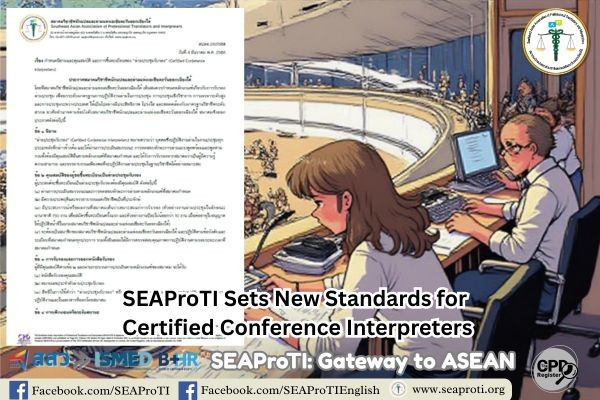
The Southeast Asian Association of Professional Translators and Interpreters (SEAProTI) has officially shared the qualifications and requirements for becoming Certified Translators, Translation Certification Providers, and Certified Interpreters in Sections 9 and 10 of the Royal Gazette, which was published by the Prime Minister’s Office in Thailand on July 25, 2024. Certified Translators, Translation Certification Providers, and Certified Interpreters
The Council of State has proposed the enactment of a Royal Decree, granting registered translators and recognised translation certifiers from professional associations or accredited language institutions the authority to provide legally valid translation certification (Letter to SEAProTI dated April 28, 2025)
SEAProTI is the first professional association in Thailand and Southeast Asia to implement a comprehensive certification system for translators, certifiers, and interpreters.
Head Office: Baan Ratchakru Building, No. 33, Room 402, Soi Phahonyothin 5, Phahonyothin Road, Phaya Thai District, Bangkok 10400, Thailand
Email: hello@seaproti.com | Tel.: (+66) 2-114-3128 (Office hours: Mon–Fri, 09:00–17:00)
การตีความเอกสารสองภาษาในคดีแรงงาน: ความรับผิดของผู้จัดทำคำแปลและบทบาทของนักแปลรับรอง
14 กุมภาพันธ์ 2569, กรุงเทพมหานคร – บทความนี้วิเคราะห์คำพิพากษาศาลฎีกาที่ 1663-1664/2529 ศาลแรงงานที่วินิจฉัยประเด็นการตีความข้อบังคับการทำงานซึ่งจัดทำเป็นภาษาอังกฤษและมีคำแปลภาษาไทยแนบ โดยศาลยึดถือถ้อยคำตามฉบับแปลภาษาไทยที่นายจ้างเป็นผู้จัดทำเอง และไม่อนุญาตให้นายจ้างโต้แย้งภายหลังว่าคำแปลคลาดเคลื่อนจากต้นฉบับ บทความเสนอว่าคำวินิจฉัยดังกล่าวสะท้อนหลักความรับผิดของผู้ร่างเอกสาร (drafting responsibility) และหลักการคุ้มครองแรงงานตามกฎหมายไทย พร้อมทั้งเสนอเชิงนโยบายว่า การใช้บริการนักแปลรับรองและผู้รับรองการแปลที่มีมาตรฐานวิชาชีพ สามารถลดความเสี่ยงทางกฎหมายและป้องกันข้อพิพาทลักษณะเดียวกันได้
1. บทนำ
ในยุคที่องค์กรข้ามชาติใช้ภาษาอังกฤษเป็นภาษาทางธุรกิจ แต่ใช้ภาษาไทยเป็นภาษาที่มีผลบังคับกับลูกจ้างในประเทศ ปัญหาการตีความเอกสารสองภาษาจึงกลายเป็นประเด็นสำคัญทางกฎหมาย โดยเฉพาะเมื่อเกิดข้อพิพาทเกี่ยวกับสิทธิแรงงาน
คดีที่นำมาศึกษานี้มีประเด็นว่า นายจ้างจัดทำข้อบังคับการทำงานเป็นภาษาอังกฤษ และจัดทำคำแปลภาษาไทยแนบไว้ใช้บังคับ เมื่อเกิดข้อพิพาท นายจ้างอ้างว่าคำแปลภาษาไทยบางส่วนไม่ตรงกับเจตนาที่แท้จริงของต้นฉบับ และขอให้ศาลยึดความตามภาษาอังกฤษเป็นหลัก
ศาลไม่รับฟังข้ออ้างดังกล่าว และวินิจฉัยโดยยึดถ้อยคำตามฉบับแปลภาษาไทย
2. ประเด็นกฎหมายที่เกี่ยวข้อง
2.1 ความรับผิดของผู้จัดทำคำแปล
ศาลให้เหตุผลว่า เมื่อจำเลยเป็นผู้จัดทำและรับรองคำแปลภาษาไทยเอง คำแปลนั้นย่อมผูกพันตามเจตนาแห่งเอกสาร และไม่อาจโต้แย้งภายหลังได้ว่าคลาดเคลื่อน
แนววินิจฉัยนี้สอดคล้องกับหลักการตีความสัญญาทั่วไปที่ว่า ผู้ร่างเอกสารต้องรับผลจากถ้อยคำที่ตนกำหนด (contra proferentem principle) โดยเฉพาะเมื่อเอกสารนั้นใช้บังคับกับคู่กรณีที่อาจอยู่ในฐานะเสียเปรียบ เช่น ลูกจ้าง (McKendrick, 2020)
2.2 การอ้างประมวลกฎหมายแพ่งและพาณิชย์ มาตรา 14
ประมวลกฎหมายแพ่งและพาณิชย์ มาตรา 14 บัญญัติถึงกรณีที่เอกสารจัดทำขึ้นสองภาษาและมีผลบังคับเท่ากัน
อย่างไรก็ตาม ศาลเห็นว่า กรณีนี้ไม่เข้าเงื่อนไขดังกล่าว เนื่องจากมีต้นฉบับภาษาอังกฤษเพียงฉบับเดียว ส่วนภาษาไทยเป็นเพียงคำแปล มิใช่เอกสารต้นฉบับร่วม
การแยกความแตกต่างระหว่าง “สองภาษาโดยมีผลเท่ากัน” กับ “ต้นฉบับ + คำแปล” มีนัยสำคัญต่อวิธีตีความเอกสารทางกฎหมายในบริบทข้ามภาษา
2.3 หลักการคุ้มครองแรงงาน
ศาลยังย้ำว่า นายจ้างไม่อาจกำหนดเงื่อนไขในข้อบังคับการทำงานเพื่อลดทอนสิทธิขั้นต่ำตามกฎหมายแรงงาน หลักการดังกล่าวสอดคล้องกับแนวคิดเรื่องกฎหมายแรงงานในฐานะกฎหมายคุ้มครอง (protective legislation) ซึ่งมุ่งสร้างความสมดุลในความสัมพันธ์ระหว่างนายจ้างกับลูกจ้าง (Deakin & Morris, 2012)
3. วิเคราะห์เชิงนิติภาษาศาสตร์
จากมุมมองนิติภาษาศาสตร์ (forensic linguistics) คำแปลมิใช่เพียงเครื่องมือถ่ายทอดความหมาย แต่เป็นการ “สร้างถ้อยคำใหม่” ที่มีผลทางกฎหมาย (Coulthard & Johnson, 2010)
เมื่อคำแปลถูกใช้บังคับจริงในบริบทแรงงาน ย่อมกลายเป็นข้อความที่กำหนดสิทธิและหน้าที่โดยตรง หากผู้จัดทำคำแปลไม่มีความเชี่ยวชาญทางกฎหมายหรือภาษา อาจเกิดความคลาดเคลื่อนที่นำไปสู่ข้อพิพาท
4. บทบาทของนักแปลรับรองและผู้รับรองการแปล
กรณีศึกษานี้สะท้อนให้เห็นว่า หากองค์กรใช้บริการ
- นักแปลรับรอง (Certified Translator)
- ผู้รับรองการแปล (Translation Certifier)
ที่มีมาตรฐานวิชาชีพ มีความรู้ทั้งด้านภาษาและกฎหมาย และมีความรับผิดทางวิชาชีพชัดเจน ย่อมลดความเสี่ยงที่คำแปลจะคลาดเคลื่อนหรือไม่สอดคล้องกับเจตนาทางกฎหมาย
การแปลโดยผู้เชี่ยวชาญที่ผ่านการรับรองช่วยให้:
- มีการตรวจทานความสอดคล้องระหว่างต้นฉบับกับคำแปล
- มีการระบุสถานะของภาษาใดเป็นภาษาหลักอย่างชัดเจน
- มีความรับผิดชอบทางวิชาชีพ หากเกิดความผิดพลาด
ดังนั้น การให้นักแปลรับรองและผู้รับรองการแปลดำเนินการแปลเอกสารสำคัญ โดยเฉพาะข้อบังคับการทำงานหรือสัญญาแรงงาน จะช่วยป้องกันปัญหาการโต้แย้งภายหลังว่า “คำแปลไม่ตรงเจตนา” และลดความเสี่ยงทางกฎหมายอย่างมีนัยสำคัญ
5. ข้อเสนอเชิงนโยบาย
องค์กรควรกำหนดนโยบายให้เอกสารที่มีผลผูกพันทางกฎหมายต้องผ่านการแปลโดยผู้เชี่ยวชาญที่ได้รับการรับรอง
ควรกำหนดชัดเจนในเอกสารว่า ภาษาใดเป็นภาษาที่มีผลบังคับเหนือกว่า
ควรมีระบบตรวจทานทางกฎหมาย (legal review) ควบคู่กับการตรวจทานทางภาษา
6. บทสรุป
คำพิพากษานี้ตอกย้ำว่า คำแปลที่ผู้จัดทำรับรองเองย่อมมีผลผูกพัน และไม่อาจโต้แย้งภายหลังได้ว่าไม่ตรงกับต้นฉบับ
ในบริบทองค์กรข้ามชาติ ความผิดพลาดทางภาษาอาจกลายเป็นความรับผิดทางกฎหมาย การใช้บริการนักแปลรับรองและผู้รับรองการแปลจึงมิใช่เพียงขั้นตอนทางเทคนิค หากแต่เป็นกลไกบริหารความเสี่ยงทางกฎหมายที่สำคัญ
References
- Coulthard, M., & Johnson, A. (2010). An introduction to forensic linguistics: Language in evidence (2nd ed.). Routledge.
- Deakin, S., & Morris, G. (2012). Labour law (6th ed.). Hart Publishing.
- McKendrick, E. (2020). Contract law: Text, cases, and materials (8th ed.). Oxford University Press.
สมาคมวิชาชีพนักแปลและล่ามแห่งเอเชียตะวันออกเฉียงใต้ (SEAProTI) ได้ประกาศหลักเกณฑ์และคุณสมบัติของผู้ที่ขึ้นทะเบียนเป็น “นักแปลรับรอง (Certified Translators) และผู้รับรองการแปล (Translation Certification Providers) และล่ามรับรอง (Certified Interpreters)” ของสมาคม หมวดที่ 9 และหมวดที่ 10 ในราชกิจจานุเบกษา ของสำนักเลขาธิการคณะรัฐมนตรี ในสำนักนายกรัฐมนตรี แห่งราชอาณาจักรไทย ลงวันที่ 25 ก.ค. 2567 เล่มที่ 141 ตอนที่ 66 ง หน้า 100 อ่านฉบับเต็มได้ที่: นักแปลรับรอง ผู้รับรองการแปล และล่ามรับรอง
สำนักคณะกรรมการกฤษฎีกาเสนอให้ตราเป็นพระราชกฤษฎีกา โดยกำหนดให้นักแปลที่ขึ้นทะเบียน รวมถึงผู้รับรองการแปลจากสมาคมวิชาชีพหรือสถาบันสอนภาษาที่มีการอบรมและขึ้นทะเบียน สามารถรับรองคำแปลได้ (จดหมายถึงสมาคม SEAProTI ลงวันที่ 28 เม.ย. 2568)
สมาคมวิชาชีพนักแปลและล่ามแห่งเอเชียตะวันออกเฉียงใต้เป็นสมาคมวิชาชีพแห่งแรกและแห่งเดียวในประเทศไทยและภูมิภาคเอเชียตะวันออกเฉียงใต้ที่มีระบบรับรองนักแปลรับรอง ผู้รับรองการแปล และล่ามรับรอง
สำนักงานใหญ่: อาคารบ้านราชครู เลขที่ 33 ห้อง 402 ซอยพหลโยธิน 5 ถนนพหลโยธิน แขวงพญาไท เขตพญาไท กรุงเทพมหานคร 10400 ประเทศไทย
อีเมล: hello@seaproti.com โทรศัพท์: (+66) 2-114-3128 (เวลาทำการ: วันจันทร์–วันศุกร์ เวลา 09.00–17.00 น.