


Authorized Translators under Ministerial Regulation B.E. 2540 (1997): A Legal and Practical Analysis
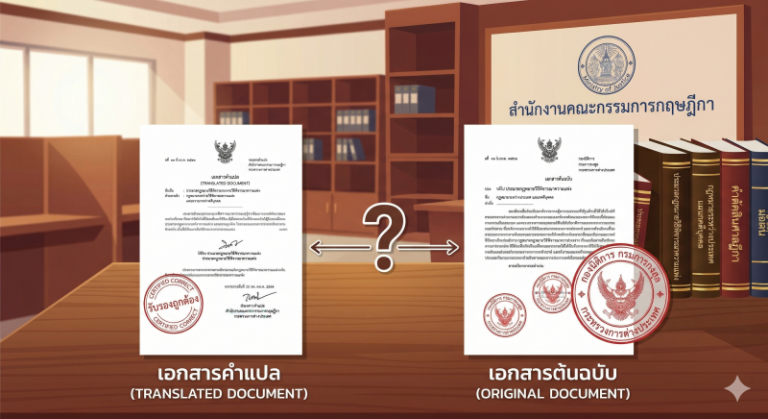
7 April 2026, Bangkok – The translation of documents from foreign languages into Thai for official or legal purposes requires certification by an “authorized translator” to ensure accuracy and completeness. This article aims to explain the qualifications of authorized translators as prescribed by the Ministerial Regulation B.E. 2540 (1997) and to analyze the legal significance of such requirements within the framework of public administration and legal reliability. The findings indicate that the regulation restricts authorized certifiers to specific qualified individuals and institutions to maintain translation standards and minimize potential disputes.
Introduction
In administrative and legal procedures, documents written in foreign languages must be translated into Thai and accompanied by a certification of accuracy. This requirement enables government authorities to properly assess the content of such documents. The Ministerial Regulation B.E. 2540 (1997), issued under the Administrative Procedure Act B.E. 2539 (1996), clearly defines the qualifications of individuals authorized to certify translations. This regulation establishes a standardized mechanism to ensure the reliability and accuracy of translated documents.
Legal Criteria for Authorized Translators
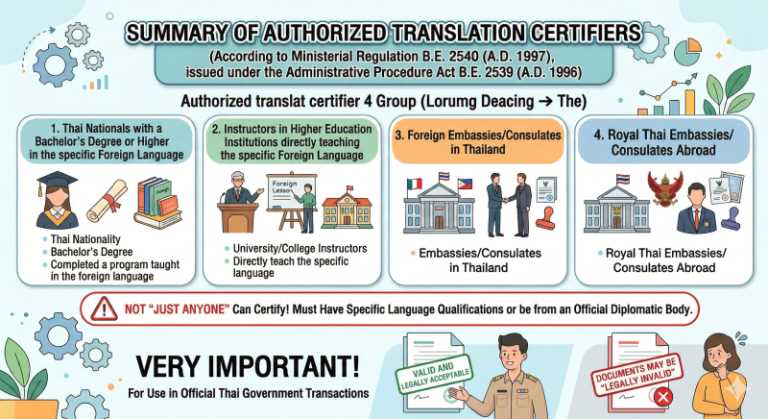
The Ministerial Regulation B.E. 2540 (1997) specifies four categories of individuals or entities authorized to certify translations from foreign languages into Thai:
- A Thai national who has obtained at least a bachelor’s degree in a program where the relevant foreign language is the medium of instruction.
- A university lecturer who teaches the relevant foreign language.
- An embassy or consulate of the country whose language is being translated, located in Thailand.
- A Thai embassy or consulate located abroad.
These categories reflect a deliberate legal approach to ensuring that certifiers possess either linguistic expertise or official institutional authority.
Legal Analysis
The restriction of authorized translators to specific groups serves as a legal quality control mechanism. It reduces the risk of mistranslation or misrepresentation, which could affect administrative decisions or judicial outcomes.
Furthermore, the inclusion of diplomatic missions enhances international credibility, particularly in cases involving cross-border transactions or international legal matters.
However, the regulation may present practical limitations, especially in areas where qualified individuals are scarce or when dealing with less commonly used languages.
Practical Implications
In practice, the selection of an authorized translator should align with the intended use of the document:
- For general administrative purposes, a qualified individual with relevant language education may suffice.
- For academic or institutional use, a university lecturer or language expert is often preferred.
- For international or high-stakes legal matters, certification by an embassy or consulate is advisable.
Choosing the appropriate certifier helps ensure acceptance by relevant authorities and enhances the document’s credibility.
Conclusion
The Ministerial Regulation B.E. 2540 (1997) provides a clear legal framework for certifying translated documents. Compliance with these requirements is essential to ensure legal validity, administrative efficiency, and the credibility of translated materials in official proceedings.
References
- Office of the Council of State. (1997). Ministerial Regulation No. 17 (B.E. 2540) issued under the Administrative Procedure Act B.E. 2539 (1996). Bangkok: Royal Gazette.
For professional services, please visit: https://www.seaproti.org/practitioners/
About certified translators, translation certifiers, and certified interpreters associated with SEAProTI.
The Southeast Asian Association of Professional Translators and Interpreters (SEAProTI) has officially shared the qualifications and requirements for becoming Certified Translators, Translation Certification Providers, and Certified Interpreters in Sections 9 and 10 of the Royal Gazette, which was published by the Prime Minister’s Office in Thailand on July 25, 2024. Certified Translators, Translation Certification Providers, and Certified Interpreters
The Council of State has proposed the enactment of a Royal Decree, granting registered translators and recognised translation certifiers from professional associations or accredited language institutions the authority to provide legally valid translation certification (Letter to SEAProTI dated April 28, 2025)
SEAProTI is the first professional association in Thailand and Southeast Asia to implement a comprehensive certification system for translators, certifiers, and interpreters.
Head Office: Baan Ratchakru Building, No. 33, Room 402, Soi Phahonyothin 5, Phahonyothin Road, Phaya Thai District, Bangkok 10400, Thailand
Email: hello@seaproti.com | Tel.: (+66) 2-114-3128 (Office hours: Mon–Fri, 09:00–17:00).
ผู้รับรองการแปลเอกสารตามกฎกระทรวง พ.ศ. 2540: การวิเคราะห์เชิงกฎหมายและการปฏิบัติ
7 เมษายน 2569, กรุงเทพมหานคร – การแปลเอกสารจากภาษาต่างประเทศเป็นภาษาไทยเพื่อใช้ในทางราชการจำเป็นต้องมี “ผู้รับรองการแปล” เพื่อยืนยันความถูกต้องของเนื้อหา บทความนี้มีวัตถุประสงค์เพื่ออธิบายหลักเกณฑ์ของผู้รับรองการแปลตามกฎกระทรวง พ.ศ. 2540 และวิเคราะห์ความสำคัญของการกำหนดคุณสมบัติของผู้รับรองดังกล่าวในบริบทของการบริหารราชการแผ่นดินและความน่าเชื่อถือของเอกสารทางกฎหมาย ผลการศึกษาพบว่ากฎหมายได้กำหนดผู้มีอำนาจรับรองไว้อย่างจำกัดเพื่อควบคุมมาตรฐานของคำแปลและลดข้อพิพาทที่อาจเกิดขึ้น
บทนำ
ในกระบวนการติดต่อราชการหรือดำเนินการทางกฎหมาย เอกสารที่เป็นภาษาต่างประเทศจำเป็นต้องได้รับการแปลเป็นภาษาไทย พร้อมทั้งมีการรับรองความถูกต้องของคำแปล เพื่อให้หน่วยงานของรัฐสามารถพิจารณาเอกสารได้อย่างถูกต้องตามข้อเท็จจริง กฎกระทรวง พ.ศ. 2540 ซึ่งออกตามพระราชบัญญัติวิธีปฏิบัติราชการทางปกครอง พ.ศ. 2539 ได้กำหนดหลักเกณฑ์เกี่ยวกับผู้รับรองการแปลไว้อย่างชัดเจน เพื่อสร้างมาตรฐานกลางในการยืนยันความถูกต้องของเอกสารแปล
หลักเกณฑ์ผู้รับรองการแปลตามกฎหมาย
กฎกระทรวง พ.ศ. 2540 กำหนดให้ผู้มีอำนาจรับรองคำแปลจากภาษาต่างประเทศเป็นภาษาไทยมี 4 ประเภท ได้แก่
- บุคคลสัญชาติไทยที่สำเร็จการศึกษาระดับปริญญาตรีขึ้นไปในหลักสูตรที่ใช้ภาษานั้นเป็นภาษาการเรียนการสอน
- อาจารย์ในสถาบันอุดมศึกษาที่สอนภาษานั้นโดยตรง
- สถานเอกอัครราชทูตหรือสถานกงสุลของประเทศเจ้าของภาษาในประเทศไทย
- สถานเอกอัครราชทูตหรือสถานกงสุลไทยในต่างประเทศ
การกำหนดเช่นนี้สะท้อนถึงแนวคิดในการคัดเลือกบุคคลหรือหน่วยงานที่มีความรู้ ความเชี่ยวชาญ หรือมีสถานะทางการทูตที่น่าเชื่อถือ เพื่อรับรองความถูกต้องของคำแปล
การวิเคราะห์เชิงกฎหมาย
การกำหนดผู้รับรองการแปลไว้เฉพาะกลุ่มมีนัยสำคัญในเชิงกฎหมาย กล่าวคือ เป็นการสร้าง “กลไกควบคุมคุณภาพ” ของเอกสารแปล โดยลดความเสี่ยงของการแปลผิดพลาดหรือการบิดเบือนข้อมูล ซึ่งอาจส่งผลต่อการพิจารณาทางปกครองหรือการตัดสินคดีในชั้นศาล
นอกจากนี้ การเปิดโอกาสให้หน่วยงานทางการทูตเข้ามามีบทบาทในการรับรอง ยังช่วยเพิ่มความน่าเชื่อถือในระดับสากล โดยเฉพาะในกรณีที่เอกสารเกี่ยวข้องกับความสัมพันธ์ระหว่างประเทศหรือธุรกรรมข้ามพรมแดน
อย่างไรก็ตาม ข้อจำกัดของกฎหมายดังกล่าวคือ การจำกัดกลุ่มผู้รับรองอาจทำให้เกิดความไม่สะดวกในทางปฏิบัติ โดยเฉพาะในพื้นที่ที่ขาดแคลนผู้เชี่ยวชาญด้านภาษา หรือในกรณีของภาษาที่ไม่เป็นที่แพร่หลาย
การประยุกต์ใช้ในทางปฏิบัติ
ในทางปฏิบัติ การเลือกผู้รับรองการแปลควรพิจารณาจากวัตถุประสงค์ของการใช้งานเอกสาร เช่น
- การใช้ในหน่วยงานราชการทั่วไป อาจใช้ผู้ที่มีคุณวุฒิทางภาษา
- การใช้ในงานวิชาการหรือการศึกษา ควรใช้อาจารย์หรือผู้เชี่ยวชาญ
- การใช้ในบริบทระหว่างประเทศ ควรใช้การรับรองจากสถานทูตหรือกงสุล
การเลือกผู้รับรองที่เหมาะสมจะช่วยลดความเสี่ยงที่เอกสารจะไม่ได้รับการยอมรับ และเพิ่มความน่าเชื่อถือของข้อมูล
สรุป
กฎกระทรวง พ.ศ. 2540 ได้กำหนดกรอบทางกฎหมายที่ชัดเจนเกี่ยวกับผู้รับรองการแปล เพื่อรักษามาตรฐานและความน่าเชื่อถือของเอกสารที่ใช้ในทางราชการ การปฏิบัติตามหลักเกณฑ์ดังกล่าวมีความสำคัญอย่างยิ่งต่อความถูกต้องทางกฎหมายและประสิทธิภาพในการบริหารราชการแผ่นดิน
เอกสารอ้างอิง (References)
- สำนักงานคณะกรรมการกฤษฎีกา. (2540). กฎกระทรวง ฉบับที่ 17 (พ.ศ. 2540) ออกตามความในพระราชบัญญัติวิธีปฏิบัติราชการทางปกครอง พ.ศ. 2539. กรุงเทพมหานคร: ราชกิจจานุเบกษา.
ติดต่อขอใช้บริการนักวิชาชีพของสมาคมได้ที่: https://www.seaproti.org/practitioners/
สมาคมวิชาชีพนักแปลและล่ามแห่งเอเชียตะวันออกเฉียงใต้ (SEAProTI) ได้ประกาศหลักเกณฑ์และคุณสมบัติของผู้ที่ขึ้นทะเบียนเป็น “นักแปลรับรอง (Certified Translators) และผู้รับรองการแปล (Translation Certification Providers) และล่ามรับรอง (Certified Interpreters)” ของสมาคม หมวดที่ 9 และหมวดที่ 10 ในราชกิจจานุเบกษา ของสำนักเลขาธิการคณะรัฐมนตรี ในสำนักนายกรัฐมนตรี แห่งราชอาณาจักรไทย ลงวันที่ 25 ก.ค. 2567 เล่มที่ 141 ตอนที่ 66 ง หน้า 100 อ่านฉบับเต็มได้ที่: นักแปลรับรอง ผู้รับรองการแปล และล่ามรับรอง
สำนักคณะกรรมการกฤษฎีกาเสนอให้ตราเป็นพระราชกฤษฎีกา โดยกำหนดให้นักแปลที่ขึ้นทะเบียน รวมถึงผู้รับรองการแปลจากสมาคมวิชาชีพหรือสถาบันสอนภาษาที่มีการอบรมและขึ้นทะเบียน สามารถรับรองคำแปลได้ (จดหมายถึงสมาคม SEAProTI ลงวันที่ 28 เม.ย. 2568)
สมาคมวิชาชีพนักแปลและล่ามแห่งเอเชียตะวันออกเฉียงใต้เป็นสมาคมวิชาชีพแห่งแรกและแห่งเดียวในประเทศไทยและภูมิภาคเอเชียตะวันออกเฉียงใต้ที่มีระบบรับรองนักแปลรับรอง ผู้รับรองการแปล และล่ามรับรอง
สำนักงานใหญ่: อาคารบ้านราชครู เลขที่ 33 ห้อง 402 ซอยพหลโยธิน 5 ถนนพหลโยธิน แขวงพญาไท เขตพญาไท กรุงเทพมหานคร 10400 ประเทศไทย
อีเมล: hello@seaproti.com โทรศัพท์: (+66) 2-114-3128 (เวลาทำการ: วันจันทร์–วันศุกร์ เวลา 09.00–17.00 น.